
BuddhistCatholicContemplativeEvangelicalGeneral ChristianHinduJewishLatter-day SaintMuslimNew VisionsProgressive Christian
Beliefs
- Buddhist
- Catholic
- Contemplative
- Evangelical
- General Christian
- Hindu
- Jewish
- Latter-day Saint
- More Voices
- Muslim
- New Visions
- Pagan
- Progressive Christian
Topics
- Religion News
- Food and Religion
- Sports and Religion
- Religious Art
- Religious Music and Entertainment
- Religious Events
- History and Religion
- Style and Religion
- Politics and Religion
- Women in Religion
- Recreation Outdoors and Religion
- Business Finance and Religion
- Careers Workplace and Religion
- Education and Religion
- Family Parenting and Religion
- Health Fitness and Religion
- Home and Religion
- Relationships and Religion
- Technology and Religion
- Travel and Religion
Columnists
- Buddhist Columnists
- Business Finance and Religion Columnists
- Careers Workplace and Religion Columnists
- Catholic Columnists
- Contemplative Columnists
- Education and Religion Columnists
- Evangelists Columnists
- Family Parenting and Religion Columnists
- General Christian Columnists
- Health Fitness and Religion Columnists
- Hindu Columnists
- History and Religion Columnists
- Home and Religion Columnists
- Jewish Columnists
- More Voices Columnists
- Latter Day Columnists
- Muslim Columnists
- New Visions Columnists
- Nonreligious Columnists
- Pagan Columnists
- Politics and Religion Columnists
- Progressive Columnists
- Recreation Outdoors and Religion Columnists
- Relationships and Religion Columnists
- Religion News Columnists
- Religious Art Columnists
- Religious Events Columnists
- Religious Music and Entertainment Columnists
- Sports and Religion Columnists
- Style and Religion Columnists
- Technology and Religion Columnists
- Travel and Religion Columnists
- Women in Religion Columnists
Resource Library
- 2026 Calendar
- Library of World Religions
- The 100 Most Holy Places on Earth
- Patheos Answers
- Podcasts
- Videos
- Faith Leaders Database
- Anglican Episcopalian
- Bahai
- Baptist
- Buddhism
- Christianity
- Confucianism
- Eastern Orthodoxy
- Hinduism
- Holiness and Pentecostal
- ISKCON
- Islam
- Judaism
- Lutheran
- Methodist
- The Church of Jesus Christ of Latter-day Saints
- New Age
- Paganism
- Presbytarian and Reformed
- Protestantism
- Religion Behind the Scenes
- Roman Catholic
- Scientology
- Shia Islam
- Sikhism
- Sufism
- Sunni Islam
- Taoism
- Zen
- See all religions
Research Tools
 Ad-Free & Subscriber Log-In Subscription Support
Ad-Free & Subscriber Log-In Subscription Support
Follow Patheos 

- Trending:
- Forgiveness
- |
- Marriage
- |
- Consciousness
- |
- Death Penalty
- |
- Election
- |
- Halloween
 The Cordial Catholic
- Home
- Catholic
- What I Wish I’d Known About Catholics (And Why I’m Becoming One Now That I Do)
What I Wish I’d Known About Catholics (And Why I’m Becoming One Now That I Do)
Last updated on: February 10, 2016 at 7:49 am by K. Albert Little
What I Wish I’d Known About Catholics (And Why I’m Becoming One Now That I Do) 2016-02-10T07:49:12-04:00 K. Albert Little
Patheos Explore the world's faith through different perspectives on religion and spirituality! Patheos has the views of the prevalent religions and spiritualities of the world.
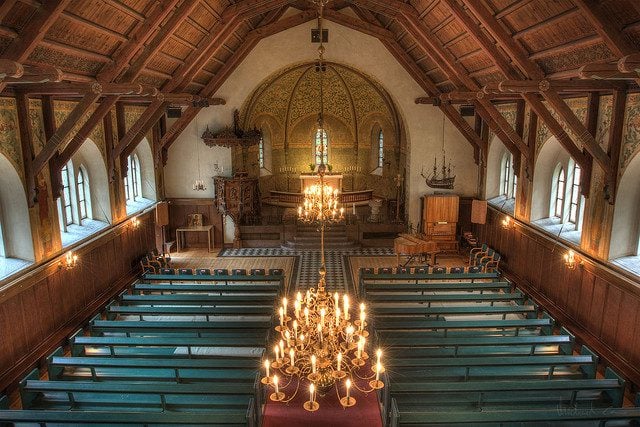
Photo Credit: Michael Caven.
This Easter I become a Catholic.
It’s been a strange, unexpected journey. Something I often think about, and reflect on, is what I would’ve thought of myself, today, if I’d met me ten years ago. What if, by some miracle of space and time, the twenty year old me was able to visit the thirty year old me, today. What would the younger me think?
Becoming a Catholic is something I never could’ve imagined or envisioned.
I became a Christian at the age of about fifteen. I found an incredible local Pentecostal church, and incredible youth group, and was welcomed into a group of fantastic, devout young Christians. It’s hard to imagine all the grace I received through the friends I found and the experiences I had.
Then, at a time when so many Christians lose their faith and their identity, by the grace of God I was plugged into an incredible campus ministry in my university years. There I met lifelong friends, and my beautiful wife.
I fellowshipped, alongside my wife and our best friends, at a non-denominational church for many years. We still attend. It’s been an incredible place of growth, grace, and meeting God.
But the trajectory of my faith life—which impacts, of course, the whole of my life—changed one day when a Protestant pastor asked me what’s more important, the Bible or tradition. I didn’t have an answer, and that stumped me. And when I dug for answers, I was even more stumped, and unsatisfied. This began a long journey of searching, prayer, and unexpected discoveries.
A journey which will culminate at Easter, and continue for the rest of my life, in an entirely new direction.
What I know now, I didn’t know then. I’m becoming Catholic because of what I’ve learned—and I’ve learned it, I believe, by the grace of God.
St. Francis de Sales is a favourite saint of mine. In the 16th century, as the Reformation split apart the Christian Church in Europe he wrote, preached, and worked tirelessly to explain the Catholic faith, and bring Protestants back into the fold. He was incredibly successful and something in his mission of cordially explaining his faith resonates deeply with me.
To paraphrase St. Francis de Sales to the early Protestants: If you’d known what the Catholic Church really taught you’d never have left.
In my case, if I’d known what the Catholic Church really taught, I’d have become Catholic much sooner.
Catholics Don’t Worship Mary
The Catholic Church doesn’t teach the worship of Mary. Worship (and adoration) are for God alone.
As a Protestant I thought, for a long time, that Catholics worshipped Mary alongside her son, Jesus. There are plenty of churches named in her honoured, Catholics seemed obsessed with statues of the Virgin, and the Rosary, of all things, seemed to be nothing more than vain repetition of praise for Jesus’s mother.
The reality, I’ve learned, is much different. Catholics don’t worship Mary but, because of her special role in salvation history, she is venerated. How is that different? In Catholic theology, which, remember, was the theology of the whole Christian Church for 1,500 years, we ask Mary to pray for us.
Like Mary’s request to Jesus at the wedding at Cana, Catholics believe that Mary has the ear of Jesus in a special way. This is also reflected in biblical typology—the same kind of exegesis that Jesus used to explain His role in salvation to the apostles on the road to Emmaus. In the same way I can ask my best friend—a living, breathing Christian—to pray for my intentions, the Catholic Church teaches that Mary can be asked for prayer in the same way. When Catholics say they pray, “to Mary,” they don’t mean that Mary will answer our prayers. When we “pray to” Mary, we ask for her to pray for us, to Christ.
Jesus answers all prayers. We ask Mary to pray on our behalf.
Catholics Don’t Worship the Saints
In the same way, the Catholic Church believes that holy men and women (more women than men, for the record) are, presently, in the presence of God. We call these people saints and, like the Virgin Mary, we can ask for their prayers.
As pictured in Revelation, the prayers of the saints gathered around the altar float up like incense before God. That’s why, since the very beginning of the Christian Church, there has been a strong belief in ability of the dead to pray for us—and the practice of us asking them for their prayers. This is why the earliest Christian Churches were built on sites where holy men and women were killed.
The beautiful theology of the Catholic Church says that the Church, as a body of believers, is made up of all past, present, and future Christians. We’re all one and the same and just because I pass away doesn’t mean I cease to be a part of that active body. The saints, as Christians, continue their role in the body, only now in the presence of God.
Jesus is Present in the Eucharist
For all the different Protestant branches and denominations I’ve learned that no one in Protestantism takes Jesus’s words more literally than the Catholic Church.
When Jesus said, “This is my body; this is my blood,” the Catholic Church—and the whole of Christianity for 1,500 years—takes Him at His word.
Incredibly, the Catholic theology of transubstantiation says that when the priest consecrates the elements (the bread and the wine) they become the actual body and blood of Jesus through a mysterious, miraculous process. The fact that we can’t see, touch, or taste these elements are real flesh and blood is part of the miracle.
This bold claim is backed up not only by a thousand and a half years of Church history but by solid exegesis of the gospels.
Jesus, from Bethlehem (which means “the house of bread”), who was laid into a manger (which is a feeding trough) when He was born is the actual manna from Heaven.
If I had known that I can actually receive Jesus in the Eucharist, I would’ve stormed the doors of my local Catholic Church a decade ago.
There’s Only One Mass
What strikes me as even more incredible is the Catholic theology of the act of the Eucharist itself: There’s only one.
Jesus’s sacrifice on the cross was once and for all, final, and this is something that all Protestants can get behind. The brilliant, beauty of the Mass and the Real Presence of Jesus in the Eucharistic elements is that it links us up with all of Christian history—past, present, and future.
Jesus only died once. When the priest prayers the Eucharistic Prayers and says, “This is my body; this is my blood,” we are, as a church community, reliving the Last Supper and Jesus’s death on the cross. We are linking up, together, with all of the other Christians who have ever, and will ever, celebrate the Eucharist. And we’re linking up with the saints, angels, the Virgin Mary, and God Himself in Heaven as we see this same celebration taking place in Revelation.
As a Catholic, then, when I go to Mass I am experiencing something universal: Jesus’s death re-presented before my eyes.
The Priest Acts as Jesus
In a similar way, I never understood the importance of the priest in Catholic theology. As a young Protestant the priest, like Mary and the saints, stood in the way of my personal relationship with Jesus. But I had it all wrong.
The priest, as understood by Catholic theology, acts as Christ. The priest is a stand-in, if you will.
In the Mass, the priests acts in the place of Jesus, as he consecrates the bread and the wine. In the blessing of people, in Baptism, in prayer, and in the healing of the sick the priest, based on the authority that Jesus gives His apostles in the New Testament, is acting in His place. Where Jesus is not tangibly, physically with us, the priest is here in His place.
In confession, the priest, based on the direct charge from Jesus, “whoever’s sins you forgive they are forgiven,” represents Christ in forgiving our sins for us.
We don’t have to imagine God among us: there He is.
God Gave Us a Real, Tangible Church
Perhaps the greatest, most incredible thing I’ve learned, and wish that I knew a long, long time ago, is that Jesus left us with a real, tangible Church.
As a Protestant, I thought of the Church as a non-physical, spiritual union of Christians all over the world. But this isn’t how Jesus meant it, I’m convinced. Because this isn’t the Church as conceived by the apostles, the fathers of the Church (who were taught by the apostles), and all Christians for more than fifteen hundred years.
As I become Catholic perhaps the greatest gift I’m to receive is union with a real, tangible Church founded by Christ.
A Church with bishops and priests who can trace their authority, historically, all the way back to the apostles. Authority that we see manifest in the New Testament as the ability to forgive sins, drive out demons, and define an understanding of doctrine. These authoritative charges, according to the Catholic Church, remain with today’s bishops and priests through Apostolic Succession.
That’s why when the priest says, “You’re forgiven,” he means it. Because Christ said he’d have that power.
Rather than having to “feel” or “know” it on our own, God gave us the beauty and the blessing of a physical, tangible Church to be His hands and feet on earth. I don’t need to pray and ask for God to give me a sense of His grace, although I certainly could, and do. But in the Eucharist, in confession, and in the knowledge that God gave us the Church, we can be certain of His grace. This, in my experience, has been the most powerful aspect of the Catholic Church—and something I wish I knew years ago.
The most beautiful gift that Jesus gave us, beyond His sacrificial offering, was the establishment of a Church to proclaim, celebrate, and safeguard truth.
There’s a lot—a lot!—I wish I’d known about the Catholic Church a long time ago. I would’ve become a Catholic. And, of course, now that I know I can’t help but do anything else. At Easter I’ll turn in a new direction, take a new path, but I suppose, really, it’s the path I’ve always been on: A slow road to Rome. But I’m finally getting there. My new orientation, then, will be continue to explain and champion this incredible faith I’ve found. And to be a cordial Catholic.
Update (December 2015): Wow! This article, originally written in March 2015, has seen an incredible resurgence over the past few days. Good news, I’m Catholic! I joined the Church at the Easter Vigil 2015. You can read more about Why I Became Catholic and more about my journey in How I Got Here: From Evangelical to Catholic.
Thanks to everyone who has recently stumbled across this article and to all of those who are liking it and sharing it with their friends and family. I invite you to join my mailing list and follow me on Facebook for more of this same stuff. Merry Christmas! Dei Gratias!
Stay in touch! Like The Cordial Catholic on Facebook:
Previous Post
March 17, 2015
How God Gives Us Grace Through Man
Next Post
March 26, 2015 How First Confession Blew My Mind
Browse Our Archives
Select a Category Appearances Christian Living Explaining the Faith Podcast Tough Questions Uncategorized Why I'm Catholic
Select a Month January 2024 December 2023 November 2023 July 2023 June 2023 May 2023 April 2023 March 2023 February 2023 January 2023 December 2022 November 2022 October 2022 September 2022 August 2022 July 2022 June 2022 May 2022 April 2022 March 2022 February 2022 January 2022 December 2021 November 2021 October 2021 September 2021 August 2021 July 2021 June 2021 May 2021 April 2021 March 2021 February 2021 January 2021 December 2020 November 2020 October 2020 September 2020 August 2020 July 2020 June 2020 May 2020 April 2020 March 2020 February 2020 January 2020 December 2019 November 2019 October 2019 September 2019 August 2019 July 2019 June 2019 May 2019 April 2019 March 2019 February 2019 January 2019 December 2018 November 2018 October 2018 September 2018 August 2018 July 2018 June 2018 May 2018 April 2018 March 2018 February 2018 January 2018 December 2017 October 2017 September 2017 July 2017 May 2017 April 2017 March 2017 February 2017 January 2017 December 2016 November 2016 October 2016 September 2016 August 2016 July 2016 June 2016 May 2016 April 2016 March 2016 February 2016 January 2016 December 2015 November 2015 October 2015 September 2015 August 2015 July 2015 June 2015 May 2015 April 2015 March 2015 February 2015 January 2015 December 2014 November 2014 October 2014
Follow Us!
TAKE THE
Religious Wisdom Quiz
What is the primary language of the Eastern Orthodox liturgy in Greece?
Select your answer to see how you score.
English Latin Greek Russian
Support this
Column


Related posts from The Cordial Catholic

235: Questions I Couldn't Answer (w/ John Martignoni)

234: The Mindblowing World of Sacramentals (w/ Shaun...

233: The Power of Good Catholic Witnesses (w/...

232: The Trajectory of Conversion (w/ Phillip Campbell)
TRENDING AT PATHEOS Catholic

The Parable Of The Sower And The Word...
One of Christ’s most famous parables is that of the sower who...

Rejecting Doom: Christian Hope And Human Action
Christianity is a religion of hope. We are to have hope and...

Why I Choose the Eucharist Over the Sermon
Choose the Eucharist, Not the Sermon What are we supposed to get...

5 Design Elements Found in Spiritually Rooted Homes
Putting Spirituality Into Home Decor Our homes are more than our living...

Credo: A Story of God Told with the...
About 10 years ago, I began to imagine a personal "Credo" that...

The Anatomy of Divine Revelation in Catholic Thought
The claim that God has made Himself known to human beings is...
view all Catholic blogs
Ad-Free & Subscriber Log-In Subscription Support
- About Us
- 2026 Calendar
- Videos
- Podcasts
- Library of World Religions
- Faith In Media Tracker
- Advertise With Us
- Write for Us
- Privacy Policy
- Terms of Service
- Do Not Sell My Data
- Contact Us
- Radiant Digital
- Manage Newsletter Subscriptions
- Unsubscribe From Notifications
- Sitemap
Copyright 2008-2026, Patheos. All rights reserved.
Subscription Support Ad-Free & Subscriber Log-In
Follow Patheos