
BuddhistCatholicContemplativeEvangelicalGeneral ChristianHinduJewishLatter-day SaintMuslimNew VisionsProgressive Christian
Beliefs
- Buddhist
- Catholic
- Contemplative
- Evangelical
- General Christian
- Hindu
- Jewish
- Latter-day Saint
- More Voices
- Muslim
- New Visions
- Pagan
- Progressive Christian
Topics
- Religion News
- Food and Religion
- Sports and Religion
- Religious Art
- Religious Music and Entertainment
- Religious Events
- History and Religion
- Style and Religion
- Politics and Religion
- Women in Religion
- Recreation Outdoors and Religion
- Business Finance and Religion
- Careers Workplace and Religion
- Education and Religion
- Family Parenting and Religion
- Health Fitness and Religion
- Home and Religion
- Relationships and Religion
- Technology and Religion
- Travel and Religion
Columnists
- Buddhist Columnists
- Business Finance and Religion Columnists
- Careers Workplace and Religion Columnists
- Catholic Columnists
- Contemplative Columnists
- Education and Religion Columnists
- Evangelists Columnists
- Family Parenting and Religion Columnists
- General Christian Columnists
- Health Fitness and Religion Columnists
- Hindu Columnists
- History and Religion Columnists
- Home and Religion Columnists
- Jewish Columnists
- More Voices Columnists
- Latter Day Columnists
- Muslim Columnists
- New Visions Columnists
- Nonreligious Columnists
- Pagan Columnists
- Politics and Religion Columnists
- Progressive Columnists
- Recreation Outdoors and Religion Columnists
- Relationships and Religion Columnists
- Religion News Columnists
- Religious Art Columnists
- Religious Events Columnists
- Religious Music and Entertainment Columnists
- Sports and Religion Columnists
- Style and Religion Columnists
- Technology and Religion Columnists
- Travel and Religion Columnists
- Women in Religion Columnists
Resource Library
- 2026 Calendar
- Library of World Religions
- The 100 Most Holy Places on Earth
- Patheos Answers
- Podcasts
- Videos
- Faith Leaders Database
- Anglican Episcopalian
- Bahai
- Baptist
- Buddhism
- Christianity
- Confucianism
- Eastern Orthodoxy
- Hinduism
- Holiness and Pentecostal
- ISKCON
- Islam
- Judaism
- Lutheran
- Methodist
- The Church of Jesus Christ of Latter-day Saints
- New Age
- Paganism
- Presbytarian and Reformed
- Protestantism
- Religion Behind the Scenes
- Roman Catholic
- Scientology
- Shia Islam
- Sikhism
- Sufism
- Sunni Islam
- Taoism
- Zen
- See all religions
Research Tools
 Ad-Free & Subscriber Log-In Subscription Support
Ad-Free & Subscriber Log-In Subscription Support
Follow Patheos 

- Trending:
- Forgiveness
- |
- Marriage
- |
- Consciousness
- |
- Death Penalty
- |
- Election
- |
- Halloween
 The Cordial Catholic
- Home
- Catholic
- The Most Important Thing Non-Catholics Need to Know About Catholicism
The Most Important Thing Non-Catholics Need to Know About Catholicism
Last updated on: August 4, 2017 at 8:55 am by K. Albert Little
The Most Important Thing Non-Catholics Need to Know About Catholicism 2017-08-04T08:55:10-04:00 K. Albert Little
Patheos Explore the world's faith through different perspectives on religion and spirituality! Patheos has the views of the prevalent religions and spiritualities of the world.
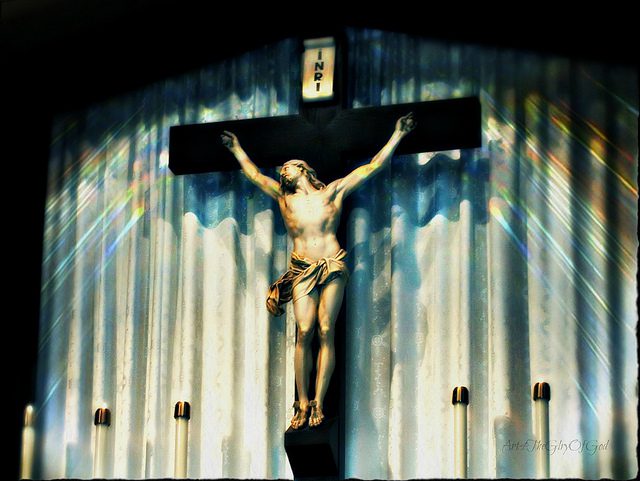
Photo Credit: Art4TheGlryOfGod..
For fifteen years I was an evangelical Protestant. This Easter I became a Roman Catholic.
I began thinking about the Catholic Church nearly a decade ago. I began reading. First, from other Protestants who converted to Catholicism. I had questions similar to theirs. Then, from the Early Church Fathers, those closest to Jesus and His apostles, writing just after the time of the New Testament. And then, I read what Catholics themselves had to say about the Church, and her teachings. And I was shocked.
I was shocked, and I think you might be too.
I’ve written elsewhere about some of the things that led me to become a Catholic—and that’s worth reading, too. But there’s one thing, one enormous thing, that I need to tell you, as a non-Catholic. Something I didn’t know for a long time. Something which took me a decade to come around to understanding, and it’s something that absolutely blew my mind, changed my life, and sent my faith sky-rocketing.
There is a closeness with Jesus which, as an evangelical Protestant, I could never imagine. I can physically consume Jesus. And, what’s more, He commanded us to do likewise.
The Catholic Claim for the Eucharist
Quite simply, if you’ve never heard this before, it’s important. So important.
In fact, Father Mike Schmitz, in a video recommended to me by a reader, suggests that this is the most important thing people need to know about the Catholic Church.
Father Mike asserts that if he were to die, this is the one thing he’d want people to know and remember out of all his talks, sermons, and videos.
This is important. Life-changing.
The Catholic Church believes that when Jesus instituted the Lord’s Supper—the Eucharist—He meant what He said.
Through a miraculous process foreshadowed immediately before hand in the Gospel of John by the multiplying of the loaves, Jesus becomes actually present in the Eucharistic elements. Jesus is not symbolically there. It’s not a representation of Jesus or merely a memorial. We’re not doing it solely to remember and reflect upon. In the Catholic tradition, Jesus becomes present in the bread and the wine, although hidden from our merely physical senses.
We are actually consuming Jesus in the Eucharist, like Jesus said we must. Jesus is really there, each and every time.
Is the Catholic Claim for the Eucharist Credible?
Absolutely.
Hands down.
First of all, in the Gospel of John, when Jesus said that we must eat His flesh and drink His blood He emphasized it five times, as Father Mike reminds us. Time and again, when His followers grumbled and questioned Him He made it abundantly clear that He was speaking literally, not in a metaphor or parable. And when the crowd couldn’t take His “difficult teaching” they left—and Jesus didn’t stop them.
The crowd—Jesus’s very disciples who, Father Mike tells us, had left their families and livelihoods—took Jesus literally, and it was too much to take. They left.
The first witnesses to Jesus’s explanation of what happens in the Lord’s Supper took Him literally.
Next is the witness of the Early Church Fathers, the apostles of the apostles. Those that learned from the apostles named and numbered in the New Testament and their witness too is unanimous. Down to the very last one, those most closely linked to Jesus’s apostolic missionaries took Jesus’s words to be absolutely, unequivocally, literal.
They understood Jesus to be really present in the Eucharist.
Finally, there is the witness of the whole of Christianity for over 1,500 years. Remarkably, this goes largely ignored but the evidence is overwhelming.
For 1,500 years every Christian on earth was part of a Church that believed, without batting an eyelash, that Jesus was actually, fully present in the Eucharist. It wasn’t until the Reformation, with the widespread introduction of new teachings on the “real presence” of Jesus that Christian belief began to splinter.
Either Jesus is a Liar or the ‘Real Presence’ Is True
The tragedy of the Reformation is that it split the Church into a million tiny fragments; a reality that we’re so far removed from that we don’t give a second thought to our particular denomination or set of beliefs, or even ask ourselves what are we protesting against?
But, the reality is, either the real presence of Jesus Christ in the Eucharist is true, or Jesus Christ is a liar.
Because Jesus was unequivocal when He said He was founding a Church and evil would not prevail over it. If He meant what He said how would it makes sense, as Father Mike reminds us, that His followers immediately after the apostles could got it so wrong.
The earliest Christians believed that Jesus was really present in the Eucharist. The whole of the Christian Church believed it for 1,500 years.
If Jesus meant what He said when He told us that evil wouldn’t prevail over His Church how is it possible that such a misunderstanding could creep in?
What Jesus a liar?
Did the Reformers, 1,500 years after the founding of Jesus’s Church suddenly come upon something new from God? Did God finally, after 1,500 years, reveal what He really meant when He instituted Holy Communion?
And what about all those millions of believers from the very early Christians up until the 16th century who falsely believed in a doctrine which was central to their faith? That would’ve, ultimately, amounted to idolatry if they got it wrong.
What makes more sense?
The Eucharist is the Ultimate Closeness with God
Ultimately, it comes down to what every non-Catholic needs to know. The one thing every single Christian on earth needs to hear, and understand.
In the Eucharist you can receive the real Jesus, and experience the ultimate closeness possible while here on earth.
Bar none.
The fact that Jesus is really present in the Eucharist and it was never meant as a mere memorial or commemoration is attested to by Jesus Himself, the earliest witnesses to His testimony (in John 6), the Early Church Fathers, and the whole of the Christian Church for 1,500 years.
What’s more, either Jesus meant what He said when He told us that we must eat His flesh and drink His blood, or He was a liar. Because if He didn’t mean it literally then not even a generation after His ascension evil, false teaching became the predominant norm in the Christian Church. False teaching that wouldn’t be repaired for over 1,500 years leaving countless millions of Christians destined for an eternity apart from God.
I’m driven by a mission not to debate, dismantle or disrespect but a mission to explain—to evangelize, and I hope that’s made clear enough. I know, as an evangelical Protestant if you had told me there was a way to experience God even more closely I would’ve jumped at the chance. Well, there is, in the opinion of the Catholic Church, and I jumped.
As an evangelical Protestant logic compelled me, but it was passion—passion for the very closeness of God—which lead me into the Catholic Church. Because the Eucharist doesn’t only make sense logically, but it’s the ultimate closeness with God here on earth and what honest, earnest, devout evangelical Protestant doesn’t want that?
Stay in touch! Like The Cordial Catholic on Facebook:
Previous Post

April 27, 2015
Catholic Conversion and the Honeymoon Period
Next Post
May 1, 2015 Dear Christians: Take Our Unity Seriously, Because Everyone is Watching
Browse Our Archives
Select a Category Appearances Christian Living Explaining the Faith Podcast Tough Questions Uncategorized Why I'm Catholic
Select a Month January 2024 December 2023 November 2023 July 2023 June 2023 May 2023 April 2023 March 2023 February 2023 January 2023 December 2022 November 2022 October 2022 September 2022 August 2022 July 2022 June 2022 May 2022 April 2022 March 2022 February 2022 January 2022 December 2021 November 2021 October 2021 September 2021 August 2021 July 2021 June 2021 May 2021 April 2021 March 2021 February 2021 January 2021 December 2020 November 2020 October 2020 September 2020 August 2020 July 2020 June 2020 May 2020 April 2020 March 2020 February 2020 January 2020 December 2019 November 2019 October 2019 September 2019 August 2019 July 2019 June 2019 May 2019 April 2019 March 2019 February 2019 January 2019 December 2018 November 2018 October 2018 September 2018 August 2018 July 2018 June 2018 May 2018 April 2018 March 2018 February 2018 January 2018 December 2017 October 2017 September 2017 July 2017 May 2017 April 2017 March 2017 February 2017 January 2017 December 2016 November 2016 October 2016 September 2016 August 2016 July 2016 June 2016 May 2016 April 2016 March 2016 February 2016 January 2016 December 2015 November 2015 October 2015 September 2015 August 2015 July 2015 June 2015 May 2015 April 2015 March 2015 February 2015 January 2015 December 2014 November 2014 October 2014
Follow Us!
TAKE THE
Religious Wisdom Quiz
Whose sheep did David care for before he became king?
Select your answer to see how you score.
His father's Saul's His brother's Pharaoh's
Support this
Column


Related posts from The Cordial Catholic
203: A Protestant Pastor, his Wife, and Their...
201: Eucharistic Miracles, Marian Apparitions, and More... (w/...
200: Reasons to Doubt Sola Scriptura (w/ Jimmy...
196: The African Roots of Catholicism (w/ Mike...
TRENDING AT PATHEOS Catholic

Rejecting Doom: Christian Hope And Human Action
Christianity is a religion of hope. We are to have hope and...

It’s What Comes From Within Which Matters
One of the most difficult things for us to understand is why...

Why I Choose the Eucharist Over the Sermon
Choose the Eucharist, Not the Sermon What are we supposed to get...

5 Design Elements Found in Spiritually Rooted Homes
Putting Spirituality Into Home Decor Our homes are more than our living...

Credo: A Story of God Told with the...
About 10 years ago, I began to imagine a personal "Credo" that...

The Anatomy of Divine Revelation in Catholic Thought
The claim that God has made Himself known to human beings is...
view all Catholic blogs
Ad-Free & Subscriber Log-In Subscription Support
- About Us
- 2026 Calendar
- Videos
- Podcasts
- Library of World Religions
- Faith In Media Tracker
- Advertise With Us
- Write for Us
- Privacy Policy
- Terms of Service
- Do Not Sell My Data
- Contact Us
- Radiant Digital
- Manage Newsletter Subscriptions
- Unsubscribe From Notifications
- Sitemap
Copyright 2008-2026, Patheos. All rights reserved.
Subscription Support Ad-Free & Subscriber Log-In
Follow Patheos