
BuddhistCatholicContemplativeEvangelicalGeneral ChristianHinduJewishLatter-day SaintMuslimNew VisionsProgressive Christian
Beliefs
- Buddhist
- Catholic
- Contemplative
- Evangelical
- General Christian
- Hindu
- Jewish
- Latter-day Saint
- More Voices
- Muslim
- New Visions
- Pagan
- Progressive Christian
Topics
- Religion News
- Food and Religion
- Sports and Religion
- Religious Art
- Religious Music and Entertainment
- Religious Events
- History and Religion
- Style and Religion
- Politics and Religion
- Women in Religion
- Recreation Outdoors and Religion
- Business Finance and Religion
- Careers Workplace and Religion
- Education and Religion
- Family Parenting and Religion
- Health Fitness and Religion
- Home and Religion
- Relationships and Religion
- Technology and Religion
- Travel and Religion
Columnists
- Buddhist Columnists
- Business Finance and Religion Columnists
- Careers Workplace and Religion Columnists
- Catholic Columnists
- Contemplative Columnists
- Education and Religion Columnists
- Evangelists Columnists
- Family Parenting and Religion Columnists
- General Christian Columnists
- Health Fitness and Religion Columnists
- Hindu Columnists
- History and Religion Columnists
- Home and Religion Columnists
- Jewish Columnists
- More Voices Columnists
- Latter Day Columnists
- Muslim Columnists
- New Visions Columnists
- Nonreligious Columnists
- Pagan Columnists
- Politics and Religion Columnists
- Progressive Columnists
- Recreation Outdoors and Religion Columnists
- Relationships and Religion Columnists
- Religion News Columnists
- Religious Art Columnists
- Religious Events Columnists
- Religious Music and Entertainment Columnists
- Sports and Religion Columnists
- Style and Religion Columnists
- Technology and Religion Columnists
- Travel and Religion Columnists
- Women in Religion Columnists
Resource Library
- 2026 Calendar
- Library of World Religions
- The 100 Most Holy Places on Earth
- Patheos Answers
- Podcasts
- Videos
- Faith Leaders Database
- Anglican Episcopalian
- Bahai
- Baptist
- Buddhism
- Christianity
- Confucianism
- Eastern Orthodoxy
- Hinduism
- Holiness and Pentecostal
- ISKCON
- Islam
- Judaism
- Lutheran
- Methodist
- The Church of Jesus Christ of Latter-day Saints
- New Age
- Paganism
- Presbytarian and Reformed
- Protestantism
- Religion Behind the Scenes
- Roman Catholic
- Scientology
- Shia Islam
- Sikhism
- Sufism
- Sunni Islam
- Taoism
- Zen
- See all religions
Research Tools
 Ad-Free & Subscriber Log-In Subscription Support
Ad-Free & Subscriber Log-In Subscription Support
Follow Patheos 

- Trending:
- Forgiveness
- |
- Marriage
- |
- Consciousness
- |
- Death Penalty
- |
- Election
- |
- Halloween
 The Cordial Catholic
- Home
- Catholic
- What Evangelicals Don’t Know About the Rosary
What Evangelicals Don’t Know About the Rosary
Last updated on: January 17, 2016 at 4:28 pm by K. Albert Little
What Evangelicals Don’t Know About the Rosary 2016-01-17T16:28:07-04:00 K. Albert Little
Patheos Explore the world's faith through different perspectives on religion and spirituality! Patheos has the views of the prevalent religions and spiritualities of the world.
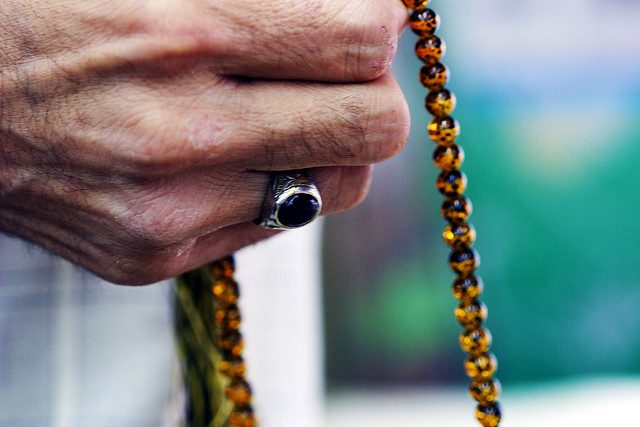
Photo Credit: Fatima.
For all good Evangelicals, myself included, Mary is the ultimate stumbling block on a journey into full Catholic communion.
This wasn’t so for the first 1,500 years of Church history.
Martin Luther one of the earliest Protestant reformers held strong and fast to Marian doctrine—even doctrine, like her perpetual virginity, which couldn’t be strongly backed up by his sola scriptura theology.
As an Evangelical convert to the Catholic Church, I didn’t have such a hard time with Mary.
Thankfully.
I was introduced, early on in my journey, to Dr. Scott Hahn’s Hail, Holy Queen
So, as an Evangelical taking baby steps towards Catholicism, I thought Mary was alright and most of what Catholics said about her sounded right too. For me, Mary was OK, but Marian devotions and rituals like the Rosary were wholly foreign and frightening.
The Rosary felt so European, like something Italian grandmothers would cling to in the back pews of dusty churches.
The Rosary felt complicated, inaccessible, and unnecessary; I didn’t speak the language, I didn’t know all the rules—I had no idea where to begin.
I knew about the Rosary largely from bits and pieces of things I’d picked up over the previous year or so of seriously reading my way into the Catholic Church. But I didn’t know a lot. I knew enough to know that the “Hail Mary” was a biblically-based prayer that asked for Mary to pray for us and acknowledged her incredible position as the bearer of the Christ child. It’s a powerful prayer and after studying and understanding it’s origins (and the theology of the Communion of the Saints) it made sense to me.
I knew that the Hail Mary made up the large part of the Rosary and I knew that somewhere in there faithful Catholics also meditated on certain “mysteries” from the life of Jesus. I didn’t know or understand what those were, or what that meant, and that was the inaccessible and complicated bit. Catholics I knew just seemed to know them and have memorized all this difficult stuff.
So, I dug deeper.
I picked up a book, a rather pedestrian text compared to Dr. Hahn’s biblical treatment, but there, tucked away in the last chapter, was a detailed explanation of the Rosary.
It turns out that the practice of the Rosary is like a complete Bible study on a necklace. When I learned this, it blew my mind.
At the heart of the Rosary are meditations on particular scenes from the gospels. This is what makes the Rosary a mini Bible study. This is what made the Rosary so popular for catechesis in the Middle Ages. There are four different sets of mysteries and the Church recommends that they’re prayed on different days of the week. Each set of mysteries—the Joyful Mysteries, the Luminous Mysteries, the Sorrowful Mysteries, and the Glorious Mysteries—contains five scenes within them for meditation.
The scenes from the Luminous Mysteries, for example, are:
- The Baptism of Jesus
- The Wedding Feast at Cana
- The Proclamation of the Kingdom of God
- The Transfiguration
- The Establishment of the Lord’s Supper
The goal of the Rosary is to meditate, prayerfully, on these scenes. As a participant in the Rosary you become a prayerful participant in these biblical scenes.
There are lots of ways this is done but here’s an example as far as I understand.
The Rosary begins with a Sign of the Cross, an ancient prayer custom which has traditionally begun prayers for thousands of years, followed by the Apostles’ Creed, one of the oldest Christian creeds in existence, the Lord’s Prayer which Jesus taught in the New Testament, and then three “Hail Mary’s”. In the Hail Mary, we call Mary blessed, like she said we would in Luke’s gospel, and acknowledge that what’s more blessed is the fruit of her womb, Jesus Christ. Then we ask Mary to pray for us.
Next, we pray the “Gloria Patri” prayer, a beautiful, ancient doxology proclaiming the power of the Trinity.
And then the Bible study begins in earnest.
If I’m praying the Luminous Mysteries I begin, for the first mystery, with the Baptism of Jesus. I announce this mystery and then pray a decade, that is ten, Hail Mary’s. What I am doing is joining my spirit, my mind, and my physical being to the baptism of Jesus in the Jordan River two thousand years ago. My goal, with the Rosary, is to meditate on that scene, while I pray, while I move the beads, and while I aspire to be like Jesus, and his mother, who said, “Yes,” to God and changed the world.
I’ve tried, and it works, and it blew my mind.
And the incredible thing about Catholic prayer, which I’d never heard of in my Protestant circles, is that I can pray with certain intentions. The Rosary is meant to work this way, too. As I begin to pray a later Luminous Mystery, maybe the fourth mystery, the Transfiguration, I can begin that decade of the Rosary with those prayers for the intention of, say, my life to be transfigured to reflect, more clearly, that of Jesus Christ. As I then go about praying ten Hail Marys, reflecting on the scene of Jesus’s glorious Transfiguration, the words I’m saying, the position of my prayerful spirit, is towards the intention of praying for transfiguration in my own life.
Each decade of the Rosary ends with the Gloria Patri. Each mystery begins again with the Lord’s Prayer.
I said it was a bit complicated, right? Well it is. But what surprised me was how quickly I could memorize all twenty mysteries, and the rotation of the prayers.
Dr. William Marshner, a Catholic convert from Lutheranism and a professor of theology, remarked in an interview that it’s easy to be overwhelmed, to be blown away, by Catholic prayer traditions. There are lots of them, from thousands of years of tradition. That’s a good thing, to be sure, but it’s overwhelming too. For the Rosary alone there are likely thousands of ways to pray and reflect on the mysteries. The way I’ve described is one way I’ve learned and when I learned it I thought, “I need to share this!” Because it’s amazing.
Yes, there is the stuff of Marian theology in the Rosary and, yes, it’s something to be overcome and, God willing, fully understood, but at it’s core I’ve learned that the Rosary is a wholly Christ-centred practice in so much as Mary, the Mother of God, always points directly to Jesus. In so much as the bulk of the Rosary, the point of its meditations, is like an incredible living Bible study. While it’s certainly true that many, maybe most, Catholics don’t know their Bible as well as evangelical Protestants do there’s deep Bible study in the Rosary.
As we ask Mary, in her special role, to pray for us. As we mediate on the seminal events in the life of Christ and His Church. As we slip the beads through our fingers and find that quiet, contemplative rhythm, we orient our whole selves and our whole lives towards the will of God and prayerful life in Jesus Christ. That sounds good to me—that sounds incredible to me—and, like learning about the Eucharist, when I learned the real deal about the Rosary it blew my mind.
This article was originally published in December 2014 on my personal blog.
Previous Post
January 7, 2016
Godparents Wanted: Apply Within
Next Post
January 21, 2016 Is Protestantism a System Designed to Fail?
Browse Our Archives
Select a Category Appearances Christian Living Explaining the Faith Podcast Tough Questions Uncategorized Why I'm Catholic
Select a Month January 2024 December 2023 November 2023 July 2023 June 2023 May 2023 April 2023 March 2023 February 2023 January 2023 December 2022 November 2022 October 2022 September 2022 August 2022 July 2022 June 2022 May 2022 April 2022 March 2022 February 2022 January 2022 December 2021 November 2021 October 2021 September 2021 August 2021 July 2021 June 2021 May 2021 April 2021 March 2021 February 2021 January 2021 December 2020 November 2020 October 2020 September 2020 August 2020 July 2020 June 2020 May 2020 April 2020 March 2020 February 2020 January 2020 December 2019 November 2019 October 2019 September 2019 August 2019 July 2019 June 2019 May 2019 April 2019 March 2019 February 2019 January 2019 December 2018 November 2018 October 2018 September 2018 August 2018 July 2018 June 2018 May 2018 April 2018 March 2018 February 2018 January 2018 December 2017 October 2017 September 2017 July 2017 May 2017 April 2017 March 2017 February 2017 January 2017 December 2016 November 2016 October 2016 September 2016 August 2016 July 2016 June 2016 May 2016 April 2016 March 2016 February 2016 January 2016 December 2015 November 2015 October 2015 September 2015 August 2015 July 2015 June 2015 May 2015 April 2015 March 2015 February 2015 January 2015 December 2014 November 2014 October 2014
Follow Us!
TAKE THE
Religious Wisdom Quiz
Which is the only book that does not mention "God"?
Select your answer to see how you score.
Lamentations Song of Solomon Esther Ezra
Support this
Column


Related posts from The Cordial Catholic

234: The Mindblowing World of Sacramentals (w/ Shaun...

229: Can Catholics and Evangelicals Agree on How...
228: The Catholic Tools for Spiritual Warfare (w/...

227: What was Medieval Catholicism Really Like? (w/...
TRENDING AT PATHEOS Catholic

Rejecting Doom: Christian Hope And Human Action
Christianity is a religion of hope. We are to have hope and...

It’s What Comes From Within Which Matters
One of the most difficult things for us to understand is why...

Why I Choose the Eucharist Over the Sermon
Choose the Eucharist, Not the Sermon What are we supposed to get...

5 Design Elements Found in Spiritually Rooted Homes
Putting Spirituality Into Home Decor Our homes are more than our living...

Credo: A Story of God Told with the...
About 10 years ago, I began to imagine a personal "Credo" that...

The Anatomy of Divine Revelation in Catholic Thought
The claim that God has made Himself known to human beings is...
view all Catholic blogs
Ad-Free & Subscriber Log-In Subscription Support
- About Us
- 2026 Calendar
- Videos
- Podcasts
- Library of World Religions
- Faith In Media Tracker
- Advertise With Us
- Write for Us
- Privacy Policy
- Terms of Service
- Do Not Sell My Data
- Contact Us
- Radiant Digital
- Manage Newsletter Subscriptions
- Unsubscribe From Notifications
- Sitemap
Copyright 2008-2026, Patheos. All rights reserved.
Subscription Support Ad-Free & Subscriber Log-In
Follow Patheos