
BuddhistCatholicContemplativeEvangelicalGeneral ChristianHinduJewishLatter-day SaintMuslimNew VisionsProgressive Christian
Beliefs
- Buddhist
- Catholic
- Contemplative
- Evangelical
- General Christian
- Hindu
- Jewish
- Latter-day Saint
- More Voices
- Muslim
- New Visions
- Pagan
- Progressive Christian
Topics
- Religion News
- Food and Religion
- Sports and Religion
- Religious Art
- Religious Music and Entertainment
- Religious Events
- History and Religion
- Style and Religion
- Politics and Religion
- Women in Religion
- Recreation Outdoors and Religion
- Business Finance and Religion
- Careers Workplace and Religion
- Education and Religion
- Family Parenting and Religion
- Health Fitness and Religion
- Home and Religion
- Relationships and Religion
- Technology and Religion
- Travel and Religion
Columnists
- Buddhist Columnists
- Business Finance and Religion Columnists
- Careers Workplace and Religion Columnists
- Catholic Columnists
- Contemplative Columnists
- Education and Religion Columnists
- Evangelists Columnists
- Family Parenting and Religion Columnists
- General Christian Columnists
- Health Fitness and Religion Columnists
- Hindu Columnists
- History and Religion Columnists
- Home and Religion Columnists
- Jewish Columnists
- More Voices Columnists
- Latter Day Columnists
- Muslim Columnists
- New Visions Columnists
- Nonreligious Columnists
- Pagan Columnists
- Politics and Religion Columnists
- Progressive Columnists
- Recreation Outdoors and Religion Columnists
- Relationships and Religion Columnists
- Religion News Columnists
- Religious Art Columnists
- Religious Events Columnists
- Religious Music and Entertainment Columnists
- Sports and Religion Columnists
- Style and Religion Columnists
- Technology and Religion Columnists
- Travel and Religion Columnists
- Women in Religion Columnists
Resource Library
- 2026 Calendar
- Library of World Religions
- The 100 Most Holy Places on Earth
- Patheos Answers
- Podcasts
- Videos
- Faith Leaders Database
- Anglican Episcopalian
- Bahai
- Baptist
- Buddhism
- Christianity
- Confucianism
- Eastern Orthodoxy
- Hinduism
- Holiness and Pentecostal
- ISKCON
- Islam
- Judaism
- Lutheran
- Methodist
- The Church of Jesus Christ of Latter-day Saints
- New Age
- Paganism
- Presbytarian and Reformed
- Protestantism
- Religion Behind the Scenes
- Roman Catholic
- Scientology
- Shia Islam
- Sikhism
- Sufism
- Sunni Islam
- Taoism
- Zen
- See all religions
Research Tools
 Ad-Free & Subscriber Log-In Subscription Support
Ad-Free & Subscriber Log-In Subscription Support
Follow Patheos 

- Trending:
- Forgiveness
- |
- Marriage
- |
- Consciousness
- |
- Death Penalty
- |
- Election
- |
- Halloween
 The Cordial Catholic
- Home
- Catholic
- The Truth is a Trap
The Truth is a Trap
Last updated on: August 3, 2015 at 4:02 pm by K. Albert Little
The Truth is a Trap 2015-08-03T16:02:31-04:00 K. Albert Little
Patheos Explore the world's faith through different perspectives on religion and spirituality! Patheos has the views of the prevalent religions and spiritualities of the world.
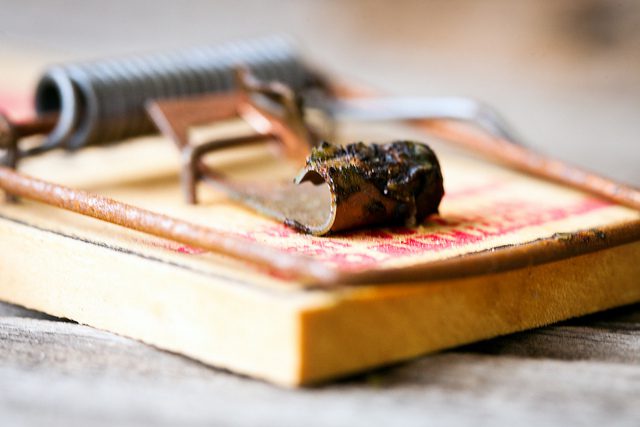
Photo Credit: George Thomas.
The truth is a trap.
I’ve recently devoured G.K. Chesterton’s The Catholic Church and Conversion. I wrote, recently, that even though I’m well on my way towards becoming Catholic his treatise on conversion seriously reframed and expanded my own understanding of my journey. It’s important, I think, to understand the narrative that you’re in—it’s brilliant when it’s so poignantly put, and that’s what Chesterton does.
Chesterton writes about the process of conversion being a three-step journey.
In the first step, a Protestant is exploring the Catholic Church. In his words, the Protestant is “being fair” to the Catholic Church. I wrote about this elsewhere. Chesterton says that this “being fair” leads to the second step, which is exploring the claims of the Catholic Church. Here Chesterton resonates, too. The final step of the journey to conversion, however, is different from the first two. Suddenly, says Chesterton, but also quite gradually, the truth begins to pursue you.
The truth, Chesterton says, is a trap but it is a trap, for the convert, that we set for ourselves.
There are times when I don’t feel very cordial, and this is one of them. Because, of course, Chesterton uses the term “truth” to mean the “fullness of truth” that is, as him and I understand it, found in the Catholic Church. This begins to tread lightly on delicate territory because the last thing I want to do is tell you, my friends and readers, that you don’t have the full truth in the expression of your faith. At the same time, that is the unabashed claim of the Catholic Church: To be the Church that Christ founded, the most full expression of the Christian faith.
It comes down, I guess, to a conversation I had with a close friend. At some point you need to draw a line and say, “This is the truth, as far as I believe it.” Drawing that line, by the very nature of the act, will make some people, other people, feel excluded.
I don’t think there’s necessarily a way around that (I’m not up for relativism).
At any rate, it isn’t too important for my point, or for Chesterton’s, that we argue about what the truth is. I don’t want to offend, so I explain.
The point is, like Chesterton, I’ve come to a place in my journey, a strange and foreign place, where the truth has begun its earnest and haphazard pursuit of me.
I can’t explain it any other way.
My friends that know me, least of all my beautiful wife, know that I’ve had an interest in Catholicism for a while. Readers of this blog, who’ve been around the past few months, or who’ve perused the archives, have learned about this too. Catholicism didn’t just fall out of the sky and knock me on the head (although that could explain a few things). I’ve been interested in Catholics for a while.
My interest turned to something more serious when I began to read about Catholicism from the perspective of Catholics themselves. My interest piqued. As I’ve written here time and again, when I began to learn about what Catholicism actually taught, not just what I thought it was all about, I found a whole new perspective. I found, like G.K. Chesterton, a beautiful, rich, vibrant faith tradition. I found something, as I’ve written elsewhere, that was historically, intellectually, and spiritually fulfilling. Something I hadn’t fully found anywhere else.
But then what I’d found turned on me. The trap sprung.
It’s a trap, Chesterton writes, that isn’t set by the pope or the priest but a trap set by ourselves. A trap that we’ve willing walked into.
And now it pursues me.
It’s a bit like going mad.
Over these last few months, I’ve been drawn up into Catholicism in ways I cannot even begin to describe. The Mass, the Liturgies, the Divine Office, Eucharistic Adoration—the prayer life of the Church. I can’t read enough fast enough. I can’t listen to enough podcasts or watch enough lectures on YouTube. And, as my long suffering wife and close friends can probably attest, I live for the opportunity to talk about this stuff.
Perhaps it’s the newness of the thing, there’s certainly some of that mixed in there, but beyond that, and in the face of some pretty crappy experiences with Catholicism so far, I’m drawn up nonetheless. It’s been pretty hard to explain apart from saying that I am now the one being pursued. The truth is after me.
There comes a point when it kind of defies logic because not everyone who reads Catholic authors and not everyone who reads my foaming-at-the-mouth descriptions of the sacraments are jumping on the papist bandwagon. Why not? If Catholicism is as compelling to everyone else as it is to me, well then we should all be Catholics. But that’s not how it works. The trap has sprung on me and my leg’s is the leg that’s half in it. That’s been difficult to learn sometimes.
Still, I wouldn’t have quite believed it if it hadn’t happened this way to me. A like another common thread that Chesterton points out in many Catholic conversion stories this one, too, is found in most. That at some point those that are seeking find. That, like me, many begin the journey interested and end up being hotly pursued. It’s an incredible and inexplicable leap to go from looking into something to being overwhelmed by it, being consumed by it, finding it blissfully inescapable.
Of course, writes Chesterton, the most difficult part is the very last bit and it’s odd to think that, in this situation, the truth is a very scary thing. The last part, Chesterton says, is giving in to the pursuit.
Previous Post

January 7, 2015
Christmas for Catholics (as a Protestant)
Next Post
January 10, 2015 Are Catholics Less Devout than Protestants?
Browse Our Archives
Select a Category Appearances Christian Living Explaining the Faith Podcast Tough Questions Uncategorized Why I'm Catholic
Select a Month January 2024 December 2023 November 2023 July 2023 June 2023 May 2023 April 2023 March 2023 February 2023 January 2023 December 2022 November 2022 October 2022 September 2022 August 2022 July 2022 June 2022 May 2022 April 2022 March 2022 February 2022 January 2022 December 2021 November 2021 October 2021 September 2021 August 2021 July 2021 June 2021 May 2021 April 2021 March 2021 February 2021 January 2021 December 2020 November 2020 October 2020 September 2020 August 2020 July 2020 June 2020 May 2020 April 2020 March 2020 February 2020 January 2020 December 2019 November 2019 October 2019 September 2019 August 2019 July 2019 June 2019 May 2019 April 2019 March 2019 February 2019 January 2019 December 2018 November 2018 October 2018 September 2018 August 2018 July 2018 June 2018 May 2018 April 2018 March 2018 February 2018 January 2018 December 2017 October 2017 September 2017 July 2017 May 2017 April 2017 March 2017 February 2017 January 2017 December 2016 November 2016 October 2016 September 2016 August 2016 July 2016 June 2016 May 2016 April 2016 March 2016 February 2016 January 2016 December 2015 November 2015 October 2015 September 2015 August 2015 July 2015 June 2015 May 2015 April 2015 March 2015 February 2015 January 2015 December 2014 November 2014 October 2014
Follow Us!
TAKE THE
Religious Wisdom Quiz
How many animals did Moses take on the Ark?
Select your answer to see how you score.
Two of each One of each Seven of each None
Support this
Column


Related posts from The Cordial Catholic

235: Questions I Couldn't Answer (w/ John Martignoni)

234: The Mindblowing World of Sacramentals (w/ Shaun...

233: The Power of Good Catholic Witnesses (w/...

232: The Trajectory of Conversion (w/ Phillip Campbell)
TRENDING AT PATHEOS Catholic

Rejecting Doom: Christian Hope And Human Action
Christianity is a religion of hope. We are to have hope and...

It’s What Comes From Within Which Matters
One of the most difficult things for us to understand is why...

Why I Choose the Eucharist Over the Sermon
Choose the Eucharist, Not the Sermon What are we supposed to get...

5 Design Elements Found in Spiritually Rooted Homes
Putting Spirituality Into Home Decor Our homes are more than our living...

Credo: A Story of God Told with the...
About 10 years ago, I began to imagine a personal "Credo" that...

The Anatomy of Divine Revelation in Catholic Thought
The claim that God has made Himself known to human beings is...
view all Catholic blogs
Ad-Free & Subscriber Log-In Subscription Support
- About Us
- 2026 Calendar
- Videos
- Podcasts
- Library of World Religions
- Faith In Media Tracker
- Advertise With Us
- Write for Us
- Privacy Policy
- Terms of Service
- Do Not Sell My Data
- Contact Us
- Radiant Digital
- Manage Newsletter Subscriptions
- Unsubscribe From Notifications
- Sitemap
Copyright 2008-2026, Patheos. All rights reserved.
Subscription Support Ad-Free & Subscriber Log-In
Follow Patheos