
BuddhistCatholicContemplativeEvangelicalGeneral ChristianHinduJewishLatter-day SaintMuslimNew VisionsProgressive Christian
Beliefs
- Buddhist
- Catholic
- Contemplative
- Evangelical
- General Christian
- Hindu
- Jewish
- Latter-day Saint
- More Voices
- Muslim
- New Visions
- Pagan
- Progressive Christian
Topics
- Religion News
- Food and Religion
- Sports and Religion
- Religious Art
- Religious Music and Entertainment
- Religious Events
- History and Religion
- Style and Religion
- Politics and Religion
- Women in Religion
- Recreation Outdoors and Religion
- Business Finance and Religion
- Careers Workplace and Religion
- Education and Religion
- Family Parenting and Religion
- Health Fitness and Religion
- Home and Religion
- Relationships and Religion
- Technology and Religion
- Travel and Religion
Columnists
- Buddhist Columnists
- Business Finance and Religion Columnists
- Careers Workplace and Religion Columnists
- Catholic Columnists
- Contemplative Columnists
- Education and Religion Columnists
- Evangelists Columnists
- Family Parenting and Religion Columnists
- General Christian Columnists
- Health Fitness and Religion Columnists
- Hindu Columnists
- History and Religion Columnists
- Home and Religion Columnists
- Jewish Columnists
- More Voices Columnists
- Latter Day Columnists
- Muslim Columnists
- New Visions Columnists
- Nonreligious Columnists
- Pagan Columnists
- Politics and Religion Columnists
- Progressive Columnists
- Recreation Outdoors and Religion Columnists
- Relationships and Religion Columnists
- Religion News Columnists
- Religious Art Columnists
- Religious Events Columnists
- Religious Music and Entertainment Columnists
- Sports and Religion Columnists
- Style and Religion Columnists
- Technology and Religion Columnists
- Travel and Religion Columnists
- Women in Religion Columnists
Resource Library
- 2026 Calendar
- Library of World Religions
- The 100 Most Holy Places on Earth
- Patheos Answers
- Podcasts
- Videos
- Faith Leaders Database
- Anglican Episcopalian
- Bahai
- Baptist
- Buddhism
- Christianity
- Confucianism
- Eastern Orthodoxy
- Hinduism
- Holiness and Pentecostal
- ISKCON
- Islam
- Judaism
- Lutheran
- Methodist
- The Church of Jesus Christ of Latter-day Saints
- New Age
- Paganism
- Presbytarian and Reformed
- Protestantism
- Religion Behind the Scenes
- Roman Catholic
- Scientology
- Shia Islam
- Sikhism
- Sufism
- Sunni Islam
- Taoism
- Zen
- See all religions
Research Tools
 Ad-Free & Subscriber Log-In Subscription Support
Ad-Free & Subscriber Log-In Subscription Support
Follow Patheos 

- Trending:
- Forgiveness
- |
- Marriage
- |
- Consciousness
- |
- Death Penalty
- |
- Election
- |
- Halloween
 The Cordial Catholic
- Home
- Catholic
- Three Things to Tell Your Evangelical Friends About Catholicism
Three Things to Tell Your Evangelical Friends About Catholicism
Last updated on: October 29, 2019 at 11:02 pm by K. Albert Little
Three Things to Tell Your Evangelical Friends About Catholicism 2019-10-29T23:02:34-04:00 K. Albert Little
Patheos Explore the world's faith through different perspectives on religion and spirituality! Patheos has the views of the prevalent religions and spiritualities of the world.
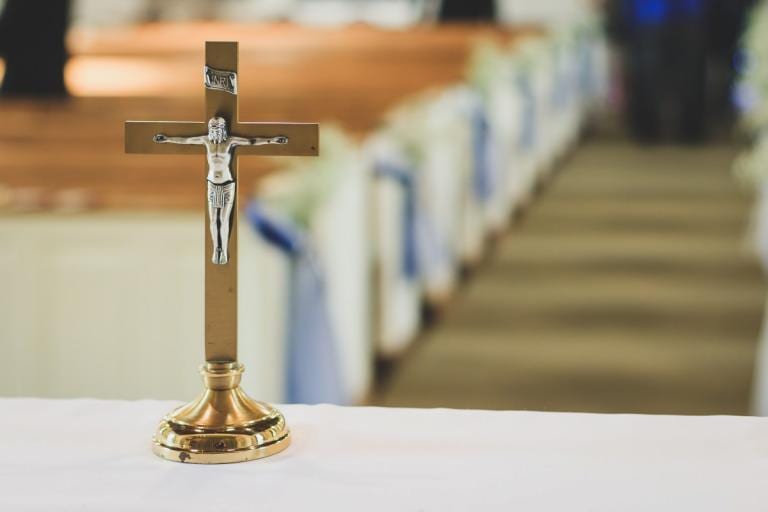
I was a very happy, mostly holy, evangelical Christian when I began to dig into the roots of my Christian faith.
It began honestly enough when the pastor of a non-denominational church I was working for asked me a question about which came first, Scripture or Tradition. I was surprised, quite frankly, when my research to try and find the answer led me to the historical development, the creation, of the biblical canon. I was surprised to learn that the Bible didn’t just fall, intact, from the sky but was compiled, collected together, by the Early Church over the course of several hundreds year.
I was shocked to learn that it was through things called church councils that these early Christians decided which books belonged in the Bible and which didn’t. I was nothing short of scandalized to learn that the people making these decisions had titles like “bishop” and traced their own authority back to the apostles appointed by Christ. I learned that this was called Apostolic Tradition and that along with this claim to authority these very early Christians who collected together the Bible also believed in infant baptism, praying to the saints, collecting and honouring relics, and that Jesus was really present in the elements of Communion—that it really was His body and blood—and they celebrated this every time they got together.
To say my mind was blown would be to put it mildly.
It was digging into the history of my Christian faith, its roots and rituals, that what felt like scales began to fall from my eyes. Other than being chief amongst the sinners I am in no way similar to the Apostle Paul but my experience here feels at least a little bit similar to his. Here I was practising a faith I thought was the complete revelation of God only to discover I’d been missing out on two thousands years of Tradition.
So, eventually, I became Catholic. And everything changed.
With all of this in mind, here are three things I think all of our evangelical friends and family should know, what I wish someone had told me, about the Catholic Church.
There’s Another Way to Read the Bible
One of the greatest difficulties I had as a non-denominational, evangelical Christian was trying to figure out my theology.
I know I’m not alone. I get e-mails and comments from non-Catholic Christians all the time expressing the same challenges; I’ve spoken to so many people who say the same thing.
So, it was the most welcome breath of fresh air to find out that the way I was trying to wrestle with the Scriptures wasn’t the only way to do it. In fact, it wasn’t even the way the authors of the New Testament ever intended.
As an evangelical Christian I was often left to my own devices when it came to understanding how to read, interpret, and practice the principles of New Testament Christianity. As anyone with any experience in the Protestant world knows there thousands of different denominations with thousands of different interpretations of what the Bible says. And, shockingly, they don’t just disagree on small issues of aesthetics or minor points of theology. We’re taking major theological concepts like how we’re saved, what baptism is, and the definition of Christian marriage.
No small potatoes.
I’d read my Bible and academics texts written by theologians and listen to my pastor on a Sunday morning and try to unpack issues in small group Bible studies but it seemed like, so many times, I would run into a wall. A wall of, “Well then how come that church over there believes something different? Are they just not reading their Bible right?”
But they could say the very same thing about us. And it wasn’t like we all weren’t trying really hard.
What I learned, as I began to understand what Catholics taught about the Bible, is that from the beginning of Christianity, the Church has taught a way of understanding the Scriptures that was radically different than mine.
Instead of each person interpreting the Bible for themselves, the Catholic Church has always taught that it should be understood in the light of Tradition, of what the Church has always taught and continues to teach, and that it can be authoritatively interpreted by this same Church. In other words, the Catholic Church traces its ancestry all the way back to when Jesus gave Peter and the apostles the authority to “bind and loose.”
This binding and loosing still applies today and on difficult, challenging matters like the sorts of things I was wrestling with as an evangelical, the Catholic Church believes it can authoritatively speak to settle them.
When I understood that it all clicked into place. Of course Jesus wouldn’t leave us to sort it all out for ourselves; any written rule needs interpretation and Jesus left a Church with the authority to interpret.
And what our evangelical friends need to know is that to those that have become burnt out, who’ve run into the same walls that I found myself kicking against, there is another way. Before you jettison the Bible and everything you’ve learned in your faith journey so far, consider this: that Christ didn’t just leave us with a Bible, he also left a Church.
Catholic Rites and Rituals Have Deep, Deep Roots
Long before I ever considered becoming Catholic, years before that evangelical pastor asked that fateful question about Scripture and Tradition, I wrote a blog article about the Catholic Mass.
Mind you, I had never actually been to a Catholic Mass. I, honestly, had no idea what even took place there but one thing that I knew for sure: It all happened for a reason.
I was, at the time, wondering exactly why my non-denominational, evangelical church structured its Sunday worship services in the way that it did. Why did we have worship music and then prayer and then a sermon, and communion once a month. I wondered what the roots of this tradition was because I couldn’t find it in the Bible. Sure, as we all know, the “breaking of bread” and the “singing of hymns” and praying together is all mentioned when the disciples get together in Acts but when did this all become codified into what my Sunday morning service looked like.
I didn’t know. I couldn’t tell. And those around me, trusted pastors and mentors, couldn’t really put words to it either. It was, so I was told, just what we’ve always done.
On the other hand there was the Mass.
The rituals, the rites, the formulaic written prayers and acclamations of the Catholic Mass, I knew even then, were deeply rooted in history. There was a purpose to every small action whether standing or sitting or kneeling. There was a reason, a root, a grounding if you will, to something deeply more.
Years later, when I began to explore the Catholic Mass and some of the traditions of Catholicism I was gobsmacked to find out how deep those roots went.
It turns out that a lot of the misconceptions and misunderstandings I had about Catholics were actually about things which had very deep traditional, biblical, and historical roots—these things were deeply grounded in very pointed purpose and intention. This stuff wasn’t invented overnight.
Practices like praying for help from Mary and the saints which, I thought, was nothing short of idolatrous, had been around since the beginning of Christianity—I learned that all Christians used to do this sort of thing. It was the same for the priesthood, Apostolic Succession, the idea of a Pope and purgatory and even, I learned, the very structure of the Catholic Mass, parts of which appear in great detail in an ancient document called the Didache dating to the time of the apostles.
To my surprise, the idea that the Catholic Church added all these weird rituals and rites to the simple Christian message of faith was wrong. It was backward. As a non-denominational evangelical my practice of the faith, much like my experience on Sunday mornings, had simply been stripped of its roots. We’d forgotten our heritage and the Church which, through its authority, had compiled and collected the books of the Bible also practiced all of these rituals and rites, too.
Rites and rituals with deep, deep roots.
You Can Consume Christ
Finally, and most shocking, was the discovery of the Catholic belief in the Real Presence.
Sadly, I can no longer pinpoint the exact time or place or means by which I first came to realize what the Catholic Church taught about the Eucharist but I know it completely shock my world. To think, as Catholics do, that when we consume the communion elements we are really and truly consuming Christ is an absolute scandal. A scandal, in fact, which caused persecutors of the Early Church to condemn Christians as “cannibals.”
Yes, that Early Church.
Because the most shocking discovery out of everything I learned as I began to dig into the roots of Christianity, was that even the very first Christians believe that Jesus was really and truly present in the elements of communion.
Today, the Catholic Church refers to this understanding as transubstantiation which means that the bread and wine become Jesus in everything but their appearance. As Catholics we consume Christ, “body, soul, blood, and divinity” under a kind of miracle that joins us to Jesus’ Last Supper and death on the cross. A kind of cosmic, time-bending experience that re-presents Christ crucified for our sins.
In short, we consume Christ to become more like Christ and receive God’s grace.
You can imagine my surprise, as a non-denominational, evangelical Christian to discover a closeness with God that I could never imagine.
For me, it was nothing short of a re-definition of my faith. God did not come, dwell among us, die and return to Heaven. He didn’t just send the Holy Spirit to dwell in and amongst us as a kind of spiritual conselor and consoler. He also established a new covenant which, as we celebrate it every week, is an actual giving of himself and a taking into ourselves, a partaking in a small way of the beautiful mystery of the life of God.
Bit by bit conforming us to be more like Christ.
And this is what the Church believed from the beginning, what was taught by the apostles, we know, because we have documents written by those they taught. What was practiced, we know, because we have records of their practice. And what, as a non-denominational evangelical Christian, I simply had to be a part of: a closeness to Christ I could never, ever have imagined.
A story which must be real, because you can’t make this stuff up.
In the end, there are lousy Catholics, this you need to know. As an evangelical with a faith on fire and a deep love for the Scriptures I considered many Catholics that I met to hardly be Christians at all. This was often discouraging in my journey. There is, to be sure, a kind of cultural Catholicism which also has deep roots but this doesn’t mean, for a second, that the faith is not alive, vibrant, and utterly soaked in the grace of God.
Believe me, it is, and as someone who has been there and, now, is somewhere so different I hope that these three things can help shed some light because if there’s anything I know for sure it’s that once those scales began to fall from my eyes, once I understood what the Catholic Church really taught and really believed, well, like Peter said, “Where else can I go, Lord?”
Previous Post
October 27, 2019
Did the Gospel Writers Get Facts Right But Their Stories Wrong?
Next Post
October 30, 2019 031: Was the Early Church the Catholic Church? (w/ Mike Aquilina)
Browse Our Archives
Select a Category Appearances Christian Living Explaining the Faith Podcast Tough Questions Uncategorized Why I'm Catholic
Select a Month January 2024 December 2023 November 2023 July 2023 June 2023 May 2023 April 2023 March 2023 February 2023 January 2023 December 2022 November 2022 October 2022 September 2022 August 2022 July 2022 June 2022 May 2022 April 2022 March 2022 February 2022 January 2022 December 2021 November 2021 October 2021 September 2021 August 2021 July 2021 June 2021 May 2021 April 2021 March 2021 February 2021 January 2021 December 2020 November 2020 October 2020 September 2020 August 2020 July 2020 June 2020 May 2020 April 2020 March 2020 February 2020 January 2020 December 2019 November 2019 October 2019 September 2019 August 2019 July 2019 June 2019 May 2019 April 2019 March 2019 February 2019 January 2019 December 2018 November 2018 October 2018 September 2018 August 2018 July 2018 June 2018 May 2018 April 2018 March 2018 February 2018 January 2018 December 2017 October 2017 September 2017 July 2017 May 2017 April 2017 March 2017 February 2017 January 2017 December 2016 November 2016 October 2016 September 2016 August 2016 July 2016 June 2016 May 2016 April 2016 March 2016 February 2016 January 2016 December 2015 November 2015 October 2015 September 2015 August 2015 July 2015 June 2015 May 2015 April 2015 March 2015 February 2015 January 2015 December 2014 November 2014 October 2014
Follow Us!
TAKE THE
Religious Wisdom Quiz
Who gave birth to Moses?
Select your answer to see how you score.
Merab Jochebed Keturah Orpah
Support this
Column


Related posts from The Cordial Catholic

235: Questions I Couldn't Answer (w/ John Martignoni)

234: The Mindblowing World of Sacramentals (w/ Shaun...

233: The Power of Good Catholic Witnesses (w/...

232: The Trajectory of Conversion (w/ Phillip Campbell)
TRENDING AT PATHEOS Catholic

Rejecting Doom: Christian Hope And Human Action
Christianity is a religion of hope. We are to have hope and...

It’s What Comes From Within Which Matters
One of the most difficult things for us to understand is why...

Why I Choose the Eucharist Over the Sermon
Choose the Eucharist, Not the Sermon What are we supposed to get...

5 Design Elements Found in Spiritually Rooted Homes
Putting Spirituality Into Home Decor Our homes are more than our living...

Credo: A Story of God Told with the...
About 10 years ago, I began to imagine a personal "Credo" that...

The Anatomy of Divine Revelation in Catholic Thought
The claim that God has made Himself known to human beings is...
view all Catholic blogs
Ad-Free & Subscriber Log-In Subscription Support
- About Us
- 2026 Calendar
- Videos
- Podcasts
- Library of World Religions
- Faith In Media Tracker
- Advertise With Us
- Write for Us
- Privacy Policy
- Terms of Service
- Do Not Sell My Data
- Contact Us
- Radiant Digital
- Manage Newsletter Subscriptions
- Unsubscribe From Notifications
- Sitemap
Copyright 2008-2026, Patheos. All rights reserved.
Subscription Support Ad-Free & Subscriber Log-In
Follow Patheos