
BuddhistCatholicContemplativeEvangelicalGeneral ChristianHinduJewishLatter-day SaintMuslimNew VisionsProgressive Christian
Beliefs
- Buddhist
- Catholic
- Contemplative
- Evangelical
- General Christian
- Hindu
- Jewish
- Latter-day Saint
- More Voices
- Muslim
- New Visions
- Pagan
- Progressive Christian
Topics
- Religion News
- Food and Religion
- Sports and Religion
- Religious Art
- Religious Music and Entertainment
- Religious Events
- History and Religion
- Style and Religion
- Politics and Religion
- Women in Religion
- Recreation Outdoors and Religion
- Business Finance and Religion
- Careers Workplace and Religion
- Education and Religion
- Family Parenting and Religion
- Health Fitness and Religion
- Home and Religion
- Relationships and Religion
- Technology and Religion
- Travel and Religion
Columnists
- Buddhist Columnists
- Business Finance and Religion Columnists
- Careers Workplace and Religion Columnists
- Catholic Columnists
- Contemplative Columnists
- Education and Religion Columnists
- Evangelists Columnists
- Family Parenting and Religion Columnists
- General Christian Columnists
- Health Fitness and Religion Columnists
- Hindu Columnists
- History and Religion Columnists
- Home and Religion Columnists
- Jewish Columnists
- More Voices Columnists
- Latter Day Columnists
- Muslim Columnists
- New Visions Columnists
- Nonreligious Columnists
- Pagan Columnists
- Politics and Religion Columnists
- Progressive Columnists
- Recreation Outdoors and Religion Columnists
- Relationships and Religion Columnists
- Religion News Columnists
- Religious Art Columnists
- Religious Events Columnists
- Religious Music and Entertainment Columnists
- Sports and Religion Columnists
- Style and Religion Columnists
- Technology and Religion Columnists
- Travel and Religion Columnists
- Women in Religion Columnists
Resource Library
- 2026 Calendar
- Library of World Religions
- The 100 Most Holy Places on Earth
- Patheos Answers
- Podcasts
- Videos
- Faith Leaders Database
- Anglican Episcopalian
- Bahai
- Baptist
- Buddhism
- Christianity
- Confucianism
- Eastern Orthodoxy
- Hinduism
- Holiness and Pentecostal
- ISKCON
- Islam
- Judaism
- Lutheran
- Methodist
- The Church of Jesus Christ of Latter-day Saints
- New Age
- Paganism
- Presbytarian and Reformed
- Protestantism
- Religion Behind the Scenes
- Roman Catholic
- Scientology
- Shia Islam
- Sikhism
- Sufism
- Sunni Islam
- Taoism
- Zen
- See all religions
Research Tools
 Ad-Free & Subscriber Log-In Subscription Support
Ad-Free & Subscriber Log-In Subscription Support
Follow Patheos 

- Trending:
- Forgiveness
- |
- Marriage
- |
- Consciousness
- |
- Death Penalty
- |
- Election
- |
- Halloween
 The Cordial Catholic
- Home
- Catholic
- There Was Something Wrong With How I Read My Bible
There Was Something Wrong With How I Read My Bible
Last updated on: May 1, 2018 at 10:26 pm by K. Albert Little
There Was Something Wrong With How I Read My Bible 2018-05-01T22:26:15-04:00 K. Albert Little
Patheos Explore the world's faith through different perspectives on religion and spirituality! Patheos has the views of the prevalent religions and spiritualities of the world.
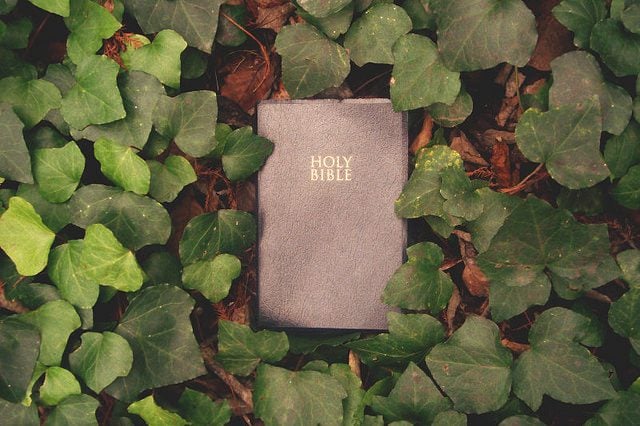
Photo Credit: Adrian V. Floyd (flickr)
As a result of my writing, I end up getting a lot of e-mails and comments from people on all different kinds of journeys. Some are from people journeying into faith; some are from people journeying out of faith. Some e-mails and comments are from people who feel hoodwinked by a faith they grew up with and can no longer believe in.
I get all sorts.
Recently, I was in a discussion with someone decidedly on their way out of a faith tradition.
“I’m losing faith,” the e-mail began. “How can I possibly understand the Bible when there are so many different Christians all interpreting it in different ways? How do we reconcile all these differences with the idea of one holy and omnipotent God?”
“If there’s any objective truth,” they continued, “God must’ve meant the Bible to be interpreted a certain way. Right?”
I poured a great big mug of coffee, set my shoulders, and began to write back.
“Of course you’re losing your faith,” I typed. “Isn’t that the natural result of a system like you describe?”
I knew, because I’d been there too. The problem my Internet friend was describing began with a system which allows for the individual interpretation of Scripture. A system which valued the Bible as the highest authority on what we’re supposed to believe, and then left us as the ones charged with figuring out exactly what it said. This is the modern, non-denominational faith landscape—a sort of hyper-charged Sola Scriptura free-for-all.
Sola Scriptura is the Protestant idea that the Bible should be the sole rule of faith and it was taught, during the Protestant Reformation, by Reformers who saw the Catholic Church and her teachings as essentially corrupt. That the Bible should be the sole measure by which our faith is understood is a nominally sensible idea but today’s non-denominational Christian milieu has taken it far too far. What the Protestant Reformers believed should be interpretation of the Bible as carried out in communities has fractured, has corrupted, and has come to mean interpretation of the Bible by ourselves.
In other words, not at all what the Reformers intended at all.
“The system,” I wrote, “simply can’t function like this.”
After all, if each and every one of us tries to interpret what particular passages of Scripture mean—hard, challenging teachings like what Jesus says about marriage, adultery, or fitting a camel through the needle’s eye—we all often end up with wildly different ideas.
A simple survey of the non-denominational, Evangelical beliefscape reveals this to be the case. On issues like marriage, homosexuality, salvation, sin, baptism, and economics beliefs from Christian to Christian differ enormously.
On Monday, I might meet a Baptist who says that marriage is between one woman and one man and that only those chosen by God, from the beginning of time, can get to Heaven. On Tuesday, I meet an Episcopalian who says that marriage is open to whomever and that Heaven is probably just a human construct to explain what happens when we die. And, meh.
How is this possible, if we’re all reading the same Book?
“Ultimately,” I wrote in reply, “there was something wrong with how I read my Bible.”
And as a non-denominational Evangelical Christian I hit a wall. Is this really what God intended, I thought. Are we really all meant to read our Bibles in isolation? To develop our belief systems based on how we interpret what we read? Can this ever produce unity?
And when Jesus Christ prayed for Christian unity in his last recorded prayer on earth, he must’ve known that a system where each of us interprets his words for ourselves would never fly—would never produce any kind of sensible unity—if he really was who he said he was. Right?
And, besides, if this was the normative way of interpreting Scripture what about the elephant in the room: The first 1,500 years of Christianity in which the Church served as the ultimate source for understanding our faith?
In which the Church taught that it was the final arbiter of Scriptural understanding. Because, remember, people couldn’t read.
In the end, my struggle led me back into that same Church which held the keys for the first 1,500 years because that’s what made sense to me. What didn’t make sense is the framework in which my e-mail buddy found, and then lost, his faith. A system which tries to interpret the Bible for each and their own. Or, in the best case, for each and their own little community. In either case, there are millions of others trying to do the same thing—and reaching different conclusions. It just doesn’t make sense.
“Instead,” I said, “I’d rather be on the side of history.”
To dip my toes into the stream that’s been flowing since the beginning of Christianity. A stream which flows from the Seat of Peter, through historical succession of apostles, through an authoritative teaching body which says, “This is how we understand this because Christ gave us the power to bind and loose.”
“That makes sense to me,” I said.
I told my friend all of this, of course, and I left it at that. I never did hear back but, hey, I don’t always. It’s the Internet.
And, who knows, maybe I will someday. In my own faith journey so many little seeds were planted along the way by people who figured I’d never see the light of day—never come around to their point-of-view—and, here I am. Maybe for my Internet friend out of faith will someday be into another. Because while I do think that the logical conclusion of a broken system might just as well be a broken faith the logic of the 2,000 year old seamless system called Catholicism is pretty compelling, too.
Previous Post

April 27, 2018
Evangelicals, the Ancient Church, and the Liturgy as a Love Song
Next Post
May 9, 2018 So You're Invited to Mass: Four Things To Know and Share
Browse Our Archives
Select a Category Appearances Christian Living Explaining the Faith Podcast Tough Questions Uncategorized Why I'm Catholic
Select a Month January 2024 December 2023 November 2023 July 2023 June 2023 May 2023 April 2023 March 2023 February 2023 January 2023 December 2022 November 2022 October 2022 September 2022 August 2022 July 2022 June 2022 May 2022 April 2022 March 2022 February 2022 January 2022 December 2021 November 2021 October 2021 September 2021 August 2021 July 2021 June 2021 May 2021 April 2021 March 2021 February 2021 January 2021 December 2020 November 2020 October 2020 September 2020 August 2020 July 2020 June 2020 May 2020 April 2020 March 2020 February 2020 January 2020 December 2019 November 2019 October 2019 September 2019 August 2019 July 2019 June 2019 May 2019 April 2019 March 2019 February 2019 January 2019 December 2018 November 2018 October 2018 September 2018 August 2018 July 2018 June 2018 May 2018 April 2018 March 2018 February 2018 January 2018 December 2017 October 2017 September 2017 July 2017 May 2017 April 2017 March 2017 February 2017 January 2017 December 2016 November 2016 October 2016 September 2016 August 2016 July 2016 June 2016 May 2016 April 2016 March 2016 February 2016 January 2016 December 2015 November 2015 October 2015 September 2015 August 2015 July 2015 June 2015 May 2015 April 2015 March 2015 February 2015 January 2015 December 2014 November 2014 October 2014
Follow Us!
TAKE THE
Religious Wisdom Quiz
What is the main Christian church in Greece?
Select your answer to see how you score.
Pentecostal Lutheran Greek Orthodox Catholic
Support this
Column


Related posts from The Cordial Catholic

235: Questions I Couldn't Answer (w/ John Martignoni)

234: The Mindblowing World of Sacramentals (w/ Shaun...

233: The Power of Good Catholic Witnesses (w/...

232: The Trajectory of Conversion (w/ Phillip Campbell)
TRENDING AT PATHEOS Catholic

Rejecting Doom: Christian Hope And Human Action
Christianity is a religion of hope. We are to have hope and...

It’s What Comes From Within Which Matters
One of the most difficult things for us to understand is why...

Why I Choose the Eucharist Over the Sermon
Choose the Eucharist, Not the Sermon What are we supposed to get...

5 Design Elements Found in Spiritually Rooted Homes
Putting Spirituality Into Home Decor Our homes are more than our living...

Credo: A Story of God Told with the...
About 10 years ago, I began to imagine a personal "Credo" that...

The Anatomy of Divine Revelation in Catholic Thought
The claim that God has made Himself known to human beings is...
view all Catholic blogs
Ad-Free & Subscriber Log-In Subscription Support
- About Us
- 2026 Calendar
- Videos
- Podcasts
- Library of World Religions
- Faith In Media Tracker
- Advertise With Us
- Write for Us
- Privacy Policy
- Terms of Service
- Do Not Sell My Data
- Contact Us
- Radiant Digital
- Manage Newsletter Subscriptions
- Unsubscribe From Notifications
- Sitemap
Copyright 2008-2026, Patheos. All rights reserved.
Subscription Support Ad-Free & Subscriber Log-In
Follow Patheos