
BuddhistCatholicContemplativeEvangelicalGeneral ChristianHinduJewishLatter-day SaintMuslimNew VisionsProgressive Christian
Beliefs
- Buddhist
- Catholic
- Contemplative
- Evangelical
- General Christian
- Hindu
- Jewish
- Latter-day Saint
- More Voices
- Muslim
- New Visions
- Pagan
- Progressive Christian
Topics
- Religion News
- Food and Religion
- Sports and Religion
- Religious Art
- Religious Music and Entertainment
- Religious Events
- History and Religion
- Style and Religion
- Politics and Religion
- Women in Religion
- Recreation Outdoors and Religion
- Business Finance and Religion
- Careers Workplace and Religion
- Education and Religion
- Family Parenting and Religion
- Health Fitness and Religion
- Home and Religion
- Relationships and Religion
- Technology and Religion
- Travel and Religion
Columnists
- Buddhist Columnists
- Business Finance and Religion Columnists
- Careers Workplace and Religion Columnists
- Catholic Columnists
- Contemplative Columnists
- Education and Religion Columnists
- Evangelists Columnists
- Family Parenting and Religion Columnists
- General Christian Columnists
- Health Fitness and Religion Columnists
- Hindu Columnists
- History and Religion Columnists
- Home and Religion Columnists
- Jewish Columnists
- More Voices Columnists
- Latter Day Columnists
- Muslim Columnists
- New Visions Columnists
- Nonreligious Columnists
- Pagan Columnists
- Politics and Religion Columnists
- Progressive Columnists
- Recreation Outdoors and Religion Columnists
- Relationships and Religion Columnists
- Religion News Columnists
- Religious Art Columnists
- Religious Events Columnists
- Religious Music and Entertainment Columnists
- Sports and Religion Columnists
- Style and Religion Columnists
- Technology and Religion Columnists
- Travel and Religion Columnists
- Women in Religion Columnists
Resource Library
- 2026 Calendar
- Library of World Religions
- The 100 Most Holy Places on Earth
- Patheos Answers
- Podcasts
- Videos
- Faith Leaders Database
- Anglican Episcopalian
- Bahai
- Baptist
- Buddhism
- Christianity
- Confucianism
- Eastern Orthodoxy
- Hinduism
- Holiness and Pentecostal
- ISKCON
- Islam
- Judaism
- Lutheran
- Methodist
- The Church of Jesus Christ of Latter-day Saints
- New Age
- Paganism
- Presbytarian and Reformed
- Protestantism
- Religion Behind the Scenes
- Roman Catholic
- Scientology
- Shia Islam
- Sikhism
- Sufism
- Sunni Islam
- Taoism
- Zen
- See all religions
Research Tools
 Ad-Free & Subscriber Log-In Subscription Support
Ad-Free & Subscriber Log-In Subscription Support
Follow Patheos 

- Trending:
- Forgiveness
- |
- Marriage
- |
- Consciousness
- |
- Death Penalty
- |
- Election
- |
- Halloween
 The Cordial Catholic
- Home
- Catholic
- The Search for Truth: Thoughts on Rachel Held Evans
The Search for Truth: Thoughts on Rachel Held Evans
Last updated on: August 3, 2015 at 3:59 pm by K. Albert Little
The Search for Truth: Thoughts on Rachel Held Evans 2015-08-03T15:59:34-04:00 K. Albert Little
Patheos Explore the world's faith through different perspectives on religion and spirituality! Patheos has the views of the prevalent religions and spiritualities of the world.
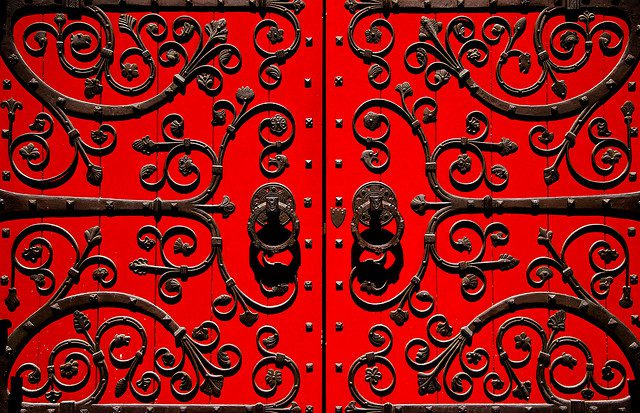
Photo Credit: A. Strakey.
I do not know Rachel Held Evans apart from the fact that she wrote A Year Of Biblical Womanhood
The article, which appeared in the Religion News Service, is an interview with Held Evans about her new book which, I gather, chronicles her departure from evangelicalism and her decision to join the Episcopalian (Anglican) church and it’s been reposted by my friends from all across the Christian spectrum.
So I was naturally intrigued. Because I’ve kind of been there.
The search for truth in evangelicalism is a challenging one. I’ve written, at length, about my own journey from evangelicalism toward Catholicism. This has been my struggle. How, if each person ends up being their own interpreter of the Bible, you end up with an awful lot of interpretations. Which one is correct? Which one is the most truthful? Without becoming a biblical scholar and pouring over the history of interpretation—and learning the ancient languages—how can I ever expect to know which of the fifty shades of Christianity is true?
I’m with Rachel Held Evans on this one. I have one foot out the door of evangelicalism and the other already entering that Catholic Church. I’ve come through the root of which truth is, to quote Stephen Colbert, the most truthy.
But this doesn’t seem to be Rachel Held Evans’s journey. And this doesn’t seem to be the journey for most evangelicals. When we look for the truth, what we really mean is, we look for which truth fits us best.
It’s my contention, instead, that Rachel Held Evans hasn’t ceased to be an evangelical which her decision to become an Episcopalian. Based on her interview, her decision is rather one of the most fundamentally evangelical ones. To find a faith of best fit.
Rachel Held Evans acknowledges that young evangelicals—and I can relate—are searching for a “truer Christianity” but by a “truer” Christianity she seems to mean, “A Christianity that better fits my idea of the truth.” And that’s a fundamentally evangelical orientation.
Held Evans says,
“I felt drawn to the Episcopal church because it offered some practices I felt were missing in my evangelical experience, like space for silence and reflection, a focus on Christ’s presence at the communion table as the climax and center of every worship service, opportunities for women in leadership, and the inclusion of LGBT people.”
Note what’s missing from the evangelical search for the truth: an honest search for the truth.
Because Held Evans explains her draw to the Episcopal church, and it wasn’t because she found it historically closer to the ancient church or more dogmatically in line with the traditions and creeds. Instead, she’s drawn to things like “space for silence and reflection,” the centrality of Communion, and “the inclusion of LGBT people.”
These are not poor reasons to join a church but these are, fundamentally, evangelical reasons. In other words, the Episcopal church is more in line with what Rachel Held Evans sees as true Christianity, and Christian values, and that is why she’s making the shift. Not, importantly, that she’s found more orthodox teaching or more objective truth.
It’s not my intention, in the least, to detract from Held Evans’s journey, experience, or theology. The mission of this blog is to cordially explain my own decision to make the move from an experience of evangelicalism to Catholicism. But what I saw in this interview were intriguing echoes of my own journey, and a kind of conclusion, in her journey, which is juxtaposed to mine.
The evangelical search for truth, in my experience, ultimately ends up in a “better fit” solution. In other words, in finding a church that fits me and my picture of Jesus more accurately. But we’ve got it all backwards. Our journey needs to be oriented not inwards, to our own needs, but outward, to the character of God. To God’s truth. We need to recognize the journey isn’t about finding a worship style or service that’s most edifying but by finding a church that’s the most true. And that takes work—beyond feeling “drawn”. That takes the work of looking at history, the Bible and early church fathers, and that frightening t-word, tradition.
And it doesn’t necessarily mean, in the end, finding a faith expression that does best fit. It might mean adjusting our own thinking and realizing—as shocking as it is—that it isn’t all about us.
I’m not suggesting that Rachel Held Evans’s journey is not authentic, and I’m not suggesting that the truth a person is seeking can’t be found in the Anglican Communion. Those are the last two things I would hope that a reader would take away from this article. I would love to create a rich, honest dialogue. What I am suggesting, and I do it as cordially as possible, is that her journey, like many of ours, is backward. Until we recognize that there is, indeed, an objective, measurable truth we’re looking the wrong way around. Our journey to find an honest expression of our faith can’t put ourselves first—it must be an eyes-wide-open search for the God’s honest truth, wherever that takes us.
Previous Post
March 6, 2015
Why Are Demons So Afraid of Mary?
Next Post

March 14, 2015 Why Creflo Dollar Made Me a Catholic
Browse Our Archives
Select a Category Appearances Christian Living Explaining the Faith Podcast Tough Questions Uncategorized Why I'm Catholic
Select a Month January 2024 December 2023 November 2023 July 2023 June 2023 May 2023 April 2023 March 2023 February 2023 January 2023 December 2022 November 2022 October 2022 September 2022 August 2022 July 2022 June 2022 May 2022 April 2022 March 2022 February 2022 January 2022 December 2021 November 2021 October 2021 September 2021 August 2021 July 2021 June 2021 May 2021 April 2021 March 2021 February 2021 January 2021 December 2020 November 2020 October 2020 September 2020 August 2020 July 2020 June 2020 May 2020 April 2020 March 2020 February 2020 January 2020 December 2019 November 2019 October 2019 September 2019 August 2019 July 2019 June 2019 May 2019 April 2019 March 2019 February 2019 January 2019 December 2018 November 2018 October 2018 September 2018 August 2018 July 2018 June 2018 May 2018 April 2018 March 2018 February 2018 January 2018 December 2017 October 2017 September 2017 July 2017 May 2017 April 2017 March 2017 February 2017 January 2017 December 2016 November 2016 October 2016 September 2016 August 2016 July 2016 June 2016 May 2016 April 2016 March 2016 February 2016 January 2016 December 2015 November 2015 October 2015 September 2015 August 2015 July 2015 June 2015 May 2015 April 2015 March 2015 February 2015 January 2015 December 2014 November 2014 October 2014
Follow Us!
TAKE THE
Religious Wisdom Quiz
What does "Emmanuel" mean?
Select your answer to see how you score.
God is Righteous God is Judge God is Peace God with Us
Support this
Column


Related posts from The Cordial Catholic
210: I Was Going to be an Anglican...
207: I Never Thought We'd Ever Become Catholic...
198: Why We Left Catholicism – and Why...
195: My Husband Was an Anglican Priest –...
TRENDING AT PATHEOS Catholic

Rejecting Doom: Christian Hope And Human Action
Christianity is a religion of hope. We are to have hope and...

It’s What Comes From Within Which Matters
One of the most difficult things for us to understand is why...

Why I Choose the Eucharist Over the Sermon
Choose the Eucharist, Not the Sermon What are we supposed to get...

5 Design Elements Found in Spiritually Rooted Homes
Putting Spirituality Into Home Decor Our homes are more than our living...

Credo: A Story of God Told with the...
About 10 years ago, I began to imagine a personal "Credo" that...

The Anatomy of Divine Revelation in Catholic Thought
The claim that God has made Himself known to human beings is...
view all Catholic blogs
Ad-Free & Subscriber Log-In Subscription Support
- About Us
- 2026 Calendar
- Videos
- Podcasts
- Library of World Religions
- Faith In Media Tracker
- Advertise With Us
- Write for Us
- Privacy Policy
- Terms of Service
- Do Not Sell My Data
- Contact Us
- Radiant Digital
- Manage Newsletter Subscriptions
- Unsubscribe From Notifications
- Sitemap
Copyright 2008-2026, Patheos. All rights reserved.
Subscription Support Ad-Free & Subscriber Log-In
Follow Patheos