
BuddhistCatholicContemplativeEvangelicalGeneral ChristianHinduJewishLatter-day SaintMuslimNew VisionsProgressive Christian
Beliefs
- Buddhist
- Catholic
- Contemplative
- Evangelical
- General Christian
- Hindu
- Jewish
- Latter-day Saint
- More Voices
- Muslim
- New Visions
- Pagan
- Progressive Christian
Topics
- Religion News
- Food and Religion
- Sports and Religion
- Religious Art
- Religious Music and Entertainment
- Religious Events
- History and Religion
- Style and Religion
- Politics and Religion
- Women in Religion
- Recreation Outdoors and Religion
- Business Finance and Religion
- Careers Workplace and Religion
- Education and Religion
- Family Parenting and Religion
- Health Fitness and Religion
- Home and Religion
- Relationships and Religion
- Technology and Religion
- Travel and Religion
Columnists
- Buddhist Columnists
- Business Finance and Religion Columnists
- Careers Workplace and Religion Columnists
- Catholic Columnists
- Contemplative Columnists
- Education and Religion Columnists
- Evangelists Columnists
- Family Parenting and Religion Columnists
- General Christian Columnists
- Health Fitness and Religion Columnists
- Hindu Columnists
- History and Religion Columnists
- Home and Religion Columnists
- Jewish Columnists
- More Voices Columnists
- Latter Day Columnists
- Muslim Columnists
- New Visions Columnists
- Nonreligious Columnists
- Pagan Columnists
- Politics and Religion Columnists
- Progressive Columnists
- Recreation Outdoors and Religion Columnists
- Relationships and Religion Columnists
- Religion News Columnists
- Religious Art Columnists
- Religious Events Columnists
- Religious Music and Entertainment Columnists
- Sports and Religion Columnists
- Style and Religion Columnists
- Technology and Religion Columnists
- Travel and Religion Columnists
- Women in Religion Columnists
Resource Library
- 2026 Calendar
- Library of World Religions
- The 100 Most Holy Places on Earth
- Patheos Answers
- Podcasts
- Videos
- Faith Leaders Database
- Anglican Episcopalian
- Bahai
- Baptist
- Buddhism
- Christianity
- Confucianism
- Eastern Orthodoxy
- Hinduism
- Holiness and Pentecostal
- ISKCON
- Islam
- Judaism
- Lutheran
- Methodist
- The Church of Jesus Christ of Latter-day Saints
- New Age
- Paganism
- Presbytarian and Reformed
- Protestantism
- Religion Behind the Scenes
- Roman Catholic
- Scientology
- Shia Islam
- Sikhism
- Sufism
- Sunni Islam
- Taoism
- Zen
- See all religions
Research Tools
 Ad-Free & Subscriber Log-In Subscription Support
Ad-Free & Subscriber Log-In Subscription Support
Follow Patheos 

- Trending:
- Forgiveness
- |
- Marriage
- |
- Consciousness
- |
- Death Penalty
- |
- Election
- |
- Halloween
 The Cordial Catholic
- Home
- Catholic
- How Catholics and Protestants Read Their Bibles (and Misconceptions Explained!)
How Catholics and Protestants Read Their Bibles (and Misconceptions Explained!)
Last updated on: August 3, 2015 at 3:59 pm by K. Albert Little
How Catholics and Protestants Read Their Bibles (and Misconceptions Explained!) 2015-08-03T15:59:28-04:00 K. Albert Little
Patheos Explore the world's faith through different perspectives on religion and spirituality! Patheos has the views of the prevalent religions and spiritualities of the world.
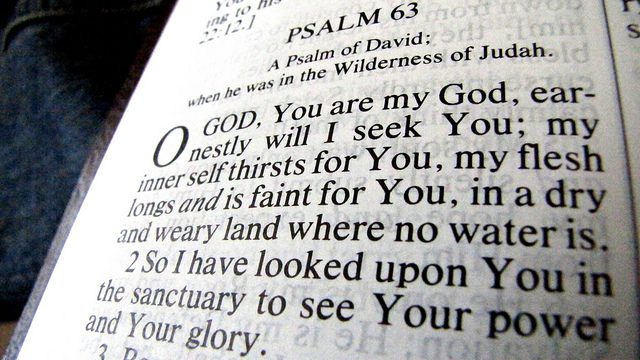
Photo Credit: Savio Sebastian.
As an Evangelical Protestant I had a lot of misconceptions about the Catholic Church. I’ve written about that before. One of these misconceptions—and a rather popular one—was that Catholics didn’t know their Bibles. They didn’t read their Bibles, at least not like we evangelicals did, and they certainly couldn’t support any of their superstitious beliefs and rituals using Holy Scripture.
As it turns out, I was mostly wrong. Mostly.
Catholics Hear A Lot of Scripture
Amazingly, Catholics are exposed to a lot of Scripture.
I remember Scott Hahn, famous Catholic convert, making the same observation after his first experience of a Mass. I’ve found the same thing, too. The Mass is utterly soaked in Scripture, more Scripture than I ever would’ve heard in all my different flavours of Evangelical Protestantism.
I recently heard an incredible fact. If a Catholic were to attend Daily Mass—something I highly recommend from experience—they would hear almost the entire Bible in a three-year period.
Almost the entire Bible.
Catholics hear a ton of Scripture.
As I’ve been attending Daily Mass lately, in the season of Easter, I’ve heard almost the entire book of Acts read section by section each morning. It’s been incredible and it shatters the myth that Catholics don’t read their Bibles. They do. Or, rather, the Church reads them the Bible.
It’s kind of amazing to think, really, but the Church is reading me the Bible. And it’s purposeful too. Readings line up, beautifully, with a Liturgical Calendar that spells out the whole year, the whole life of Christ, in a myriad of feasts and solemnities and special days of reflection. It’s a beautiful rhythm, and at its core is an expression of the Holy Scriptures.
But, in so far as the Church reads me the Bible, I need to read it for myself too and this seems to be a largely lost art in Catholic circles.
Why the Catholic Church ‘Suppressed’ the Bible
The idea that the Catholic Church has, over the course of history, suppressed the study of the Bible is a patently untrue assertion. Or, in the least, highly misunderstood.
At the heart of the Protestant Reformation was the notion that increasingly enlightened common folk ought to have access to the Holy Scriptures for themselves. This belief was pioneered, chiefly, by Martin Luther. Himself a Monk who struggled mightily with his own personal defects. Nonetheless, Luther championed the right for ordinary individuals to have their own Bibles. With his own unique interpretations of several aspects of Christian doctrine, Luther believed that a plain sense reading of Scripture would lead other Christians out of the heretical Catholic Church and into his own version of Reformed Christianity—the Lutheran Church.
But quickly Luther realized his mistake and, indeed, regretted the wide distribution of the Holy Scriptures in the vernacular (German, in Luther’s case) for precisely the same reasons that the Catholic Church had, wisely, not encouraged personal Scripture reading for the laity (that is, for people who aren’t priests, monks, or nuns).
The reason is simple: Common people couldn’t understand it.
While it might be incredibly difficult to believe in our modern age when most of us, in the developed world, can read and write and understand complex situations and scenarios but this was not so in the Medieval world. Not before and not, for a long time, afterwards. What Luther did, and what he immediately regretted, was to give the common people a fully-loaded weapon without the proper training on how to use it.
In the end, when he was the proliferation of denominations and the ruin he’d caused amongst Medieval Christianity, Luther largely regretted putting the Bible into the hands of common Christians. Without the help of the Church and Her educated priests and lay teachers, the Bible was extremely difficult to understand for the Medieval Christian. The Church, I would argue, was extremely wise in its decision not to withhold the Bible but to put it in its proper place—and offer sound interpretation and doctrine, to avoid confusion and schism.
Why We Must Read our Bibles
But the myth that Catholics don’t read their Bibles persists and, in a sense, it’s true.
Catholics have a great deal of the Bible read to them; more Bible than I’ve ever experienced in an Evangelical Protestant service, and read in a much more reverent way. When Catholics read from the Bible it’s clear that we’re reading from the Bible. In the case of reading from the Gospels, the very Words of Jesus, the priest, and the congregation, make extra special pronouncements. The priest even kisses the Gospel after reading it so demonstrate his reverence and respect for the actual words of Jesus.
But many Catholics don’t read their Bibles at regular intervals and in any kind of serious personal study.
But we ought to.
The New Evangelization, ushered in two decades ago by Pope John Paul II, insists that the starting point for Catholics to begin to understand and explain their incredible faith is by reading their Bibles. Louis Bouyer, a French theologian writing in the aftermath of Vatican II, and a favourite of mine, writes, likewise, of the importance of personal biblical study in the Catholic’s daily devotion.
We need to cleave hard and fast to the Word of God both as we receive it in the Eucharist and as we receive it in the Bible. These two, Bouyer says, work together in tandem to fill us with abundant grace and to renew our minds, as St. Paul says, and our hearts.
Catholics Beliefs are Biblical
The incredible thing I’ve learned since seriously studying Catholicism is that despite what I thought I knew Catholic’s beliefs are entirely, wholly biblical.
As a younger Evangelical Protestant I thought I knew a lot of things about Catholics. Even recently, as I began to dig deeper into the Church, I was sure some aspects couldn’t be found or justified in the Holy Scriptures—I was wrong.
The Catholic faith, all aspects of it, are biblical the problem is most Catholics don’t know that.
With a deeper understanding of Scripture. With a deeper dedication to daily reading our Bibles and praying for those words to sink into our souls we will, all of us, become better able to understand and explain the beautiful faith which we profess. Too many of the myriad misconceptions that I carried about Catholics could have been handily dispelled by a Catholic who knew what they were talking about—someone who was steeped in the Word of God, nourished by the Eucharist, and steadfast in prayer. But these folks, unfortunately, are sometimes few and far between.
What Evangelical Protestants have resoundingly right is a holy tradition of personal, private biblical study. What I hope, as an Evangelical Catholic, to urge us all toward is taking up a study of our own. And a personal devotion to reading our Bibles daily and being refreshed and renewed in the Word of God.
Previous Post
May 20, 2015
Evangelicals, We've Been Praying Wrong!
Next Post

June 1, 2015 What Would The Early Church Look Like If I Had a Time Machine?
Browse Our Archives
Select a Category Appearances Christian Living Explaining the Faith Podcast Tough Questions Uncategorized Why I'm Catholic
Select a Month January 2024 December 2023 November 2023 July 2023 June 2023 May 2023 April 2023 March 2023 February 2023 January 2023 December 2022 November 2022 October 2022 September 2022 August 2022 July 2022 June 2022 May 2022 April 2022 March 2022 February 2022 January 2022 December 2021 November 2021 October 2021 September 2021 August 2021 July 2021 June 2021 May 2021 April 2021 March 2021 February 2021 January 2021 December 2020 November 2020 October 2020 September 2020 August 2020 July 2020 June 2020 May 2020 April 2020 March 2020 February 2020 January 2020 December 2019 November 2019 October 2019 September 2019 August 2019 July 2019 June 2019 May 2019 April 2019 March 2019 February 2019 January 2019 December 2018 November 2018 October 2018 September 2018 August 2018 July 2018 June 2018 May 2018 April 2018 March 2018 February 2018 January 2018 December 2017 October 2017 September 2017 July 2017 May 2017 April 2017 March 2017 February 2017 January 2017 December 2016 November 2016 October 2016 September 2016 August 2016 July 2016 June 2016 May 2016 April 2016 March 2016 February 2016 January 2016 December 2015 November 2015 October 2015 September 2015 August 2015 July 2015 June 2015 May 2015 April 2015 March 2015 February 2015 January 2015 December 2014 November 2014 October 2014
Follow Us!
TAKE THE
Religious Wisdom Quiz
What does "Genesis" mean?
Select your answer to see how you score.
Law Wisdom History Origin or beginning
Support this
Column


Related posts from The Cordial Catholic
204: The Great Big Protestant Problem with Scripture...
192: Making the Mass Meaningful for Our Kids...
188: Pitfalls for New Catholic Converts (w/ Keith...
186: So You Want to Be a Reverent...
TRENDING AT PATHEOS Catholic

The Parable Of The Sower And The Word...
One of Christ’s most famous parables is that of the sower who...

Rejecting Doom: Christian Hope And Human Action
Christianity is a religion of hope. We are to have hope and...

Why I Choose the Eucharist Over the Sermon
Choose the Eucharist, Not the Sermon What are we supposed to get...

5 Design Elements Found in Spiritually Rooted Homes
Putting Spirituality Into Home Decor Our homes are more than our living...

Credo: A Story of God Told with the...
About 10 years ago, I began to imagine a personal "Credo" that...

The Anatomy of Divine Revelation in Catholic Thought
The claim that God has made Himself known to human beings is...
view all Catholic blogs
Ad-Free & Subscriber Log-In Subscription Support
- About Us
- 2026 Calendar
- Videos
- Podcasts
- Library of World Religions
- Faith In Media Tracker
- Advertise With Us
- Write for Us
- Privacy Policy
- Terms of Service
- Do Not Sell My Data
- Contact Us
- Radiant Digital
- Manage Newsletter Subscriptions
- Unsubscribe From Notifications
- Sitemap
Copyright 2008-2026, Patheos. All rights reserved.
Subscription Support Ad-Free & Subscriber Log-In
Follow Patheos