
BuddhistCatholicContemplativeEvangelicalGeneral ChristianHinduJewishLatter-day SaintMuslimNew VisionsProgressive Christian
Beliefs
- Buddhist
- Catholic
- Contemplative
- Evangelical
- General Christian
- Hindu
- Jewish
- Latter-day Saint
- More Voices
- Muslim
- New Visions
- Pagan
- Progressive Christian
Topics
- Religion News
- Food and Religion
- Sports and Religion
- Religious Art
- Religious Music and Entertainment
- Religious Events
- History and Religion
- Style and Religion
- Politics and Religion
- Women in Religion
- Recreation Outdoors and Religion
- Business Finance and Religion
- Careers Workplace and Religion
- Education and Religion
- Family Parenting and Religion
- Health Fitness and Religion
- Home and Religion
- Relationships and Religion
- Technology and Religion
- Travel and Religion
Columnists
- Buddhist Columnists
- Business Finance and Religion Columnists
- Careers Workplace and Religion Columnists
- Catholic Columnists
- Contemplative Columnists
- Education and Religion Columnists
- Evangelists Columnists
- Family Parenting and Religion Columnists
- General Christian Columnists
- Health Fitness and Religion Columnists
- Hindu Columnists
- History and Religion Columnists
- Home and Religion Columnists
- Jewish Columnists
- More Voices Columnists
- Latter Day Columnists
- Muslim Columnists
- New Visions Columnists
- Nonreligious Columnists
- Pagan Columnists
- Politics and Religion Columnists
- Progressive Columnists
- Recreation Outdoors and Religion Columnists
- Relationships and Religion Columnists
- Religion News Columnists
- Religious Art Columnists
- Religious Events Columnists
- Religious Music and Entertainment Columnists
- Sports and Religion Columnists
- Style and Religion Columnists
- Technology and Religion Columnists
- Travel and Religion Columnists
- Women in Religion Columnists
Resource Library
- 2026 Calendar
- Library of World Religions
- The 100 Most Holy Places on Earth
- Patheos Answers
- Podcasts
- Videos
- Faith Leaders Database
- Anglican Episcopalian
- Bahai
- Baptist
- Buddhism
- Christianity
- Confucianism
- Eastern Orthodoxy
- Hinduism
- Holiness and Pentecostal
- ISKCON
- Islam
- Judaism
- Lutheran
- Methodist
- The Church of Jesus Christ of Latter-day Saints
- New Age
- Paganism
- Presbytarian and Reformed
- Protestantism
- Religion Behind the Scenes
- Roman Catholic
- Scientology
- Shia Islam
- Sikhism
- Sufism
- Sunni Islam
- Taoism
- Zen
- See all religions
Research Tools
 Ad-Free & Subscriber Log-In Subscription Support
Ad-Free & Subscriber Log-In Subscription Support
Follow Patheos 

- Trending:
- Forgiveness
- |
- Marriage
- |
- Consciousness
- |
- Death Penalty
- |
- Election
- |
- Halloween
 The Cordial Catholic
- Home
- Catholic
- So You Might Be a Heretic…
So You Might Be a Heretic…
Last updated on: February 15, 2017 at 6:00 am by K. Albert Little
So You Might Be a Heretic… 2017-02-14T22:45:39-04:00 K. Albert Little
Patheos Explore the world's faith through different perspectives on religion and spirituality! Patheos has the views of the prevalent religions and spiritualities of the world.
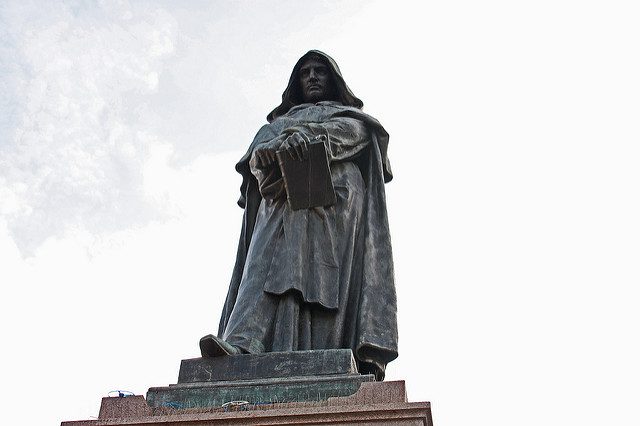
Photo Credit: Lorena.
When Martin Luther nailed his ninety-five theses to the door of the Wittenberg Castle church he was almost immediately rebuked by his Catholic interlocutors.
It was St. Francis de Sales, Bishop of Geneva, who wrote authoritatively in response to Luther’s anti-Church movement—a text which remains one of my favourite treaties on the Catholic faith.
Calling Luther’s re-interpretations of ancient Catholic doctrines a “novelty” St. Francis took Luther to task for inventing new interpretations of old heresies.
What Luther was doing, charged St. Francis, was simply rehashing old ideas that the Church had already flatly and authoritatively rejected.
Luther was a heretic, said St. Francis, because he was single-handedly claiming to know better than 1,500 years of consistent Church teaching.
No matter your stance on Martin Luther and the movement which codified into the Protestant Reformation history shows that its effects on Christian unity have been nothing short of ruinous. Devastating.
And whether or not you think Luther and his predecessors were brilliant or mad it’s important to note the power, for good or ill, of a “novel” idea.
These days, in an ever fragmented Christian landscape, the ability of one of these novel ideas to bubble up to the surface of popular belief is nothing short of alarming.
These heresies, authoritatively condemned by 1,500 plus years of Church teaching, can catch fire and spread at a rate unimagined by the Reformers.
And, alarmingly, we tend to repeat and spread these ancient misbeliefs without even knowing it.
In my journey out of the Evangelical Church and into Catholicism an honest study of Church history did a great deal to help my understanding of the development of Christianity, and where my faith came from. I learned, along the way, that many of the tenets of my faith, things that I took for granted were believed universally, were actually long lost heresies.
Aspects of so-called Christian belief that had been unequivocally condemned by the Church within the first 1,500 years of its history.
These discoveries made me nervous.
After all, what made me think that I knew better than the Church who carefully and prayerfully laid down proper teaching for a millennium and a half. And what made me think they got it wrong?
It’s Paul, writing to Timothy, who calls the Church “the bulwark and pillar of Truth.”
It’s Jesus who says He’ll establish a Church with nothing will overcome.
And so I struggled with these two teachings.
If Jesus truly founded and Church which was the guardian of Truth and couldn’t be overcome then why did my Evangelical leaders—whom I trusted for faith formation—claim that the Church lost its way and began to add “Catholic” stuff sometime in its early history?
And, I wrestled, if the Church truly did lose its way and a right and proper understanding of salvation and the Gospel wasn’t rediscovered until Martin Luther came along what about all those Christians who were mislead in the meantime?
And how come the Protestant understanding of the Gospel fragmented so quickly into Baptism, Lutheran, and Reformed camps so quickly? All with distinctive teachings and interpretations.
I struggled, because the more I dipped my toe into the stream of Church history the more I found myself thick in the mud of ancient heresy.
Take, for example, the teaching of Mary as Mother of God.
As an Evangelical I would’ve balked at a term which, on the face of it, seems to elevate the Virgin Mary to unseemly heights. But this teaching, authoritatively affirmed in the 4th century, was affirmed alongside the doctrine which outlined Jesus’ divine and human nature.
It was, in fact, to explain the nature of Christ that Mary received such a lofty title.
But I knew better than Church history, right?
I was beginning to think otherwise and what I came to realize, and I think this is true, is that our loose grasp on Church history dooms us to repeat the mistakes of the past.
Our apparent amnesiac understanding of where we came from informs our blundering around in the dark as we head forward.
And it’s making us into heretics.
What we ought to do instead is this: If and when—and I would charge it’s more likely “if” than “when”—we encounter a belief that’s at odds with the historical Church we need to ask ourselves some simple, honest questions.
What makes me think I’m smarter than the ancient Church?
What makes me think I know more than Christians did for 1,500 years?
And even if we don’t recognize the authoritative claims of the Catholic Church what makes us think that they didn’t at least get it right?
(That the Holy Spirit may have been working there rather than laying dormant for a millennium and a half until the Reformation came along.)
If we take seriously the kind of unity that Jesus charged us with—that we may be one as He and God the Father are one—then we need to, in the least, seriously consider what we believe.
And if we are put at odds with what the ancient Church believed for fifteen hundred years it might be in the best interest of the entire Body of Christ if we at least ask ourselves why.
Next Post

February 17, 2017 I Don't Know How I Lived Without Coffee
Browse Our Archives
Select a Category Appearances Christian Living Explaining the Faith Podcast Tough Questions Uncategorized Why I'm Catholic
Select a Month January 2024 December 2023 November 2023 July 2023 June 2023 May 2023 April 2023 March 2023 February 2023 January 2023 December 2022 November 2022 October 2022 September 2022 August 2022 July 2022 June 2022 May 2022 April 2022 March 2022 February 2022 January 2022 December 2021 November 2021 October 2021 September 2021 August 2021 July 2021 June 2021 May 2021 April 2021 March 2021 February 2021 January 2021 December 2020 November 2020 October 2020 September 2020 August 2020 July 2020 June 2020 May 2020 April 2020 March 2020 February 2020 January 2020 December 2019 November 2019 October 2019 September 2019 August 2019 July 2019 June 2019 May 2019 April 2019 March 2019 February 2019 January 2019 December 2018 November 2018 October 2018 September 2018 August 2018 July 2018 June 2018 May 2018 April 2018 March 2018 February 2018 January 2018 December 2017 October 2017 September 2017 July 2017 May 2017 April 2017 March 2017 February 2017 January 2017 December 2016 November 2016 October 2016 September 2016 August 2016 July 2016 June 2016 May 2016 April 2016 March 2016 February 2016 January 2016 December 2015 November 2015 October 2015 September 2015 August 2015 July 2015 June 2015 May 2015 April 2015 March 2015 February 2015 January 2015 December 2014 November 2014 October 2014
Follow Us!
TAKE THE
Religious Wisdom Quiz
Jesus raised whose daughter from the dead?
Select your answer to see how you score.
Jairus Thaddeus Bartholomew Darius
Support this
Column


Related posts from The Cordial Catholic
231: Becoming Catholic in a Church Crisis (w/...

229: Can Catholics and Evangelicals Agree on How...

227: What was Medieval Catholicism Really Like? (w/...
212: Evangelicals, Here's How to Look for a...
TRENDING AT PATHEOS Catholic

Rejecting Doom: Christian Hope And Human Action
Christianity is a religion of hope. We are to have hope and...

It’s What Comes From Within Which Matters
One of the most difficult things for us to understand is why...

Why I Choose the Eucharist Over the Sermon
Choose the Eucharist, Not the Sermon What are we supposed to get...

5 Design Elements Found in Spiritually Rooted Homes
Putting Spirituality Into Home Decor Our homes are more than our living...

Credo: A Story of God Told with the...
About 10 years ago, I began to imagine a personal "Credo" that...

The Anatomy of Divine Revelation in Catholic Thought
The claim that God has made Himself known to human beings is...
view all Catholic blogs
Ad-Free & Subscriber Log-In Subscription Support
- About Us
- 2026 Calendar
- Videos
- Podcasts
- Library of World Religions
- Faith In Media Tracker
- Advertise With Us
- Write for Us
- Privacy Policy
- Terms of Service
- Do Not Sell My Data
- Contact Us
- Radiant Digital
- Manage Newsletter Subscriptions
- Unsubscribe From Notifications
- Sitemap
Copyright 2008-2026, Patheos. All rights reserved.
Subscription Support Ad-Free & Subscriber Log-In
Follow Patheos