
BuddhistCatholicContemplativeEvangelicalGeneral ChristianHinduJewishLatter-day SaintMuslimNew VisionsProgressive Christian
Beliefs
- Buddhist
- Catholic
- Contemplative
- Evangelical
- General Christian
- Hindu
- Jewish
- Latter-day Saint
- More Voices
- Muslim
- New Visions
- Pagan
- Progressive Christian
Topics
- Religion News
- Food and Religion
- Sports and Religion
- Religious Art
- Religious Music and Entertainment
- Religious Events
- History and Religion
- Style and Religion
- Politics and Religion
- Women in Religion
- Recreation Outdoors and Religion
- Business Finance and Religion
- Careers Workplace and Religion
- Education and Religion
- Family Parenting and Religion
- Health Fitness and Religion
- Home and Religion
- Relationships and Religion
- Technology and Religion
- Travel and Religion
Columnists
- Buddhist Columnists
- Business Finance and Religion Columnists
- Careers Workplace and Religion Columnists
- Catholic Columnists
- Contemplative Columnists
- Education and Religion Columnists
- Evangelists Columnists
- Family Parenting and Religion Columnists
- General Christian Columnists
- Health Fitness and Religion Columnists
- Hindu Columnists
- History and Religion Columnists
- Home and Religion Columnists
- Jewish Columnists
- More Voices Columnists
- Latter Day Columnists
- Muslim Columnists
- New Visions Columnists
- Nonreligious Columnists
- Pagan Columnists
- Politics and Religion Columnists
- Progressive Columnists
- Recreation Outdoors and Religion Columnists
- Relationships and Religion Columnists
- Religion News Columnists
- Religious Art Columnists
- Religious Events Columnists
- Religious Music and Entertainment Columnists
- Sports and Religion Columnists
- Style and Religion Columnists
- Technology and Religion Columnists
- Travel and Religion Columnists
- Women in Religion Columnists
Resource Library
- 2026 Calendar
- Library of World Religions
- The 100 Most Holy Places on Earth
- Patheos Answers
- Podcasts
- Videos
- Faith Leaders Database
- Anglican Episcopalian
- Bahai
- Baptist
- Buddhism
- Christianity
- Confucianism
- Eastern Orthodoxy
- Hinduism
- Holiness and Pentecostal
- ISKCON
- Islam
- Judaism
- Lutheran
- Methodist
- The Church of Jesus Christ of Latter-day Saints
- New Age
- Paganism
- Presbytarian and Reformed
- Protestantism
- Religion Behind the Scenes
- Roman Catholic
- Scientology
- Shia Islam
- Sikhism
- Sufism
- Sunni Islam
- Taoism
- Zen
- See all religions
Research Tools
 Ad-Free & Subscriber Log-In Subscription Support
Ad-Free & Subscriber Log-In Subscription Support
Follow Patheos 

- Trending:
- Forgiveness
- |
- Marriage
- |
- Consciousness
- |
- Death Penalty
- |
- Election
- |
- Halloween
 The Cordial Catholic
- Home
- Catholic
- Pentecostal and Non-Denominational
Pentecostal and Non-Denominational
Last updated on: August 3, 2015 at 4:02 pm by K. Albert Little
Pentecostal and Non-Denominational 2015-08-03T16:02:38-04:00 K. Albert Little
Patheos Explore the world's faith through different perspectives on religion and spirituality! Patheos has the views of the prevalent religions and spiritualities of the world.
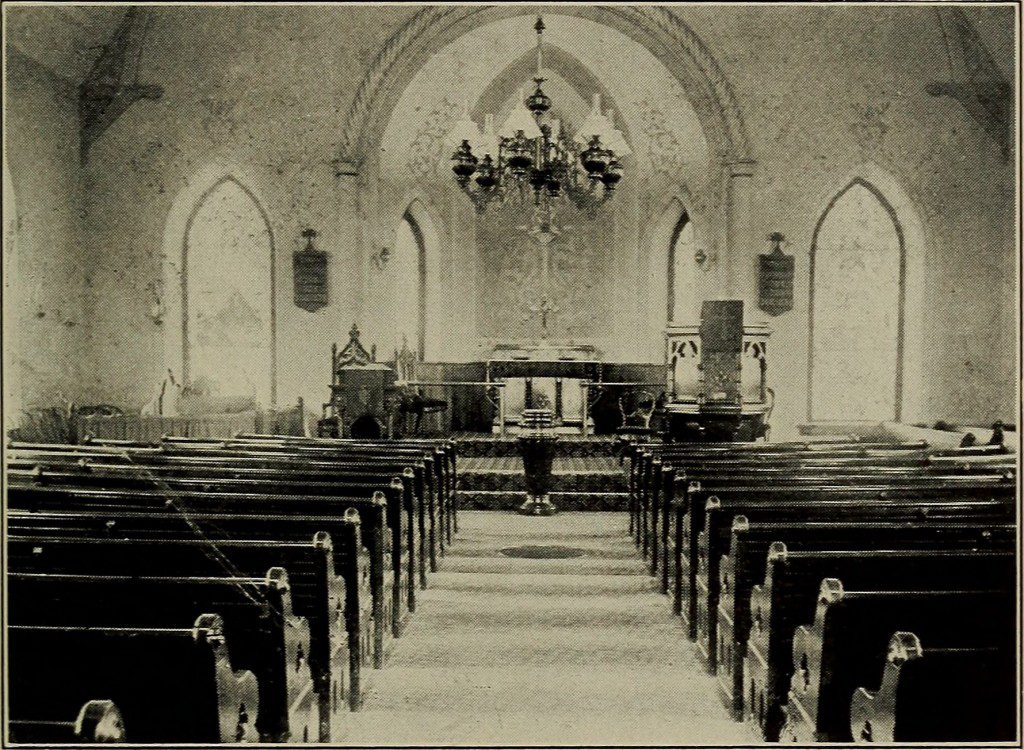
University, or college, is an incredibly formative time of life. In university you form friendships and make decisions that last a lifetime. I was fortunate to attend an incredible university, the University of Waterloo, and live in an even more incredible residence Conrad Grebel. A small, intimate, Mennonite dorm with a reputation for its incredible student community. It lived up to my sky-high expectations and I made some incredible friendships there—and made some brilliant decisions too (beginning to date my wife, who I met there, probably ranks among the best).
For me, like most of us, I’d imagine, a good amount of soul-searching took place in university. Books like Donald Miller’s Blue Like Jazz
I wrote in my introduction that in the early years of university, I vacillated between a non-denominational mega-church on the outskirts of town and a resoundingly Pentecostal congregation in the city. Both had good things to offer.
First, was the mega-church. It was well-attended by the friends I’d made on campus, in residence, so it seemed a good fit initially. It was similar to the nominally Pentecostal church I’d been involved with before moving away for school so it felt right too. But it was big. Even then, with two jam-packed services, and clocks always ticking away, counting down the forty-five minute mark when the show must end, it felt much more like a production than a worship service. But I couldn’t articulate it that well back then, and so I kept on going.
I was involved, also, with a local Pentecostal congregation in those early years of my undergrad degree and I came in through the backdoor, literally.
I was looking for a volunteer opportunity in the community around my school and I found it in the form of a group of students and young adults who served a free meal to undergrads once a week. The group worked out of the local Pentecostal church and so I went there to help too. Here I found an amazing community that more than met my needs. I found something I was good at: serving food and cleaning up. It was easy but I felt fulfilled, like I was using what I was good at for something more than meeting my own needs.
Maybe the most interesting thing about my time in the Pentecostal church was what kept me coming back. Despite the name of my blog—the Cordial Catholic—I’m not the most friendly, soft-spoken person around. I’m cranky, introverted, and anti-social sometimes and the group of folks that made up that small, core group of volunteers serving meals were eclectic, at best. Maybe that’s why I fit in so well. We were a raggity bunch but I felt fulfilled doing what I did and I felt like I was doing the good that Jesus asked us to do. To feed people. Despite working with people that, sometimes, rubbed each other the wrong way, I felt a strong desire to make it work, and stick with it.
After a few weeks I realized that after they’d fed everyone and cleaned up the core group of volunteers met to have a Bible study and worship together. It felt like a natural transition, not pushy or forced, but a natural extension of the work we were already doing together, and so I went too. As it turned out, the first book we’d study together wasn’t the Bible, but Blue Like Jazz
Unlike the nominally Pentecostal church I’d known in high school, and unlike the very similar mega-church I’d been attending on the outskirts of the city, this church was raw and honest. The emotions of speaking in tongues, of waving flags, of fainting in the spirit were shockingly on display for everyone to see. It was honest; it was scary. But it introduced me to something my faith had been lacking, or at least something I’d once gained, back in the early days of my conversion, but lost again shortly afterwards. It re-introduced me to the mysticism of Christianity, the realm of things I couldn’t touch, feel, or even always understand. And it was cool.
For me, it was the church that I’d needed at that time. A church that resounded with a spirituality I’d had earlier on in my Christian conversion: a faith that recognized that God was everywhere and in just about every thing.
But the Pentecostal church left a lot to the imagination, too.
The pastor—a lay-preacher without much significant grounding in education—preached on a variety of pretty questionable themes. The seven ‘ships’ of the New Testament (e.g., worship, discipleship, etc.) was one of the themes that springs to mind. A former body builder he also performed an arm wrestling competition on the podium on a Sunday morning—challenging anyone in the congregation to try and defeat him—as a sermon illustration. It was certainly memorable, visceral, but it left a lot to be desired from my point of view. I desired edification—emotional, spiritual, and intellectual—and I was having a difficult time finding it there.
At the Pentecostal church I had solid relationships, I was emotionally fulfilled, and I enjoyed the charismatic honesty of the service, I was spiritually fulfilled, but feeling skeptical about much of the teaching I was receiving put me in a difficult place. I wasn’t feeling intellectually fulfilled and, eventually, felt myself moving on. First, moving backwards, and then taking a side-step into a church community I’d long known about, been associated with, but hadn’t truly explored.
Previous Post
October 17, 2014
The Slow Road to Rome
Next Post
October 22, 2014 Finding a Community
Browse Our Archives
Select a Category Appearances Christian Living Explaining the Faith Podcast Tough Questions Uncategorized Why I'm Catholic
Select a Month January 2024 December 2023 November 2023 July 2023 June 2023 May 2023 April 2023 March 2023 February 2023 January 2023 December 2022 November 2022 October 2022 September 2022 August 2022 July 2022 June 2022 May 2022 April 2022 March 2022 February 2022 January 2022 December 2021 November 2021 October 2021 September 2021 August 2021 July 2021 June 2021 May 2021 April 2021 March 2021 February 2021 January 2021 December 2020 November 2020 October 2020 September 2020 August 2020 July 2020 June 2020 May 2020 April 2020 March 2020 February 2020 January 2020 December 2019 November 2019 October 2019 September 2019 August 2019 July 2019 June 2019 May 2019 April 2019 March 2019 February 2019 January 2019 December 2018 November 2018 October 2018 September 2018 August 2018 July 2018 June 2018 May 2018 April 2018 March 2018 February 2018 January 2018 December 2017 October 2017 September 2017 July 2017 May 2017 April 2017 March 2017 February 2017 January 2017 December 2016 November 2016 October 2016 September 2016 August 2016 July 2016 June 2016 May 2016 April 2016 March 2016 February 2016 January 2016 December 2015 November 2015 October 2015 September 2015 August 2015 July 2015 June 2015 May 2015 April 2015 March 2015 February 2015 January 2015 December 2014 November 2014 October 2014
Follow Us!
TAKE THE
Religious Wisdom Quiz
Who carried Jesus' cross after He could no longer?
Select your answer to see how you score.
John Peter Simon of Cyrene Pilate
Support this
Column


Related posts from The Cordial Catholic

235: Questions I Couldn't Answer (w/ John Martignoni)

234: The Mindblowing World of Sacramentals (w/ Shaun...

233: The Power of Good Catholic Witnesses (w/...

232: The Trajectory of Conversion (w/ Phillip Campbell)
TRENDING AT PATHEOS Catholic

Rejecting Doom: Christian Hope And Human Action
Christianity is a religion of hope. We are to have hope and...

It’s What Comes From Within Which Matters
One of the most difficult things for us to understand is why...

Why I Choose the Eucharist Over the Sermon
Choose the Eucharist, Not the Sermon What are we supposed to get...

5 Design Elements Found in Spiritually Rooted Homes
Putting Spirituality Into Home Decor Our homes are more than our living...

Credo: A Story of God Told with the...
About 10 years ago, I began to imagine a personal "Credo" that...

The Anatomy of Divine Revelation in Catholic Thought
The claim that God has made Himself known to human beings is...
view all Catholic blogs
Ad-Free & Subscriber Log-In Subscription Support
- About Us
- 2026 Calendar
- Videos
- Podcasts
- Library of World Religions
- Faith In Media Tracker
- Advertise With Us
- Write for Us
- Privacy Policy
- Terms of Service
- Do Not Sell My Data
- Contact Us
- Radiant Digital
- Manage Newsletter Subscriptions
- Unsubscribe From Notifications
- Sitemap
Copyright 2008-2026, Patheos. All rights reserved.
Subscription Support Ad-Free & Subscriber Log-In
Follow Patheos