
BuddhistCatholicContemplativeEvangelicalGeneral ChristianHinduJewishLatter-day SaintMuslimNew VisionsProgressive Christian
Beliefs
- Buddhist
- Catholic
- Contemplative
- Evangelical
- General Christian
- Hindu
- Jewish
- Latter-day Saint
- More Voices
- Muslim
- New Visions
- Pagan
- Progressive Christian
Topics
- Religion News
- Food and Religion
- Sports and Religion
- Religious Art
- Religious Music and Entertainment
- Religious Events
- History and Religion
- Style and Religion
- Politics and Religion
- Women in Religion
- Recreation Outdoors and Religion
- Business Finance and Religion
- Careers Workplace and Religion
- Education and Religion
- Family Parenting and Religion
- Health Fitness and Religion
- Home and Religion
- Relationships and Religion
- Technology and Religion
- Travel and Religion
Columnists
- Buddhist Columnists
- Business Finance and Religion Columnists
- Careers Workplace and Religion Columnists
- Catholic Columnists
- Contemplative Columnists
- Education and Religion Columnists
- Evangelists Columnists
- Family Parenting and Religion Columnists
- General Christian Columnists
- Health Fitness and Religion Columnists
- Hindu Columnists
- History and Religion Columnists
- Home and Religion Columnists
- Jewish Columnists
- More Voices Columnists
- Latter Day Columnists
- Muslim Columnists
- New Visions Columnists
- Nonreligious Columnists
- Pagan Columnists
- Politics and Religion Columnists
- Progressive Columnists
- Recreation Outdoors and Religion Columnists
- Relationships and Religion Columnists
- Religion News Columnists
- Religious Art Columnists
- Religious Events Columnists
- Religious Music and Entertainment Columnists
- Sports and Religion Columnists
- Style and Religion Columnists
- Technology and Religion Columnists
- Travel and Religion Columnists
- Women in Religion Columnists
Resource Library
- 2026 Calendar
- Library of World Religions
- The 100 Most Holy Places on Earth
- Patheos Answers
- Podcasts
- Videos
- Faith Leaders Database
- Anglican Episcopalian
- Bahai
- Baptist
- Buddhism
- Christianity
- Confucianism
- Eastern Orthodoxy
- Hinduism
- Holiness and Pentecostal
- ISKCON
- Islam
- Judaism
- Lutheran
- Methodist
- The Church of Jesus Christ of Latter-day Saints
- New Age
- Paganism
- Presbytarian and Reformed
- Protestantism
- Religion Behind the Scenes
- Roman Catholic
- Scientology
- Shia Islam
- Sikhism
- Sufism
- Sunni Islam
- Taoism
- Zen
- See all religions
Research Tools
 Ad-Free & Subscriber Log-In Subscription Support
Ad-Free & Subscriber Log-In Subscription Support
Follow Patheos 

- Trending:
- Forgiveness
- |
- Marriage
- |
- Consciousness
- |
- Death Penalty
- |
- Election
- |
- Halloween
 The Cordial Catholic
- Home
- Catholic
- Remember That You Are Not Butt Dust
Remember That You Are Not Butt Dust
Last updated on: March 6, 2019 at 4:46 pm by K. Albert Little
Remember That You Are Not Butt Dust 2019-03-06T16:46:03-04:00 K. Albert Little
Patheos Explore the world's faith through different perspectives on religion and spirituality! Patheos has the views of the prevalent religions and spiritualities of the world.
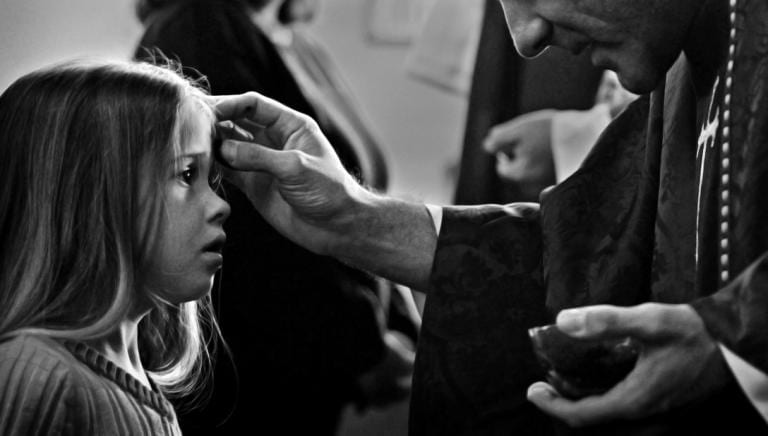
Photo Credit: Jensen Stidham.
Every year at this time the “Remember That You Are Butt Dust” meme starts circling the internet. And every year, when I see it again for the first time, it never fails to entertain. It’s a classic case for proofreading and a great ode to the nuance of the English language. But it’s also a great object lesson in the beautiful theology of Lent.
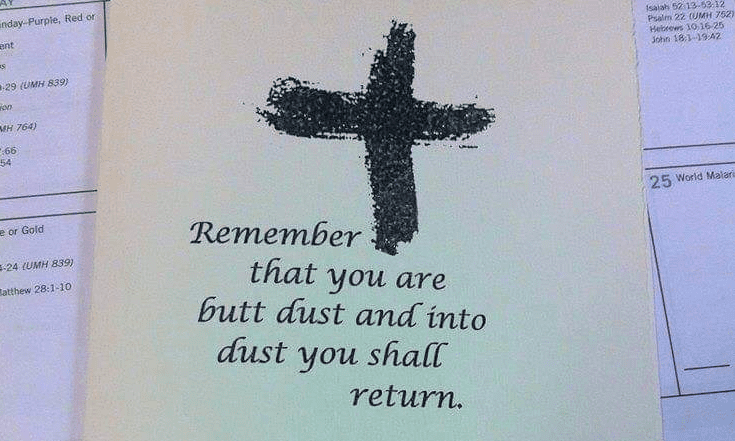
While Martin Luther and the Early Reformers may have agreed with the sentiment, Catholic theology does not, in fact, teach that we are butt dust.
Luther, indeed, got very close when he described human beings and our good works as a pile of “dung.” To Luther, Christians could do no good works worthy of anything other than a big pile of poo. It was Christ, like freshly fallen snow, that covered our steaming hot piles of dung to make us worthy.
(I don’t know about you, but nothing says sanctification like a steaming hot pile of poop—covered by snow.)
What the Catholic Church says, and what Lent reminds us of, is that we are not, in fact, dust from a butt or a steaming pile of poop but magnificent works made in the image of the Almighty God.
We are brilliant. We are beautiful. And we are, so we are told, worthy of a place in the family of God.
Purgatory, Not Poo
Purgatory is one of those classically misunderstood Catholic teachings despite being wonderfully simple to explain.
Through Christ, and Christ alone, we are saved unto eternity. Those that die in friendship with Christ join His Family in Heaven, but only perfect things can exist in Heaven. Therefore, we have to become perfect before we can join the party. We try, on Earth, through the grace God gives us but if we still have hurts or hang-ups when we die those have to be dealt with first. God cannot wave a wand or overwhelm our wills to make us perfect the minute we die. This is purgatory, what the Apostle Paul calls the “fire” that we escape through and this is what believers will experience—a kind of “burning away” of those last vestiges of sin.
I am saved by Christ but I am not perfect yet. I must become perfect to enter Heaven. How am I made so?
That, quite simply, is purgatory.
Lent, then, is like a mini-purgatory.
Lent, the Little Purgatory
Throughout Lent the goal of the good Catholic, to quote St. Paul again, is to train ourselves like athletes to run a race. Through fasting, through prayer, through a practice of good spiritual reading Lent helps us to supercharge our transformation into the perfect beings which Christ intends for us to become.We pray and fast and give because God wants, in Heaven, people that pray and fast and give. Because that is who God is. Because that is His heart for us too.
God wants us to share in His divine life in Heaven. He gives us grace, in Lent, to help us in that transformation.
This is the point and purpose of Lent.
We are not butt dust.
Instead, we are beings created in the image of God that are capable of doing good things. We are capable of being like Christ in our actions and attitude not so that we can win or attain our own salvation—this was the fundamental misunderstanding of the Reformers and many Christians today—but so that we can, bit by bit, become more like God through the grace He gives. That if we cooperate with how God wants us to live we can, we’re told, move mountains for Christ.
We are not butt dust, and this should spur us into greater, deeper, and more meaningful action. Because we are capable of greatness, of becoming who God intends us to be if not in this life then in the next. Lent, at any rate, is meant to give us a good head start.
Previous Post

March 5, 2019
St. Francis de Sales' Advice for Lent: Prepare to be Tempted
Next Post
March 7, 2019 So There Aren't 33,000 Protestant Denominations, Does It Matter?
Browse Our Archives
Select a Category Appearances Christian Living Explaining the Faith Podcast Tough Questions Uncategorized Why I'm Catholic
Select a Month January 2024 December 2023 November 2023 July 2023 June 2023 May 2023 April 2023 March 2023 February 2023 January 2023 December 2022 November 2022 October 2022 September 2022 August 2022 July 2022 June 2022 May 2022 April 2022 March 2022 February 2022 January 2022 December 2021 November 2021 October 2021 September 2021 August 2021 July 2021 June 2021 May 2021 April 2021 March 2021 February 2021 January 2021 December 2020 November 2020 October 2020 September 2020 August 2020 July 2020 June 2020 May 2020 April 2020 March 2020 February 2020 January 2020 December 2019 November 2019 October 2019 September 2019 August 2019 July 2019 June 2019 May 2019 April 2019 March 2019 February 2019 January 2019 December 2018 November 2018 October 2018 September 2018 August 2018 July 2018 June 2018 May 2018 April 2018 March 2018 February 2018 January 2018 December 2017 October 2017 September 2017 July 2017 May 2017 April 2017 March 2017 February 2017 January 2017 December 2016 November 2016 October 2016 September 2016 August 2016 July 2016 June 2016 May 2016 April 2016 March 2016 February 2016 January 2016 December 2015 November 2015 October 2015 September 2015 August 2015 July 2015 June 2015 May 2015 April 2015 March 2015 February 2015 January 2015 December 2014 November 2014 October 2014
Follow Us!
TAKE THE
Religious Wisdom Quiz
What does "Silas" mean in Greek?
Select your answer to see how you score.
Strength in the Lord Man of the forest God's servant The chosen one
Support this
Column


Related posts from The Cordial Catholic

229: Can Catholics and Evangelicals Agree on How...

227: What was Medieval Catholicism Really Like? (w/...
165: The Most Incredible Catholic Case for Atonement...

158: Purgatory for Evangelicals (w/ Dr. Brett Salkeld)
TRENDING AT PATHEOS Catholic

Rejecting Doom: Christian Hope And Human Action
Christianity is a religion of hope. We are to have hope and...

It’s What Comes From Within Which Matters
One of the most difficult things for us to understand is why...

Why I Choose the Eucharist Over the Sermon
Choose the Eucharist, Not the Sermon What are we supposed to get...

5 Design Elements Found in Spiritually Rooted Homes
Putting Spirituality Into Home Decor Our homes are more than our living...

Credo: A Story of God Told with the...
About 10 years ago, I began to imagine a personal "Credo" that...

The Anatomy of Divine Revelation in Catholic Thought
The claim that God has made Himself known to human beings is...
view all Catholic blogs
Ad-Free & Subscriber Log-In Subscription Support
- About Us
- 2026 Calendar
- Videos
- Podcasts
- Library of World Religions
- Faith In Media Tracker
- Advertise With Us
- Write for Us
- Privacy Policy
- Terms of Service
- Do Not Sell My Data
- Contact Us
- Radiant Digital
- Manage Newsletter Subscriptions
- Unsubscribe From Notifications
- Sitemap
Copyright 2008-2026, Patheos. All rights reserved.
Subscription Support Ad-Free & Subscriber Log-In
Follow Patheos