
BuddhistCatholicContemplativeEvangelicalGeneral ChristianHinduJewishLatter-day SaintMuslimNew VisionsProgressive Christian
Beliefs
- Buddhist
- Catholic
- Contemplative
- Evangelical
- General Christian
- Hindu
- Jewish
- Latter-day Saint
- More Voices
- Muslim
- New Visions
- Pagan
- Progressive Christian
Topics
- Religion News
- Food and Religion
- Sports and Religion
- Religious Art
- Religious Music and Entertainment
- Religious Events
- History and Religion
- Style and Religion
- Politics and Religion
- Women in Religion
- Recreation Outdoors and Religion
- Business Finance and Religion
- Careers Workplace and Religion
- Education and Religion
- Family Parenting and Religion
- Health Fitness and Religion
- Home and Religion
- Relationships and Religion
- Technology and Religion
- Travel and Religion
Columnists
- Buddhist Columnists
- Business Finance and Religion Columnists
- Careers Workplace and Religion Columnists
- Catholic Columnists
- Contemplative Columnists
- Education and Religion Columnists
- Evangelists Columnists
- Family Parenting and Religion Columnists
- General Christian Columnists
- Health Fitness and Religion Columnists
- Hindu Columnists
- History and Religion Columnists
- Home and Religion Columnists
- Jewish Columnists
- More Voices Columnists
- Latter Day Columnists
- Muslim Columnists
- New Visions Columnists
- Nonreligious Columnists
- Pagan Columnists
- Politics and Religion Columnists
- Progressive Columnists
- Recreation Outdoors and Religion Columnists
- Relationships and Religion Columnists
- Religion News Columnists
- Religious Art Columnists
- Religious Events Columnists
- Religious Music and Entertainment Columnists
- Sports and Religion Columnists
- Style and Religion Columnists
- Technology and Religion Columnists
- Travel and Religion Columnists
- Women in Religion Columnists
Resource Library
- 2026 Calendar
- Library of World Religions
- The 100 Most Holy Places on Earth
- Patheos Answers
- Podcasts
- Videos
- Faith Leaders Database
- Anglican Episcopalian
- Bahai
- Baptist
- Buddhism
- Christianity
- Confucianism
- Eastern Orthodoxy
- Hinduism
- Holiness and Pentecostal
- ISKCON
- Islam
- Judaism
- Lutheran
- Methodist
- The Church of Jesus Christ of Latter-day Saints
- New Age
- Paganism
- Presbytarian and Reformed
- Protestantism
- Religion Behind the Scenes
- Roman Catholic
- Scientology
- Shia Islam
- Sikhism
- Sufism
- Sunni Islam
- Taoism
- Zen
- See all religions
Research Tools
 Ad-Free & Subscriber Log-In Subscription Support
Ad-Free & Subscriber Log-In Subscription Support
Follow Patheos 

- Trending:
- Forgiveness
- |
- Marriage
- |
- Consciousness
- |
- Death Penalty
- |
- Election
- |
- Halloween
 The Cordial Catholic
- Home
- Catholic
- Three Questions to Ask Your Atheist Neighbour
Three Questions to Ask Your Atheist Neighbour
Last updated on: October 24, 2019 at 8:21 pm by K. Albert Little
Three Questions to Ask Your Atheist Neighbour 2019-10-24T20:21:15-04:00 K. Albert Little
Patheos Explore the world's faith through different perspectives on religion and spirituality! Patheos has the views of the prevalent religions and spiritualities of the world.

When Jesus famous told us that we must love our neighbours as ourselves the anxious crowd responded, “Who then is our neighbour?”
The question is no less prescient today.
While the Jewish/Gentile and Roman/Non-Roman fault lines of the ancient world are no longer what divides our society, one could easily argue that we’re just as divided as ever. Along lines of politics and race; of culture and ethnicity; of those in our circle of trust and those that we are, for all kinds of reasons, afraid to let in.
But who is our neighbour? The answer is, everyone.
And if the Good News of the Gospel of Jesus Christ is really good news then we need to be prepared to engage with our neighbours, in dialogue and discussion—in charity and clarity—to give, as St. Peter urges, a reason for the hope that we have.
With that in mind, I was blessed recently to sit down and chat with John DeRosa. John is the host of the incredibly popular Classical Theism Podcast.
Every week John speaks with philosophers, theologians, and apologists to dig deeply into aspects of Catholic Christian faith in order to better understand, explain, and defend it. It’s a brilliant show and John, as a self described “studious amateur,” is learning alongside some of the absolute best.
So I was naturally very grateful that John would sit down and share some of what he’s learned with me; specifically, how to meet some of the most common atheist objections to our faith. The kind of “slogans” you might hear in the staff room at work or slung around at parties or in coffee shops. Slogans picked up from places on the Internet but, as John demonstrates, are prone to a little bit of gentle, graceful pushback with the right kind of response.
The “Ask Questions First” Approach
Like all good theologians, apologists, and even artists, John says his approach to apologetics is borrowed from others but I can understand why—it’s a great one—and I want to begin by underscoring how he talks about these topics from the outset.
John asks questions.
Key, he says, in his approach to apologetics is to understand where the person you’re speaking with is coming from: What are their specific objections? And how are they approaching the topic?
To ask questions first, an approach which Catholic Answers apologist Trent Horn discussed with me as well, you not only save time but you better understand your dialogue partners point-of-view and are better able to empathize.
So, you begin there, to tackle objections, first, with questions.
Answering The Scientific Objection
The first question John tackles is the scientific objection to belief in God.
Simply put, science hasn’t found God so how can he exist?
This is, sad to say, an all-too-common objection to Christianity, Catholicism, and theism in general. I’ve written about it before as well. And while science is responsible for some of the greatest breakthroughs of the hundred years or more it isn’t, as John highlights, the be-all-and-end-all.
Because, for starters, science can’t prove itself through the scientific method.
The practice of science cannot be shown to be scientifically true in a test tube experiment, in controlled conditions in a lab, or through any kind of field research study.
To do good science, as it were, we have to make all kinds of assumptions outside of science like that the scientist isn’t fudging their results (morality), that their observations are accurate (sense stimuli), and that their conclusions are sound (logic). None of these assumptions exist within the framework of science and none of them can be proved through scientific experimentation.
What can you ask your atheist neighbour about science?
In charity and with grace, gently ask your atheist neighbour how science can even prove itself. If science can prove everything then it also needs to prove itself, but of course it can’t.
It’s worth considering, then, that maybe science isn’t the right tool to find God. Citing and example from Dr. Edward Feser, John suggests it’s like using a metal detector to find plastic cups at the beach. It simply isn’t the right tool for the job, no matter how hard you try.
Answering the Objection from Suffering
Probably the greatest challenge any Catholic or Christian apologist has to meet is the problem of suffering.
It’s a challenge that features, in every survey or poll, as one of the top reasons why otherwise believing Christians and Catholics leave the faith.
So it’s a hefty challenge to meet and, as John reminded me, any attempt to meet it needs to be surrounded in lots and lots of prayer. It is, after all, a highly emotional topic. Few, I would wager, approach the problem of evil or suffering from a purely philosophical perspective. More likely, and I think this is true, those who are suffering or have suffered greatly come at this topic from a highly personal perspective.
It isn’t, I don’t think, suffering in a void. It is, instead, the death of a child, the loss of a great love, the reality of terrible disasters and violence.
Sensitivity, tact, grace, and a lot of prayer is required to even approach this topic.
And then ask the question, “What is your problem with suffering?”
Revealing whether a person’s problem with evil and suffering is purely philosophical (how can a good God allow bad things?) versus highly emotional (why did God let my child die?) can radically change the type of conversation you will have.
In the first case, if someone objects to the fact that a good, all-knowing, and all-powerful God allows bad things to happen a simple, gentle push back might be to ask something along the lines of, “Well God had to allow humankind a choice to worship Him, right, because that choice necessarily comes with side effects, namely the ability to choose not to.”
A simple, gentle question like this, as John points out in our discussion, can be a easy way to demonstrate perhaps some flaws in the challenge to begin with.
God had to give us the opportunity to choose right from wrong and that ability to choose can create wrong.
Of course the second, more difficult perspective on the problem of God and suffering is the deeply personal one.
If, on the other hand, the person’s objection to suffering comes from the well of their own experience our response, in turn, should become a much more pastoral one. And, in this case, John wisely reminds us of the Book of Job—the best thing Job’s friends is to, first, simply sit alongside him.
Answering the Wishful Thinking Objection
Karl Marx famously called religion “the opiate of the masses.” Freud later called it “wishful thinking.” And when I posed this challenge to John, in our discussion, his response was, in a word, fantastic.
“But what if it’s true!” he said.
What if God exists and religion is true?
As John insightfully points out, the challenge that religion is simply a sedative to keep the human population under control, a drug, or merely our fanciful imagination only actually challenges God if God isn’t true. If, on the other hand, religion can be proved to be true, then it isn’t a opiate for the masses and it isn’t merely wishful thinking.
Here, we simply need to point the atheist in the direction of some good evidence for God’s existence.
Ask, as Catholic Answers apologist Trent Horn is fond of doing, “What’s the best evidence you know for God’s existence, and why don’t you believe it?”
In other words, in order to undermine or begin to gently push back against the idea of God as “wishful thinking” is to simply show good reasons why he isn’t. After all, it isn’t wishful thinking if we have good reasons to believe that God is real.
Prayer First, Apologetics Afterwards
In the end, one enormous takeaway from my fantastic conversation with John was the importance of prayer.
Prayer is, ultimately, what underpins all of our best apologetic efforts and I know this from my own life as well. So unfruitful have been the times when I’ve rushed in, armed with the best apologetic arguments I can muster, to “do combat” with someone I disagree with.
It always falls short.
Instead, as John reminds us, we need to be in constant prayer (as a priority) in order to be ready for those moments, those opportunities, to share about the hope that we have; hope in Christ, and in the Church he founded.
For more from John DeRosa listen to his appearance on The Cordial Catholic. Also available below,
Previous Post
October 23, 2019
030: Answering Atheist Objections to Catholicism (w/ John DeRosa)
Next Post

October 27, 2019 Did the Gospel Writers Get Facts Right But Their Stories Wrong?
Browse Our Archives
Select a Category Appearances Christian Living Explaining the Faith Podcast Tough Questions Uncategorized Why I'm Catholic
Select a Month January 2024 December 2023 November 2023 July 2023 June 2023 May 2023 April 2023 March 2023 February 2023 January 2023 December 2022 November 2022 October 2022 September 2022 August 2022 July 2022 June 2022 May 2022 April 2022 March 2022 February 2022 January 2022 December 2021 November 2021 October 2021 September 2021 August 2021 July 2021 June 2021 May 2021 April 2021 March 2021 February 2021 January 2021 December 2020 November 2020 October 2020 September 2020 August 2020 July 2020 June 2020 May 2020 April 2020 March 2020 February 2020 January 2020 December 2019 November 2019 October 2019 September 2019 August 2019 July 2019 June 2019 May 2019 April 2019 March 2019 February 2019 January 2019 December 2018 November 2018 October 2018 September 2018 August 2018 July 2018 June 2018 May 2018 April 2018 March 2018 February 2018 January 2018 December 2017 October 2017 September 2017 July 2017 May 2017 April 2017 March 2017 February 2017 January 2017 December 2016 November 2016 October 2016 September 2016 August 2016 July 2016 June 2016 May 2016 April 2016 March 2016 February 2016 January 2016 December 2015 November 2015 October 2015 September 2015 August 2015 July 2015 June 2015 May 2015 April 2015 March 2015 February 2015 January 2015 December 2014 November 2014 October 2014
Follow Us!
TAKE THE
Religious Wisdom Quiz
Who was sent by the Jerusalem church to witness revival in Samaria?
Select your answer to see how you score.
James and John Peter and John Paul and Barnabas Silas and Timothy
Support this
Column


Related posts from The Cordial Catholic
179: Unexpectedly Catholic (w/ Morgan Blair)
140: The Catholic Guide to Suffering (w/ Father...
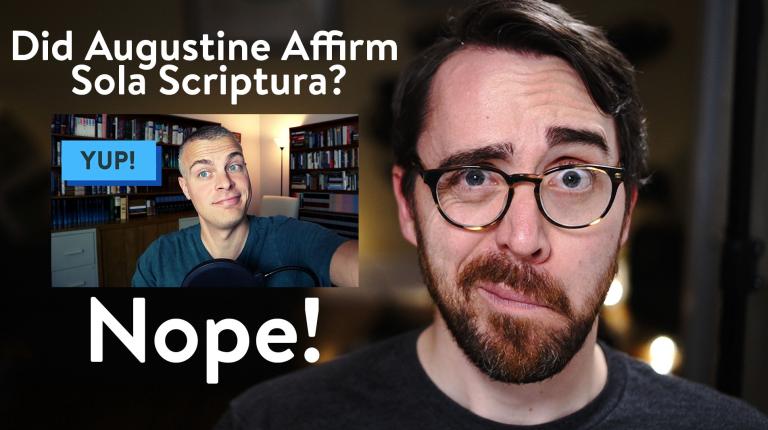
Did Augustine Affirm Sola Scripture? No!
The Bible Made This Evangelical Professor Convert to...
TRENDING AT PATHEOS Catholic

Rejecting Doom: Christian Hope And Human Action
Christianity is a religion of hope. We are to have hope and...

It’s What Comes From Within Which Matters
One of the most difficult things for us to understand is why...

Why I Choose the Eucharist Over the Sermon
Choose the Eucharist, Not the Sermon What are we supposed to get...

5 Design Elements Found in Spiritually Rooted Homes
Putting Spirituality Into Home Decor Our homes are more than our living...

Credo: A Story of God Told with the...
About 10 years ago, I began to imagine a personal "Credo" that...

The Anatomy of Divine Revelation in Catholic Thought
The claim that God has made Himself known to human beings is...
view all Catholic blogs
Ad-Free & Subscriber Log-In Subscription Support
- About Us
- 2026 Calendar
- Videos
- Podcasts
- Library of World Religions
- Faith In Media Tracker
- Advertise With Us
- Write for Us
- Privacy Policy
- Terms of Service
- Do Not Sell My Data
- Contact Us
- Radiant Digital
- Manage Newsletter Subscriptions
- Unsubscribe From Notifications
- Sitemap
Copyright 2008-2026, Patheos. All rights reserved.
Subscription Support Ad-Free & Subscriber Log-In
Follow Patheos