
BuddhistCatholicContemplativeEvangelicalGeneral ChristianHinduJewishLatter-day SaintMuslimNew VisionsProgressive Christian
Beliefs
- Buddhist
- Catholic
- Contemplative
- Evangelical
- General Christian
- Hindu
- Jewish
- Latter-day Saint
- More Voices
- Muslim
- New Visions
- Pagan
- Progressive Christian
Topics
- Religion News
- Food and Religion
- Sports and Religion
- Religious Art
- Religious Music and Entertainment
- Religious Events
- History and Religion
- Style and Religion
- Politics and Religion
- Women in Religion
- Recreation Outdoors and Religion
- Business Finance and Religion
- Careers Workplace and Religion
- Education and Religion
- Family Parenting and Religion
- Health Fitness and Religion
- Home and Religion
- Relationships and Religion
- Technology and Religion
- Travel and Religion
Columnists
- Buddhist Columnists
- Business Finance and Religion Columnists
- Careers Workplace and Religion Columnists
- Catholic Columnists
- Contemplative Columnists
- Education and Religion Columnists
- Evangelists Columnists
- Family Parenting and Religion Columnists
- General Christian Columnists
- Health Fitness and Religion Columnists
- Hindu Columnists
- History and Religion Columnists
- Home and Religion Columnists
- Jewish Columnists
- More Voices Columnists
- Latter Day Columnists
- Muslim Columnists
- New Visions Columnists
- Nonreligious Columnists
- Pagan Columnists
- Politics and Religion Columnists
- Progressive Columnists
- Recreation Outdoors and Religion Columnists
- Relationships and Religion Columnists
- Religion News Columnists
- Religious Art Columnists
- Religious Events Columnists
- Religious Music and Entertainment Columnists
- Sports and Religion Columnists
- Style and Religion Columnists
- Technology and Religion Columnists
- Travel and Religion Columnists
- Women in Religion Columnists
Resource Library
- 2026 Calendar
- Library of World Religions
- The 100 Most Holy Places on Earth
- Patheos Answers
- Podcasts
- Videos
- Faith Leaders Database
- Anglican Episcopalian
- Bahai
- Baptist
- Buddhism
- Christianity
- Confucianism
- Eastern Orthodoxy
- Hinduism
- Holiness and Pentecostal
- ISKCON
- Islam
- Judaism
- Lutheran
- Methodist
- The Church of Jesus Christ of Latter-day Saints
- New Age
- Paganism
- Presbytarian and Reformed
- Protestantism
- Religion Behind the Scenes
- Roman Catholic
- Scientology
- Shia Islam
- Sikhism
- Sufism
- Sunni Islam
- Taoism
- Zen
- See all religions
Research Tools
 Ad-Free & Subscriber Log-In Subscription Support
Ad-Free & Subscriber Log-In Subscription Support
Follow Patheos 

- Trending:
- Forgiveness
- |
- Marriage
- |
- Consciousness
- |
- Death Penalty
- |
- Election
- |
- Halloween
 The Cordial Catholic
- Home
- Catholic
- No, You Can’t Have the Eucharist (And That’s OK)
No, You Can’t Have the Eucharist (And That’s OK)
Last updated on: February 9, 2016 at 11:48 pm by K. Albert Little
No, You Can’t Have the Eucharist (And That’s OK) 2016-02-09T23:48:36-04:00 K. Albert Little
Patheos Explore the world's faith through different perspectives on religion and spirituality! Patheos has the views of the prevalent religions and spiritualities of the world.
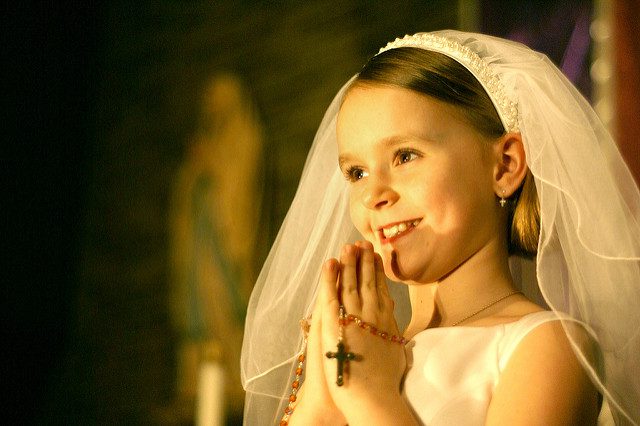
Photo Credit: Jenniferschwalm.
A stir was created, a few weeks ago, when a group of Lutheran clergy visiting the Vatican as part of the Week of Christian Unity received the Eucharist during a sort of ecumenical Mass.
The stir, while nothing more than a ripple in the global secular media created something much more like a tidal wave for Vatican watchers on all sides of the Christian Church.
Lutherans, Anglo-Catholics, and keen-eyed Evangelicals skeptically eyed an end to the Catholic Church’s so-called Closed Communion.
Traditional Catholics, at odds with some of the Pope’s seemingly “liberal” gesticulations, pointed to it as yet further evidence of a Church rapidly slip-sliding away.
Moderates on all sides took the events, as they unfolded, with a grain of salt.
As it turns out, according to an official clarification released by the Vatican, it came down to a misunderstanding. Yes, the Lutherans in attendance received the Eucharist. No, they shouldn’t have. It was a cultural misunderstanding and, says the Vatican, participants in the Mass are reminded that it’s best to simply stay in their seats if they’re not in a proper state to receive.
At any rate, crisis averted.
But such a situation serves as a poignant reminder of the situation in which we find ourselves. On one hand, the strong desire of those non-Catholics groups to receive the Eucharist alongside their Catholic brethren. And, on the other, the rightfully protective attitude many Catholics have towards something which is, theologically and materially, the very centrepiece of their faith.
In the end, nothing has changed. Such a position on the Eucharist, says the Vatican, won’t be changed “in the field” by priests administering the Host. More likely, says Cardinal Sarah, Prefect of the Congregation for Divine Worship and the Discipline of the Sacraments, nothing will change despite a strong desire for unity from many corners of the Christianity.
In other words, no, you can’t have the Eucharist.
And that’s OK.
See, the Catholic Church, for two thousands years, has had a relatively straight-forward understanding of the Eucharist. From Jesus’ own words, the Church understands the elements of bread and wine to be Jesus’ actual flesh and blood.
In tandem, and despite a split about a thousand years ago, the Eastern Orthodox churches hold to this same sacred theology. Jesus Christ is really present in the Eucharist.
This is why an Orthodox Christian may receive the Eucharist in a Catholic Church.
But beginning around the Reformation, Protestant groups which made a decided split from the Catholic Church began to reject this understanding of the Eucharist. Luther made unilateral modifications to his theology of the Eucharist and taught his followers likewise, Calvin would dither but essentially distance himself and his theology even further from the Catholic understanding, and the Anabaptist sects would reject flatly the idea of Christ being really present in Communion.
And so here we ago, on the cusp of the 500-year anniversary of the ostensible beginning of the Reformation and we are the inheritors of this fragmented history, and theology.
And the thing is, it’s OK.
Because the Catholic Church has a particular understanding of what’s taking place in the Eucharist. It’s sacred. It’s holy. And it must be taken with a measure of seriousness. This is clear from St. Paul in his epistles, and the Church has taken him at his word.
For the faithful Catholic, Communion can’t be received unless one is in a state of grace (achieved by a healthy habit of regular reception of the Sacrament of Reconciliation).
For the non-Catholic Christian, Communion simply cannot be received.
And that’s OK.
Because we’re called to live in this particular tension.
The Catholic Church says, “This is Christ’s body,” in the same way that Christ said, “This is my body,” and for those that don’t accept such a challenging reality then the Eucharist should not be received.
But what might, at first blush, seem like an overly zealous church jealously protecting its own is actually an overly careful, faithful institution protecting its greatest gift. A gift that, says our earliest teachers like St. Paul, must be given very thoughtfully and not abused.
It’s a tension we must live in: that there are Christians who decided to reject the theology of the Eucharist.
That there are Christians today who have inherited that rejection.
Through no fault of their own.
This is the tension, and that’s OK.
Because the tension highlights something greater and as we approach this 500th anniversary of what began it all we need to reflect, more deeply, and more earnestly, on the division in which we find the Christian Church. The millions of fragmented pieces. And to reflect on Christ’s charge: That they’ll know we’re Christians by our unity.
And how.
And in this tension—where what I understand about Communion is not what you understand about Communion—we do everyone a disservice by merely papering over our differences. Instead, it’s this tension we must embrace because it’s this tension—this awkward friction—which serves as a catalyst for all us Christians to do something about it.
Recently, the Anglican Communion is a perfect example of this tension in which we live. After their decision to begin performing same-sex marriages in the United States, the Episcopal Church was sanctioned by the larger Anglican body when they met at Canterbury. Forbidden from taking part in votes and having a formal say on committees the Anglican Communion is using the tools at its disposal, after much discussion amongst its leadership, to force the dissenting Episcopal body to live in the tension that they’ve created.
The Episcopal Church has chosen to move away from traditional Anglican theology, teaching, and practice, and the Anglican Communion has responding by saying, “This is your choice, but it has ramifications, and an impact on our unity.”
Likewise for Catholic/Non-Catholic understandings of the Eucharist.
And although the moving away from a traditional understanding of the Eucharist took place over a much longer stretch of time, and much more further into our collective past, its ramifications are no less prescient. But that’s OK. Because in the same way that the Anglican Church is forced to live in the tension surrounding same-sex unions, the Catholic Church, and those who broke communion, are forced to do the same. And it’s precisely that tension which must be keenly felt, and desperately overcome, if we’re ever going to find our way back together again.
So there you have it. No, you can’t have the Eucharist because you’re not Catholic; you don’t subscribe to a theology of the Eucharist that respects what the Church says that it is. And, likely, it’s no fault of your own and that is difficult and awkward and sad but that is what it is. And it’s OK.
Because the Catholic Church, and this Pope in particular, desperately wants you back.
Even 500 years later.
The call is to Communion and an ancient understanding of it and, until then, the awkward conversations we have with our non-Catholics friends and family every time they attend Mass isn’t meant to serve as an insult or an injury or a slight but as a recognition of a broken unity, a fractured past, and a tension in which we must work and build and live.
Stay in touch! Like The Cordial Catholic on Facebook:
Previous Post
February 8, 2016
The Incorruptibles Are Scary as Hell
Next Post

February 10, 2016 Giving Up Complaint, Taking Up Mercy
Browse Our Archives
Select a Category Appearances Christian Living Explaining the Faith Podcast Tough Questions Uncategorized Why I'm Catholic
Select a Month January 2024 December 2023 November 2023 July 2023 June 2023 May 2023 April 2023 March 2023 February 2023 January 2023 December 2022 November 2022 October 2022 September 2022 August 2022 July 2022 June 2022 May 2022 April 2022 March 2022 February 2022 January 2022 December 2021 November 2021 October 2021 September 2021 August 2021 July 2021 June 2021 May 2021 April 2021 March 2021 February 2021 January 2021 December 2020 November 2020 October 2020 September 2020 August 2020 July 2020 June 2020 May 2020 April 2020 March 2020 February 2020 January 2020 December 2019 November 2019 October 2019 September 2019 August 2019 July 2019 June 2019 May 2019 April 2019 March 2019 February 2019 January 2019 December 2018 November 2018 October 2018 September 2018 August 2018 July 2018 June 2018 May 2018 April 2018 March 2018 February 2018 January 2018 December 2017 October 2017 September 2017 July 2017 May 2017 April 2017 March 2017 February 2017 January 2017 December 2016 November 2016 October 2016 September 2016 August 2016 July 2016 June 2016 May 2016 April 2016 March 2016 February 2016 January 2016 December 2015 November 2015 October 2015 September 2015 August 2015 July 2015 June 2015 May 2015 April 2015 March 2015 February 2015 January 2015 December 2014 November 2014 October 2014
Follow Us!
TAKE THE
Religious Wisdom Quiz
Which two apostles went up to the temple at the "hour of prayer" and healed a lame man in Acts 3?
Select your answer to see how you score.
Paul and Barnabas Peter and John Philip and Stephen James and Jude
Support this
Column


Related posts from The Cordial Catholic

232: The Trajectory of Conversion (w/ Phillip Campbell)

229: Can Catholics and Evangelicals Agree on How...

227: What was Medieval Catholicism Really Like? (w/...
212: Evangelicals, Here's How to Look for a...
TRENDING AT PATHEOS Catholic

Rejecting Doom: Christian Hope And Human Action
Christianity is a religion of hope. We are to have hope and...

It’s What Comes From Within Which Matters
One of the most difficult things for us to understand is why...

Why I Choose the Eucharist Over the Sermon
Choose the Eucharist, Not the Sermon What are we supposed to get...

5 Design Elements Found in Spiritually Rooted Homes
Putting Spirituality Into Home Decor Our homes are more than our living...

Credo: A Story of God Told with the...
About 10 years ago, I began to imagine a personal "Credo" that...

The Anatomy of Divine Revelation in Catholic Thought
The claim that God has made Himself known to human beings is...
view all Catholic blogs
Ad-Free & Subscriber Log-In Subscription Support
- About Us
- 2026 Calendar
- Videos
- Podcasts
- Library of World Religions
- Faith In Media Tracker
- Advertise With Us
- Write for Us
- Privacy Policy
- Terms of Service
- Do Not Sell My Data
- Contact Us
- Radiant Digital
- Manage Newsletter Subscriptions
- Unsubscribe From Notifications
- Sitemap
Copyright 2008-2026, Patheos. All rights reserved.
Subscription Support Ad-Free & Subscriber Log-In
Follow Patheos