
BuddhistCatholicContemplativeEvangelicalGeneral ChristianHinduJewishLatter-day SaintMuslimNew VisionsProgressive Christian
Beliefs
- Buddhist
- Catholic
- Contemplative
- Evangelical
- General Christian
- Hindu
- Jewish
- Latter-day Saint
- More Voices
- Muslim
- New Visions
- Pagan
- Progressive Christian
Topics
- Religion News
- Food and Religion
- Sports and Religion
- Religious Art
- Religious Music and Entertainment
- Religious Events
- History and Religion
- Style and Religion
- Politics and Religion
- Women in Religion
- Recreation Outdoors and Religion
- Business Finance and Religion
- Careers Workplace and Religion
- Education and Religion
- Family Parenting and Religion
- Health Fitness and Religion
- Home and Religion
- Relationships and Religion
- Technology and Religion
- Travel and Religion
Columnists
- Buddhist Columnists
- Business Finance and Religion Columnists
- Careers Workplace and Religion Columnists
- Catholic Columnists
- Contemplative Columnists
- Education and Religion Columnists
- Evangelists Columnists
- Family Parenting and Religion Columnists
- General Christian Columnists
- Health Fitness and Religion Columnists
- Hindu Columnists
- History and Religion Columnists
- Home and Religion Columnists
- Jewish Columnists
- More Voices Columnists
- Latter Day Columnists
- Muslim Columnists
- New Visions Columnists
- Nonreligious Columnists
- Pagan Columnists
- Politics and Religion Columnists
- Progressive Columnists
- Recreation Outdoors and Religion Columnists
- Relationships and Religion Columnists
- Religion News Columnists
- Religious Art Columnists
- Religious Events Columnists
- Religious Music and Entertainment Columnists
- Sports and Religion Columnists
- Style and Religion Columnists
- Technology and Religion Columnists
- Travel and Religion Columnists
- Women in Religion Columnists
Resource Library
- 2026 Calendar
- Library of World Religions
- The 100 Most Holy Places on Earth
- Patheos Answers
- Podcasts
- Videos
- Faith Leaders Database
- Anglican Episcopalian
- Bahai
- Baptist
- Buddhism
- Christianity
- Confucianism
- Eastern Orthodoxy
- Hinduism
- Holiness and Pentecostal
- ISKCON
- Islam
- Judaism
- Lutheran
- Methodist
- The Church of Jesus Christ of Latter-day Saints
- New Age
- Paganism
- Presbytarian and Reformed
- Protestantism
- Religion Behind the Scenes
- Roman Catholic
- Scientology
- Shia Islam
- Sikhism
- Sufism
- Sunni Islam
- Taoism
- Zen
- See all religions
Research Tools
 Ad-Free & Subscriber Log-In Subscription Support
Ad-Free & Subscriber Log-In Subscription Support
Follow Patheos 

- Trending:
- Forgiveness
- |
- Marriage
- |
- Consciousness
- |
- Death Penalty
- |
- Election
- |
- Halloween
 The Cordial Catholic
- Home
- Catholic
- N.T. Wright and the Catholic Church as a Postman
N.T. Wright and the Catholic Church as a Postman
Last updated on: August 3, 2015 at 4:02 pm by K. Albert Little
N.T. Wright and the Catholic Church as a Postman 2015-08-03T16:02:32-04:00 K. Albert Little
Patheos Explore the world's faith through different perspectives on religion and spirituality! Patheos has the views of the prevalent religions and spiritualities of the world.
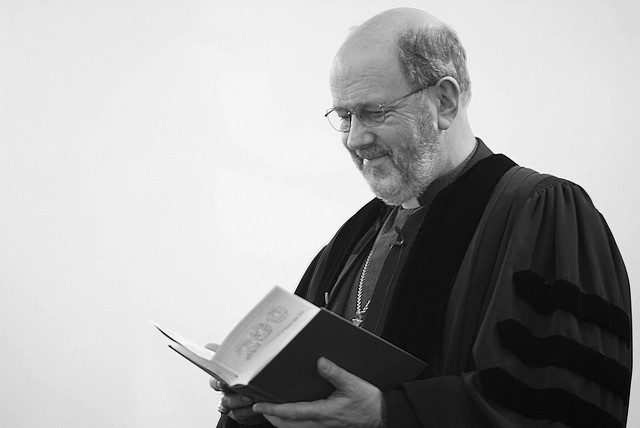
N.T. Wright. Photo Credit: Rachel James.
I’m reading N.T. Wright’s Scripture and the Authority of God
Still, I’ve read a lot, recently, on the Catholic response to the authority and interpretation of Scripture and I’m doing my level best to understand the Protestant perspective as well. Like I said, up until quite recently I wrestled with these monumental issues from that side of the fence. It was that wrestling, in fact, which drove me into the arms of the Catholic Church.
I don’t, in N.T. Wright, expect to find a solution to the problem of authority, the problem of interpretation, that’s going to stop me in my tracks but I’d like to understand and respect how such a prominent Protestant scholar makes sense of this problem. I hadn’t found a satisfying solution, apart from the Catholic experience, but maybe Wright had.
As Wright tackles the idea of authority of the Holy Bible, he briefly gives way to what he calls a view held amongst “traditionalist Catholics.” This piqued my interest.
This view, Wright says, is one that holds the Church above the Bible because, as I’ve argued here before, the Church put the Bible together.
Of this view, Wright says,
This makes a rather obvious logical mistake analogous to that of a soldier who, receiving order through the mail, concludes that the letter carrier is his commanding officer. Those who transmit, collect, and distribute the message are not in the same league as those who write it in the first place.
If I’m going to be honest with you, coming into Scripture and the Authority of God I had hoped N.T. Wright had developed some kind of novel, air-tight paradigm for interpreting the Scriptures. I was spoiling, not for a theological knife fight, but, in the least, for a lively discussion over dinner. Something I could sink my teeth into. Something that could give my Protestant past some fighting words with which to engage my increasingly Catholic future.
I had hoped N.T. Wright would heartily engage the Catholic paradigm of authority, not half-heartedly nudge it aside with a wet mop, and carry on.
Simply put, Wright’s analogy of the Catholic Church as a postman is a complete farce.
If we follow Wright’s anemic analogy we get this:
The Catholic Church’s claim to be the seat of authority over and above the Bible is a “rather obvious logical mistake” because, in fact, the Church merely delivered the message it did not write it.
As compared to a soldier who receives orders in the mail and then concludes that the postman is his commanding officer. The postman didn’t write the orders, he merely delivered them.
But, heavens above, the Church did not merely deliver the books of the Bible.
Again, Wright says that “those who transmit, collect, and distribute” aren’t in the same league as those who write it.
But, good grief, the Church did not merely “transmit, collect, and distribute” the books of the Bible.
At the risk of sounding anything but cordial (maybe I should’ve named this blog something else!) it’s safe to say that Wright, on this topic, is an utter disappointment. Instead of a hearty engagement Wright brushes aside the claims of the Catholic Church with nothing more than a mild retort, and moves on. Wright, in a book about authority, brushes aside 1,500 years of Church history with a damp rag—and a rag full of holes at that.
Because there are enormous holes in Wright’s analogy.
The Church did not, in the early part of its history, merely collect or deliver the books of the Bible. Of course if that were the role of the Church it would be nothing but a divine postman delivering the signed and sealed very words of God. But that’s not how it worked. The Church, in its councils and committees, decided which books, which letters, which gospels belong in the Bible.
The Church isn’t the postman, it’s the post office.
If, in Wright’s analogy, the word of God is a letter to be delivered the Church wasn’t merely the postman delivering but the post office, sorting out which letters go where, whose letter is genuine, whose letter is faked, who is reading what, what is going where.
The Church did the sorting. The Church did the deciding. The Church was the authority that collected the Bible together and decided what was in and what was out and, yes, it was messy and complicated and confusing but if the Bible has been recognized as divinely inspired it’s been because the Church decided which books were divinely inspired and put them all together.
It wasn’t as if all the “letters” to be delivered were neatly stacked on the boss’s desk waiting to be posted. It wasn’t as if all the books of the Bible were there, written, and ready to be collected up. That took discernment by a body with authority.
If I sound frustrated it’s because I am and, oh dear reader, I get in such a funk sometimes. I was sincerely hoping that N.T. Wright, a respected bible scholar of incredible renown, would have some rich and decadent theological approach to the claims of the Catholic Church. Something meaty to work through to really challenge my newly-founded beliefs. Instead, we’re served up a wet noodle on a platter. I’m disappointed. I’m disappointed because if this is the best that Protestant scholarship has to offer—this half-baked, weak-kneed postman analogy—we’d better all throw in the towel. It’s a shame.
Wright is right, of course, in judging the importance of a book like Scripture and the Authority of God. As Wright says, we’re facing a culture, a zeitgeist, and an international Christian church that is increasingly challenging the authoritative norms. As Christians we desperately need to know how to understand the authority of the Scriptures; how to interpret them in a world of myriad interpretations. This is a real challenge. I’ve found a solution, a two-thousand year old solution that makes an awful lot of sense to me, but Wright is robbing his readers at least of the intellectual discourse of honestly and openly addressing the claim of a Church-based authority over a Bible-based one. At least, if nothing else, craft a metaphor a little more tightly.
Previous Post

December 29, 2014
The Common Thread of Conversion
Next Post

January 4, 2015 New Year's Journey
Browse Our Archives
Select a Category Appearances Christian Living Explaining the Faith Podcast Tough Questions Uncategorized Why I'm Catholic
Select a Month January 2024 December 2023 November 2023 July 2023 June 2023 May 2023 April 2023 March 2023 February 2023 January 2023 December 2022 November 2022 October 2022 September 2022 August 2022 July 2022 June 2022 May 2022 April 2022 March 2022 February 2022 January 2022 December 2021 November 2021 October 2021 September 2021 August 2021 July 2021 June 2021 May 2021 April 2021 March 2021 February 2021 January 2021 December 2020 November 2020 October 2020 September 2020 August 2020 July 2020 June 2020 May 2020 April 2020 March 2020 February 2020 January 2020 December 2019 November 2019 October 2019 September 2019 August 2019 July 2019 June 2019 May 2019 April 2019 March 2019 February 2019 January 2019 December 2018 November 2018 October 2018 September 2018 August 2018 July 2018 June 2018 May 2018 April 2018 March 2018 February 2018 January 2018 December 2017 October 2017 September 2017 July 2017 May 2017 April 2017 March 2017 February 2017 January 2017 December 2016 November 2016 October 2016 September 2016 August 2016 July 2016 June 2016 May 2016 April 2016 March 2016 February 2016 January 2016 December 2015 November 2015 October 2015 September 2015 August 2015 July 2015 June 2015 May 2015 April 2015 March 2015 February 2015 January 2015 December 2014 November 2014 October 2014
Follow Us!
TAKE THE
Religious Wisdom Quiz
I am three that testify on earth and agree as one. The Spirit, the water, and what completes our trio?
Select your answer to see how you score.
The blood The church The truth The word
Support this
Column


Related posts from The Cordial Catholic

235: Questions I Couldn't Answer (w/ John Martignoni)
204: The Great Big Protestant Problem with Scripture...

200: Reasons to Doubt Sola Scriptura (w/ Jimmy...
166: How the Early Church Read the Bible...
TRENDING AT PATHEOS Catholic

Rejecting Doom: Christian Hope And Human Action
Christianity is a religion of hope. We are to have hope and...

It’s What Comes From Within Which Matters
One of the most difficult things for us to understand is why...

Why I Choose the Eucharist Over the Sermon
Choose the Eucharist, Not the Sermon What are we supposed to get...

5 Design Elements Found in Spiritually Rooted Homes
Putting Spirituality Into Home Decor Our homes are more than our living...

Credo: A Story of God Told with the...
About 10 years ago, I began to imagine a personal "Credo" that...

The Anatomy of Divine Revelation in Catholic Thought
The claim that God has made Himself known to human beings is...
view all Catholic blogs
Ad-Free & Subscriber Log-In Subscription Support
- About Us
- 2026 Calendar
- Videos
- Podcasts
- Library of World Religions
- Faith In Media Tracker
- Advertise With Us
- Write for Us
- Privacy Policy
- Terms of Service
- Do Not Sell My Data
- Contact Us
- Radiant Digital
- Manage Newsletter Subscriptions
- Unsubscribe From Notifications
- Sitemap
Copyright 2008-2026, Patheos. All rights reserved.
Subscription Support Ad-Free & Subscriber Log-In
Follow Patheos