
BuddhistCatholicContemplativeEvangelicalGeneral ChristianHinduJewishLatter-day SaintMuslimNew VisionsProgressive Christian
Beliefs
- Buddhist
- Catholic
- Contemplative
- Evangelical
- General Christian
- Hindu
- Jewish
- Latter-day Saint
- More Voices
- Muslim
- New Visions
- Pagan
- Progressive Christian
Topics
- Religion News
- Food and Religion
- Sports and Religion
- Religious Art
- Religious Music and Entertainment
- Religious Events
- History and Religion
- Style and Religion
- Politics and Religion
- Women in Religion
- Recreation Outdoors and Religion
- Business Finance and Religion
- Careers Workplace and Religion
- Education and Religion
- Family Parenting and Religion
- Health Fitness and Religion
- Home and Religion
- Relationships and Religion
- Technology and Religion
- Travel and Religion
Columnists
- Buddhist Columnists
- Business Finance and Religion Columnists
- Careers Workplace and Religion Columnists
- Catholic Columnists
- Contemplative Columnists
- Education and Religion Columnists
- Evangelists Columnists
- Family Parenting and Religion Columnists
- General Christian Columnists
- Health Fitness and Religion Columnists
- Hindu Columnists
- History and Religion Columnists
- Home and Religion Columnists
- Jewish Columnists
- More Voices Columnists
- Latter Day Columnists
- Muslim Columnists
- New Visions Columnists
- Nonreligious Columnists
- Pagan Columnists
- Politics and Religion Columnists
- Progressive Columnists
- Recreation Outdoors and Religion Columnists
- Relationships and Religion Columnists
- Religion News Columnists
- Religious Art Columnists
- Religious Events Columnists
- Religious Music and Entertainment Columnists
- Sports and Religion Columnists
- Style and Religion Columnists
- Technology and Religion Columnists
- Travel and Religion Columnists
- Women in Religion Columnists
Resource Library
- 2026 Calendar
- Library of World Religions
- The 100 Most Holy Places on Earth
- Patheos Answers
- Podcasts
- Videos
- Faith Leaders Database
- Anglican Episcopalian
- Bahai
- Baptist
- Buddhism
- Christianity
- Confucianism
- Eastern Orthodoxy
- Hinduism
- Holiness and Pentecostal
- ISKCON
- Islam
- Judaism
- Lutheran
- Methodist
- The Church of Jesus Christ of Latter-day Saints
- New Age
- Paganism
- Presbytarian and Reformed
- Protestantism
- Religion Behind the Scenes
- Roman Catholic
- Scientology
- Shia Islam
- Sikhism
- Sufism
- Sunni Islam
- Taoism
- Zen
- See all religions
Research Tools
 Ad-Free & Subscriber Log-In Subscription Support
Ad-Free & Subscriber Log-In Subscription Support
Follow Patheos 

- Trending:
- Forgiveness
- |
- Marriage
- |
- Consciousness
- |
- Death Penalty
- |
- Election
- |
- Halloween
 The Cordial Catholic
- Home
- Catholic
- Mass is the Spiritual Workout God Knows You Need
Mass is the Spiritual Workout God Knows You Need
Last updated on: November 7, 2019 at 6:00 am by K. Albert Little
Mass is the Spiritual Workout God Knows You Need 2019-11-06T14:41:08-04:00 K. Albert Little
Patheos Explore the world's faith through different perspectives on religion and spirituality! Patheos has the views of the prevalent religions and spiritualities of the world.
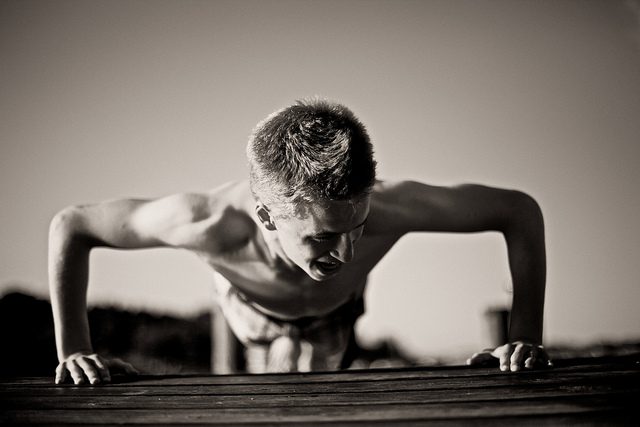
Photo Credit: Roger Augdal Olsen (flickr).
In almost all of the developed world obesity is a growing crisis. People—adults and, most alarmingly, children too—are getting fatter and becoming considerably less healthy. It’s a huge problem, pun intended, but strangely enough the causes of the epidemic we find ourselves is are all too well known, and stupidly simple. Highly processed food and a movement away from eating honest, down-to-earth meals as a family unit can be linked directly to our current crisis. A culture that values accomplishments, running around, and productivity over nutrition and slowing down has got us exactly what we deserve.
Instead of taking the time to cook a meal together and eat genuine food made from ingredients we can pronounce, touch, and see, we rush around filling our schedules with unnecessary and unimportant things, grabbing meals to go or snacking way too much.
We could, if we truly applied ourselves, eat a lot better. Prioritize things differently. Get in shape.
And, spiritually, it’s just the same.
In our busy lives it’s often those simple spiritual practices—which should be our daily touchstones—which get crowded out when the appointments and activities pile up. It’s daily prayer, it’s keeping our eyes open to how God wants to lead us, it’s stretching out a helping hand to our neighbours.
It’s these things which are pushed to the fringes when we get busy.
In the same way that when eating well goes out the window we become less healthy, when our spiritual discipline begins to slacken we become less holy.
Thankfully, the Catholic Church knows exactly what we need. And the metaphor of eating well, exercise, and physical health is nearly perfect because what the Church prescribes for our spiritual health is just the same.
Eat well and exercise—by going to Sunday Mass.
I recently had the privilege of sitting down and talking to Dr. Denis McNamara. Dr. McNamara is one of the hosts of the brilliant Liturgy Guys podcast and, for most of his academic career, taught that the Liturgical Institute. An organization which counts Bishop Robert Barron as one of its founding members.
Dr. McNamara describes the Mass as just that: exercise.
To understand what he means, you need to understand, first of all, what the Mass is. We unpack this in depth in our conversation but, in brief, Dr. McNamara urges us to think about Mass as a kind of exercise that helps us to get “ready” to understand heavenly things.
The Cathecism of the Catholic Church describes the Eucharist as the “center” and “the most intense expression” of our Catholic faith. Elsewhere it’s called the “source and summit.” This is hardly hyperbole because what is happening in the Mass, while theologically and spiritually deep, is also startlingly simple.
It is our spiritual exercise; it is the way in which God makes us more like Him.
From the moment we enter a Catholic Church, says McNamara, we are seeing a kind of “image” of heaven—and this is intentionally so. From there as we begin to participate in the Mass we are seeing, on earth, a mirror or an image of how the saints are worshipping God in Heaven. In fact, we are joined in a kind of mystical time-and-space bending way, to that very same worship and it comes, McNamara explains, from the Book of Revelation.
We are, in a Catholic Mass, acting out how we best understand the worship in Heaven in order to help to prepare ourselves to be there one day.
After all, says Dr. McNamara, it’s one thing to see Michael Jordan accomplish an impossible-to-believe free throw and another thing entirely to practice, day after day, so that we can perform that free throw as well.
We sing, in Mass, the Holy, Holy, Holy so that when we get to Heaven, by the grace of God, we will know the tune.
And, here, it’s quite clear to see why the Catholic Church says we must go to Mass every Sunday. Because, like a good exercise and eating regime if we don’t follow it closely we aren’t going to reap the same rewards. If I exercise once a month I will get stronger at a much slower rate than if I exercise once a week or once a day.
The same applies to my spiritual health, too.
In her wisdom the Catholic Church encourages us to go to Mass at least once a week not because the Pope and bishops are seeking to enforce ridiculous, baseless, and draconian rules on the Catholic faithful but because, hey, they know what’s best for our spiritual health.
Exactly what is happening when we prayer along with the priest, when we kneel, when we sing, and when we receive Communion is hidden in the mystery of the sacrament but we know this much, because Jesus told us, that it is for our good to make us more like God.
In theological terms, says Dr. McNamara, we call this deification—making us more like Christ—and this is the ultimate goal of the Christian life. This is what God created us for; this is what he intended. The Mass, then, is the exercise we need to perform, with the graces received in the sacraments, to help get us there.
It is profound, and it is simple and in the same way that the solution to the obesity epidemic in the West is easily discerned, the solution to our spiritual malaise is pretty obvious too.
And, like the advice of good and reasonable doctors this world over, the advice of the Church is startlingly simple. Eat well and exercise. Go to Mass, not because we have to and ought to go, but because it’s truly the best exercise and the best meal for our spiritual selves that we can come by.
Listen to Dr. McNamara talk about the Mass here or below,
Previous Post
November 6, 2019
On Reformation Day, I Remain a Catholic

Browse Our Archives
Select a Category Appearances Christian Living Explaining the Faith Podcast Tough Questions Uncategorized Why I'm Catholic
Select a Month January 2024 December 2023 November 2023 July 2023 June 2023 May 2023 April 2023 March 2023 February 2023 January 2023 December 2022 November 2022 October 2022 September 2022 August 2022 July 2022 June 2022 May 2022 April 2022 March 2022 February 2022 January 2022 December 2021 November 2021 October 2021 September 2021 August 2021 July 2021 June 2021 May 2021 April 2021 March 2021 February 2021 January 2021 December 2020 November 2020 October 2020 September 2020 August 2020 July 2020 June 2020 May 2020 April 2020 March 2020 February 2020 January 2020 December 2019 November 2019 October 2019 September 2019 August 2019 July 2019 June 2019 May 2019 April 2019 March 2019 February 2019 January 2019 December 2018 November 2018 October 2018 September 2018 August 2018 July 2018 June 2018 May 2018 April 2018 March 2018 February 2018 January 2018 December 2017 October 2017 September 2017 July 2017 May 2017 April 2017 March 2017 February 2017 January 2017 December 2016 November 2016 October 2016 September 2016 August 2016 July 2016 June 2016 May 2016 April 2016 March 2016 February 2016 January 2016 December 2015 November 2015 October 2015 September 2015 August 2015 July 2015 June 2015 May 2015 April 2015 March 2015 February 2015 January 2015 December 2014 November 2014 October 2014
Follow Us!
TAKE THE
Religious Wisdom Quiz
What is the correct sequence of the fruit of the Spirit as listed in Galatians?
Select your answer to see how you score.
Love, joy, peace, forbearance, kindness, goodness, faithfulness, gentleness, self-control Joy, love, peace, goodness, kindness, faithfulness, forbearance, gentleness, self-control Love, peace, joy, kindness, forbearance, faithfulness, goodness, self-control, gentleness Love, joy, peace, kindness, goodness, forbearance, faithfulness, self-control, gentleness
Support this
Column


Related posts from The Cordial Catholic

232: The Trajectory of Conversion (w/ Phillip Campbell)
231: Becoming Catholic in a Church Crisis (w/...

229: Can Catholics and Evangelicals Agree on How...
212: Evangelicals, Here's How to Look for a...
TRENDING AT PATHEOS Catholic

Rejecting Doom: Christian Hope And Human Action
Christianity is a religion of hope. We are to have hope and...

It’s What Comes From Within Which Matters
One of the most difficult things for us to understand is why...

Why I Choose the Eucharist Over the Sermon
Choose the Eucharist, Not the Sermon What are we supposed to get...

5 Design Elements Found in Spiritually Rooted Homes
Putting Spirituality Into Home Decor Our homes are more than our living...

Credo: A Story of God Told with the...
About 10 years ago, I began to imagine a personal "Credo" that...

The Anatomy of Divine Revelation in Catholic Thought
The claim that God has made Himself known to human beings is...
view all Catholic blogs
Ad-Free & Subscriber Log-In Subscription Support
- About Us
- 2026 Calendar
- Videos
- Podcasts
- Library of World Religions
- Faith In Media Tracker
- Advertise With Us
- Write for Us
- Privacy Policy
- Terms of Service
- Do Not Sell My Data
- Contact Us
- Radiant Digital
- Manage Newsletter Subscriptions
- Unsubscribe From Notifications
- Sitemap
Copyright 2008-2026, Patheos. All rights reserved.
Subscription Support Ad-Free & Subscriber Log-In
Follow Patheos