
BuddhistCatholicContemplativeEvangelicalGeneral ChristianHinduJewishLatter-day SaintMuslimNew VisionsProgressive Christian
Beliefs
- Buddhist
- Catholic
- Contemplative
- Evangelical
- General Christian
- Hindu
- Jewish
- Latter-day Saint
- More Voices
- Muslim
- New Visions
- Pagan
- Progressive Christian
Topics
- Religion News
- Food and Religion
- Sports and Religion
- Religious Art
- Religious Music and Entertainment
- Religious Events
- History and Religion
- Style and Religion
- Politics and Religion
- Women in Religion
- Recreation Outdoors and Religion
- Business Finance and Religion
- Careers Workplace and Religion
- Education and Religion
- Family Parenting and Religion
- Health Fitness and Religion
- Home and Religion
- Relationships and Religion
- Technology and Religion
- Travel and Religion
Columnists
- Buddhist Columnists
- Business Finance and Religion Columnists
- Careers Workplace and Religion Columnists
- Catholic Columnists
- Contemplative Columnists
- Education and Religion Columnists
- Evangelists Columnists
- Family Parenting and Religion Columnists
- General Christian Columnists
- Health Fitness and Religion Columnists
- Hindu Columnists
- History and Religion Columnists
- Home and Religion Columnists
- Jewish Columnists
- More Voices Columnists
- Latter Day Columnists
- Muslim Columnists
- New Visions Columnists
- Nonreligious Columnists
- Pagan Columnists
- Politics and Religion Columnists
- Progressive Columnists
- Recreation Outdoors and Religion Columnists
- Relationships and Religion Columnists
- Religion News Columnists
- Religious Art Columnists
- Religious Events Columnists
- Religious Music and Entertainment Columnists
- Sports and Religion Columnists
- Style and Religion Columnists
- Technology and Religion Columnists
- Travel and Religion Columnists
- Women in Religion Columnists
Resource Library
- 2026 Calendar
- Library of World Religions
- The 100 Most Holy Places on Earth
- Patheos Answers
- Podcasts
- Videos
- Faith Leaders Database
- Anglican Episcopalian
- Bahai
- Baptist
- Buddhism
- Christianity
- Confucianism
- Eastern Orthodoxy
- Hinduism
- Holiness and Pentecostal
- ISKCON
- Islam
- Judaism
- Lutheran
- Methodist
- The Church of Jesus Christ of Latter-day Saints
- New Age
- Paganism
- Presbytarian and Reformed
- Protestantism
- Religion Behind the Scenes
- Roman Catholic
- Scientology
- Shia Islam
- Sikhism
- Sufism
- Sunni Islam
- Taoism
- Zen
- See all religions
Research Tools
 Ad-Free & Subscriber Log-In Subscription Support
Ad-Free & Subscriber Log-In Subscription Support
Follow Patheos 

- Trending:
- Forgiveness
- |
- Marriage
- |
- Consciousness
- |
- Death Penalty
- |
- Election
- |
- Halloween
 The Cordial Catholic
- Home
- Catholic
- Laudato Si: Why the Church Must Speak to Environmental Issues
Laudato Si: Why the Church Must Speak to Environmental Issues
Last updated on: June 6, 2017 at 7:34 pm by K. Albert Little
Laudato Si: Why the Church Must Speak to Environmental Issues 2017-06-06T19:34:36-04:00 K. Albert Little
Patheos Explore the world's faith through different perspectives on religion and spirituality! Patheos has the views of the prevalent religions and spiritualities of the world.
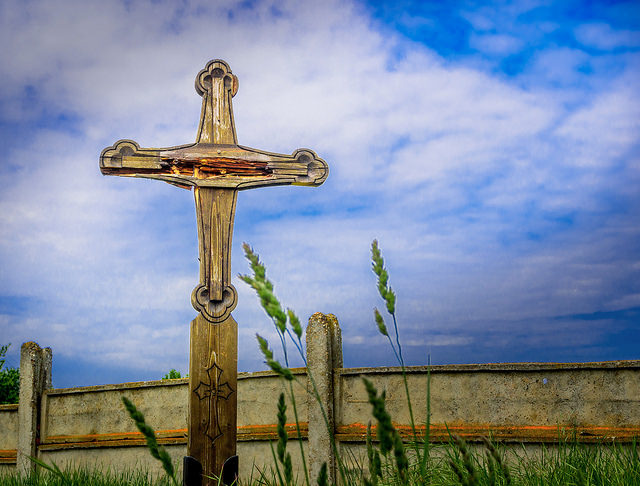
Photo Credit: Vasile Hurghis.
I remembering sitting in the pew at my non-denominational church one Sunday morning following a massive global catastrophe, and stewing.
I was stewing because the service had ended without even a single mention of the massive disaster, a disaster which had taken, at that time, countless lives. A disaster that the world was reeling from; which plastered the covers of the Sunday papers, which filled my Twitter and Facebook feeds, and which took up, of course, every inch of airtime on the major 24-hour news networks.
Talking heads must talk.
But I was stewing because our non-denominational church is otherwise incredibly connected to the world. We run a very robust outreach program for new immigrants, we have missionary connections around the world, and we’re culturally, ethnically, and socially quite diverse (and we celebrate it).
But no one mentioned the tragedy.
Nowhere in our prayers that morning, in the pastor’s lengthy sermon, or even in the form of a tiny blurb in the bulletin—“Hey, keep this tragedy in your prayers.”
Nothing, and I was mad.
Because, in my opinion, the Christian Church (and I use a big ‘C’ now) must speak out about issues like major catastrophes. The Church must muster all of its prayer power, all of its well-intentioned Christian love, and it must be Jesus in these sorts of situations. The Church has that obligation.
Last week, Pope Francis released his first encyclical, Laudato Si—I’ve been reading through it, and I suggest you do likewise.
The papal document, which bears much weight for Catholics, has been received with mixed reviews from downright incredulity, “What does the Pope know about climate change?” To wholesale enthusiasm, “Finally! A Christian speaking out for the environment!”
As a relatively new Catholic, a convert from Evangelical Protestantism, I think I can bring a fresh perspective on exactly why I think the Church must speak to issues like the environment. And why Laudato Si, in our current cultural climate (pun intended), is so profoundly important.
The Integrated Christian Life
The Christian Church has an obligation to speak out about social, moral, and yes, even environmental issues because we, as Christians, believe in the integrated Christian life.
Plain and simple, in my opinion.
As a Christian, my faith permeates and informs every aspect of my life. From the company I keep, to the decisions I make, to the way I drive, my life should be deeply informed by my faith.
Of course, I fail. We all do. If I truly took the time to examine all of my decisions from the perspective of my Christian faith there are all sorts of things I would be doing differently. How can I, for example, wear clothes made by a child in India who isn’t making a fair wage (and who is being exploited for their labour). I couldn’t, as a Christian, and neither could you (I suspect). But I often just don’t think about it, and that’s wrong.
So we fail.
But we ought not to; we ought to strive for a better, more integrated Christian life. And that’s exactly why the Catholic Church, and Pope Francis as its head, has a duty to speak out about contemporary issues.
We are not Christians in one part of our lives and gas-guzzling nature-haters in another. We Christians need to make our decisions informed by our faith.
Speaking to “New Things”
In the early days of my journey into the Catholic Church, I watched a debate between a Catholic priest (the indomitable Fr. Mitch Pacwa) and a Protestant Pastor. For his closing argument, the pastor wheeled a suitcase up onto the stage and proceeded to unload a small library onto his podium.
“This,” he triumphantly proclaimed, “is everything you need to know to be a Catholic.”
Taking his Bible in his hand he then said, “And this is all you need to know to be a Protestant.”
Visually, the comparison was striking.
Catholics are governed by a mountain of memorandum (indeed it teetered precariously as he spoke) while Protestants live, simply, on the Bible alone.
But Fr. Pacwa was not perturbed by the theatrics and without missing a beat he replied, “But aren’t there new things for the Church to speak out about?”
Yes. Yes, there are.
Fr. Pacwa’s point applies here too. The environment is something new for the Church to speak out about. As Pope Francis explains in the encyclical itself, we were taught all about creation, from the Bible itself, but we lost the thread—we lost the narrative, we forgot what it meant to be caretakers of the planet and we’re letting it all go to pot.
Pope Francis writes,
“An inadequate presentation of Christian anthropology gave rise to a wrong understanding of the relationship between human beings and the world.” (116)
The Bible speaks amply about creation but if we miss the point—and, look around, we certainly have—the Church must take a role in reminding us, lest we forget and run asunder.
Living as a Christian (in 2015)
What will be the enduring wisdom of Pope Francis’s Laudato Si is that it does both of these things well.
Francis speaks to the environment’s integral part of the Christian life while, in tandem, addressing how living in a Christian in this day and age ought to reflect certain values and choices.
Critics will, and have, panned Laudato Si as the Church straying too far into a territory where it has no right be stray: What does a Pope know about the environment?
But a question like this is missing the point.
Rather, we should ask, what does the Pope know about being a Christian in 2015?
The Church must speak to a myriad of issues and cannot remain silent because the Church is what Jesus left for us to help us understand how to live. Because new concerns like global warming will inevitably emerge over the course of two-thousand years and we need concrete, faith-filled direction.
Because, for those interested enough to read Laudato Si (and it’s thankfully highly readable), you’ll find a document rich in Christian teaching. From the perils of our technocratic society (technology is not neutral; people want to make money) to the inherent sacredness and dignity of human life (all life is sacred, even the unborn) to the problem with our wasteful habits and culture (nature cries out!).
As an Evangelical Protestant I sat in church that one Sunday morning stunned because not a word was mentioned about something I felt the Christian Church should be speaking out about. Later that same day, at Mass, and at every Mass across the face of the whole world, we prayed, in the Prayers of the Faithful, for all those impacted by that very same catastrophe.
Because Pope Francis, as the head of the Catholic Church, informed his bishops of a new issue to speak out about, and to pray for. And the Church assembled, and reacted.
As Christians, there are topics which we need to firmly wrestle with, on a daily basis, if we’re going to live truly integrated lives (as we’re called to do) and if there’s anything—anything at all—that Pope Francis has a “right” to speak about it’s undoubtedly this: how to live as a Christian.
Previous Post
June 22, 2015
Trusting God (When It Really Counts)
Next Post
June 27, 2015 Keep Calm And Carry On: How We Respond to Same-Sex Marriage
Browse Our Archives
Select a Category Appearances Christian Living Explaining the Faith Podcast Tough Questions Uncategorized Why I'm Catholic
Select a Month January 2024 December 2023 November 2023 July 2023 June 2023 May 2023 April 2023 March 2023 February 2023 January 2023 December 2022 November 2022 October 2022 September 2022 August 2022 July 2022 June 2022 May 2022 April 2022 March 2022 February 2022 January 2022 December 2021 November 2021 October 2021 September 2021 August 2021 July 2021 June 2021 May 2021 April 2021 March 2021 February 2021 January 2021 December 2020 November 2020 October 2020 September 2020 August 2020 July 2020 June 2020 May 2020 April 2020 March 2020 February 2020 January 2020 December 2019 November 2019 October 2019 September 2019 August 2019 July 2019 June 2019 May 2019 April 2019 March 2019 February 2019 January 2019 December 2018 November 2018 October 2018 September 2018 August 2018 July 2018 June 2018 May 2018 April 2018 March 2018 February 2018 January 2018 December 2017 October 2017 September 2017 July 2017 May 2017 April 2017 March 2017 February 2017 January 2017 December 2016 November 2016 October 2016 September 2016 August 2016 July 2016 June 2016 May 2016 April 2016 March 2016 February 2016 January 2016 December 2015 November 2015 October 2015 September 2015 August 2015 July 2015 June 2015 May 2015 April 2015 March 2015 February 2015 January 2015 December 2014 November 2014 October 2014
Follow Us!
TAKE THE
Religious Wisdom Quiz
Who killed Goliath the giant?
Select your answer to see how you score.
David Moses Adam Joseph
Support this
Column


Related posts from The Cordial Catholic
231: Becoming Catholic in a Church Crisis (w/...
212: Evangelicals, Here's How to Look for a...
187: The History of the Papacy (w/ Erick...
158: Purgatory for Evangelicals (w/ Dr. Brett Salkeld)
TRENDING AT PATHEOS Catholic

Rejecting Doom: Christian Hope And Human Action
Christianity is a religion of hope. We are to have hope and...

It’s What Comes From Within Which Matters
One of the most difficult things for us to understand is why...

Why I Choose the Eucharist Over the Sermon
Choose the Eucharist, Not the Sermon What are we supposed to get...

5 Design Elements Found in Spiritually Rooted Homes
Putting Spirituality Into Home Decor Our homes are more than our living...

Credo: A Story of God Told with the...
About 10 years ago, I began to imagine a personal "Credo" that...

The Anatomy of Divine Revelation in Catholic Thought
The claim that God has made Himself known to human beings is...
view all Catholic blogs
Ad-Free & Subscriber Log-In Subscription Support
- About Us
- 2026 Calendar
- Videos
- Podcasts
- Library of World Religions
- Faith In Media Tracker
- Advertise With Us
- Write for Us
- Privacy Policy
- Terms of Service
- Do Not Sell My Data
- Contact Us
- Radiant Digital
- Manage Newsletter Subscriptions
- Unsubscribe From Notifications
- Sitemap
Copyright 2008-2026, Patheos. All rights reserved.
Subscription Support Ad-Free & Subscriber Log-In
Follow Patheos