
BuddhistCatholicContemplativeEvangelicalGeneral ChristianHinduJewishLatter-day SaintMuslimNew VisionsProgressive Christian
Beliefs
- Buddhist
- Catholic
- Contemplative
- Evangelical
- General Christian
- Hindu
- Jewish
- Latter-day Saint
- More Voices
- Muslim
- New Visions
- Pagan
- Progressive Christian
Topics
- Religion News
- Food and Religion
- Sports and Religion
- Religious Art
- Religious Music and Entertainment
- Religious Events
- History and Religion
- Style and Religion
- Politics and Religion
- Women in Religion
- Recreation Outdoors and Religion
- Business Finance and Religion
- Careers Workplace and Religion
- Education and Religion
- Family Parenting and Religion
- Health Fitness and Religion
- Home and Religion
- Relationships and Religion
- Technology and Religion
- Travel and Religion
Columnists
- Buddhist Columnists
- Business Finance and Religion Columnists
- Careers Workplace and Religion Columnists
- Catholic Columnists
- Contemplative Columnists
- Education and Religion Columnists
- Evangelists Columnists
- Family Parenting and Religion Columnists
- General Christian Columnists
- Health Fitness and Religion Columnists
- Hindu Columnists
- History and Religion Columnists
- Home and Religion Columnists
- Jewish Columnists
- More Voices Columnists
- Latter Day Columnists
- Muslim Columnists
- New Visions Columnists
- Nonreligious Columnists
- Pagan Columnists
- Politics and Religion Columnists
- Progressive Columnists
- Recreation Outdoors and Religion Columnists
- Relationships and Religion Columnists
- Religion News Columnists
- Religious Art Columnists
- Religious Events Columnists
- Religious Music and Entertainment Columnists
- Sports and Religion Columnists
- Style and Religion Columnists
- Technology and Religion Columnists
- Travel and Religion Columnists
- Women in Religion Columnists
Resource Library
- 2026 Calendar
- Library of World Religions
- The 100 Most Holy Places on Earth
- Patheos Answers
- Podcasts
- Videos
- Faith Leaders Database
- Anglican Episcopalian
- Bahai
- Baptist
- Buddhism
- Christianity
- Confucianism
- Eastern Orthodoxy
- Hinduism
- Holiness and Pentecostal
- ISKCON
- Islam
- Judaism
- Lutheran
- Methodist
- The Church of Jesus Christ of Latter-day Saints
- New Age
- Paganism
- Presbytarian and Reformed
- Protestantism
- Religion Behind the Scenes
- Roman Catholic
- Scientology
- Shia Islam
- Sikhism
- Sufism
- Sunni Islam
- Taoism
- Zen
- See all religions
Research Tools
 Ad-Free & Subscriber Log-In Subscription Support
Ad-Free & Subscriber Log-In Subscription Support
Follow Patheos 

- Trending:
- Forgiveness
- |
- Marriage
- |
- Consciousness
- |
- Death Penalty
- |
- Election
- |
- Halloween
 The Cordial Catholic
- Home
- Catholic
- Is the Catholic Church Just Another Christian Denomination?
Is the Catholic Church Just Another Christian Denomination?
Last updated on: September 6, 2019 at 2:53 pm by K. Albert Little
Is the Catholic Church Just Another Christian Denomination? 2019-09-06T14:53:56-04:00 K. Albert Little
Patheos Explore the world's faith through different perspectives on religion and spirituality! Patheos has the views of the prevalent religions and spiritualities of the world.
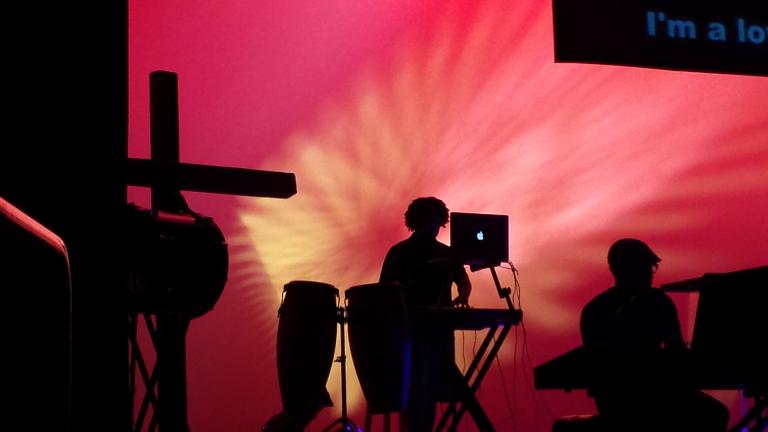
As a non-denominational evangelical Christian I thought the Catholic Church was just another denomination.
Just another expression of Christianity. And, for the most part, a pretty crappy and corrupt one.
I thought that Catholics worshiped statues, they elevated the Virgin Mary beyond a reasonable degree, and they didn’t have a personal relationship with Jesus. Not like I had, anyway.
But as I began to dig into history my perspective on denominationalism and Catholicism began to change. I was shocked, in fact, to discover that the Catholic Church wasn’t simply another denomination of Christianity. Instead, as history made plainly clear, the Catholic Church traces itself back to the beginning of Christianity.
The Catholic Church, from history, came first.
The plethora of denominations—ten of thousands of them, by some counts—came from the Catholic Church. These denominations spit from the Catholic Church or split from churches which split from the Catholic Church in the 500 years since the Protestant Reformation.
So, as history bears out, the Catholic Church is squarely not just another Christian denomination.
So why did I believe this?
First, my belief was predicated on the idea that the Body of Christ, as we called it in my evangelical churches, was merely an invisible collection of Christian believers. If there wasn’t a single, unified, physical infrastructure called the Body of Christ then there’s nothing to spilt from.
I believe that the Catholic Church was merely another Christian denomination because I believed that anyone, all Christians, who professed Christ were merely part of this invisible network of believers. How do you split from an invisible network? Well, you don’t. So we were all Christians and Catholics, as badly as they behaved, were merely part of this same network. We had differences, sometimes major and sometimes minor, over certain theological points but we were all Christians—the Body of Christ.
The problem with this belief, however, is that it wasn’t biblical, it wasn’t historical, and it wasn’t even logical.
Simply summarized, Jesus prayed that Christian believers would be “one as [I and the Father] are one” (John 17:1-26). Jesus and the Father weren’t merely invisibly connected around some loosely defined doctrine. Jesus and the Father were absolutely one, completely unified. Jesus didn’t intend to merely create an invisible body of believers based around an undefined collection of beliefs, he intended to create an organization of believers that were absolutely unified.
Another clue comes in Matthew’s gospel where Jesus explains how to settle a dispute between believers. The final step, says Christ, is to “bring it before the church” (Matthew 18:15-20). If Jesus intended Christians to be merely an invisible collection of believers with vastly different theological opinions how can a dispute possibly, in any meaningful sense, be reserved by “the church” when someone can simply skip down the street to a church which agrees with their theological point.
Both of these passages, the words of Christ, only make sense if the Church Christ established is absolutely united.
My understanding of the Church of Christ as an invisible collection of believers, and therefore the Catholic Church as just another part of that invisible network, was also historically untenable.
After all, from the Early Church right through to the Orthodox Schism in 1066, all Christians were clearly and visibly united under the bishops. While the Orthodox Schism is certainly a wound in the side of unity (and both sides remain committed and actively working on reconciliation) it is beyond historical dispute that the church was Catholic. United and universal. Physical and tangible—just like Jesus prayed for.
While some may argue that Constantine in the 300’s corrupted the church and it’s authority was lost a simple test proposed by historians is this: examine the doctrine, dogma, and practice of the Catholic Church before and after Constantine. In reality, as historical fact, Constantine’s supposed “legalizing of Christianity” (an overblown fact to be sure) did not change or alter the beliefs of these Early Christians. It was not a corruption of the Church, the visible collection of Christians, and did not some how drive the true Christians underground.
It’s simply an untenable position.
And, finally, it isn’t logical. To propose that Jesus intended to found an invisible Church of which Catholicism is simply another branch just doesn’t make sense. Because for the entire history of the Catholic Church, stretching back to the bishops who received their ordinations from the apostles, we see an apostolic succession which sees itself as visible, united, and hierarchical. An argument to the contrary seems to miss the whole point. If the Church was meant to be invisible and not bound together around strict doctrine, dogma, and practice, were the very earliest Christians, like St. Clement who was a disciple of John the Apostle, wrong? Clement writes of authority and doctrine and dogma and understands the earliest Church as clearly structured.
Not a loose collection of believers.
St. Ignatius, writing only a little bit later, makes it clear in his volumes of writing, that there are some Christians who are outside of the fold because of their beliefs. They are heretics and shouldn’t be considered true believers because they don’t profess a faith in things which the Catholic Church, tracing its lineage back through the apostles to Christ (a short trip back in Ignatius’s day) held to be true.
The Early Church was the Catholic Church which clear lines of who was in and who was out. Not an invisible collection of people professing a vague belief in Christ but differing in everything else.
What has changed today?
Well, nothing.
The Church can’t, and hasn’t, suddenly decided to stop seeing itself in direct lineage from the apostles. This is what the Catholic Church still believes—and can credibly trace!
As a non-denominational evangelical, however, I knew nothing of this. I assumed, because I believed the Christian Church to be defined as an invisible collection of believers, that everyone believed this too. The Catholic Church was just another denomination because we were all just invisibly linked anyway—that was our unity, although it hard is unity at all.
I’ve come to see that I was wrong.
Biblically, historically, and even logically, the Catholic Church is not just another denomination in a milieu of Christianity but it is the Church, founded by Christ, from which all denominations broke off from. And, certainly, some Protestant Christians may feel strongly that there was a reason for this. I grant you that you may feel that way too. But best feel that way with wide open eyes, walking in full recognition of the schism you find yourself in. And pray, ultimately, for unity once more.

Next Post
September 7, 2019 4 Proofs for the Catholic Church in the Book of Acts
Browse Our Archives
Select a Category Appearances Christian Living Explaining the Faith Podcast Tough Questions Uncategorized Why I'm Catholic
Select a Month January 2024 December 2023 November 2023 July 2023 June 2023 May 2023 April 2023 March 2023 February 2023 January 2023 December 2022 November 2022 October 2022 September 2022 August 2022 July 2022 June 2022 May 2022 April 2022 March 2022 February 2022 January 2022 December 2021 November 2021 October 2021 September 2021 August 2021 July 2021 June 2021 May 2021 April 2021 March 2021 February 2021 January 2021 December 2020 November 2020 October 2020 September 2020 August 2020 July 2020 June 2020 May 2020 April 2020 March 2020 February 2020 January 2020 December 2019 November 2019 October 2019 September 2019 August 2019 July 2019 June 2019 May 2019 April 2019 March 2019 February 2019 January 2019 December 2018 November 2018 October 2018 September 2018 August 2018 July 2018 June 2018 May 2018 April 2018 March 2018 February 2018 January 2018 December 2017 October 2017 September 2017 July 2017 May 2017 April 2017 March 2017 February 2017 January 2017 December 2016 November 2016 October 2016 September 2016 August 2016 July 2016 June 2016 May 2016 April 2016 March 2016 February 2016 January 2016 December 2015 November 2015 October 2015 September 2015 August 2015 July 2015 June 2015 May 2015 April 2015 March 2015 February 2015 January 2015 December 2014 November 2014 October 2014
Follow Us!
TAKE THE
Religious Wisdom Quiz
Who said: "You are a chosen people, a royal priesthood, a holy nation, God's special possession"?
Select your answer to see how you score.
Paul Peter Moses James
Support this
Column


Related posts from The Cordial Catholic

232: The Trajectory of Conversion (w/ Phillip Campbell)
231: Becoming Catholic in a Church Crisis (w/...

229: Can Catholics and Evangelicals Agree on How...

227: What was Medieval Catholicism Really Like? (w/...
TRENDING AT PATHEOS Catholic

Rejecting Doom: Christian Hope And Human Action
Christianity is a religion of hope. We are to have hope and...

It’s What Comes From Within Which Matters
One of the most difficult things for us to understand is why...

Why I Choose the Eucharist Over the Sermon
Choose the Eucharist, Not the Sermon What are we supposed to get...

5 Design Elements Found in Spiritually Rooted Homes
Putting Spirituality Into Home Decor Our homes are more than our living...

Credo: A Story of God Told with the...
About 10 years ago, I began to imagine a personal "Credo" that...

The Anatomy of Divine Revelation in Catholic Thought
The claim that God has made Himself known to human beings is...
view all Catholic blogs
Ad-Free & Subscriber Log-In Subscription Support
- About Us
- 2026 Calendar
- Videos
- Podcasts
- Library of World Religions
- Faith In Media Tracker
- Advertise With Us
- Write for Us
- Privacy Policy
- Terms of Service
- Do Not Sell My Data
- Contact Us
- Radiant Digital
- Manage Newsletter Subscriptions
- Unsubscribe From Notifications
- Sitemap
Copyright 2008-2026, Patheos. All rights reserved.
Subscription Support Ad-Free & Subscriber Log-In
Follow Patheos