
BuddhistCatholicContemplativeEvangelicalGeneral ChristianHinduJewishLatter-day SaintMuslimNew VisionsProgressive Christian
Beliefs
- Buddhist
- Catholic
- Contemplative
- Evangelical
- General Christian
- Hindu
- Jewish
- Latter-day Saint
- More Voices
- Muslim
- New Visions
- Pagan
- Progressive Christian
Topics
- Religion News
- Food and Religion
- Sports and Religion
- Religious Art
- Religious Music and Entertainment
- Religious Events
- History and Religion
- Style and Religion
- Politics and Religion
- Women in Religion
- Recreation Outdoors and Religion
- Business Finance and Religion
- Careers Workplace and Religion
- Education and Religion
- Family Parenting and Religion
- Health Fitness and Religion
- Home and Religion
- Relationships and Religion
- Technology and Religion
- Travel and Religion
Columnists
- Buddhist Columnists
- Business Finance and Religion Columnists
- Careers Workplace and Religion Columnists
- Catholic Columnists
- Contemplative Columnists
- Education and Religion Columnists
- Evangelists Columnists
- Family Parenting and Religion Columnists
- General Christian Columnists
- Health Fitness and Religion Columnists
- Hindu Columnists
- History and Religion Columnists
- Home and Religion Columnists
- Jewish Columnists
- More Voices Columnists
- Latter Day Columnists
- Muslim Columnists
- New Visions Columnists
- Nonreligious Columnists
- Pagan Columnists
- Politics and Religion Columnists
- Progressive Columnists
- Recreation Outdoors and Religion Columnists
- Relationships and Religion Columnists
- Religion News Columnists
- Religious Art Columnists
- Religious Events Columnists
- Religious Music and Entertainment Columnists
- Sports and Religion Columnists
- Style and Religion Columnists
- Technology and Religion Columnists
- Travel and Religion Columnists
- Women in Religion Columnists
Resource Library
- 2026 Calendar
- Library of World Religions
- The 100 Most Holy Places on Earth
- Patheos Answers
- Podcasts
- Videos
- Faith Leaders Database
- Anglican Episcopalian
- Bahai
- Baptist
- Buddhism
- Christianity
- Confucianism
- Eastern Orthodoxy
- Hinduism
- Holiness and Pentecostal
- ISKCON
- Islam
- Judaism
- Lutheran
- Methodist
- The Church of Jesus Christ of Latter-day Saints
- New Age
- Paganism
- Presbytarian and Reformed
- Protestantism
- Religion Behind the Scenes
- Roman Catholic
- Scientology
- Shia Islam
- Sikhism
- Sufism
- Sunni Islam
- Taoism
- Zen
- See all religions
Research Tools
 Ad-Free & Subscriber Log-In Subscription Support
Ad-Free & Subscriber Log-In Subscription Support
Follow Patheos 

- Trending:
- Forgiveness
- |
- Marriage
- |
- Consciousness
- |
- Death Penalty
- |
- Election
- |
- Halloween
 The Cordial Catholic
- Home
- Catholic
- How to Explain Purgatory to Everyone
How to Explain Purgatory to Everyone
Last updated on: January 18, 2018 at 11:39 am by K. Albert Little
How to Explain Purgatory to Everyone 2018-01-18T11:39:01-04:00 K. Albert Little
Patheos Explore the world's faith through different perspectives on religion and spirituality! Patheos has the views of the prevalent religions and spiritualities of the world.
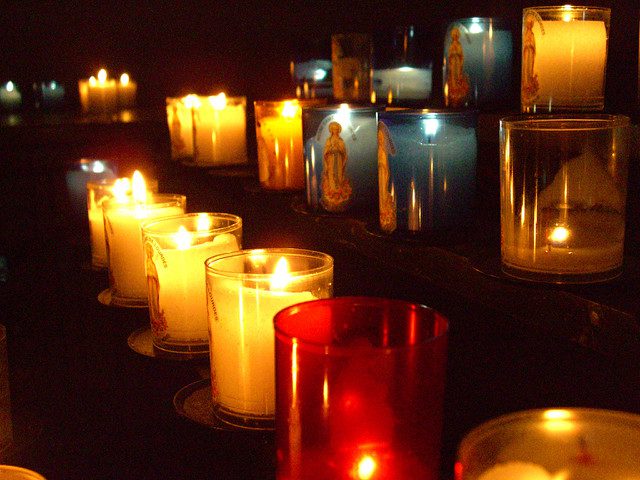
Photo Credit: Tybo.
One of the most responding, human impulses that St. Paul describes in his letters to the early churches is the idea of wanting to do what he doesn’t do.
“For what I want to do, I do not do,” Paul writes in his letter to the Romans.
In this, Paul captures something so profound that scholars and poets alike have spent the last two millennia working to unpack it.
The want to do something other than what we do and, sometimes, the mere want to want.
Purgatory is like this.
I’m reading a book right now by Reformed philosopher and theologian James K.A. Smith called You Are What You Love. In it, Smith takes a decidedly Catholic approach to orienting our lives towards God. In the course of the book, he refers to a 1979 Russian film called The Stalker. It’s an admittedly obscure film depicting the journey of three men in a post-apocalyptic world, trying to reach something called The Room—a place in which their innermost desires will be fulfilled.
After a harrowing journey the three stand on the cusp of The Room in a place called The Zone and, suddenly, have what Smith describes as some serious reservations.
What if what we really desire in our hearts isn’t what we should desire?
What if what lies behind that door, in The Room, uncovers our secret, hidden wishes? The true call of our heart that we didn’t even realize was there?
Because The Room reveals to us—gives to us—what we desire most; what we love the most.
Even if we don’t know it.
This is a picture of purgatory.
In the teaching of the Catholic Church, we believe that God doesn’t simply wave a magic wand when we die and make us fit to live, with Him, in Heaven.
In Heaven no imperfection can exist—nothing but perfect love—and, with that, no remorse, no wishful thinking, no hesitation or changing our mind.
Our loves and desires are perfected and oriented towards God. The Ultimate Perfection. The Ultimate Love.
Enter purgatory.
In the Catechism of the Catholic Church, purgatory is described as this,
All who die in God’s grace and friendship, but still imperfectly purified, are indeed assured of their eternal salvation; but after death they undergo purification, so as to achieve the holiness necessary to enter the joy of heaven (1030).
Purgatory is that which makes us fit for Heaven.
Like our characters’ hesitation to complete their journey and reveal the true loves of their heart in The Stalker, we too pause at the precipice of Heaven—we must—before we can charge the gates because when we die we’re not perfect, despite the very real sacrifice of Christ.
While we’re certainly saved, by Christ alone, we still have our hurts and hang-ups, don’t we? We still sin, and become frustrated, and like St. Paul, do things we do not want to do.
And we want to do better.
And, sometimes, we simply want to want to do better, and on those days when I’m a miserable, sorry mess, I’m absolutely unfit for Heaven even if my salvation—my faith in Christ—remains utterly unshaken.
I surely want to be perfect, but I’m not.
If I were to die on one of those days, or even on a good day, would God simply wave a magic wand and make all my insecurities and struggles vanish the second I kicked the bucket?
The Catholic Church says no.
This is purgatory: What St. Paul, and the Church, calls a kind of slow burning fire to purify us of whatever we’re still hanging on to.
To orient our desires fully to Christ—to ensure that what we really love is God and when we open the door to The Room it’s God on the inside.
Ultimately, how we explain purgatory is simple.
God can never bend our will. He refuses to wave a magic wand and change who we are because that would negate our ability to exercise free will. Instead, God designed a process to help slowly and surely transform us into images of Himself. This is life; this is the goal of our everyday existence on earth.
And this, too, is the purpose of purgatory.
A way to finish the job, on the precipice of Heaven, so once we enter into those lofty gates what we love is, ultimately, what we should love and we can enjoy eternity in the presence of God without hang-ups, hurts, or hesitation.
Previous Post

October 2, 2017
Let Me Explain Why I Love All This Catholic In-Fighting, OK?
Next Post

December 16, 2017 Why Do Catholics Kiss the Pope's Ring?
Browse Our Archives
Select a Category Appearances Christian Living Explaining the Faith Podcast Tough Questions Uncategorized Why I'm Catholic
Select a Month January 2024 December 2023 November 2023 July 2023 June 2023 May 2023 April 2023 March 2023 February 2023 January 2023 December 2022 November 2022 October 2022 September 2022 August 2022 July 2022 June 2022 May 2022 April 2022 March 2022 February 2022 January 2022 December 2021 November 2021 October 2021 September 2021 August 2021 July 2021 June 2021 May 2021 April 2021 March 2021 February 2021 January 2021 December 2020 November 2020 October 2020 September 2020 August 2020 July 2020 June 2020 May 2020 April 2020 March 2020 February 2020 January 2020 December 2019 November 2019 October 2019 September 2019 August 2019 July 2019 June 2019 May 2019 April 2019 March 2019 February 2019 January 2019 December 2018 November 2018 October 2018 September 2018 August 2018 July 2018 June 2018 May 2018 April 2018 March 2018 February 2018 January 2018 December 2017 October 2017 September 2017 July 2017 May 2017 April 2017 March 2017 February 2017 January 2017 December 2016 November 2016 October 2016 September 2016 August 2016 July 2016 June 2016 May 2016 April 2016 March 2016 February 2016 January 2016 December 2015 November 2015 October 2015 September 2015 August 2015 July 2015 June 2015 May 2015 April 2015 March 2015 February 2015 January 2015 December 2014 November 2014 October 2014
Follow Us!
TAKE THE
Religious Wisdom Quiz
What is the main Christian church in Greece?
Select your answer to see how you score.
Pentecostal Lutheran Greek Orthodox Catholic
Support this
Column


Related posts from The Cordial Catholic

229: Can Catholics and Evangelicals Agree on How...

182: The Catholic Guide to Death, Dying, and...

161: How to Die to Yourself (w/ Father...

158: Purgatory for Evangelicals (w/ Dr. Brett Salkeld)
TRENDING AT PATHEOS Catholic

Rejecting Doom: Christian Hope And Human Action
Christianity is a religion of hope. We are to have hope and...

It’s What Comes From Within Which Matters
One of the most difficult things for us to understand is why...

Why I Choose the Eucharist Over the Sermon
Choose the Eucharist, Not the Sermon What are we supposed to get...

5 Design Elements Found in Spiritually Rooted Homes
Putting Spirituality Into Home Decor Our homes are more than our living...

Credo: A Story of God Told with the...
About 10 years ago, I began to imagine a personal "Credo" that...

The Anatomy of Divine Revelation in Catholic Thought
The claim that God has made Himself known to human beings is...
view all Catholic blogs
Ad-Free & Subscriber Log-In Subscription Support
- About Us
- 2026 Calendar
- Videos
- Podcasts
- Library of World Religions
- Faith In Media Tracker
- Advertise With Us
- Write for Us
- Privacy Policy
- Terms of Service
- Do Not Sell My Data
- Contact Us
- Radiant Digital
- Manage Newsletter Subscriptions
- Unsubscribe From Notifications
- Sitemap
Copyright 2008-2026, Patheos. All rights reserved.
Subscription Support Ad-Free & Subscriber Log-In
Follow Patheos