
BuddhistCatholicContemplativeEvangelicalGeneral ChristianHinduJewishLatter-day SaintMuslimNew VisionsProgressive Christian
Beliefs
- Buddhist
- Catholic
- Contemplative
- Evangelical
- General Christian
- Hindu
- Jewish
- Latter-day Saint
- More Voices
- Muslim
- New Visions
- Pagan
- Progressive Christian
Topics
- Religion News
- Food and Religion
- Sports and Religion
- Religious Art
- Religious Music and Entertainment
- Religious Events
- History and Religion
- Style and Religion
- Politics and Religion
- Women in Religion
- Recreation Outdoors and Religion
- Business Finance and Religion
- Careers Workplace and Religion
- Education and Religion
- Family Parenting and Religion
- Health Fitness and Religion
- Home and Religion
- Relationships and Religion
- Technology and Religion
- Travel and Religion
Columnists
- Buddhist Columnists
- Business Finance and Religion Columnists
- Careers Workplace and Religion Columnists
- Catholic Columnists
- Contemplative Columnists
- Education and Religion Columnists
- Evangelists Columnists
- Family Parenting and Religion Columnists
- General Christian Columnists
- Health Fitness and Religion Columnists
- Hindu Columnists
- History and Religion Columnists
- Home and Religion Columnists
- Jewish Columnists
- More Voices Columnists
- Latter Day Columnists
- Muslim Columnists
- New Visions Columnists
- Nonreligious Columnists
- Pagan Columnists
- Politics and Religion Columnists
- Progressive Columnists
- Recreation Outdoors and Religion Columnists
- Relationships and Religion Columnists
- Religion News Columnists
- Religious Art Columnists
- Religious Events Columnists
- Religious Music and Entertainment Columnists
- Sports and Religion Columnists
- Style and Religion Columnists
- Technology and Religion Columnists
- Travel and Religion Columnists
- Women in Religion Columnists
Resource Library
- 2026 Calendar
- Library of World Religions
- The 100 Most Holy Places on Earth
- Patheos Answers
- Podcasts
- Videos
- Faith Leaders Database
- Anglican Episcopalian
- Bahai
- Baptist
- Buddhism
- Christianity
- Confucianism
- Eastern Orthodoxy
- Hinduism
- Holiness and Pentecostal
- ISKCON
- Islam
- Judaism
- Lutheran
- Methodist
- The Church of Jesus Christ of Latter-day Saints
- New Age
- Paganism
- Presbytarian and Reformed
- Protestantism
- Religion Behind the Scenes
- Roman Catholic
- Scientology
- Shia Islam
- Sikhism
- Sufism
- Sunni Islam
- Taoism
- Zen
- See all religions
Research Tools
 Ad-Free & Subscriber Log-In Subscription Support
Ad-Free & Subscriber Log-In Subscription Support
Follow Patheos 

- Trending:
- Forgiveness
- |
- Marriage
- |
- Consciousness
- |
- Death Penalty
- |
- Election
- |
- Halloween
 The Cordial Catholic
- Home
- Catholic
- Evangelicals, We’ve Been Praying Wrong!
Evangelicals, We’ve Been Praying Wrong!
Last updated on: August 3, 2015 at 3:59 pm by K. Albert Little
Evangelicals, We’ve Been Praying Wrong! 2015-08-03T15:59:28-04:00 K. Albert Little
Patheos Explore the world's faith through different perspectives on religion and spirituality! Patheos has the views of the prevalent religions and spiritualities of the world.
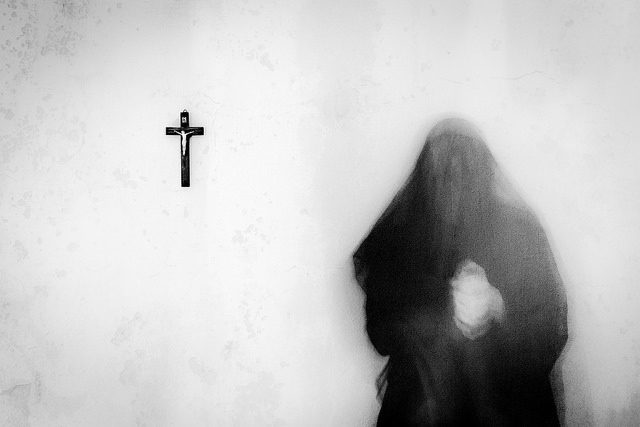
Photo Credit: S.T.
As an Evangelical Protestant, spontaneous, heartfelt prayer was the bread and butter of the expression of our faith. It was our lifeline; our direct means of communication with God. Our spontaneous, unrehearsed prayer was what moved God to our causes and concerns on earth.
So, as a convert to Catholicism I approached the Church’s vast litany of pre-selected and written prayers with an equal measure of incredulity and skepticism. Remarkably, however, after scratching below the surface, after taking a good look, I’ve come to the conclusion that it’s not the ancient and liturgical churches that have their prayers wrong, it was us evangelicals.
We’ve been praying wrong.
Rote is Routine; Routine is Religious; Religion is Bad
I come from a Pentecostal tradition that said, in no uncertain terms, that the Lord’s Prayer was vain repetition. I think it’s important to get that off my chest straight away because that’s where I, as a Christian, began.
Back in those early days, as a young and zealous Christian, we were taught to shun written and rote prayers as everything wrong with religious Christianity. Remarkably, the Lord’s Prayer, the prayer that Jesus taught us to pray was seen as something to fundamentally avoid. It was a template, we were told, a framework for how our own spontaneous, authentic prayers should sound and was never to be repeated verbatim.
What my Pentecostal upbringing taught me—and where we were perhaps were guilty of a bit of over-emphasis—was that rote, routine, and tired religious acts of all stripes should be avoided. That’s what they meant in the end with their strict avoidance of the Lord’s Prayer—a prayer which made up the cornerstone of the Christian Church for 2,000 years—they meant: we need to avoid falling into mindless pattern. And, really, that’s a laudable thing in the end.
What was, ultimately, wrong with written or memorized prayers was that they ran the risk of becoming dead—of becoming mere vain repetition. And this was something we, in my Pentecostal community, sought to avoid above all else.
Our Christian History of Prayer
Likewise missing from my Pentecostal upbringing, and from much of Evangelical Protestantism, in my experience, is a fundamental grasp of our history as Christians. For us Pentecostals, our history went back to the turn of the 20th century, or even more recently, to the foundation of our vibrant church community sometime in the 1960’s charismatic renewal.
We suffered, in the end, from a great amnesia about our past, about our collective history as Christians. We, sadly, couldn’t even trace our history back to the Reformation, let alone the beginning of the Christian Church and all the councils, heretics, and developments in between.
We forgot, as Thomas Howard writes,
“That the Faith has been borne on human shoulders and in human hearts for two thousand years.”
Naturally, with our ignorance of our shared Christian heritage we remained, largely, ignorant of the vast shared archive of written Christian prayer.
Likewise, our modern Pentecostal church, a descendant, ultimately, of the Congregationalist movement in North America, was a microcosm all of its own. We shared no history with the rest of Christianity, including a history of prayer. We, as many Evangelical communities do, drew a straight line from the Early Church communities, straight to ourselves. A hop, skip, and jump over all the mess in the middle.
What’s Wrong with Written Prayer
Fundamentally, if you’d asked me, as an evangelical, what was actually wrong with rote, written, or repeated prayers I probably wouldn’t have truly had a good answer. Probably, many in the same boat I was in, had a similar deficiency.
In my early upbringing we were truly leery of falling into vain repetition or merely ignorant, we left untouched the vast repository of Christian prayer opting, instead, for our own. But even in my experience of the more intentional, more traditional-leaning non-denominational church the practice of reciting prescribed prayers was completely absent.
We avoided such prayers out of ignorance and a vague sense of piety. Our spontaneous prayers were, at least on a subconscious level, more honest, more earnest, and more in tune with the heart of God. Nevermind that David—who was described by God as a man after His own heart—wrote the greatest collection of rote prayers the Church has even known.
And this,
“What I was forgetting was that the extempore prayers that I knew so well were themselves made up of stock phrases strung together.”
Thomas Howard, again, sheds light on our vague disdain for written prayers but reminding us that, ultimately, even our spontaneous prayers are made up of what he calls, lovingly, “stock phrases.” Expressions like “Dear God,” or “Lord, we come to You,” can be oft-repeated phrases which weasel their way into many a spontaneous prayer and have far less historical foundation and precedence than the ancient written, repeated prayers of the Christian Church.
While spontaneous prayer has, fundamentally, a place in all pious Christian devotion more room needs to be made, urgently, to access the vast treasure trove of written, ancient Christian prayer.
We’ve Been Praying Wrong
If our only good reason to avoid praying the written prayers of the Church is to avoid the appearance or reality of vain repetition then there are, undoubtedly, a number of other areas of our worship we need to likewise address.
Starting with worship music.
If anything but spontaneous prayer is shunned then what about rehearsed, repeated worship music—a cornerstone of our modern, evangelical worship. How is singing a rehearsed song any different than using a pre-selected, rehearsed prayer?
We must admit: There’s no difference at all.
But what about an argument made for relevance?
How can an ancient Christian prayer possibly be made relevant to our particular, unusual needs. What do ancient Christians like St. Athanasius, St. Ambrose, or St. Frances de Sales know of the very modern situations we find ourselves in—and the very modern problems we pray for?
While praying a spontaneous prayer for our friend’s social network might make us feel like we’ve truly reached God most earnestly mere feeling, I would argue, relates nothing to relevance.
Howard, again, writes poignantly,
“What is the touchstone of relevance: subjective sentiments or seventeen centuries of Christian worship.”
What remains relevant to us today? What is more relevant to the Christian act of worship? That which is spontaneous and makes us feel heard, or that which has remained historically relevant through the test of time? That which connects us with the Church across all time and space?
When Facebook has disappeared ten years from now the beautiful poetic prayers of St. Ambrose, you can bet, will still be repeated, and prayed, across the whole world.
Where We Go From Here
I feel a fool, as we all should, for needlessly spurning the beautiful, vast litany of Christian prayers. The two-thousand year treasure trove of faithful devotion. The vault of written prayer.
Whether for an outright fear of vain repetition of a vague misunderstanding and lack of Christian identity, we ignored, or shunned, written prayer at our own peril. We clung to spontaneous, personal and individual prayers because, we thought, they were more relevant, more genuine. But what could be more relevant, or more genuine, than prayer refined in fire for a thousand years?
Prayer that stood the test of a thousand plus years of Christian devotion.
Thomas Howard writes that,
“The prayers of the Church lead us into regions that, left to our own resources, we might never have imagined.”
The wealth of written Christian prayer takes us beyond our meager abilities to pray what we feel and gives us words, like the groaning of our spirit, to fill in the blanks. It brings us to new places, deeper places of relationship and connection—not places that are more shallow.
I write as a Catholic, an Evangelical Catholic, to my dearest, closest Evangelical friends. I write to say that, ultimately, we’ve been praying wrong.
Don’t get me wrong, we weren’t praying all wrong because God hears us, every weak whimper we make. Many older Catholics, I can tell you from experience, don’t know the first place to start a spontaneous prayer and that’s an awful deficit in and of itself. Spontaneous prayers are of vital importance to the devotional life of every single Christian. But fundamentally, our distrust or vague avoidance of written, ancient Christian prayer was, and is, misguided. There is a litany of beautiful, foundational prayers out there just waiting for us to begin to scratch at the surface.
And we need this.
We need, as evangelical communities of believers, to reconnect more fully with the tradition in which we stand. We need to learn our history so that we can learn from it, and grow, and we can begin by praying prayers that set us shoulder to shoulder with great Christians, martyrs, and heroes of the faith.
Previous Post
May 18, 2015
Stop Staring at the Clouds, and Get Out There
Browse Our Archives
Select a Category Appearances Christian Living Explaining the Faith Podcast Tough Questions Uncategorized Why I'm Catholic
Select a Month January 2024 December 2023 November 2023 July 2023 June 2023 May 2023 April 2023 March 2023 February 2023 January 2023 December 2022 November 2022 October 2022 September 2022 August 2022 July 2022 June 2022 May 2022 April 2022 March 2022 February 2022 January 2022 December 2021 November 2021 October 2021 September 2021 August 2021 July 2021 June 2021 May 2021 April 2021 March 2021 February 2021 January 2021 December 2020 November 2020 October 2020 September 2020 August 2020 July 2020 June 2020 May 2020 April 2020 March 2020 February 2020 January 2020 December 2019 November 2019 October 2019 September 2019 August 2019 July 2019 June 2019 May 2019 April 2019 March 2019 February 2019 January 2019 December 2018 November 2018 October 2018 September 2018 August 2018 July 2018 June 2018 May 2018 April 2018 March 2018 February 2018 January 2018 December 2017 October 2017 September 2017 July 2017 May 2017 April 2017 March 2017 February 2017 January 2017 December 2016 November 2016 October 2016 September 2016 August 2016 July 2016 June 2016 May 2016 April 2016 March 2016 February 2016 January 2016 December 2015 November 2015 October 2015 September 2015 August 2015 July 2015 June 2015 May 2015 April 2015 March 2015 February 2015 January 2015 December 2014 November 2014 October 2014
Follow Us!
TAKE THE
Religious Wisdom Quiz
What is the longest prophecy in the Bible given to an individual?
Select your answer to see how you score.
John’s Revelation Daniel’s 70 Weeks Isaiah’s Suffering Servant Joseph’s Dream
Support this
Column


Related posts from The Cordial Catholic
228: The Catholic Tools for Spiritual Warfare (w/...

227: What was Medieval Catholicism Really Like? (w/...
201: Eucharistic Miracles, Marian Apparitions, and More... (w/...
198: Why We Left Catholicism – and Why...
TRENDING AT PATHEOS Catholic

Rejecting Doom: Christian Hope And Human Action
Christianity is a religion of hope. We are to have hope and...

It’s What Comes From Within Which Matters
One of the most difficult things for us to understand is why...

Why I Choose the Eucharist Over the Sermon
Choose the Eucharist, Not the Sermon What are we supposed to get...

5 Design Elements Found in Spiritually Rooted Homes
Putting Spirituality Into Home Decor Our homes are more than our living...

Credo: A Story of God Told with the...
About 10 years ago, I began to imagine a personal "Credo" that...

The Anatomy of Divine Revelation in Catholic Thought
The claim that God has made Himself known to human beings is...
view all Catholic blogs
Ad-Free & Subscriber Log-In Subscription Support
- About Us
- 2026 Calendar
- Videos
- Podcasts
- Library of World Religions
- Faith In Media Tracker
- Advertise With Us
- Write for Us
- Privacy Policy
- Terms of Service
- Do Not Sell My Data
- Contact Us
- Radiant Digital
- Manage Newsletter Subscriptions
- Unsubscribe From Notifications
- Sitemap
Copyright 2008-2026, Patheos. All rights reserved.
Subscription Support Ad-Free & Subscriber Log-In
Follow Patheos