
BuddhistCatholicContemplativeEvangelicalGeneral ChristianHinduJewishLatter-day SaintMuslimNew VisionsProgressive Christian
Beliefs
- Buddhist
- Catholic
- Contemplative
- Evangelical
- General Christian
- Hindu
- Jewish
- Latter-day Saint
- More Voices
- Muslim
- New Visions
- Pagan
- Progressive Christian
Topics
- Religion News
- Food and Religion
- Sports and Religion
- Religious Art
- Religious Music and Entertainment
- Religious Events
- History and Religion
- Style and Religion
- Politics and Religion
- Women in Religion
- Recreation Outdoors and Religion
- Business Finance and Religion
- Careers Workplace and Religion
- Education and Religion
- Family Parenting and Religion
- Health Fitness and Religion
- Home and Religion
- Relationships and Religion
- Technology and Religion
- Travel and Religion
Columnists
- Buddhist Columnists
- Business Finance and Religion Columnists
- Careers Workplace and Religion Columnists
- Catholic Columnists
- Contemplative Columnists
- Education and Religion Columnists
- Evangelists Columnists
- Family Parenting and Religion Columnists
- General Christian Columnists
- Health Fitness and Religion Columnists
- Hindu Columnists
- History and Religion Columnists
- Home and Religion Columnists
- Jewish Columnists
- More Voices Columnists
- Latter Day Columnists
- Muslim Columnists
- New Visions Columnists
- Nonreligious Columnists
- Pagan Columnists
- Politics and Religion Columnists
- Progressive Columnists
- Recreation Outdoors and Religion Columnists
- Relationships and Religion Columnists
- Religion News Columnists
- Religious Art Columnists
- Religious Events Columnists
- Religious Music and Entertainment Columnists
- Sports and Religion Columnists
- Style and Religion Columnists
- Technology and Religion Columnists
- Travel and Religion Columnists
- Women in Religion Columnists
Resource Library
- 2026 Calendar
- Library of World Religions
- The 100 Most Holy Places on Earth
- Patheos Answers
- Podcasts
- Videos
- Faith Leaders Database
- Anglican Episcopalian
- Bahai
- Baptist
- Buddhism
- Christianity
- Confucianism
- Eastern Orthodoxy
- Hinduism
- Holiness and Pentecostal
- ISKCON
- Islam
- Judaism
- Lutheran
- Methodist
- The Church of Jesus Christ of Latter-day Saints
- New Age
- Paganism
- Presbytarian and Reformed
- Protestantism
- Religion Behind the Scenes
- Roman Catholic
- Scientology
- Shia Islam
- Sikhism
- Sufism
- Sunni Islam
- Taoism
- Zen
- See all religions
Research Tools
 Ad-Free & Subscriber Log-In Subscription Support
Ad-Free & Subscriber Log-In Subscription Support
Follow Patheos 

- Trending:
- Forgiveness
- |
- Marriage
- |
- Consciousness
- |
- Death Penalty
- |
- Election
- |
- Halloween
 The Cordial Catholic
- Home
- Catholic
- Did Catholics Corrupt the Church That Jesus Founded?
Did Catholics Corrupt the Church That Jesus Founded?
Last updated on: May 16, 2019 at 9:10 pm by K. Albert Little
Did Catholics Corrupt the Church That Jesus Founded? 2019-05-16T21:10:45-04:00 K. Albert Little
Patheos Explore the world's faith through different perspectives on religion and spirituality! Patheos has the views of the prevalent religions and spiritualities of the world.
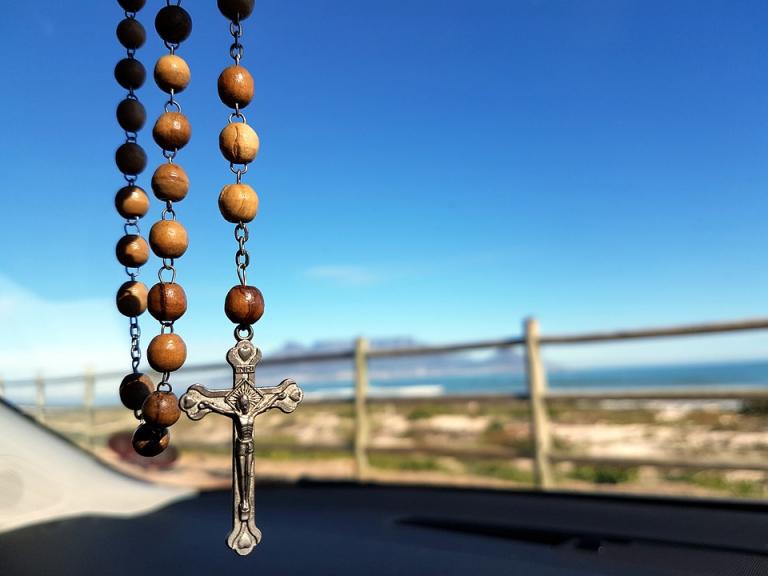
Recently, I had the incredible opportunity to chat with Rod Bennett, author of The Apostasy That Wasn’t.
Every Christian church that isn’t Catholic, said Rod in our hour-plus interview, has an apostasy theory.
Every Christian church that isn’t Catholic has to have picked a time, in history, when the Church that Jesus founded went off the rails.
Got lost.
Was hopelessly corrupt.
Strayed from the simple faith that Christ established and had to be inevitably rescued somewhere later down the line.
This is the working hypothesis of all Christians that aren’t Catholic, says Rod. The Church that Jesus clearly founded in the Bible with Peter and the apostles in charge, somehow became so terribly unhinged from Christ’s original plan.
Here’s how it often goes.
Jesus, as pictured in the New Testament, appointed twelve apostles to help establish his Church. After his death, resurrection, and ascension into Heaven, Christ trusted these apostles—11 plus the newly-appointed Matthias—to plant churches, to establish communities, and to spread the message of Christianity across the world.
As the story goes, the apostles started out well. The Church was growing but mostly in secret; mostly sequestered in upper rooms or hidden below the ground. The Church was spreading incognito.
But, at some point in history, the Church began to become more popular. It began to Romanize as the Roman Empire adopted it as its official religion. Politics, war, economics began to mingle with pious religion which quickly began to look more and more like the condemnable “religion” of Pharisees than the simple “faith” of the apostles.
At this point, or sometimes later, an apostasy took place.
That is, the Church which Jesus established was so far off the rails that the Holy Spirit called it quits and left the building.
(No tips for the waitresses either.)
But, says Rod, it simply ain’t so.
For one thing, the myth of the simple faith of the Early Church is, just that, a myth. From the very beginning, the earliest Christians began to define substantial doctrine, mark out holy places with shrines and cathedrals, and were very much active and involved in public life—even while Christianity wasn’t officially recognized by the Roman authorities.
While scores of the first Christians were martyred and persecuted for their faith, the church continued by appointing successors to the apostles and successors to their successors and so on and so forth. The Church, far from being a disorganized band of Christians cowering in private homes, was a hierarchically structured, doctrined and disciplined, visible body of believers with a clear chain of authority, from the very beginning.
If the Church somehow jettisoned the simple faith of the apostles it did so immediately after beginning.
But what about later?
Most non-Catholic Christians will point to Constantine and the AD 300-400’s as the time when the Early Church most definitely lost its way. As Christianity became “legal” it also began to mix with politics; it became a secular, paganized religion. And, again, that simple faith of the apostles was lost.
It wouldn’t be until the Reformation, 1,200 years later, that it was finally restored.
Rod says that this, too, is bunk.
If you read the Early Church Fathers the disciples of Jesus writing directly after the time of the apostles, you will see that the teaching of the Church is the same before, during, and after the so-called reign of the Christian Constantine.
In other words, the teaching and practice of the Church did not change even after it’s “legalization.”
The Early Church Fathers, Christians in places of authority, some of whom were direct disciples of the apostles appointed by Jesus, write clearly of an early Christian church which had an authority structure, clear doctrine, and beliefs that remain the same even after Constantine and the Roman Empire get involved.
While the Christian Church may have gotten cozy with the authorities, and while some popes are evil, the fundamental teaching of the Church—the one founded by Christ which continued to march on—was not altered.
There was no apostasy here.
But, what about later?
The challenge of it all, says Rod, is that every non-Catholic Christian must hold to some kind of apostasy theory. And every theory is different.
If you don’t accept that the Catholic Church, with its historical succession of bishops traced back to the apostles themselves, is still the Church that Christ founded then you have to develop some kind of theory of what happened.
What happened to that Church?
And whether or not you know it, you’ve got an apostasy theory.
Whether or not you know it, if you aren’t Catholic you are holding to a position that the Church founded by Christ was somehow lost in the mists of time and history. And, somehow, it was found again. Whether it was Luther, Calvin, Zwingli, or some other priest of prophet, if you believe that you’re in Christ’s Christian Church, you had to have found it again… after it was lost.
And how did that happen?
The ancient Church was Catholic. This is, from a historical perspective, impossible to dispute. With its succession of bishops, with its teaching on the Eucharist, baptism, and the sacraments. With the pope as its head, traceable through the veil of history up to today, the Church founded by Christ is what we today call the Catholic Church.
Maybe, you’d say, what is today’s Catholic church somehow went off the rails. Maybe it was the Church founded by Christ but it stumbled. When and where is a matter of, you’d say… opinion? Somehow that doesn’t seem good enough.
But if you aren’t Catholic, says Rod Bennett, you need to know why. You need a better answer.
When do you think the Church went wrong? Where? And when was it brought back under the harness of the Holy Spirit once again? These are fundamental questions, which demand satisfying answers.
Or, maybe, there wasn’t an apostasy after all. Maybe when Jesus said that the gates of Hades would not overcome His Church, he meant it. Maybe the Catholic Church that marches on today—that holds to the same ancient beliefs, practices, and doctrines of the very first Christians—is still the Church that Jesus made.
I think so.
For more, listen to Rod Bennett on The Cordial Catholic Podcast below.
Previous Post

May 15, 2019
007: Debunking the Great Apostasy (w/ Rod Bennett)
Next Post
May 22, 2019 008: Out of Islam and Into the Catholic Church (w/ Dr. Derya Little)
Browse Our Archives
Select a Category Appearances Christian Living Explaining the Faith Podcast Tough Questions Uncategorized Why I'm Catholic
Select a Month January 2024 December 2023 November 2023 July 2023 June 2023 May 2023 April 2023 March 2023 February 2023 January 2023 December 2022 November 2022 October 2022 September 2022 August 2022 July 2022 June 2022 May 2022 April 2022 March 2022 February 2022 January 2022 December 2021 November 2021 October 2021 September 2021 August 2021 July 2021 June 2021 May 2021 April 2021 March 2021 February 2021 January 2021 December 2020 November 2020 October 2020 September 2020 August 2020 July 2020 June 2020 May 2020 April 2020 March 2020 February 2020 January 2020 December 2019 November 2019 October 2019 September 2019 August 2019 July 2019 June 2019 May 2019 April 2019 March 2019 February 2019 January 2019 December 2018 November 2018 October 2018 September 2018 August 2018 July 2018 June 2018 May 2018 April 2018 March 2018 February 2018 January 2018 December 2017 October 2017 September 2017 July 2017 May 2017 April 2017 March 2017 February 2017 January 2017 December 2016 November 2016 October 2016 September 2016 August 2016 July 2016 June 2016 May 2016 April 2016 March 2016 February 2016 January 2016 December 2015 November 2015 October 2015 September 2015 August 2015 July 2015 June 2015 May 2015 April 2015 March 2015 February 2015 January 2015 December 2014 November 2014 October 2014
Follow Us!
TAKE THE
Religious Wisdom Quiz
According to 2 Peter, by what were the heavens and earth of old destroyed?
Select your answer to see how you score.
God's word alone Water (the flood) Fire Earthquake
Support this
Column


Related posts from The Cordial Catholic

229: Can Catholics and Evangelicals Agree on How...

227: What was Medieval Catholicism Really Like? (w/...
212: Evangelicals, Here's How to Look for a...
198: Why We Left Catholicism – and Why...
TRENDING AT PATHEOS Catholic

Rejecting Doom: Christian Hope And Human Action
Christianity is a religion of hope. We are to have hope and...

It’s What Comes From Within Which Matters
One of the most difficult things for us to understand is why...

Why I Choose the Eucharist Over the Sermon
Choose the Eucharist, Not the Sermon What are we supposed to get...

5 Design Elements Found in Spiritually Rooted Homes
Putting Spirituality Into Home Decor Our homes are more than our living...

Credo: A Story of God Told with the...
About 10 years ago, I began to imagine a personal "Credo" that...

The Anatomy of Divine Revelation in Catholic Thought
The claim that God has made Himself known to human beings is...
view all Catholic blogs
Ad-Free & Subscriber Log-In Subscription Support
- About Us
- 2026 Calendar
- Videos
- Podcasts
- Library of World Religions
- Faith In Media Tracker
- Advertise With Us
- Write for Us
- Privacy Policy
- Terms of Service
- Do Not Sell My Data
- Contact Us
- Radiant Digital
- Manage Newsletter Subscriptions
- Unsubscribe From Notifications
- Sitemap
Copyright 2008-2026, Patheos. All rights reserved.
Subscription Support Ad-Free & Subscriber Log-In
Follow Patheos