
BuddhistCatholicContemplativeEvangelicalGeneral ChristianHinduJewishLatter-day SaintMuslimNew VisionsProgressive Christian
Beliefs
- Buddhist
- Catholic
- Contemplative
- Evangelical
- General Christian
- Hindu
- Jewish
- Latter-day Saint
- More Voices
- Muslim
- New Visions
- Pagan
- Progressive Christian
Topics
- Religion News
- Food and Religion
- Sports and Religion
- Religious Art
- Religious Music and Entertainment
- Religious Events
- History and Religion
- Style and Religion
- Politics and Religion
- Women in Religion
- Recreation Outdoors and Religion
- Business Finance and Religion
- Careers Workplace and Religion
- Education and Religion
- Family Parenting and Religion
- Health Fitness and Religion
- Home and Religion
- Relationships and Religion
- Technology and Religion
- Travel and Religion
Columnists
- Buddhist Columnists
- Business Finance and Religion Columnists
- Careers Workplace and Religion Columnists
- Catholic Columnists
- Contemplative Columnists
- Education and Religion Columnists
- Evangelists Columnists
- Family Parenting and Religion Columnists
- General Christian Columnists
- Health Fitness and Religion Columnists
- Hindu Columnists
- History and Religion Columnists
- Home and Religion Columnists
- Jewish Columnists
- More Voices Columnists
- Latter Day Columnists
- Muslim Columnists
- New Visions Columnists
- Nonreligious Columnists
- Pagan Columnists
- Politics and Religion Columnists
- Progressive Columnists
- Recreation Outdoors and Religion Columnists
- Relationships and Religion Columnists
- Religion News Columnists
- Religious Art Columnists
- Religious Events Columnists
- Religious Music and Entertainment Columnists
- Sports and Religion Columnists
- Style and Religion Columnists
- Technology and Religion Columnists
- Travel and Religion Columnists
- Women in Religion Columnists
Resource Library
- 2026 Calendar
- Library of World Religions
- The 100 Most Holy Places on Earth
- Patheos Answers
- Podcasts
- Videos
- Faith Leaders Database
- Anglican Episcopalian
- Bahai
- Baptist
- Buddhism
- Christianity
- Confucianism
- Eastern Orthodoxy
- Hinduism
- Holiness and Pentecostal
- ISKCON
- Islam
- Judaism
- Lutheran
- Methodist
- The Church of Jesus Christ of Latter-day Saints
- New Age
- Paganism
- Presbytarian and Reformed
- Protestantism
- Religion Behind the Scenes
- Roman Catholic
- Scientology
- Shia Islam
- Sikhism
- Sufism
- Sunni Islam
- Taoism
- Zen
- See all religions
Research Tools
 Ad-Free & Subscriber Log-In Subscription Support
Ad-Free & Subscriber Log-In Subscription Support
Follow Patheos 

- Trending:
- Forgiveness
- |
- Marriage
- |
- Consciousness
- |
- Death Penalty
- |
- Election
- |
- Halloween
 The Cordial Catholic
- Home
- Catholic
- Confession, the Gym, and Taking Sin Seriously
Confession, the Gym, and Taking Sin Seriously
Last updated on: August 3, 2015 at 3:59 pm by K. Albert Little
Confession, the Gym, and Taking Sin Seriously 2015-08-03T15:59:29-04:00 K. Albert Little
Patheos Explore the world's faith through different perspectives on religion and spirituality! Patheos has the views of the prevalent religions and spiritualities of the world.
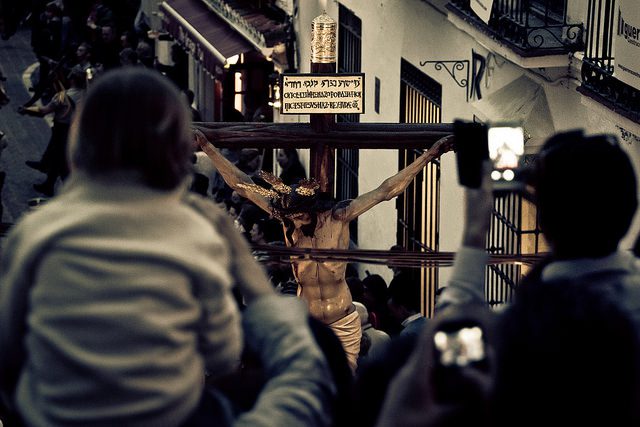
Photo Credit: Hernán Piñera.
The s-word.
As an Evangelical Protestant we rarely spoke about sin. I know that’s not the experience of all evangelicals—maybe not even the majority—but it was certainly my experience. Sin was something we knew about. Sin was something for which we were all culpable. Sin was even preached about the occasional Sunday morning—or whispered about on a Wednesday night.
But it was always sin in the sense of, “This is what you shouldn’t be doing. You need to ask God for forgiveness, and live a better way.”
It was something I needed to do, and no one else needn’t be bothered.
The Catholic Church takes an entirely different approach to sin, a fulsome, roundly biblical approach to sin, I would suggest, that’s not only captivating—and captivated me as an evangelical—but beautiful, and overflowing with the love of God, and grace.
Sin is What Cuts You Off
Protestant churches on the radical fringes practice excommunication. The idea, as I understand it, is to cut off the sinner from the rest of the flock. Really, it’s entirely biblical. Paul, in his epistles, writes that if a fellow Christian is in sin then you need to talk to them, if they won’t listen then you need to bring in other Christians to help, and if they still won’t listen you need to bring them to the Church.
If they still won’t listen, even to the whole Church, you need to remove them, place them outside like a leper, lest they infect the rest of the community with their persistent refusal to turn from their sins.
Like the Church of the New Testament, which Paul sheds light on in these writings, Protestant churches on the fringe, for whatever else they get wrong—lots, I would suggest—grasp something on the nature of the relational aspect of sin.
In the Catholic Church sin is understood as being that which not only cuts us off from our relationship with God, but also fractures our relationship with each other. And the Church, taking seriously the words of Christ that we be one body, and the words of Paul outlines above, places a high priority on that relationship.
For that reason, at every Mass the body of faithful Catholics confesses to each other, as a community, that we’ve all sinned. We communally pray, “Lord, have mercy. Christ, have mercy,” because we’re all in the same boat. Called to be Christ’s united Bride on earth unity is of the utmost importance to the Catholic Church, and so we confess that we’ve broken ourselves apart.
As an evangelical I could sit in my chair in church in my own sin with very little accountability. It was particularly private and personal. As a Catholic, I’m called to repair the greater relationship not only with God but with my community. And the consequences of doing otherwise are spelled out clearly.
The Consequences of Sin
The existence of the Sacrament of Reconciliation (i.e., confession) makes very real the existence of sin. It takes it seriously, and it’s biblical too. I’ve written before how, as a younger evangelical, I was bothered by the fact that my Bible says we should be confessing our sins to each other and nobody I knew was. In evangelical communities, at least those I’ve belonged to, there is no outlet for the confession of sin. There’s no accountability for confessing the things I’ve done that have separated me from God and from each other.
But that Catholic church is deadly serious about sin. And the mere existence of confession makes that plainly clear: you will sin and this is your outlet. Certainly you could ignore it—and I bet we could all name a dozens Catholics we know that do—but bad faith formation and crappy Christians aside, the devout Catholic ignores it at their own peril, and ignoring it is fairly tricky.
Because the Catholic Church is so serious about sin that if you’re not in a particular state of grace—that is, if you have unconfessed sins of a serious nature—you’re meant not to receive Communion. So serious does the Church take sin that you’re barred from participating in its most central and sacred celebration until you take steps to repair your broken relationship.
That’s an incredibly serious view of Paul’s words about both taking Communion worthily and the charge to confess our sins. That’s a good view of Paul.
And like a good personal trainer provides a workout regime, the Church is clear on how to grow closer to God (very clear, in fact) and equally clear about what can wrest you from His arms. And maybe, in a world increasingly confused about what’s right and wrong, being told, “This is not good for you,” comes across as arrogant and hateful but since when was stating plainly, “Junk food will make you fat,” considered unacceptable.
Instead, the Church provides a clear path to greater closeness with God—and this is beautiful—but this must, equally, reflect how to avoid fracturing that loving, grace-filled relationship. And that, I take, as a very good thing.
Taking Sin Seriously Means Understanding the Church
Fundamentally, the difference is one of relationship, and this is what intrigued me so greatly about the Catholic Church. The Church professes a theology built solidly around each other, and that’s so profoundly beautiful.
In the same way, as a Catholic, I rely on the community of ordained clergy to celebrate our sacraments we rely on each other to help us get closer to God. We’re doing it together, a whole team pulling as one. And if even one in that body is in sin—is disconnected from relationship—it slows us all down, until we go out, find them, and gently bring them back home.
Now what story does that remind you of?
Sin is not an awe-inspiring conversation but I’ve been genuinely inspired, and humbled, by sin, as a Catholic. No longer can I dismiss my sin without seriousness nor can I utter a half-hearted request for forgiveness and be on my way.
As a Catholic, more than any other time in my life, I have to seriously face down my sins, admit them out loud, and humbly receive reconciliation. And it’s amazing.
In the end, it comes down to this: Confession reminds us of our need to confess in the same way that the gym reminds us to eat healthy and exercise. Just because it’s there doesn’t mean everyone is going to access it, but like the Goodlife Fitness in the plaza you drive passed on your way to work, it’s a stark reminder that we’ve fallen short, we’re broken, but there’s help.
Previous Post

May 1, 2015
Dear Christians: Take Our Unity Seriously, Because Everyone is Watching
Next Post
May 11, 2015 The Catholic Church is a Powerhouse of Prayer
Browse Our Archives
Select a Category Appearances Christian Living Explaining the Faith Podcast Tough Questions Uncategorized Why I'm Catholic
Select a Month January 2024 December 2023 November 2023 July 2023 June 2023 May 2023 April 2023 March 2023 February 2023 January 2023 December 2022 November 2022 October 2022 September 2022 August 2022 July 2022 June 2022 May 2022 April 2022 March 2022 February 2022 January 2022 December 2021 November 2021 October 2021 September 2021 August 2021 July 2021 June 2021 May 2021 April 2021 March 2021 February 2021 January 2021 December 2020 November 2020 October 2020 September 2020 August 2020 July 2020 June 2020 May 2020 April 2020 March 2020 February 2020 January 2020 December 2019 November 2019 October 2019 September 2019 August 2019 July 2019 June 2019 May 2019 April 2019 March 2019 February 2019 January 2019 December 2018 November 2018 October 2018 September 2018 August 2018 July 2018 June 2018 May 2018 April 2018 March 2018 February 2018 January 2018 December 2017 October 2017 September 2017 July 2017 May 2017 April 2017 March 2017 February 2017 January 2017 December 2016 November 2016 October 2016 September 2016 August 2016 July 2016 June 2016 May 2016 April 2016 March 2016 February 2016 January 2016 December 2015 November 2015 October 2015 September 2015 August 2015 July 2015 June 2015 May 2015 April 2015 March 2015 February 2015 January 2015 December 2014 November 2014 October 2014
Follow Us!
TAKE THE
Religious Wisdom Quiz
What does "Beersheba" mean in Hebrew?
Select your answer to see how you score.
City of Peace Well of the Oath Place of Bread Dwelling of the Lord
Support this
Column


Related posts from The Cordial Catholic

152: The Most Incredible Conversion Story Ever (w/...

151: The Mind-Blowing Sacramental Worldview (w/ Fr. Harrison...
140: The Catholic Guide to Suffering (w/ Father...
122: How and Why the Sacraments Make Sense...
TRENDING AT PATHEOS Catholic

Rejecting Doom: Christian Hope And Human Action
Christianity is a religion of hope. We are to have hope and...

It’s What Comes From Within Which Matters
One of the most difficult things for us to understand is why...

Why I Choose the Eucharist Over the Sermon
Choose the Eucharist, Not the Sermon What are we supposed to get...

5 Design Elements Found in Spiritually Rooted Homes
Putting Spirituality Into Home Decor Our homes are more than our living...

Credo: A Story of God Told with the...
About 10 years ago, I began to imagine a personal "Credo" that...

The Anatomy of Divine Revelation in Catholic Thought
The claim that God has made Himself known to human beings is...
view all Catholic blogs
Ad-Free & Subscriber Log-In Subscription Support
- About Us
- 2026 Calendar
- Videos
- Podcasts
- Library of World Religions
- Faith In Media Tracker
- Advertise With Us
- Write for Us
- Privacy Policy
- Terms of Service
- Do Not Sell My Data
- Contact Us
- Radiant Digital
- Manage Newsletter Subscriptions
- Unsubscribe From Notifications
- Sitemap
Copyright 2008-2026, Patheos. All rights reserved.
Subscription Support Ad-Free & Subscriber Log-In
Follow Patheos