
BuddhistCatholicContemplativeEvangelicalGeneral ChristianHinduJewishLatter-day SaintMuslimNew VisionsProgressive Christian
Beliefs
- Buddhist
- Catholic
- Contemplative
- Evangelical
- General Christian
- Hindu
- Jewish
- Latter-day Saint
- More Voices
- Muslim
- New Visions
- Pagan
- Progressive Christian
Topics
- Religion News
- Food and Religion
- Sports and Religion
- Religious Art
- Religious Music and Entertainment
- Religious Events
- History and Religion
- Style and Religion
- Politics and Religion
- Women in Religion
- Recreation Outdoors and Religion
- Business Finance and Religion
- Careers Workplace and Religion
- Education and Religion
- Family Parenting and Religion
- Health Fitness and Religion
- Home and Religion
- Relationships and Religion
- Technology and Religion
- Travel and Religion
Columnists
- Buddhist Columnists
- Business Finance and Religion Columnists
- Careers Workplace and Religion Columnists
- Catholic Columnists
- Contemplative Columnists
- Education and Religion Columnists
- Evangelists Columnists
- Family Parenting and Religion Columnists
- General Christian Columnists
- Health Fitness and Religion Columnists
- Hindu Columnists
- History and Religion Columnists
- Home and Religion Columnists
- Jewish Columnists
- More Voices Columnists
- Latter Day Columnists
- Muslim Columnists
- New Visions Columnists
- Nonreligious Columnists
- Pagan Columnists
- Politics and Religion Columnists
- Progressive Columnists
- Recreation Outdoors and Religion Columnists
- Relationships and Religion Columnists
- Religion News Columnists
- Religious Art Columnists
- Religious Events Columnists
- Religious Music and Entertainment Columnists
- Sports and Religion Columnists
- Style and Religion Columnists
- Technology and Religion Columnists
- Travel and Religion Columnists
- Women in Religion Columnists
Resource Library
- 2026 Calendar
- Library of World Religions
- The 100 Most Holy Places on Earth
- Patheos Answers
- Podcasts
- Videos
- Faith Leaders Database
- Anglican Episcopalian
- Bahai
- Baptist
- Buddhism
- Christianity
- Confucianism
- Eastern Orthodoxy
- Hinduism
- Holiness and Pentecostal
- ISKCON
- Islam
- Judaism
- Lutheran
- Methodist
- The Church of Jesus Christ of Latter-day Saints
- New Age
- Paganism
- Presbytarian and Reformed
- Protestantism
- Religion Behind the Scenes
- Roman Catholic
- Scientology
- Shia Islam
- Sikhism
- Sufism
- Sunni Islam
- Taoism
- Zen
- See all religions
Research Tools
 Ad-Free & Subscriber Log-In Subscription Support
Follow Patheos 

- Trending:
- Advent
- |
- Forgiveness
- |
- Thanksgiving
- |
- Election
- |
- Seasonal Holidays
- |
- Marriage
 The Cordial Catholic
- Home
- Catholic
- Church Splits Are Driving Evangelicals to Catholicism
Church Splits Are Driving Evangelicals to Catholicism
Last updated on: May 20, 2020 at 8:49 am by K. Albert Little
Church Splits Are Driving Evangelicals to Catholicism 2020-05-20T08:49:34-04:00 K. Albert Little
Patheos Explore the world's faith through different perspectives on religion and spirituality! Patheos has the views of the prevalent religions and spiritualities of the world.
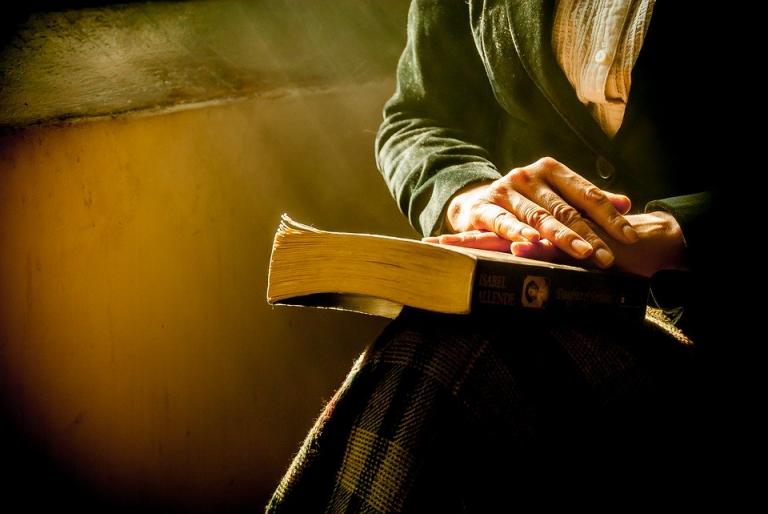
For those that don’t know the story of my conversion to the Catholic faith it centres, like many similar stories, around the issue of authority.
This week I had the privilege of sitting down and talking to yet another convert who had a conversion experience similar to mine. Sonja Corbitt was a Southern Baptist, through and through. She loved her Scriptures—in fact, she led a popular Bible study group at the Baptist church where she and her husband served in leadership.
But it was on that fateful question of authority that, like me, she began to see cracks in the watertight evangelical worldview.
For me, it began when questions around same-sex attraction and marriage and gender identity were brought up in our mid-sized non-denominational evangelical church. As a community, these issues weren’t fully fleshed out or thought through and when it came time to debate, discuss, and actually engage with them I began to realize how challenging answering these questions would be.
As an evangelical—a Christian from the Protestant tradition—we were taught that the Bible was the final arbiter of faith. In the case of same-sex marriage and gender questions, however, it seemed like evangelical theologians could come down in a variety of positions. Although, in my opinion, the Bible seemed fairly straightforward in its understanding of what marriage was, good friends within the same church community and many of the leaders mustered up good, biblical arguments to the contrary.
I was left with the distinct impression that if the Bible was the sole rule for my faith it was ultimately unworkable because, as I found out, the Bible needs an interpreter.
Both sides in this particular argument—on the nature of marriage—had good biblical arguments.
But this wasn’t the only issue, I came to realize, where the Bible can be used to support opposing sides of an argument. On questions of how we’re saved, who goes to Heaven, why Jesus had to die, what is the nature of God, and even, ironically, what the Bible is, can be debated at length based on quotations, evidence, and an examination of the Bible.
On its own, I realized, the Bible did not work, because we can all read the Bible and come to different conclusions—even if we read really closely and pray very hard this still seems to be the case.
For her part, Sonja agrees.
“I knew other people to be holier than I was,” she says, “and we disagreed on very important interpretations.”
Her conclusion: that the Holy Spirit can’t be confused. That there must be a right answer, but how can we find it?
After experiencing not one but two splits from the same church Sonja realized that something had gone terribly wrong with the Church that Christ intended to found. After all, the Christians she knew were reading their Bibles, were praying, and were coming to different conclusions on important topics. Conclusions which couldn’t be reconciled. Conclusions which split apart churches.
But Sonja’s perspective was clear. “What I knew,” she says, “is that division is demonic. Disunity is demonic.”
Christ intended the Church to be one, so what happened?
Sonja decided to investigate the life and writings of the first person she knew to take a stand against the Church, Martin Luther, the father of the Protestant Reformation—a reform which ultimately spawned the thousands of different Protestant denominations which exist today.
The Protestant Reformation, she realized as she poured over the writings of the Reformers, was not the reform she thought it was.
As she dug into the roots of the Reformation, in Martin Luther’s own words, she realized that what happened wasn’t an attempt to fix the Church from the inside but ultimately a definitive split, a break, from the singular authority of the Church that had been past down since the beginning.
In other words, Luther was, arguably, the first to split a church, to separate Christians from the authority that had been past down since Christ and the apostles. And the result was devastating.
I became a Catholic. Sonja did too and her story is an incredible one.
In large part, many converts just like us became Catholic for very similar reasons: the ultimate place of authority. Because while the Bible remains central, foundational, to how Catholics understand our faith, we also have the authority of the Bishops, who trace their lineage right back to the very first apostles appointed by Christ. These Bishops, in mercy and charity, exercise the power given by Christ to “bind and loose,” a rabbinical term used by Jesus to indicate the authority he was giving his apostles to teach, instruct, and guide. An authority which the apostles passed on through the laying of hands, and their successors passed on, and so did their successors, and so on right down until today.
Of course, we are not unique. As evangelical churches continue to split over questions of who can interpret what and who holds the ultimate authority the Catholic Church remains, like a lighthouse beacon, that city on the hill. A faith that offers unity that many of us craved and an authority, that ancient interpreter, which makes sense of the Scriptures. Converts like Sonja and myself and countless others have found refuge here; and, hey, it’s certainly big enough for us all.
To listen to Sonja’s incredible story click here, or listen below.

Browse Our Archives
Select a Category Appearances Christian Living Explaining the Faith Podcast Tough Questions Uncategorized Why I'm Catholic
Select a Month January 2024 December 2023 November 2023 July 2023 June 2023 May 2023 April 2023 March 2023 February 2023 January 2023 December 2022 November 2022 October 2022 September 2022 August 2022 July 2022 June 2022 May 2022 April 2022 March 2022 February 2022 January 2022 December 2021 November 2021 October 2021 September 2021 August 2021 July 2021 June 2021 May 2021 April 2021 March 2021 February 2021 January 2021 December 2020 November 2020 October 2020 September 2020 August 2020 July 2020 June 2020 May 2020 April 2020 March 2020 February 2020 January 2020 December 2019 November 2019 October 2019 September 2019 August 2019 July 2019 June 2019 May 2019 April 2019 March 2019 February 2019 January 2019 December 2018 November 2018 October 2018 September 2018 August 2018 July 2018 June 2018 May 2018 April 2018 March 2018 February 2018 January 2018 December 2017 October 2017 September 2017 July 2017 May 2017 April 2017 March 2017 February 2017 January 2017 December 2016 November 2016 October 2016 September 2016 August 2016 July 2016 June 2016 May 2016 April 2016 March 2016 February 2016 January 2016 December 2015 November 2015 October 2015 September 2015 August 2015 July 2015 June 2015 May 2015 April 2015 March 2015 February 2015 January 2015 December 2014 November 2014 October 2014
Follow Us!
TAKE THE
Religious Wisdom Quiz
What religious movement emphasizes unity among all Christians globally?
Select your answer to see how you score.
Monasticism Ecumenism Adventism Pietism
Support this
Column


Related posts from The Cordial Catholic
235: Questions I Couldn't Answer (w/ John Martignoni)
234: The Mindblowing World of Sacramentals (w/ Shaun...
233: The Power of Good Catholic Witnesses (w/...
232: The Trajectory of Conversion (w/ Phillip Campbell)
TRENDING AT PATHEOS Catholic

Bad Survey Questions Distort Eucharistic Theology
It seems to be the newest thing: someone conducts a bad survey...

If Baptism Washes Away Sin, Why Do Catholics...
The seven sacraments stand as the foundation of Catholic ecclesial life. The...

Far from promoting indifference, inaction, or quietism, Paul consistently tells us to...

The Power of Setting a Good Example
Remember last August when the Chicago White Sox hosted a "Pope Hat...

A Catholic Critique of Biblical Unitarianism
If the statistics are to be believed, Unitarianism is rising worldwide. Although...

How Grandma Tourism Helps Grandparents Live Their Vocation
Grandma, The New Travel Influencer What started as a nostalgia-inspired social media...
view all Catholic blogs
Ad-Free & Subscriber Log-In Subscription Support
- About Us
- 2026 Calendar
- Videos
- Podcasts
- Library of World Religions
- Faith In Media Tracker
- Advertise With Us
- Write for Us
- Privacy Policy
- Terms of Service
- Do Not Sell My Data
- Contact Us
- Radiant Digital
- Manage Newsletter Subscriptions
- Unsubscribe From Notifications
- Sitemap
Copyright 2008-2026, Patheos, part of the Radiant Digital network of media brands. All rights reserved.
Subscription Support Ad-Free & Subscriber Log-In
Follow Patheos