
BuddhistCatholicContemplativeEvangelicalGeneral ChristianHinduJewishLatter-day SaintMuslimNew VisionsProgressive Christian
Beliefs
- Buddhist
- Catholic
- Contemplative
- Evangelical
- General Christian
- Hindu
- Jewish
- Latter-day Saint
- More Voices
- Muslim
- New Visions
- Pagan
- Progressive Christian
Topics
- Religion News
- Food and Religion
- Sports and Religion
- Religious Art
- Religious Music and Entertainment
- Religious Events
- History and Religion
- Style and Religion
- Politics and Religion
- Women in Religion
- Recreation Outdoors and Religion
- Business Finance and Religion
- Careers Workplace and Religion
- Education and Religion
- Family Parenting and Religion
- Health Fitness and Religion
- Home and Religion
- Relationships and Religion
- Technology and Religion
- Travel and Religion
Columnists
- Buddhist Columnists
- Business Finance and Religion Columnists
- Careers Workplace and Religion Columnists
- Catholic Columnists
- Contemplative Columnists
- Education and Religion Columnists
- Evangelists Columnists
- Family Parenting and Religion Columnists
- General Christian Columnists
- Health Fitness and Religion Columnists
- Hindu Columnists
- History and Religion Columnists
- Home and Religion Columnists
- Jewish Columnists
- More Voices Columnists
- Latter Day Columnists
- Muslim Columnists
- New Visions Columnists
- Nonreligious Columnists
- Pagan Columnists
- Politics and Religion Columnists
- Progressive Columnists
- Recreation Outdoors and Religion Columnists
- Relationships and Religion Columnists
- Religion News Columnists
- Religious Art Columnists
- Religious Events Columnists
- Religious Music and Entertainment Columnists
- Sports and Religion Columnists
- Style and Religion Columnists
- Technology and Religion Columnists
- Travel and Religion Columnists
- Women in Religion Columnists
Resource Library
- 2026 Calendar
- Library of World Religions
- The 100 Most Holy Places on Earth
- Patheos Answers
- Podcasts
- Videos
- Faith Leaders Database
- Anglican Episcopalian
- Bahai
- Baptist
- Buddhism
- Christianity
- Confucianism
- Eastern Orthodoxy
- Hinduism
- Holiness and Pentecostal
- ISKCON
- Islam
- Judaism
- Lutheran
- Methodist
- The Church of Jesus Christ of Latter-day Saints
- New Age
- Paganism
- Presbytarian and Reformed
- Protestantism
- Religion Behind the Scenes
- Roman Catholic
- Scientology
- Shia Islam
- Sikhism
- Sufism
- Sunni Islam
- Taoism
- Zen
- See all religions
Research Tools
 Ad-Free & Subscriber Log-In Subscription Support
Follow Patheos 

- Trending:
- Advent
- |
- Forgiveness
- |
- Thanksgiving
- |
- Election
- |
- Seasonal Holidays
- |
- Marriage
 The Cordial Catholic
- Home
- Catholic
- Being “Fair” to the Catholic Church
Being “Fair” to the Catholic Church
Last updated on: August 3, 2015 at 4:02 pm by K. Albert Little
Being “Fair” to the Catholic Church 2015-08-03T16:02:36-04:00 K. Albert Little
Patheos Explore the world's faith through different perspectives on religion and spirituality! Patheos has the views of the prevalent religions and spiritualities of the world.
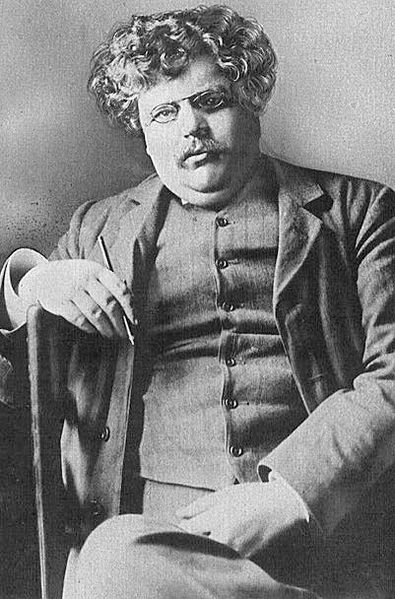
G.K. Chesterton, 1914.
I’m on a G.K. Chesterton kick today.
Chesterton, a Catholic convert from Anglicanism (and an atheist before that) is an intellectual giant in terms of modern Christian writers. He is eclipsed, in writers of his era, perhaps only by C.S. Lewis, another hero of Christianity who actually credited Chesterton’s writings for his own conversion.
As an atheist himself, Lewis approached Chesterton’s The Everlasting Man with a measure of skepticism. He later wrote in his autobiography Surprised by Joy that,
A young man who wishes to remain a sound atheist cannot be too careful of his reading.
He was referring to Chesterton and, in hindsight, Lewis wasn’t careful enough.
I think this same principle applies to a Protestant: A Protestant who wishes to remain a good Protestant cannot be too careful of his reading.
In hindsight, I haven’t been careful enough either.
My wife, who is becoming known for her Catholic zingers, once commented that I’m probably the best non-Catholic Catholic out there. The best Protestant Catholic At least, the most knowledgeable Catholic—even though I’m a Protestant. OK, I’m ruining the joke, and she could tell it much better than I can, but the point is: As I read more and more about the Catholic Church I realized that I, as a Protestant, probably knew more than most Catholics.
I was becoming a really good Catholic, the only problem was I was Protestant.
I’ve talked about the lack of good faith formation in the Catholic Church—and it’s truly shocking—but what I found in my not-so-careful reading was that once you began to read about the Catholic Church and her traditions and practices there’s an awful lot to read. Fifteen hundred years, in fact.
And reading, as I said earlier, has a tendency of snowballing.
When I first started seriously reading Catholic authors I justified it by saying it was important to know both sides of the argument. If I was going to be a Protestant I needed to know why, which meant I needed to know what I was protesting against. My faith tradition, five hundred years ago, split off from the Catholic Church and it was my due diligence to understand why that happened. It was a conscience effort to break away from the Catholic Church back then; nothing has changed, it should be a conscience effort today to remain broken away. This made sense to me.
Again, Chesterton rings true. In The Catholic Church and Conversion, his own story of becoming a Catholic convert he writes,
The convert takes his first step rather unwittingly when he decides he is going to be “fair” to the Catholic Church.
I was giving the Catholics their fair shake, that’s what I told myself, that’s what I told others, that’s what I told my beautiful wife, but like Lewis writing about Chesterton, one cannot be too careful about what one reads.
My “fair shake” for the Catholic Church gradually began to work at my own understanding and my own long-held beliefs.
As a thirty year old I’ve been Protestant for more than half my life. I wasn’t born a devout Protestant, I worked up to it, and you can read about that here too but the point is, I’d read a lot of Protestant literature. I’d read the classics, I’d read the emergent church stuff, I’d read Eugene Peterson, Dallas Willard, and N.T. Wright. I had even read some of the Church Fathers (who weren’t very Protestant in hindsight). I had done a lot of reading on our side of the fence and as my interest grew in Catholicism I thought, naively, that it would be “fair” to read stuff from there side as well.
But the more Catholic authors I was fair to the more Catholicism made sense.
Some would argue, “Of course, if you read enough of a certain type of something you’ll be convinced be it.” That is to say, if you read enough about Catholicism you’ll be convinced to become a Catholic. I don’t think the second logically springs from the first though.
“By that same token,” I could respond, “the only reason you’re a Protestant is because you’ve read lots of Protestant literature.”
I don’t think the argument is honestly very sound.
Chesterton, in my opinion, makes more sense.
Once I decided to be “fair” to the Catholic Church and read what the Catholic Church actually had to say, rather than what I thought (or had been told) it had to say I began to see the sense in it. It began to make sense. Once I was “fair” I saw the strengths in Catholic thought. Once I was “fair” I saw the weaknesses in my own. Once I was “fair” I began to put puzzle pieces together that before, for me, never quite fit properly together anyway.
I’m not, I don’t think, becoming Catholic because I read a lot of Catholic literature. I did read a lot, and I’m reading tons more, and my wife is probably right, I know more than most Catholics about their own faith. But once I decided to be fair to Catholicism and understand the faith from within, from its own writers, I took the first fatal step that Chesterton warned against.
And there has to be, by the sheer nature of things, a bit of the work of God in my heart and mind, too.
Previous Post
November 16, 2014
The Collapse of Catholic Misconceptions
Next Post
November 18, 2014 "It's All Bosh, Except the Scrolls."
Browse Our Archives
Select a Category Appearances Christian Living Explaining the Faith Podcast Tough Questions Uncategorized Why I'm Catholic
Select a Month January 2024 December 2023 November 2023 July 2023 June 2023 May 2023 April 2023 March 2023 February 2023 January 2023 December 2022 November 2022 October 2022 September 2022 August 2022 July 2022 June 2022 May 2022 April 2022 March 2022 February 2022 January 2022 December 2021 November 2021 October 2021 September 2021 August 2021 July 2021 June 2021 May 2021 April 2021 March 2021 February 2021 January 2021 December 2020 November 2020 October 2020 September 2020 August 2020 July 2020 June 2020 May 2020 April 2020 March 2020 February 2020 January 2020 December 2019 November 2019 October 2019 September 2019 August 2019 July 2019 June 2019 May 2019 April 2019 March 2019 February 2019 January 2019 December 2018 November 2018 October 2018 September 2018 August 2018 July 2018 June 2018 May 2018 April 2018 March 2018 February 2018 January 2018 December 2017 October 2017 September 2017 July 2017 May 2017 April 2017 March 2017 February 2017 January 2017 December 2016 November 2016 October 2016 September 2016 August 2016 July 2016 June 2016 May 2016 April 2016 March 2016 February 2016 January 2016 December 2015 November 2015 October 2015 September 2015 August 2015 July 2015 June 2015 May 2015 April 2015 March 2015 February 2015 January 2015 December 2014 November 2014 October 2014
Follow Us!
TAKE THE
Religious Wisdom Quiz
What was Paul's original name?
Select your answer to see how you score.
Matthias Saul Simon Levi
Support this
Column


Related posts from The Cordial Catholic
235: Questions I Couldn't Answer (w/ John Martignoni)
234: The Mindblowing World of Sacramentals (w/ Shaun...
233: The Power of Good Catholic Witnesses (w/...
232: The Trajectory of Conversion (w/ Phillip Campbell)
TRENDING AT PATHEOS Catholic

The Kingdom Of God In Ordinary Life And...
The kingdom of God is all around us; it is in us...

How Discretion Guides Us Away From Extremes
Prudence is an important virtue for all of us. While we should...

If Baptism Washes Away Sin, Why Do Catholics...
The seven sacraments stand as the foundation of Catholic ecclesial life. The...

The Power of Setting a Good Example
Remember last August when the Chicago White Sox hosted a "Pope Hat...

A Catholic Critique of Biblical Unitarianism
If the statistics are to be believed, Unitarianism is rising worldwide. Although...

How Grandma Tourism Helps Grandparents Live Their Vocation
Grandma, The New Travel Influencer What started as a nostalgia-inspired social media...
view all Catholic blogs
Ad-Free & Subscriber Log-In Subscription Support
- About Us
- 2026 Calendar
- Videos
- Podcasts
- Library of World Religions
- Faith In Media Tracker
- Advertise With Us
- Write for Us
- Privacy Policy
- Terms of Service
- Do Not Sell My Data
- Contact Us
- Radiant Digital
- Manage Newsletter Subscriptions
- Unsubscribe From Notifications
- Sitemap
Copyright 2008-2026, Patheos, part of the Radiant Digital network of media brands. All rights reserved.
Subscription Support Ad-Free & Subscriber Log-In
Follow Patheos