
BuddhistCatholicContemplativeEvangelicalGeneral ChristianHinduJewishLatter-day SaintMuslimNew VisionsProgressive Christian
Beliefs
- Buddhist
- Catholic
- Contemplative
- Evangelical
- General Christian
- Hindu
- Jewish
- Latter-day Saint
- More Voices
- Muslim
- New Visions
- Pagan
- Progressive Christian
Topics
- Religion News
- Food and Religion
- Sports and Religion
- Religious Art
- Religious Music and Entertainment
- Religious Events
- History and Religion
- Style and Religion
- Politics and Religion
- Women in Religion
- Recreation Outdoors and Religion
- Business Finance and Religion
- Careers Workplace and Religion
- Education and Religion
- Family Parenting and Religion
- Health Fitness and Religion
- Home and Religion
- Relationships and Religion
- Technology and Religion
- Travel and Religion
Columnists
- Buddhist Columnists
- Business Finance and Religion Columnists
- Careers Workplace and Religion Columnists
- Catholic Columnists
- Contemplative Columnists
- Education and Religion Columnists
- Evangelists Columnists
- Family Parenting and Religion Columnists
- General Christian Columnists
- Health Fitness and Religion Columnists
- Hindu Columnists
- History and Religion Columnists
- Home and Religion Columnists
- Jewish Columnists
- More Voices Columnists
- Latter Day Columnists
- Muslim Columnists
- New Visions Columnists
- Nonreligious Columnists
- Pagan Columnists
- Politics and Religion Columnists
- Progressive Columnists
- Recreation Outdoors and Religion Columnists
- Relationships and Religion Columnists
- Religion News Columnists
- Religious Art Columnists
- Religious Events Columnists
- Religious Music and Entertainment Columnists
- Sports and Religion Columnists
- Style and Religion Columnists
- Technology and Religion Columnists
- Travel and Religion Columnists
- Women in Religion Columnists
Resource Library
- 2026 Calendar
- Library of World Religions
- The 100 Most Holy Places on Earth
- Patheos Answers
- Podcasts
- Videos
- Faith Leaders Database
- Anglican Episcopalian
- Bahai
- Baptist
- Buddhism
- Christianity
- Confucianism
- Eastern Orthodoxy
- Hinduism
- Holiness and Pentecostal
- ISKCON
- Islam
- Judaism
- Lutheran
- Methodist
- The Church of Jesus Christ of Latter-day Saints
- New Age
- Paganism
- Presbytarian and Reformed
- Protestantism
- Religion Behind the Scenes
- Roman Catholic
- Scientology
- Shia Islam
- Sikhism
- Sufism
- Sunni Islam
- Taoism
- Zen
- See all religions
Research Tools
 Ad-Free & Subscriber Log-In Subscription Support
Ad-Free & Subscriber Log-In Subscription Support
Follow Patheos 

- Trending:
- Forgiveness
- |
- Marriage
- |
- Consciousness
- |
- Death Penalty
- |
- Election
- |
- Halloween
 The Cordial Catholic
- Home
- Catholic
- An Evangelical at the Door of Mercy
An Evangelical at the Door of Mercy
Last updated on: December 14, 2015 at 7:00 am by K. Albert Little
An Evangelical at the Door of Mercy 2015-12-13T21:06:33-04:00 K. Albert Little
Patheos Explore the world's faith through different perspectives on religion and spirituality! Patheos has the views of the prevalent religions and spiritualities of the world.
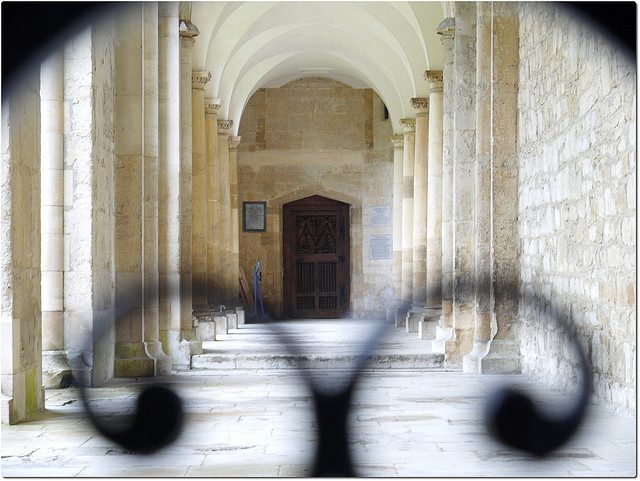
Photo Credit: Farrukh.
We are a people of the tangible.
A people of the here and now and, as much as we try, it’s difficult to imagine ourselves anywhere else.
This is, often, how we find ourselves caught up in despair. Or desire.
We are of the moment which is why this Advent season of the Church is so incredible: It shoehorns us out of our own ritual and routine and demands we turn our attention to something so much more than ourselves. Something two thousand years ago.
And it does this every year.
But this year, at Advent, that elusive thing we chase after—the fullness of God in helpless babe—has been made that much more tangible through the remarkable efforts of our Holy Father, Pope Francis, and the Mercy Door.
As Catholics, we’re banned from singing Christmas Carols until Christmas proper (and the blissfully wonderful days that follow) at which time the Church celebrates like nobody’s business. But, for now, in this penitential, expectant season of Advent we wait in anticipation. With that in mind, it’s probably unfair (and in breach of many Canon Laws) to quote, even briefly, from a secular Christmas tune but I can’t help myself.
So here goes.
I know it’s been said, many times, many ways… but I love the tangible element of the Catholic faith.
As a people of the here and now I feel like my Christian faith, as a Catholic, has been that much more magnified. Enhanced.
Made more full by those things that I can touch and feel.
Enter, the Mercy Door.
At the start of the new Church Year, which begins, traditionally, at Advent, Pope Francis has declared this to be a Jubilee Year—a Year of Mercy.
In this, the Pope invites us, the world’s Catholics, to reflect, express, and extend what ought to be considered one of the chief attributes of the Christian: mercy.
We’re called to bring mercy to this weary world. How fitting that this Jubilee begins with Advent.
The fullness of God in a helpless babe—bringing mercy.
Now here’s where I come in.
I know I’ve said it before (I’ve said it before that I’ve said it before, too) but there’s something remarkable and refreshing about making mercy tangible. About the Mercy Door.
Indeed.
At the request of the Pope, every diocese across the face of the earth is to establish a Mercy Door. A door through which the Catholic faithful can, quite literally, walk through and be renewed.
What is more tangible than that?
And what timing.
When the world struggles to reconcile itself to the humanitarian crisis taking place across the Middle East. A door, a physical door, reminds us to have mercy. When we, who have so much, celebrate like there aren’t those who have so little. A door, a door in every diocese, reminds us to show mercy. When we of so little patience cannot wait just ten seconds longer in that line of cars at the light. A door, a million doors, remind us to be grateful for mercy.
And when we, who are so weary and broken inside, need nothing more than to know we are loved, still, there is that door.
As a Catholic, the Sacrament of Penance, is something of our stock and trade. I’ve written about it before. In this, the waiting season of Advent, we Catholics are called with renewed hope back to the confessional. It’s a time to prepare ourselves for the once again coming of Christ; it’s a time to be ready, and so we come to the fount for mercy.
This year, in a renewed way, with that special focus on mercy, we do it again.
And these are powerful things.
The Mercy Door. The confessional.
Really, the same thing. And, with that in mind, I’ve been reflecting on this, the absolution, which is prayed by the priest—which affirms God’s mercy—during the sacrament.
It is this,
God the Father of mercies, through the death and resurrection of His Son, has reconciled the world to Himself and sent the Holy Spirit among us for the forgiveness of sins. Through the ministry of the Church, may God give you pardon and peace. I absolve you from your sins, in the name of the Father, and of the Son and of the Holy Spirit.
In this busy season of Advent—the Christmas season—it is dangerously easy to slip into an autopiloted routine. It’s easy to be swept away in the secular season, up and down the aisles of choose-whatever-shop-you’d-like. But this is why, as an Evangelical, the Catholic Church appeared like a beacon in the storm.
Here is the Mercy Door. Here is Mercy.
Here is what the priest says.
Here are these tangible things to reveal our Lord, the Fullness of God in helpless babe, just a little bit more clearly this Advent season.
Previous Post
December 7, 2015
How Much Ritual Is Too Much?
Next Post
December 15, 2015 Why Are Demons Afraid of Mary?
Browse Our Archives
Select a Category Appearances Christian Living Explaining the Faith Podcast Tough Questions Uncategorized Why I'm Catholic
Select a Month January 2024 December 2023 November 2023 July 2023 June 2023 May 2023 April 2023 March 2023 February 2023 January 2023 December 2022 November 2022 October 2022 September 2022 August 2022 July 2022 June 2022 May 2022 April 2022 March 2022 February 2022 January 2022 December 2021 November 2021 October 2021 September 2021 August 2021 July 2021 June 2021 May 2021 April 2021 March 2021 February 2021 January 2021 December 2020 November 2020 October 2020 September 2020 August 2020 July 2020 June 2020 May 2020 April 2020 March 2020 February 2020 January 2020 December 2019 November 2019 October 2019 September 2019 August 2019 July 2019 June 2019 May 2019 April 2019 March 2019 February 2019 January 2019 December 2018 November 2018 October 2018 September 2018 August 2018 July 2018 June 2018 May 2018 April 2018 March 2018 February 2018 January 2018 December 2017 October 2017 September 2017 July 2017 May 2017 April 2017 March 2017 February 2017 January 2017 December 2016 November 2016 October 2016 September 2016 August 2016 July 2016 June 2016 May 2016 April 2016 March 2016 February 2016 January 2016 December 2015 November 2015 October 2015 September 2015 August 2015 July 2015 June 2015 May 2015 April 2015 March 2015 February 2015 January 2015 December 2014 November 2014 October 2014
Follow Us!
TAKE THE
Religious Wisdom Quiz
Who said: "The reason the Son of God appeared was to destroy the devil's work"?
Select your answer to see how you score.
Jesus Peter John Paul
Support this
Column


Related posts from The Cordial Catholic

235: Questions I Couldn't Answer (w/ John Martignoni)

234: The Mindblowing World of Sacramentals (w/ Shaun...

233: The Power of Good Catholic Witnesses (w/...

232: The Trajectory of Conversion (w/ Phillip Campbell)
TRENDING AT PATHEOS Catholic

Rejecting Doom: Christian Hope And Human Action
Christianity is a religion of hope. We are to have hope and...

It’s What Comes From Within Which Matters
One of the most difficult things for us to understand is why...

Why I Choose the Eucharist Over the Sermon
Choose the Eucharist, Not the Sermon What are we supposed to get...

5 Design Elements Found in Spiritually Rooted Homes
Putting Spirituality Into Home Decor Our homes are more than our living...

Credo: A Story of God Told with the...
About 10 years ago, I began to imagine a personal "Credo" that...

The Anatomy of Divine Revelation in Catholic Thought
The claim that God has made Himself known to human beings is...
view all Catholic blogs
Ad-Free & Subscriber Log-In Subscription Support
- About Us
- 2026 Calendar
- Videos
- Podcasts
- Library of World Religions
- Faith In Media Tracker
- Advertise With Us
- Write for Us
- Privacy Policy
- Terms of Service
- Do Not Sell My Data
- Contact Us
- Radiant Digital
- Manage Newsletter Subscriptions
- Unsubscribe From Notifications
- Sitemap
Copyright 2008-2026, Patheos. All rights reserved.
Subscription Support Ad-Free & Subscriber Log-In
Follow Patheos