
BuddhistCatholicContemplativeEvangelicalGeneral ChristianHinduJewishLatter-day SaintMuslimNew VisionsProgressive Christian
Beliefs
- Buddhist
- Catholic
- Contemplative
- Evangelical
- General Christian
- Hindu
- Jewish
- Latter-day Saint
- More Voices
- Muslim
- New Visions
- Pagan
- Progressive Christian
Topics
- Religion News
- Food and Religion
- Sports and Religion
- Religious Art
- Religious Music and Entertainment
- Religious Events
- History and Religion
- Style and Religion
- Politics and Religion
- Women in Religion
- Recreation Outdoors and Religion
- Business Finance and Religion
- Careers Workplace and Religion
- Education and Religion
- Family Parenting and Religion
- Health Fitness and Religion
- Home and Religion
- Relationships and Religion
- Technology and Religion
- Travel and Religion
Columnists
- Buddhist Columnists
- Business Finance and Religion Columnists
- Careers Workplace and Religion Columnists
- Catholic Columnists
- Contemplative Columnists
- Education and Religion Columnists
- Evangelists Columnists
- Family Parenting and Religion Columnists
- General Christian Columnists
- Health Fitness and Religion Columnists
- Hindu Columnists
- History and Religion Columnists
- Home and Religion Columnists
- Jewish Columnists
- More Voices Columnists
- Latter Day Columnists
- Muslim Columnists
- New Visions Columnists
- Nonreligious Columnists
- Pagan Columnists
- Politics and Religion Columnists
- Progressive Columnists
- Recreation Outdoors and Religion Columnists
- Relationships and Religion Columnists
- Religion News Columnists
- Religious Art Columnists
- Religious Events Columnists
- Religious Music and Entertainment Columnists
- Sports and Religion Columnists
- Style and Religion Columnists
- Technology and Religion Columnists
- Travel and Religion Columnists
- Women in Religion Columnists
Resource Library
- 2026 Calendar
- Library of World Religions
- The 100 Most Holy Places on Earth
- Patheos Answers
- Podcasts
- Videos
- Faith Leaders Database
- Anglican Episcopalian
- Bahai
- Baptist
- Buddhism
- Christianity
- Confucianism
- Eastern Orthodoxy
- Hinduism
- Holiness and Pentecostal
- ISKCON
- Islam
- Judaism
- Lutheran
- Methodist
- The Church of Jesus Christ of Latter-day Saints
- New Age
- Paganism
- Presbytarian and Reformed
- Protestantism
- Religion Behind the Scenes
- Roman Catholic
- Scientology
- Shia Islam
- Sikhism
- Sufism
- Sunni Islam
- Taoism
- Zen
- See all religions
Research Tools
 Ad-Free & Subscriber Log-In Subscription Support
Ad-Free & Subscriber Log-In Subscription Support
Follow Patheos 

- Trending:
- Forgiveness
- |
- Marriage
- |
- Consciousness
- |
- Death Penalty
- |
- Election
- |
- Halloween
 Aine Llewellyn - Dalliances with Deities
- Home
- Pagan
- Definitions, Labels, and Utility
Definitions, Labels, and Utility
Last updated on: March 14, 2021 at 4:44 pm by Aine Llewellyn
Definitions, Labels, and Utility 2021-03-14T16:44:32-06:00 Aine Llewellyn
Patheos Explore the world's faith through different perspectives on religion and spirituality! Patheos has the views of the prevalent religions and spiritualities of the world.
In a recent discussion online, I encountered someone claiming that ‘everyone’ knows what the word Witch means so there is no need to define it (or, indeed, use it at all). Witch is a term that is still heavily debated and argued over – my Twitter and other feeds attests to that.
This small interaction highlighted a problem I see throughout our communities: resistance to labels and definitions.
Labels as Limitations
“A label locks me into a definition that people use to control me.” – Craig D Lounsbrough
Many Pagans I have known approach labels from the above quoted viewpoint. Labels are treated as restrictive. Claustrophobic. As if, once we have chosen or been given a label, we are locked only into that one identity. Forever.
But we aren’t just one thing, so we naturally rebel against this perceived straight-jacket. We aren’t just one identity or one self. We all wear many masks. Even when we find identities that fit us, we struggle against the barriers. We find ourselves leaking out.
We seem to expect labels to be perfectly tailored clothes made in our exact preferred style. By their very nature they are not so well-suited. They are better compared to jeans that fit well-enough to wear. Not perfect. Not great. But you can wear them and they work.
Think of how often ‘Pagan’ as a term is argued over. Is it an umbrella term, a ‘big-tent’ one, who exactly gets to call themselves Pagan, who shouldn’t we call Pagan… These are all well-worn discussions. Depending on how some people define it I don’t count as a Pagan. But the word effectively gives an idea about my religious practices, and I do fit into ‘Pagan’ as most people define the word. It is very useful when interacting with people who aren’t part of the many Pagan and polytheist communities, people who may not know or care about the nuances of my identity.
No label is ever going to encompass the entirety of who we are. That really isn’t why we take up labels.
Labels for Communication
I am absolutely the type of person who can go on for an hour about the different labels I use, why I use them, and why they don’t quite fit. But it a community setting, especially a group one where, say, everyone is going around introducing themselves, getting to know each other for the first time, I often find it much better to use the terms the group is going to be familiar with. So, in most general Pagan settings, I introduce myself as a polytheist. I might specify that I do more devotion than anything magical.
Keep it short and simple.
That’s the whole reason I use the specific labels I do.
It would be, ultimately, more ‘honest’ to go on a long tangent about this, that, and the other parts of my practice. But I don’t have time for that, and I know other people don’t have time for that. Getting into the intricacies of who we are and what we do is better saved for more intimate or more focused conversation.
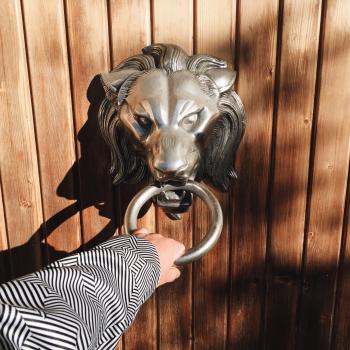
Image by Andrew Martin from Pixabay
Enabling discussion and allowing us to connect with each other shallowly is one of the purposes of labeling. It helps us signal to each other where our similarities and differences lie. Very big, encompassing labels inform us of broad possibilities of who a person is. More specific or limiting words – like, say, ‘Thelemite’ or ‘Druid’ – tell us more specific details, obviously. But even very specific terminology should be a way to create conversation, rather than shut it down.
That’s where a lot of the issue is, isn’t it? People will sometimes resist labels that objectively apply to them because of bias or prejudice or out of fear of being associated with ‘those’ people. Maybe the community someone is in hates a specific group, like Wiccans (very trendy to dislike them, it seems), so we toss out any consideration for people under that label. Maybe we had a bad interaction with someone who is part of some group or identity and decide that means everyone who uses the label is a jerk.
We can’t just abandon group identities because they’re difficult, though. A big reason is that they can allow us to effectively mobilize together for our rights and freedoms. (The queer community seems to understand this a lot better than the Pagan one, despite how much crossover our communities have.)
Defining Difficult Terms
Of course, if these identities are helpful mainly in communicating something about ourselves, we kind-of definitely need definitions. If we want to be understood, anyway.
How do we define ‘witch’, though? Or ‘Pagan’? Or even ‘Wiccan’? ‘Polytheist’ gets argued over sometimes. (And that is certainly a topic that could be explored. Somewhere else. Preferably far from me.)
What is ‘witchcraft’ and who counts as a ‘witch’ are questions that I find endlessly interesting. How people chose to define witchcraft says a lot about their background, their training, their culture, their own practices, their assumptions… Basically, their everything. Where we draw the lines of our definition or, alternatively, where we fail to draw boundaries tells us a lot about ourselves.
Someone who defines witchcraft so openly as to encompass ‘anything any human does’ probably isn’t going to be a great conversation partner for me, for example. I’m going to find it beyond irritating trying to have a discussion about historical and cultural witchcraft practices with a person that actively doesn’t want to draw limitations around the term.
Witchcraft is a difficult word to define! It’s impossible to define it in a way that makes everyone happy.
So we can’t make everyone happy…but we can come up with definitions that foster discussion within our own pockets of community. This is something I try to keep an eye on whenever I enter a new community, whether online or off. How are they defining their labels? How are these terms being used? Are they being defined at all or are we supposed to just intuitively ‘know’? Knowing how a group is using a term like witchcraft tells me a lot about what to expect, information wise, from them. About how I should approach them and their practices.
And in cases where witchcraft or Paganism is defined as ‘whatever you want it to be, who cares’ it lets me know to get out before I waste my time.
Previous Post

February 28, 2021
Otherfaith Spirits: Aster Aira
Next Post

April 4, 2021 No, I Don't Do Ancestor Work
Browse Our Archives
Select a Category Uncategorized
Select a Month October 2021 June 2021 May 2021 April 2021 March 2021 February 2021 January 2021 December 2020 November 2020 October 2020 September 2020 July 2020 April 2020 March 2020 February 2020 January 2020 December 2019 November 2019 October 2019 May 2014 April 2014 March 2014 February 2014 January 2014 December 2013 November 2013 October 2013 September 2013 August 2013 July 2013 June 2013 May 2013 April 2013 March 2013 February 2013 January 2013
Follow Us!
TAKE THE
Religious Wisdom Quiz
According to Paul, nothing in all creation can separate you from me—not death, not life, not angels or demons. What am I?
Select your answer to see how you score.
God's grace God's mercy Salvation The love of God
Related posts from Aine Llewellyn - Dalliances with Deities

Aine Llewellyn - Dalliances with Deities
Pagan Proselytizing Is Still Bad
Aine Llewellyn - Dalliances with Deities

Aine Llewellyn - Dalliances with Deities

Aine Llewellyn - Dalliances with Deities
TRENDING AT PATHEOS Pagan

I was recently chatting with someone on Instagram. She asked me what...

While there are many people who share their results, the end of...

On July 23, I saw Christopher Nolan's The Odyssey which is Homer’s...

As I write this two big events have just finished up. One...

Restoring the Watershed of Divine Love
Perhaps cooperation is not something we manufacture through legislation, ideology, or moral...

Many UUs don’t pray because of bad experiences in a previous religion,...
view all Pagan blogs
Ad-Free & Subscriber Log-In Subscription Support
- About Us
- 2026 Calendar
- Videos
- Podcasts
- Library of World Religions
- Faith In Media Tracker
- Advertise With Us
- Write for Us
- Privacy Policy
- Terms of Service
- Do Not Sell My Data
- Contact Us
- Radiant Digital
- Manage Newsletter Subscriptions
- Unsubscribe From Notifications
- Sitemap
Copyright 2008-2026, Patheos. All rights reserved.
Subscription Support Ad-Free & Subscriber Log-In
Follow Patheos