
BuddhistCatholicContemplativeEvangelicalGeneral ChristianHinduJewishLatter-day SaintMuslimNew VisionsProgressive Christian
Beliefs
- Buddhist
- Catholic
- Contemplative
- Evangelical
- General Christian
- Hindu
- Jewish
- Latter-day Saint
- More Voices
- Muslim
- New Visions
- Pagan
- Progressive Christian
Topics
- Religion News
- Food and Religion
- Sports and Religion
- Religious Art
- Religious Music and Entertainment
- Religious Events
- History and Religion
- Style and Religion
- Politics and Religion
- Women in Religion
- Recreation Outdoors and Religion
- Business Finance and Religion
- Careers Workplace and Religion
- Education and Religion
- Family Parenting and Religion
- Health Fitness and Religion
- Home and Religion
- Relationships and Religion
- Technology and Religion
- Travel and Religion
Columnists
- Buddhist Columnists
- Business Finance and Religion Columnists
- Careers Workplace and Religion Columnists
- Catholic Columnists
- Contemplative Columnists
- Education and Religion Columnists
- Evangelists Columnists
- Family Parenting and Religion Columnists
- General Christian Columnists
- Health Fitness and Religion Columnists
- Hindu Columnists
- History and Religion Columnists
- Home and Religion Columnists
- Jewish Columnists
- More Voices Columnists
- Latter Day Columnists
- Muslim Columnists
- New Visions Columnists
- Nonreligious Columnists
- Pagan Columnists
- Politics and Religion Columnists
- Progressive Columnists
- Recreation Outdoors and Religion Columnists
- Relationships and Religion Columnists
- Religion News Columnists
- Religious Art Columnists
- Religious Events Columnists
- Religious Music and Entertainment Columnists
- Sports and Religion Columnists
- Style and Religion Columnists
- Technology and Religion Columnists
- Travel and Religion Columnists
- Women in Religion Columnists
Resource Library
- 2026 Calendar
- Library of World Religions
- The 100 Most Holy Places on Earth
- Patheos Answers
- Podcasts
- Videos
- Faith Leaders Database
- Anglican Episcopalian
- Bahai
- Baptist
- Buddhism
- Christianity
- Confucianism
- Eastern Orthodoxy
- Hinduism
- Holiness and Pentecostal
- ISKCON
- Islam
- Judaism
- Lutheran
- Methodist
- The Church of Jesus Christ of Latter-day Saints
- New Age
- Paganism
- Presbytarian and Reformed
- Protestantism
- Religion Behind the Scenes
- Roman Catholic
- Scientology
- Shia Islam
- Sikhism
- Sufism
- Sunni Islam
- Taoism
- Zen
- See all religions
Research Tools
 Ad-Free & Subscriber Log-In Subscription Support
Ad-Free & Subscriber Log-In Subscription Support
Follow Patheos 

- Trending:
- Forgiveness
- |
- Marriage
- |
- Consciousness
- |
- Death Penalty
- |
- Election
- |
- Halloween
 Aine Llewellyn - Dalliances with Deities
- Home
- Pagan
- Reading Thoroughly
Reading Thoroughly
Last updated on: November 22, 2019 at 9:00 am by Aine Llewellyn
Reading Thoroughly 2019-11-19T09:15:19-07:00 Aine Llewellyn
Patheos Explore the world's faith through different perspectives on religion and spirituality! Patheos has the views of the prevalent religions and spiritualities of the world.
Pagans often call ourselves ‘people of the library’, but how do we handle having hundreds (if not thousands) of books on modern Paganism and occultism to peruse? There’s lot of information and hot takes on how to read, say, the Bible. How do we, as Pagans, approach our reading?
Gods know I don’t have any firm answers. But I am an avid reader and my home library isn’t just for show, so here are some of the ways I go about reading books on Paganism and witchcraft.
The Purpose of the Text
Before I get into the meat of a book, I want to understand what the book is trying to accomplish. Is it more of a memoir? Is it meant to be worked through over a period of time, as a workbook? Is it a primer or more in-depth? Is it meant for outsiders (non-Pagans)?
Reading the back or dust jacket will give me an idea of how the book is being marketed, but often where we find the answer to these questions is in the introduction. Many Pagan books have a section in the introduction called ‘How to Read’ or something similar. Workbooks will have information there on what pace the author intends for them to be worked through. In A Book of Pagan Prayer, Ceisiwr Serith uses the introduction to explain why he organized the prayers as he did and notes that the book will have little in the way of ‘Pagan 101’ content.
The reason I find the purpose of the book first is so, after I have finished reading, I can decide if the book has accomplished what it set out to do. It also helps me set my expectations appropriately. It isn’t fair for me to judge a book for not being advanced enough if it’s a beginner text. I also want to avoid judging a book too harshly just because I dislike an author’s voice. I am often looking for books to recommend to others, so my personal dislike of someone’s humor shouldn’t factor in as much as whether the author accomplishes their stated goal.
I also read to learn. Knowing what the focus of a book is lets me rank it appropriately as I decide what to read next. Do I want to read yet another 101 book on a topic I feel confident in? There’s always a chance to learn something new, but that 101 book will probably go closer to the bottom of the pile. On the other hand, should I really jump into an advanced text on a topic I have no knowledge of? Probably not.
Another place I look before digging into a book is the table of contents. This doesn’t so much show me the purpose of the text as much as it can inform what content lies within. This can be helpful when looking over the many beginner or introductory texts we see within Pagan publishing. Does the ToC look almost identical to the majority of them? Or does it seem to touch on ideas I don’t usually see?
Image by Free-Photos from Pixabay
The Purpose of Reading
It’s great to know what the author intended when writing the book, but what do we want to get out of reading it? An additional question to this is what can we get out of reading?
Some people read for pleasure. Some of us read for school and assignments. Sometimes we read to teach ourselves new skills. And we can read for multiple reasons, of course.
Personally, I read fiction (and fanfiction) almost exclusively for pleasure. What that means is that I decide to turn off the more critical parts of my brain and just enjoy the story being told to me. It also means I won’t force myself through a book I dislike. I read fiction for the same reason I play video games: to have fun.
Reading books about Paganism and religion, though, is a different matter. I will force myself to read a book I don’t like so I can learn something or be able to judge it fairly. I do not read Pagan books for pleasure. I read them to teach myself, so I can then teach others. My joy of reading takes a backseat to my desire to consume knowledge. This means I approach my reading in a completely different way.
I don’t bring a rainbow assortment of highlighters when I’m reading the new Rainbow Rowell book.
Speaking of highlighters…
Read First, Then Highlight
Highlighting on your first read through is a great way to highlight way more than you need to. Personally, I found that highlighting and note-taking on my first pass over a chapter usually resulted in me being hyper-critical. We want to read critically, yes, but we don’t want to make reading a complete slog.
You don’t need to read a whole book through before you highlight or notate what sticks out to you. Break it up by chapter or parts, or even sections of chapters if needs be. But you do want to try to get a feel for the article or section you’re reading as a whole. It’s harder to do that if you’re looking for bits to pick at, even in a positive way.
Sometimes we won’t have the luxury of being able to do essentially two reads of a book. And we may not want to do so either, if our goal is more about the enjoyment of reading or just figuring out if we like the book as a whole. Doing more in-depth reading like this is good for teaching ourselves and remembering parts of the text, though. Considering how many solitary practitioners there are within Paganism, solitaries that largely teach themselves through books (or the internet), I think it’s a useful habit to build.
A common problem a lot of people (including me) run into is highlighting too much. This often happens during a first read through when you’re not yet sure what is important to highlight; going back a second time after just reading normally will help you figure out what is worth highlighting and remembering. The advice of ‘read first, highlight after’ has helped me immensely in my studies.
What to highlight and how is a whole topic on its own. I’ve been developing my own highlighting key which I’ll be sharing next week.
How do you approach reading Pagan books? Do you tend to horde them, buying up more than you can possibly read? (Guilty of that here.) Do you tend to read one at a time or haphazardly skip between unfinished books?
Previous Post

November 20, 2019
A Goodbye to Witchvox
Next Post
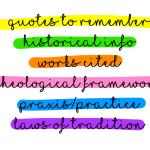
November 27, 2019 A Pagan's Highlighting System
Browse Our Archives
Select a Category Uncategorized
Select a Month October 2021 June 2021 May 2021 April 2021 March 2021 February 2021 January 2021 December 2020 November 2020 October 2020 September 2020 July 2020 April 2020 March 2020 February 2020 January 2020 December 2019 November 2019 October 2019 May 2014 April 2014 March 2014 February 2014 January 2014 December 2013 November 2013 October 2013 September 2013 August 2013 July 2013 June 2013 May 2013 April 2013 March 2013 February 2013 January 2013
Follow Us!
TAKE THE
Religious Wisdom Quiz
What Christian group celebrates Mass as their primary form of worship?
Select your answer to see how you score.
Catholics Lutherans Methodists Baptists
Related posts from Aine Llewellyn - Dalliances with Deities

Aine Llewellyn - Dalliances with Deities

Aine Llewellyn - Dalliances with Deities

Aine Llewellyn - Dalliances with Deities

Aine Llewellyn - Dalliances with Deities
TRENDING AT PATHEOS Pagan

I was recently chatting with someone on Instagram. She asked me what...

While there are many people who share their results, the end of...

On July 23, I saw Christopher Nolan's The Odyssey which is Homer’s...

As I write this two big events have just finished up. One...

Restoring the Watershed of Divine Love
Perhaps cooperation is not something we manufacture through legislation, ideology, or moral...

Many UUs don’t pray because of bad experiences in a previous religion,...
view all Pagan blogs
Ad-Free & Subscriber Log-In Subscription Support
- About Us
- 2026 Calendar
- Videos
- Podcasts
- Library of World Religions
- Faith In Media Tracker
- Advertise With Us
- Write for Us
- Privacy Policy
- Terms of Service
- Do Not Sell My Data
- Contact Us
- Radiant Digital
- Manage Newsletter Subscriptions
- Unsubscribe From Notifications
- Sitemap
Copyright 2008-2026, Patheos. All rights reserved.
Subscription Support Ad-Free & Subscriber Log-In
Follow Patheos