
BuddhistCatholicContemplativeEvangelicalGeneral ChristianHinduJewishLatter-day SaintMuslimNew VisionsProgressive Christian
Beliefs
- Buddhist
- Catholic
- Contemplative
- Evangelical
- General Christian
- Hindu
- Jewish
- Latter-day Saint
- More Voices
- Muslim
- New Visions
- Pagan
- Progressive Christian
Topics
- Religion News
- Food and Religion
- Sports and Religion
- Religious Art
- Religious Music and Entertainment
- Religious Events
- History and Religion
- Style and Religion
- Politics and Religion
- Women in Religion
- Recreation Outdoors and Religion
- Business Finance and Religion
- Careers Workplace and Religion
- Education and Religion
- Family Parenting and Religion
- Health Fitness and Religion
- Home and Religion
- Relationships and Religion
- Technology and Religion
- Travel and Religion
Columnists
- Buddhist Columnists
- Business Finance and Religion Columnists
- Careers Workplace and Religion Columnists
- Catholic Columnists
- Contemplative Columnists
- Education and Religion Columnists
- Evangelists Columnists
- Family Parenting and Religion Columnists
- General Christian Columnists
- Health Fitness and Religion Columnists
- Hindu Columnists
- History and Religion Columnists
- Home and Religion Columnists
- Jewish Columnists
- More Voices Columnists
- Latter Day Columnists
- Muslim Columnists
- New Visions Columnists
- Nonreligious Columnists
- Pagan Columnists
- Politics and Religion Columnists
- Progressive Columnists
- Recreation Outdoors and Religion Columnists
- Relationships and Religion Columnists
- Religion News Columnists
- Religious Art Columnists
- Religious Events Columnists
- Religious Music and Entertainment Columnists
- Sports and Religion Columnists
- Style and Religion Columnists
- Technology and Religion Columnists
- Travel and Religion Columnists
- Women in Religion Columnists
Resource Library
- 2026 Calendar
- Library of World Religions
- The 100 Most Holy Places on Earth
- Patheos Answers
- Podcasts
- Videos
- Faith Leaders Database
- Anglican Episcopalian
- Bahai
- Baptist
- Buddhism
- Christianity
- Confucianism
- Eastern Orthodoxy
- Hinduism
- Holiness and Pentecostal
- ISKCON
- Islam
- Judaism
- Lutheran
- Methodist
- The Church of Jesus Christ of Latter-day Saints
- New Age
- Paganism
- Presbytarian and Reformed
- Protestantism
- Religion Behind the Scenes
- Roman Catholic
- Scientology
- Shia Islam
- Sikhism
- Sufism
- Sunni Islam
- Taoism
- Zen
- See all religions
Research Tools
 Ad-Free & Subscriber Log-In Subscription Support
Follow Patheos 

- Trending:
- Advent
- |
- Forgiveness
- |
- Thanksgiving
- |
- Election
- |
- Seasonal Holidays
- |
- Marriage
 Aidan Kelly: Including Paganism
- Home
- Pagan
- The Pagan Way
The Pagan Way
Last updated on: November 23, 2012 at 5:30 pm by Aidan Kelly
The Pagan Way 2012-11-23T17:30:18-08:00 Aidan Kelly
Patheos Explore the world's faith through different perspectives on religion and spirituality! Patheos has the views of the prevalent religions and spiritualities of the world.
In a strict chronology, I should next be discussing events in California and New England in the late 1960s, but, given the problem of many developments all happening more or less simultaneously, I think it will be clearer if I wrap up some later history of the Pagan Way movement, since I have covered its origins.
In creating the Pagan Way, Joe Wilson, Ed Fitch, John Hansen, and the other members of the Committee of Correspondence created a form of Witchcraft that was Gardnerian in all but a few oath-bound details. They hoped it would allow more people to become Witches than could possibly be accommodated by the extant Gardnerian covens, with their fairly strict rules on how long candidates for admission had to remain in training. The founders combined knowledge from their various traditions and created new rituals to replace those that were oath-bound. One major source for the work was the Grimoire of the Shadows that Ed had written while stationed by the military in Thailand in the 1960s.
The rituals, lore, and background material of the Pagan Way, which included major contributions by Donna Cole, were never copyrighted but were placed in the public domain in order to gain the widest possible distribution. Over the years, they have been republished several times by various occult houses as The Rituals of the Pagan Way, A Book of Pagan Rituals, and perhaps under other titles as well.
The Pagan Way movement soon had two major centers, one in Chicago, the other in Philadelphia, with other groves spreading about the country. In Chicago, Donna Cole, with Herman Enderle and Ginnie Brubaker, founded the Temple of the Pagan Way in 1970 as a formal Pagan Way grove. It practiced a combination of ceremonial magic and Ed’s nonsecret Craft rituals. The Temple was not a Gardnerian Outer Court, but it did serve to attract people whom Donna could consider for training and initiation into her Gardnerian coven, The Coven of the Sacred Stones, which she kept strictly separate from the Pagan Way.
The history of the Temple itself is complex. Enderle later left and started the Earthstar Temple. Other organizations were spun off from it. These have included Epiphanes, under the direction of Christa Heiden; Parthenon West; the Covenant of Gaea, under Ginnie Brubaker and Dave Norman, which hived from the Temple of the Pagan Way in 1971; and the Calumet Pagan Temple, founded by Richard Clarke in 1973. The name of the Temple was changed several times; in 1974, the Elders of the temple changed its name to the Temple of Uranus.
Dianis Lucien has written that
The Temple of the Pagan Way described itself as an Initiatory Temple and its goal as restoring the Temples of Initiation of the ancient Mysteries. The Temple distinctly understood and described itself as practicing Initiatory Craft. However, there was some ambivalence among the members about using the words “Witch” and “Witchcraft” . . [since] some of the members felt [that those] words (rather than the shorter form “Craft”) carried too much baggage, because of the negative connotations of the words to the average person, and would therefore be detrimental to the Temple’s goals. . . . This official ambivalence toward the words “Witch” and “Witchcraft” (not denial, but certainly not active espousal except by and as individual Initiates) is reflected in the fact that while some of the Pagan groups descended from the Temple identify themselves as practicing Wicca, or other forms of Witchcraft, there are also some that do not.
John Hansen was at first the mainstay of the Pagan Way in Philadelphia, but fairly soon Penny and Michael Novack took over from him and founded their own grove, which also served as a nest of the Church of all Worlds and was a member of the Council of Themis in 1972. In the 1970s Pagan Way groves spread across the United States, primarily in major cities but also in some small communities.
According to Ed Fitch, the Pagan Way was never intended to address the esoteric audience of those who wanted initiation and training in the Craft itself. Pagan Way appealed to two main audiences: those just getting started in Witchcraft, and those interested in attending Pagan ceremonies and structuring social and civic activities around them, much as in mainstream churches. The founders and early organizers let the movement take its own course. No central organization was formed; the groves and mailing centers remained autonomous and loosely affiliated. Some covens of Witches ran Pagan Way groups as training circles for interested persons and potential initiates. Candidates for initiation spent the traditional year and a day in probation, studying the Craft and undergoing evaluation by coven leaders. Not everyone who joined a Pagan Way training circle was initiated into Witchcraft. Those who were not remained in Pagan Way groups for as long as they chose or worked as solitaries or formed their own Pagan Way groups.
It is useful to distinguish between the Pagan Way as an organization and the Pagan Way Tradition, which continues to flourish. A pattern that has often been repeated is that what was originally a networking organization evolves its own new Tradition as a way of practicing the Craft. Within the Pagan Way, the ritual materials were adapted for those who wanted more esoteric aspects: initiation rites were added by Cole, Enderle, and others, and secret, closed Outer Courts were formed which gave more emphasis to magic. In this way the Pagan Way in Chicago evolved into an autonomous Tradition of the Craft (although, as Dianis Lucien commented, some members of this Tradition insist on referring to themselves as Pagans, not Witches). It is most easily identified by its use of a system of “elemental pacts”: five initiatory grades keyed to the elements in the sequence earth, water, air, fire, and spirit.
Given the evolution of the overall movement during the next decade, there came to be less and less need for the Pagan Way as an intake device for covens. By the early 1980s what was left of the Pagan Way had fallen apart, and groves dwindled in size and number. Even though the Pagan Way’s functions were taken over by other kinds of Pagan organizations, the Pagan Way rituals endured and continue to be used and adapted by numerous succeeding Pagan groups.
Another offshoot of the Philadelphia Pagan Way was the family of covens known as the Open Goddess Tradition, which was active in 1973 and 1974. Its High Priestess and High Priest were Pennie and Kevin Robbins, based in the Boston area; hence their history is entangled with that of the Boston Alexandrians (we’ll get to them). There were daughter covens headed by Ingrid Lupp in the Bronx and Linda Martorelli in Woodbridge, NJ. The Robbins were friends with Carol Maddox, who also used the names Claudia Haldane and Erinna Northwind. She taught a Tradition that she called Deborean and insisted was the true form of Witchcraft, which (according to the Witches at the Hub of the Universe, compiled by Jim Baker et al.), made it difficult for her to cooperate in the local networking meetings. She was active in the Boston area, began publishing a journal, Northwind News, in 1976, and had a group called People of the Holy Earth. In 1990 her group was called Eregion Grove.
According to the useful and quite accurate research of the Beaufort House group, some major offshoots of the Pagan Way Tradition have included: the McFarland Dianics, from which the Faerie Faith Tradition evolved; the Isian Tradition; the Starkindler Tradition; the Aglaian Tradition; and the Blue Star Tradition, which later spun off the Odyssian Tradition and then Pagans for Peace. I’ll eventually be discussing all of these.
Previous Post

November 22, 2012
Raymond Buckland and Seax-Wica
Next Post
December 2, 2012 Of Pagan Spirituality and Addiction
Browse Our Archives
Select a Category Gnostics Pagan Paganism Poetry Social Justice Theology Uncategorized Witches
Select a Month August 2018 April 2018 February 2018 January 2018 August 2017 July 2017 June 2017 May 2017 April 2017 January 2017 December 2016 November 2016 October 2016 August 2016 July 2016 June 2016 April 2016 March 2016 February 2016 January 2016 November 2015 September 2015 June 2015 May 2015 April 2015 March 2015 February 2015 January 2015 December 2014 November 2014 September 2014 August 2014 June 2014 May 2014 April 2014 March 2014 February 2014 January 2014 December 2013 November 2013 October 2013 September 2013 August 2013 July 2013 June 2013 May 2013 April 2013 March 2013 February 2013 January 2013 December 2012 November 2012 October 2012 September 2012 August 2012 July 2012 June 2012
TAKE THE
Religious Wisdom Quiz
According to the Beatitudes, who will be blessed?
Select your answer to see how you score.
The strongest The most powerful The merciful The wealthiest
Related posts from Aidan Kelly: Including Paganism

Our Experiment in Religious Engineering
Aidan Kelly: Including Paganism

New York Gardnerians: Judith Harrow (1946-2014)[1]
Aidan Kelly: Including Paganism
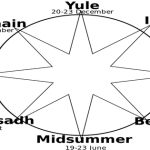
About Naming Ostara, Litha, and Mabon
Aidan Kelly: Including Paganism

A Tapestry of Witches II: The Alexandrians
Aidan Kelly: Including Paganism
TRENDING AT PATHEOS Pagan

10 years of the Power Sigil & Moving...
Last week while reorganizing my studio space, I found the sketchbook that...

Here comes a rant (and TLDR: if you're a US citizen eligible...

Why are younger seekers drawn to Paganism and...
One of the things I've noticed the most is that I'm far...

When we talk about Greek religion, we often begin with the dodekatheion—the...

I was recently chatting with someone on Instagram. She asked me what...

On July 23, I saw Christopher Nolan's The Odyssey which is Homer’s...
view all Pagan blogs
Ad-Free & Subscriber Log-In Subscription Support
- About Us
- 2026 Calendar
- Videos
- Podcasts
- Library of World Religions
- Faith In Media Tracker
- Advertise With Us
- Write for Us
- Privacy Policy
- Terms of Service
- Do Not Sell My Data
- Contact Us
- Radiant Digital
- Manage Newsletter Subscriptions
- Unsubscribe From Notifications
- Sitemap
Copyright 2008-2026, Patheos. All rights reserved.
Subscription Support Ad-Free & Subscriber Log-In
Follow Patheos