
BuddhistCatholicContemplativeEvangelicalGeneral ChristianHinduJewishLatter-day SaintMuslimNew VisionsProgressive Christian
Beliefs
- Buddhist
- Catholic
- Contemplative
- Evangelical
- General Christian
- Hindu
- Jewish
- Latter-day Saint
- More Voices
- Muslim
- New Visions
- Pagan
- Progressive Christian
Topics
- Religion News
- Food and Religion
- Sports and Religion
- Religious Art
- Religious Music and Entertainment
- Religious Events
- History and Religion
- Style and Religion
- Politics and Religion
- Women in Religion
- Recreation Outdoors and Religion
- Business Finance and Religion
- Careers Workplace and Religion
- Education and Religion
- Family Parenting and Religion
- Health Fitness and Religion
- Home and Religion
- Relationships and Religion
- Technology and Religion
- Travel and Religion
Columnists
- Buddhist Columnists
- Business Finance and Religion Columnists
- Careers Workplace and Religion Columnists
- Catholic Columnists
- Contemplative Columnists
- Education and Religion Columnists
- Evangelists Columnists
- Family Parenting and Religion Columnists
- General Christian Columnists
- Health Fitness and Religion Columnists
- Hindu Columnists
- History and Religion Columnists
- Home and Religion Columnists
- Jewish Columnists
- More Voices Columnists
- Latter Day Columnists
- Muslim Columnists
- New Visions Columnists
- Nonreligious Columnists
- Pagan Columnists
- Politics and Religion Columnists
- Progressive Columnists
- Recreation Outdoors and Religion Columnists
- Relationships and Religion Columnists
- Religion News Columnists
- Religious Art Columnists
- Religious Events Columnists
- Religious Music and Entertainment Columnists
- Sports and Religion Columnists
- Style and Religion Columnists
- Technology and Religion Columnists
- Travel and Religion Columnists
- Women in Religion Columnists
Resource Library
- 2026 Calendar
- Library of World Religions
- The 100 Most Holy Places on Earth
- Patheos Answers
- Podcasts
- Videos
- Faith Leaders Database
- Anglican Episcopalian
- Bahai
- Baptist
- Buddhism
- Christianity
- Confucianism
- Eastern Orthodoxy
- Hinduism
- Holiness and Pentecostal
- ISKCON
- Islam
- Judaism
- Lutheran
- Methodist
- The Church of Jesus Christ of Latter-day Saints
- New Age
- Paganism
- Presbytarian and Reformed
- Protestantism
- Religion Behind the Scenes
- Roman Catholic
- Scientology
- Shia Islam
- Sikhism
- Sufism
- Sunni Islam
- Taoism
- Zen
- See all religions
Research Tools
 Ad-Free & Subscriber Log-In Subscription Support
Ad-Free & Subscriber Log-In Subscription Support
Follow Patheos 

- Trending:
- Forgiveness
- |
- Marriage
- |
- Consciousness
- |
- Death Penalty
- |
- Election
- |
- Halloween
 Aidan Kelly: Including Paganism
- Home
- Pagan
- The End of My Catholic Boyhood
The End of My Catholic Boyhood
Last updated on: June 12, 2012 at 12:53 pm by Aidan Kelly
The End of My Catholic Boyhood 2012-06-12T12:53:11-07:00 Aidan Kelly
Patheos Explore the world's faith through different perspectives on religion and spirituality! Patheos has the views of the prevalent religions and spiritualities of the world.
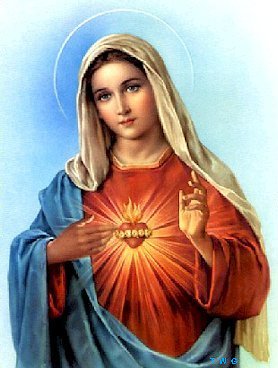 In order for you, dear reader, to see why I think about religion as I do, you need to know what happened to me at age 14.
One Saturday evening in the summer of 1955, I was sitting at my desk in an alcove of the basement suite of rooms my father had built for my brother Bill and me in our house way at the tail end of Tamalpais Valley, the southern branch of Mill Valley (California). I had been having severe cyclic depressions every two or three weeks for about a year; one was on me that evening.
I was wondering about my parents; we were not an ideal family, but things could have been much worse. I was wondering why Ted Giesecke, the first friend I had made at Tamalpais High, should have to go to hell for being such a happy atheist. (It was Ted’s throwing firecrackers at the workmen building the new Catholic Church below his house that must, I thought, have condemned him, for he certainly didn’t have the respectful attitude toward Christianity that apparently let some pagans through the pearly gates.) Especially I was wondering about sex, because I had gone to confession that afternoon.
Until I was 11, being Catholic was merely something I did with my parents on Sundays, but in Brooklyn, waiting to join my father in Germany, I began taking catechism classes in 1952 in preparation for my confirmation at St. Patrick’s parish. The Baltimore Catechism had seemed like a logical system. At least, each point of doctrine had to be true in order for the ones following it to be true, but I could not see how to deduce the latter from the former. I especially did not understand what we were being taught about sex.
In the 1950s, Catholicism seemed (at least to me) to be all about sex or, more precisely, about not having sex. Jesus was a virgin, his mother was a virgin, all his friends were virgins, and all the saints were young women who had been martyred for refusing to have sex. We were taught to be pure in thought, word, and deed. Even thinking about sex was a terrible sin that God would punish us for. Nothing was taught about forgiveness.
After Brooklyn came Germany, for just over two years, then in December 1954 we returned to the States, in time for Christmas at Nana’s house in Brooklyn. There my cousin Tommy taught me about masturbation. I did not at first realize that this wonderfully pleasurable activity was something that the Church forbade. I had finally gotten up the courage to go confess it that Saturday. Our parish priest said what I had expected, what I had nevertheless hoped he would not say: that it was unconditionally evil, that I must stop it immediately and never do it again. But when I got home, I realized that it seemed an innocent pleasure to me. I did not, could not believe what the Church said about it; yet I also believed that I should believe what the Church said. This seemed an insoluble problem for the moment; so I laid it aside.
Rummaging in a drawer, I came across a pamphlet I had found in 1953 in the lobby of the post chapel in Dillingen-am-Donau. It said nihil obstat et imprimatur on the copyright page; it was an official teaching of the Church. One passage in it, answering a question about how Catholics can believe in the Immaculate Conception and the Virgin Birth, asserted that Catholics are not required to believe anything by blind faith, but instead have all the doctrines of the Church proven to them logically. “Clearly,” I had thought in 1953, “one purpose of the catechism was to prove the doctrines to me, but since I didn’t see how their logic worked, I will have to learn about logic in order to understand the proofs.” I had filed this pamphlet away for future reference.
I reread the passage I remembered, and thought back to my catechism. Since I hadn’t understood the logic of it, I wondered whether anything had been proved to me or not. Oh, but this year I had mastered geometry as the archetypal logical system. I now knew how a logical system worked; and so . . .
(The thought that would have risen into consciousness next would have been something like, “The axioms of any logical system must be accepted on faith, but since this pamphlet, which is an official teaching of the Church, says that nothing need be accepted on faith, I now know that nothing has ever been proved to me, and that I am under no obligation to believe anymore.” But, before that thought could rise up into awareness, the whole Thomist system in me, its bubble pierced by a paradox, all that bound-up psychic energy, layer upon layer of social conditioning, exploded; and all ordinary, rational consciousness ceased.)
The details of the experience were as follows.
There was no sense of time during it; it felt simultaneously instantaneous and unending.
A ball of light, or perhaps of cool yellow fire, filled my field of vision.
The depression had felt like black pitch oozing down behind my eyes; now it sublimed, like dry ice, passing instantly from solid to gaseous, filling me with ecstasy, joy, safety.
I was simultaneously both myself and part of the vast compassionate consciousness of a Person.
A voice was speaking too fast for me to hear words, but it filled me with knowledge.
When it was over, I broke forth in a babble of praise and sorrow, a lamentation that I was merely myself again, a thanksgiving that such a thing had happened to me, addressed to a god about whom I knew nothing, on and on until I fell asleep from exhaustion.
I had not known, and did not deduce until much later, how close I must have been to suicide. Looking back, I can see that the weight of the Church’s teachings were killing me—so Someone removed that yoke from me. Saving my life was a sufficient reason for it to have happened.
(When I told this story to our Full Moon Coven in about 1970, Brandel, one of our staunchest members, commented, “That seems typical of you. You couldn’t have left just because you wanted to. You had to be forced away.”)
The next morning I examined myself curiously to see what had happened. I was no longer obliged to believe in God or any of the church’s teachings. I knew that a Person had cut me loose from having to believe, but otherwise I knew nothing about that Person. On the other hand, I felt a new obligation: to go discover for myself what the truth about things religious might be, not to settle for what anyone else believed, not to depend on anyone’s authority or opinion, but to find out for myself. I’ve now been working on that for 57 years.
There are two conclusions I can draw from the nature of that experience. First, its essence was its bliss; the ecstasy was an order of magnitude more pleasurable than even the most intense orgasm. Hence I suspect that the beatitude of the angels would not be a tranquil serenity. Instead, it would be an uproarious, never-ending, uninhibited sensual delight in playing with the divine. (The Witches are far closer to understanding that Mystery than most Christians are.)
Second, it has seemed obvious to me ever since then that our concept of ourselves as isolated individuals, separate from each other and the divine, is an illusion. I know what I felt, and I come back to that theme many times in my poetry. Finding an explanation for how and why that illusion exists has been an exceedingly gradual process.
So in the summer of 1955 I began looking for information about religion. First I found an essay by Bertrand Russell about agnosticism; second, a summary of Leland’s Aradia. They’re next.
You now know why I am not a True Believer, neither in the doctrines of any one religion nor in the skepticism that denies there can be any truth to religious beliefs. I’m not one, because my Fairy Godmother, or Guardian Angel, or Patron Deity, or Whoever that was, won’t let me be.
Previous Post

June 11, 2012
"Human Life Is Sacred": My Foray Into Blogging
Next Post

June 13, 2012 A Very Strange Novel About Witches and Gnostics
Browse Our Archives
Select a Category Gnostics Pagan Paganism Poetry Social Justice Theology Uncategorized Witches
Select a Month August 2018 April 2018 February 2018 January 2018 August 2017 July 2017 June 2017 May 2017 April 2017 January 2017 December 2016 November 2016 October 2016 August 2016 July 2016 June 2016 April 2016 March 2016 February 2016 January 2016 November 2015 September 2015 June 2015 May 2015 April 2015 March 2015 February 2015 January 2015 December 2014 November 2014 September 2014 August 2014 June 2014 May 2014 April 2014 March 2014 February 2014 January 2014 December 2013 November 2013 October 2013 September 2013 August 2013 July 2013 June 2013 May 2013 April 2013 March 2013 February 2013 January 2013 December 2012 November 2012 October 2012 September 2012 August 2012 July 2012 June 2012
TAKE THE
Religious Wisdom Quiz
What is the purpose for the Law?
Select your answer to see how you score.
To save people To give hope To bring about adoption To teach of sin
Related posts from Aidan Kelly: Including Paganism

An Overview of My Life and the Craft
Aidan Kelly: Including Paganism

Aidan Kelly: Including Paganism

Our Experiment in Religious Engineering
Aidan Kelly: Including Paganism

Aidan Kelly: Including Paganism
TRENDING AT PATHEOS Pagan

I was recently chatting with someone on Instagram. She asked me what...

While there are many people who share their results, the end of...

On July 23, I saw Christopher Nolan's The Odyssey which is Homer’s...

As I write this two big events have just finished up. One...

Restoring the Watershed of Divine Love
Perhaps cooperation is not something we manufacture through legislation, ideology, or moral...

Many UUs don’t pray because of bad experiences in a previous religion,...
view all Pagan blogs
Ad-Free & Subscriber Log-In Subscription Support
- About Us
- 2026 Calendar
- Videos
- Podcasts
- Library of World Religions
- Faith In Media Tracker
- Advertise With Us
- Write for Us
- Privacy Policy
- Terms of Service
- Do Not Sell My Data
- Contact Us
- Radiant Digital
- Manage Newsletter Subscriptions
- Unsubscribe From Notifications
- Sitemap
Copyright 2008-2026, Patheos. All rights reserved.
Subscription Support Ad-Free & Subscriber Log-In
Follow Patheos