
BuddhistCatholicContemplativeEvangelicalGeneral ChristianHinduJewishLatter-day SaintMuslimNew VisionsProgressive Christian
Beliefs
- Buddhist
- Catholic
- Contemplative
- Evangelical
- General Christian
- Hindu
- Jewish
- Latter-day Saint
- More Voices
- Muslim
- New Visions
- Pagan
- Progressive Christian
Topics
- Religion News
- Food and Religion
- Sports and Religion
- Religious Art
- Religious Music and Entertainment
- Religious Events
- History and Religion
- Style and Religion
- Politics and Religion
- Women in Religion
- Recreation Outdoors and Religion
- Business Finance and Religion
- Careers Workplace and Religion
- Education and Religion
- Family Parenting and Religion
- Health Fitness and Religion
- Home and Religion
- Relationships and Religion
- Technology and Religion
- Travel and Religion
Columnists
- Buddhist Columnists
- Business Finance and Religion Columnists
- Careers Workplace and Religion Columnists
- Catholic Columnists
- Contemplative Columnists
- Education and Religion Columnists
- Evangelists Columnists
- Family Parenting and Religion Columnists
- General Christian Columnists
- Health Fitness and Religion Columnists
- Hindu Columnists
- History and Religion Columnists
- Home and Religion Columnists
- Jewish Columnists
- More Voices Columnists
- Latter Day Columnists
- Muslim Columnists
- New Visions Columnists
- Nonreligious Columnists
- Pagan Columnists
- Politics and Religion Columnists
- Progressive Columnists
- Recreation Outdoors and Religion Columnists
- Relationships and Religion Columnists
- Religion News Columnists
- Religious Art Columnists
- Religious Events Columnists
- Religious Music and Entertainment Columnists
- Sports and Religion Columnists
- Style and Religion Columnists
- Technology and Religion Columnists
- Travel and Religion Columnists
- Women in Religion Columnists
Resource Library
- 2026 Calendar
- Library of World Religions
- The 100 Most Holy Places on Earth
- Patheos Answers
- Podcasts
- Videos
- Faith Leaders Database
- Anglican Episcopalian
- Bahai
- Baptist
- Buddhism
- Christianity
- Confucianism
- Eastern Orthodoxy
- Hinduism
- Holiness and Pentecostal
- ISKCON
- Islam
- Judaism
- Lutheran
- Methodist
- The Church of Jesus Christ of Latter-day Saints
- New Age
- Paganism
- Presbytarian and Reformed
- Protestantism
- Religion Behind the Scenes
- Roman Catholic
- Scientology
- Shia Islam
- Sikhism
- Sufism
- Sunni Islam
- Taoism
- Zen
- See all religions
Research Tools
 Ad-Free & Subscriber Log-In Subscription Support
Ad-Free & Subscriber Log-In Subscription Support
Follow Patheos 

- Trending:
- Forgiveness
- |
- Marriage
- |
- Consciousness
- |
- Death Penalty
- |
- Election
- |
- Halloween

- Home
- Pagan
- Salt City Pagan: The Value of Unverified Personal Gnosis
Salt City Pagan: The Value of Unverified Personal Gnosis
Last updated on: May 5, 2021 at 8:52 pm by Tyson Chase
Salt City Pagan: The Value of Unverified Personal Gnosis 2021-05-05T20:52:51+00:00 Tyson Chase
Patheos Explore the world's faith through different perspectives on religion and spirituality! Patheos has the views of the prevalent religions and spiritualities of the world.
Unverified Personal Gnosis is a term that describes your personal experience with spirituality as an authentic and affirmatory system. Within the Pagan community and I’d argue spirituality as a whole, UPG is an excellent way to fill in the gaps of religious teachings. In this article I want to talk about the value of unverified personal gnosis and how it has helped me shape a system of belief that is fulfilling and fluid. This article will not go in depth about how to distinguish between UPG and what might be considered a hunch or other sensation. Although that is a very valuable practice, I want to expand on what happens once we arrive at UPG.
I am going to discuss how I use UPG to bridge gaps in my Pagan practice, the value of internalizing, and examine what it means to look into the past. UPG is ever-expanding and in many cases impermanent. What we know now will hopefully continue to grow. These musings are methods I have used to establish branches of thought and practice into my spirituality. My examples are in the form of listening, reading, internalizing, and comparing.
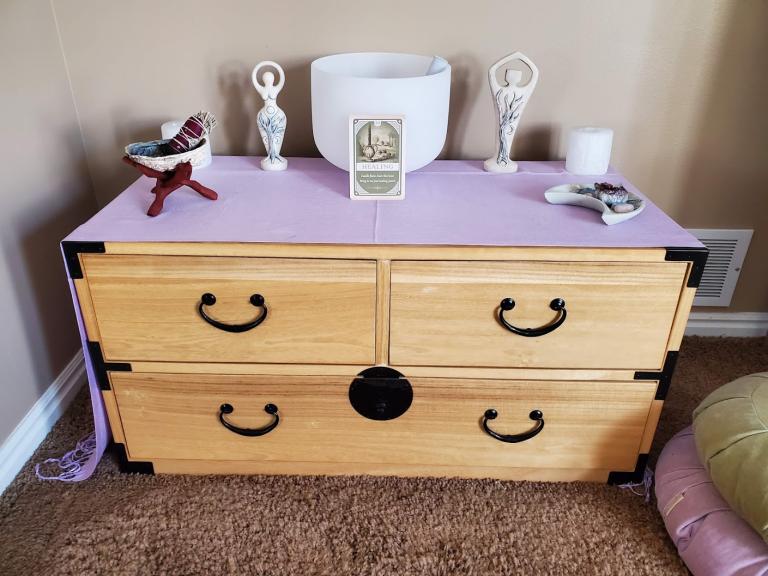
UPG is part of my practice. Image by the author.
Speak Little, Listen Much
The method of simply listening has been profoundly helpful in my life. I use this in my spirituality, my relationships, and even amongst general public interactions. Whenever I listen to or read about other people’s experiences, ideas, or beliefs there are usually nuggets of gold to be found. For years I struggled between balancing Buddhist beliefs with my Pagan beliefs. I felt the urge to choose one and focus my attention on that path in order to wholeheartedly gain spiritual fulfillment. That wasn’t entirely necessary to do and although I see the benefit in narrowing in on a practice, it just wasn’t helpful for my development.
Instead, I kept reading and listening to Buddhist leaders repeating the idea that we do not need to be Buddhist in order to benefit from the teachings of Buddhism. I frequently use Buddhist teachings to fill in some major gaps that I feel within Paganism. Often times I find bridges between the two practices that humor and delight me. Examples of these gaps have included: meditation, mindfulness, compassion, death, and to an extent cosmology. This transcends into UPG by impacting my beliefs in how I should speak with others and view other people’s beliefs. It also heavily plays a part in my views of what happens after death. Death is perhaps the ultimate topic where we are all agnostic and our strongly held beliefs are UPG.
Within the realm of Paganism my UPG covers an area that is much larger! A great example is my unverified personal gnosis of herbs in magick. I start with medicinal qualities and then work down towards spiritual applications. Let’s take lavender for example. Medicinally speaking, it falls within a nervine herb and this use has been recorded for roughly 2500 years. We know it supports calmer moods and relaxes us but most people don’t realize that will carry into their digestive system as well. It can also help with bug bites and minor burns, making it excellent at protecting our skin. My personal gnosis would then tell me to use lavender as a protection herb and to help me fight my fears or anxieties. I might use it to purify an area and create balance. I wouldn’t likely use it, magically, as an herb for psychic dreams. Instead, I would use it to ease fears and help bring peace to a space or person.
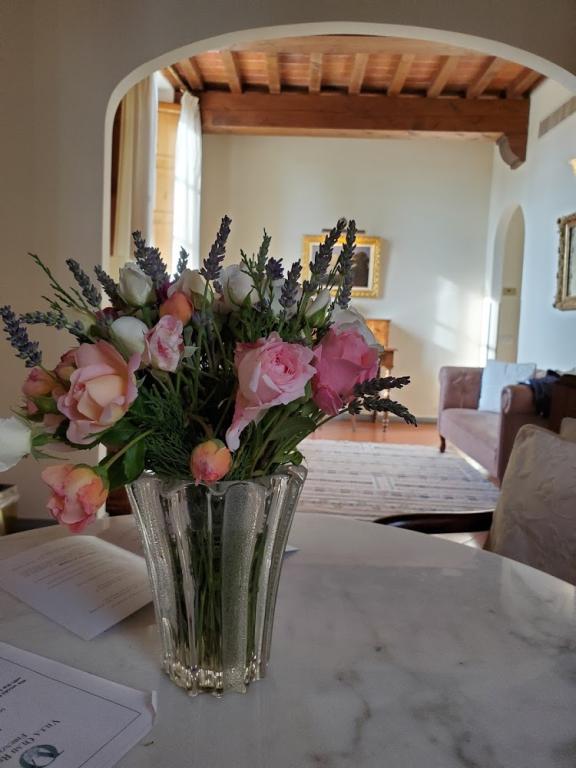
Lavender supports calmer moods and relaxes us. Image by the author.
Now, some people will use lavender the same way I do and some magical books might include articles on lavender in the way I described. When this happens it only helps to enforce my UPG and I feel connected to a web of intuitive knowledge. This same sensation has happened to me whenever I speak about the Goddess and God, certain crystals, candle-work, and many other pieces of my practice. The value in listening to other people maintains the fire within, adding to the kindle of maintaining practice.
Keeping It to Myself
It is rare that I divulge my UPG or the sensations around my practice. In Wicca there are oaths and practitioners can be encouraged to keep elements of their practice a secret. There are several reasons why oaths and secrecy are still practiced in the occult. Pertaining to UPG it oftentimes protects us from sounding a little off-center amongst our friends. Even other Pagans can have differing experiences that might make us question their sanity and that is perfectly fine within UPG.
Oftentimes I keep my initial UPG experiences to myself for the sake of evaluation. It helps me to meditate on or mull over the perceived belief. In the past (recent past too) I had a terrible habit of sharing my beliefs out loud only to feel differently a couple of months later. My friends would say something like, “I thought you no longer felt that way about (insert a topic)”. So, to avoid embarrassment I have learned to keep most things to myself for a moment.
This shouldn’t suggest that there aren’t kindred souls out there who wouldn’t understand where you are coming from. They very much exist and those people are priceless to have in life! In many cases we can openly share our UPG as a way to further connect and nourish our beliefs. I have just found it good practice to begin with internal examination. Make sure that this belief or experience wasn’t meant to be for you alone. Also, take a moment to play devil’s advocate and see if you can establish a flexible belief that won’t grow into something rigid.
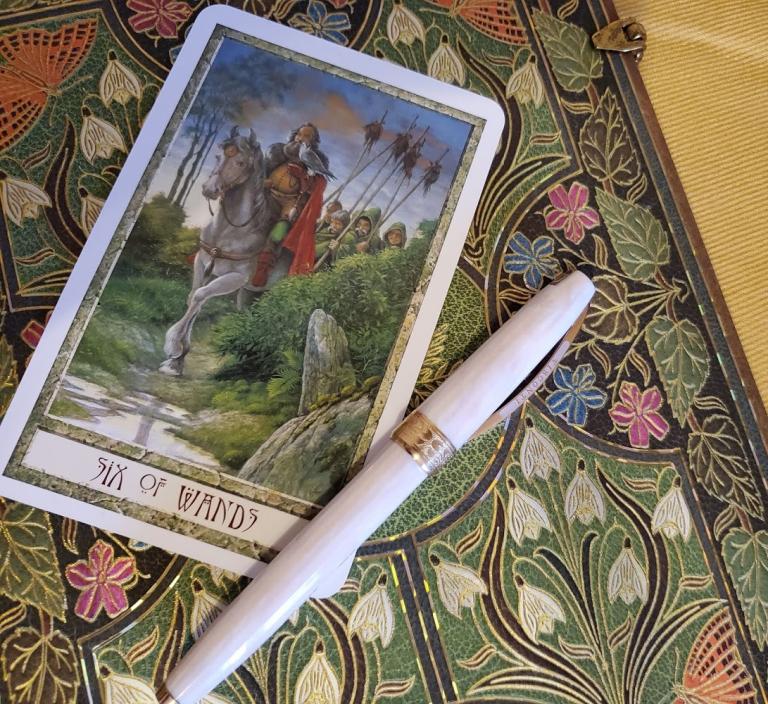
A religion’s age does not equal validity. Image by the author.
Time Doesn’t Equal Validity, But…
This is going to be the area of my post that may get the most attention, for good or for bad. I am prefacing this part by definitively stating that I do not believe a religion’s age equals validity. That said, I do think there are some wonderful and valid ideas in ancient thought. For me, and the purpose of this blog, I want to distinguish thought vs dogma. Thoughts, ideas, and even teachings are areas that leave room for growth. I find that dogma does not usually have the same space. Note that my education does not specialize in anthropology, comparative religion, or religious studies. I may use terms or phrases at a more mundane level.
Establishing that religious age does not equal validity is fundamental within Paganism. We currently do not have an unbroken European religious practice that was not somehow impacted by Christianity. We do have folk-based practices that have aged well and we have unbroken practices found throughout Asia, Africa, and bits of Australia and the American continents. The common practices found between these various regions are helpful in developing a certain amount of UPG for European-based practices and beliefs. There is a level of validity when examining the teachings from various ancient sources and they lend a hand in our modern-pagan beliefs.
We are drawn to the past as a way to confirm many of our current practices and this isn’t without reason. Some have argued that this is because our ancestors had a better connection to land and spirit than we do. Others see the past as a source of knowledge that was temporarily lost or displaced. Neither of these views are wrong and yet in an academic sense these views do need to allow room for possibility. We can still find glimpses of what Pagan Europe might have looked like through our modern festivals, especially regional festivals centered on equinoxes and solstices. We only need to crack open a few history books to see how many festivities and traditions can be traced back to the middle ages or older. Keep in mind that the practices are likely tweaked to fit a region’s conversion to Christianity, whatever that process looked like historically (violent, non-violent, economic…).
While developing your unverified personal gnosis it can be helpful to examine ancient teachings, ideas, and practices. Do so with a critical eye, open heart, and I think you will find that throughout history people have felt a similar awe that you feel now. Look into the past and find ways to bring beliefs into the modern times; just try not to get stuck looking backwards. That is perhaps the most valuable advice and valid thing I can offer in this blog.
It is helpful to question the past, observe the present, and look forward to the future. Modern Paganism is a culmination of several beautiful traditions. The thing that makes our practices special is that we are made for the here and now. We are comfortable looking to the past for valuable lessons and using UPG or modern teachings to carry us into the future. Even more brilliant is that the way we practice now is not going to be the way future generations practice. They will look back on our teachings and ideas to build a spiritual future that fits their time. I find this fact absolutely fascinating. It is also why I believe non-dogmatic faiths continue to grow. We have allowed room for people to question ideas instead of rotting in the past.
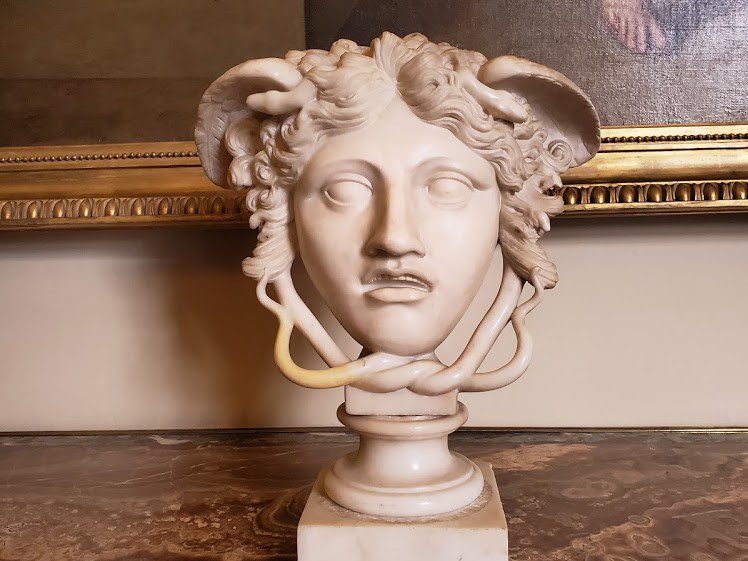
Non-dogmatic faiths continue to grow. Image by the author.
Final Thoughts
There is a wonderful lesson from the Haudenosaunee tribe called The Seventh Generation philosophy. In basic terms it comes something like this: When we practice for the welfare of the people, you must not think of yourself or of your family, not even of your generation. We have to make decisions on behalf of the seven generations to come, so that they may enjoy what you have today. This practice isn’t only applied to how we treat the earth but also in the development of spirituality.
Unverified Personal Gnosis is not an empty box. Gnosis is knowledge and knowledge is indeed a form of power. When we allow room for our beliefs to grow, they will. We must also leave room for others to experience gnosis, growth, and their own truths. I think that is why I resonate with ‘And it harm none, do what ye will’. As long as my UPG is not harming you and yours does not harm me, we should be encouraged to experience our beliefs.
In the end spirituality is a big ball of unverifiable gnosis and we can’t pass on the sensation we have. That is what makes it so special. Your UPG belongs only to you and the joys or comfort it brings is all yours. Look at it like a little piece of this massive universe that was made just for you (truly special, no?). Unverified never needs to mean insignificant. Quite the opposite, your UPG is invaluable.
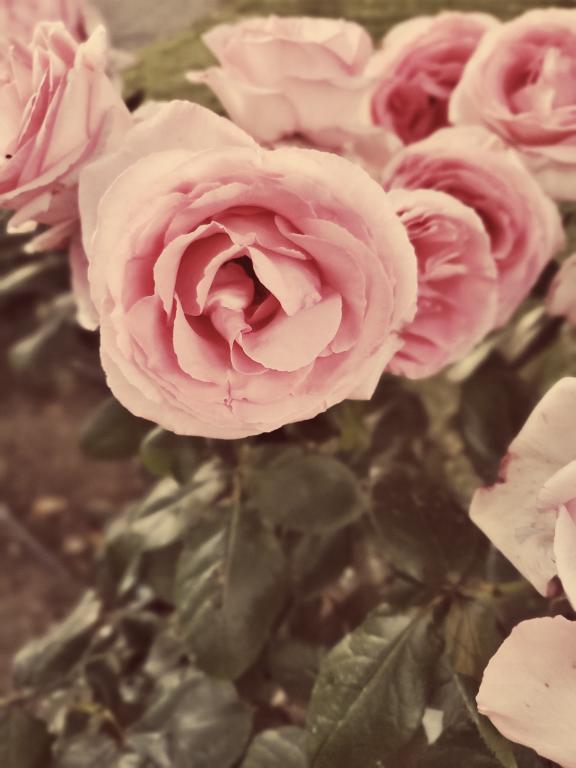
When we allow room for our beliefs to grow, they will. Image by the author.
Peaceful Home Cleansing
Items:
- Charcoal disc
- Heat-proof container (hello cauldron)
- Blend of equal parts: lavender, rosemary, and cedar (juniper berries work well too)
Instructions:
- Light the charcoal disc and place it in your heat-proof container.
- Sprinkle a sensible amount of your herbal blend onto the charcoal disc.
- Starting in the eastern part of your home (or room) begin to waft the smoke while envisioning the negative energies dissipating.
- With each waft you can say something like, “let there be peace, let there be light”.
- Continue to cleanse in a counter-clockwise position (from east to north to west to south and back to east).
- Once you have cleansed in each direction you can sprinkle more herbs onto the disc and allow the smoke to fill the space. I like to leave my cauldron on the kitchen counter since it is a central space.

About Tyson Chase
Tyson Chase is a practitioner of Wicca, living in Salt Lake City, Utah. He is a business professional by day and an avid amateur researcher by night. His research includes over 15 years as a practitioner of Wicca, Witchcraft, history, comparative religion, quantum physics. He is frequently caught creating fantastical concoctions for his guilty indulgences in the world of kitchen witchery. You can read more about the author here.
Previous Post
April 28, 2021
Salt City Pagan: Making Commitments This Beltane
Next Post

May 6, 2021 Between Two Worlds: A Covid Beltane To Remember
Browse Our Archives
Select a Category A Lakeside Hearth Adventures in Wortcunning Alone In Her Presence Arts, Crafts & Cooking Birthing Hereditary Witchcraft Book of Blackbirds Book Reviews Born-Again Witch Cauldron, Sword, Spear, & Stone Cermony and Liturgy Columns Community Dandelion Seeds Dear Jasmine Druid Thoughts Editor's Picks Everyday Pagan Family & Household Practice Family Traditions Full Frontal Magic Gateway Goddess Guest Articles Happily Heathen Health and Wellness Hearth of Hellenism Heathen Woman Hills of the Horizon History Holidays Horse Goddesses Interfaith Interviews Irish-American Witchcraft Jewish Witch Lamp & Labyrinth Letters from Midgard Literature, Media, Film, Music Loop of Brighid Love, Sex & Relationships Magic or Magick Making Light Naturalistic Traditions Nature News Outside The Circle Pantheisticon Politics Prayers, Poems, Blessings & Stories Queer Femme Mystic Queer of Swords Recipes Ritual and Practice Science and Research Seekers and Guides Seeking the Grail Socially Responsible Magic Spear of Athena Star Made Witch Syncretic Electric Technology The Blooming Staff The Busy Witch The Cartomancer The Crow's Nest The Dance of Pagan Recovery The Hearth of Hellenism The Lady's Quill The Other Side of the Hedge The Path of She The Rantin' Raven The Witches Next Door The Zen Pagan Theology, Ethics, Philosophy Tree City Witch Urban Earthwitch Wayfaring Woman Witch on Fire Wyrd Words
Select a Month January 2026 March 2025 December 2024 June 2024 April 2024 March 2024 January 2024 December 2023 November 2023 October 2023 August 2023 July 2023 May 2023 April 2023 March 2023 February 2023 January 2023 December 2022 November 2022 October 2022 September 2022 August 2022 July 2022 June 2022 May 2022 March 2022 February 2022 January 2022 December 2021 November 2021 October 2021 September 2021 August 2021 July 2021 June 2021 May 2021 April 2021 March 2021 February 2021 January 2021 December 2020 November 2020 October 2020 September 2020 August 2020 July 2020 June 2020 May 2020 April 2020 March 2020 February 2020 January 2020 December 2019 November 2019 October 2019 September 2019 August 2019 July 2019 June 2019 May 2019 April 2019 March 2019 February 2019 January 2019 December 2018 November 2018 October 2018 September 2018 August 2018 July 2018 June 2018 May 2018 April 2018 March 2018 February 2018 January 2018 December 2017 November 2017 October 2017 September 2017 August 2017 July 2017 June 2017 May 2017 April 2017 March 2017 February 2017 January 2017 December 2016 November 2016 October 2016 September 2016 August 2016 July 2016 June 2016 May 2016 April 2016 March 2016 February 2016 January 2016 December 2015 November 2015 October 2015 September 2015 August 2015 July 2015 June 2015 May 2015 April 2015 March 2015 February 2015 January 2015 December 2014 November 2014 October 2014 September 2014 August 2014 July 2014 June 2014 May 2014 April 2014 March 2014 February 2014 January 2014 December 2013 November 2013 October 2013 September 2013 August 2013 July 2013 June 2013 May 2013 April 2013 March 2013 February 2013 January 2013 December 2012 November 2012 October 2012 September 2012 August 2012 July 2012 June 2012 May 2012 April 2012 March 2012 February 2012 January 2012
Follow Us!
TAKE THE
Religious Wisdom Quiz
Who said, "Speak, Lord, for your servant is listening"?
Select your answer to see how you score.
Saul Eli David Samuel
Related posts from Agora

Simple Witchery: To Keep Silent

Simple Witchery: Leaning On The Four Pillars


Simple Witchery: Resistance and Resilience in Hard Times
TRENDING AT PATHEOS Pagan

I was recently chatting with someone on Instagram. She asked me what...

While there are many people who share their results, the end of...

On July 23, I saw Christopher Nolan's The Odyssey which is Homer’s...

As I write this two big events have just finished up. One...

Restoring the Watershed of Divine Love
Perhaps cooperation is not something we manufacture through legislation, ideology, or moral...

Many UUs don’t pray because of bad experiences in a previous religion,...
view all Pagan blogs
Ad-Free & Subscriber Log-In Subscription Support
- About Us
- 2026 Calendar
- Videos
- Podcasts
- Library of World Religions
- Faith In Media Tracker
- Advertise With Us
- Write for Us
- Privacy Policy
- Terms of Service
- Do Not Sell My Data
- Contact Us
- Radiant Digital
- Manage Newsletter Subscriptions
- Unsubscribe From Notifications
- Sitemap
Copyright 2008-2026, Patheos. All rights reserved.
Subscription Support Ad-Free & Subscriber Log-In
Follow Patheos