
BuddhistCatholicContemplativeEvangelicalGeneral ChristianHinduJewishLatter-day SaintMuslimNew VisionsProgressive Christian
Beliefs
- Buddhist
- Catholic
- Contemplative
- Evangelical
- General Christian
- Hindu
- Jewish
- Latter-day Saint
- More Voices
- Muslim
- New Visions
- Pagan
- Progressive Christian
Topics
- Religion News
- Food and Religion
- Sports and Religion
- Religious Art
- Religious Music and Entertainment
- Religious Events
- History and Religion
- Style and Religion
- Politics and Religion
- Women in Religion
- Recreation Outdoors and Religion
- Business Finance and Religion
- Careers Workplace and Religion
- Education and Religion
- Family Parenting and Religion
- Health Fitness and Religion
- Home and Religion
- Relationships and Religion
- Technology and Religion
- Travel and Religion
Columnists
- Buddhist Columnists
- Business Finance and Religion Columnists
- Careers Workplace and Religion Columnists
- Catholic Columnists
- Contemplative Columnists
- Education and Religion Columnists
- Evangelists Columnists
- Family Parenting and Religion Columnists
- General Christian Columnists
- Health Fitness and Religion Columnists
- Hindu Columnists
- History and Religion Columnists
- Home and Religion Columnists
- Jewish Columnists
- More Voices Columnists
- Latter Day Columnists
- Muslim Columnists
- New Visions Columnists
- Nonreligious Columnists
- Pagan Columnists
- Politics and Religion Columnists
- Progressive Columnists
- Recreation Outdoors and Religion Columnists
- Relationships and Religion Columnists
- Religion News Columnists
- Religious Art Columnists
- Religious Events Columnists
- Religious Music and Entertainment Columnists
- Sports and Religion Columnists
- Style and Religion Columnists
- Technology and Religion Columnists
- Travel and Religion Columnists
- Women in Religion Columnists
Resource Library
- 2026 Calendar
- Library of World Religions
- The 100 Most Holy Places on Earth
- Patheos Answers
- Podcasts
- Videos
- Faith Leaders Database
- Anglican Episcopalian
- Bahai
- Baptist
- Buddhism
- Christianity
- Confucianism
- Eastern Orthodoxy
- Hinduism
- Holiness and Pentecostal
- ISKCON
- Islam
- Judaism
- Lutheran
- Methodist
- The Church of Jesus Christ of Latter-day Saints
- New Age
- Paganism
- Presbytarian and Reformed
- Protestantism
- Religion Behind the Scenes
- Roman Catholic
- Scientology
- Shia Islam
- Sikhism
- Sufism
- Sunni Islam
- Taoism
- Zen
- See all religions
Research Tools
 Ad-Free & Subscriber Log-In Subscription Support
Ad-Free & Subscriber Log-In Subscription Support
Follow Patheos 

- Trending:
- Forgiveness
- |
- Marriage
- |
- Consciousness
- |
- Death Penalty
- |
- Election
- |
- Halloween

- Home
- Pagan
- Irish-American Witchcraft: Pareidolia and Fairies – Seeing What We Expect
Irish-American Witchcraft: Pareidolia and Fairies – Seeing What We Expect
Last updated on: August 6, 2020 at 3:43 pm by Morgan Daimler
Irish-American Witchcraft: Pareidolia and Fairies – Seeing What We Expect 2020-08-06T15:43:35+00:00 Morgan Daimler
Patheos Explore the world's faith through different perspectives on religion and spirituality! Patheos has the views of the prevalent religions and spiritualities of the world.
There’s been a trend in fairy groups for years of people posting pictures of what they claim are fairies caught on film. Usually these images are nature shots, with the alleged fairy appearing within and formed by the leaves and bark, or sometimes the images are blurry flying objects. People are often quick to jump in and comment that they can see the fairies in the picture occasionally even spotting new ones not seen by the person who took the picture.
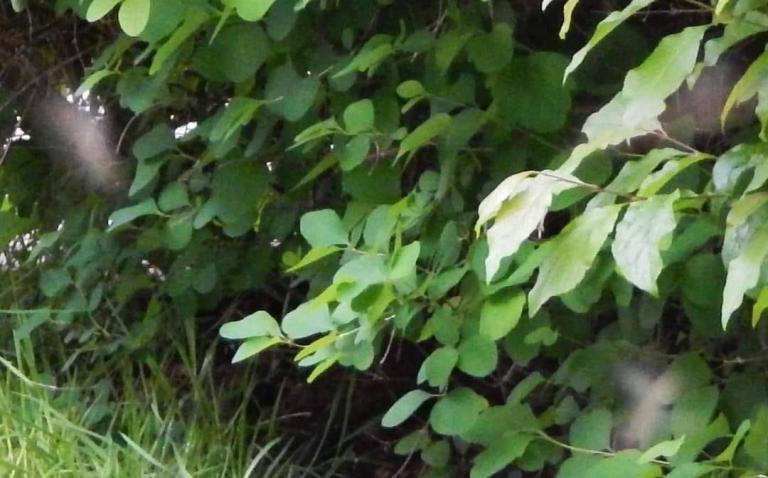
Out of focus midges. Photo by Polly Jones, used with permission.
Despite my own profound belief in fairies I am skeptical of these pictures and in my own experience most of them can be easily explained by natural phenomena or known factors and are examples of pareidolia. Discussing this, however, is usually not allowed or frowned on, as it’s seen as discouraging belief or criticizing individual’s experiences. My entire raison d’être is forwarding and encouraging belief in fairies but I think it’s essential to discuss pareidolia in relation to photos of fairies and understand how skepticism of these photos isn’t the same as disbelief in fairies more generally.
What Is Pareidolia?
Let’s start by looking at what pareidolia is and the related phenomena of apophenia. Basically pareidolia is the tendency for the human brain to see familiar shapes in random patterns, including faces, figures, and animals. We’ve all experienced this; for example, if you look at a wooden floor and find a face formed by the swirls and knots in the wood that’s pareidolia. There have also been some very high profile cases of pareidolia, such as when someone appears in a magazine because they have a piece of toast they claim looks like the Virgin Mary. Psychology uses pareidolia via the Rorschach test by having a person interpret a random ink blot and analyzing the result.
The human brain is designed to recognize faces and shapes quickly as a survival mechanism, and as Stephanie Pappas explains in the article ‘Why Its Perfectly Normal to See Jesus in Toast‘: “When people expect to see a face, these expectations may activate a brain region responsible for processing faces.” In other words, if you are looking for faces you are more likely to see faces. Apophenia is a related phenomena where people will see or hear recognizable things in random input; pareidolia is considered a type of apophenia. Apophenia may play a role in ghost hunting via the interpretation of sounds and images.
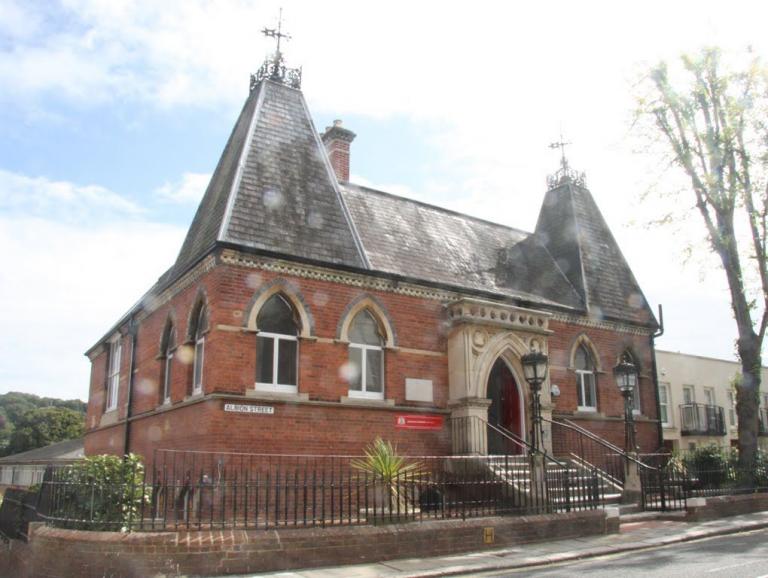
Lens flare in front of building. Photo by Lucya Szachnowski, used with permission.
Pareidolia and Fairy Sightings
Pareidolia is a common phenomena among all humans because it’s how the human brain is wired to process patterns. In fairy groups, however, the phenomena isn’t generally acknowledged, is in fact sometimes treated with hostility, although the majority of photographic evidence* of fairies is pretty clearly pareidolia.
As we touched in in the previous section the cause behind this is usually a person who is primed to see fairies in nature because they are intentionally looking for fairies. This also occurs in still photos of things like flying bugs where the image is out of focus on the bug or the insect is highlighted or backlit creating the impression of a glowing amorphous creature with wings and legs. Instead of being understood as a trick of perception these images are put forward as proof of fairies.
Another aspect of this that I think needs to be considered is the way that those who do believe in fairies are expected to also believe that these photos represent fairies caught on film. There’s a kind of group think that happens around this and which strongly rejects those who try to discuss other possible explanations. I find this unfortunate as any and all phenomena should always be open to discussion and explanation. I have said before that in any case of a fairy experience the first thing to be done is apply Occam’s Razor and look for the simplest and most likely explanation – only when that has been ruled out should we consider supernatural explanations as valid. I say this as someone who has a profound belief in these beings and whose spirituality is based on a foundation of that belief.
In folklore and modern anecdotes seeing fairies isn’t about spotting something that looks a bit like a person in the shapes of leaves but is usually about seeing something that is clearly defined, present, and often interactive. I highly recommend reading through the 2017 Fairy Census to get a feel for some of the modern sightings.
We have accounts of fairies in a range of sizes up to 6 feet tall and these beings are clearly seen by the witnesses’ physical eyes. Folklore contains multiple methods to gain the sight of fairies if one doesn’t have it naturally, and many stories warning of the results of offending them by violating their privacy. so seeing fairies is certainly a thing that does happen and still happens to humans, including ones who were not expecting to see or encounter them, but these sightings are very different from what we find in most cases of fairy photos.
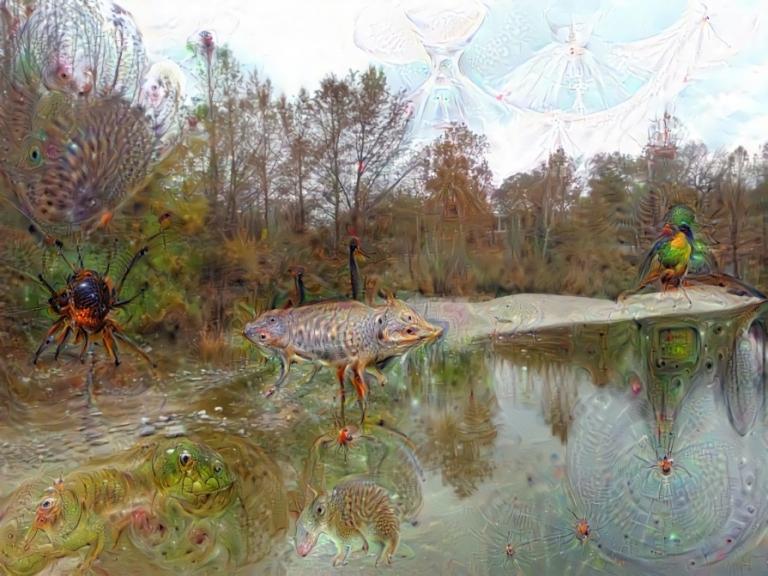
Nature photo with image filter applied. Photo by Frances Osbourne, used with permission.
Belief Versus Proof
I think a significant underlying factor going on with this entire subject is the desire by some to prove that fairies are real. And to be honest I find this problematic, and not just because of the folklore that says violating fairy privacy brings serious consequences.
We shouldn’t need to prove that these beings exist in order to believe in them, but should trust our own experiences and the belief we may have from our culture or study of the subject. It is also worth noting – must be noted I think – that many anecdotal and folkloric accounts of fairies describe beings that are between 18 inches and 6 feet tall and are clearly humanoid** in appearance and can be (and are) interacted with and in some cases spoken to, which are vastly at odds with the tiny, fleeting, and often ambiguously shaped creatures captured on film.
I find that any time belief is linked to a need for indisputable physical, technological proof that will sway the hardest of skeptics, the person will always be disappointed. While it may be nice to have such evidence of fairies, or ghosts, or even gods we shouldn’t need it in order to have belief in these beings. In this I think we need to learn a lesson from the Cottingley Fairies Hoax, where a series of faked fairy photographs in 1917 were initially taken as real and then later disproved, causing a crisis of faith for many people who had anchored their belief in fairies to this earthly proof of their existence.
Using Pareidolia
I want to be clear here that pareidolia isn’t a bad thing, necessarily, nor is apophenia. When scrying using water, smoke, clouds, or fire – for example – we are basically using pareidolia to tap into a precognitive ability and interpreting the images we see to get messages or answers. Pareidolia can also be used to interpret omens or engage with psychic phenomena. Just because there is a psychological explanation behind the process doesn’t invalidate the effectiveness of it. I might argue that seeing fairies works differently because we aren’t talking about interpreting a random pattern to get a message but trying to perceive an otherwise invisible being; however, readers may decide differently.
Final Thoughts
In the end, just like the devout Christians who see Jesus in a cheese sandwich, those who truly want to see fairies in random photos will see them. It behooves us as a community, though, I think, to understand pareidolia and to work on weeding out evidence that doesn’t pass the Occam’s Razor test. Fairies are no less real because we aren’t getting photos of them every 5 minutes, and if we toss out all the images that are obviously leaves and bugs what we have left will be evidence with some merit. Because while I will be the first to say 95% to 99% of the pictures I’ve seen have clear earthly or tech explanations the remaining 1 – 5% don’t, and that is very, very interesting indeed.
*there are also issues with gaffs, or basically artwork passed off as genuine fairies or fairy bodies.
**of course some encounters are with fairy beings in animal forms as well
Previous Post

August 4, 2020
Cross and Crossroads: How to Spot an Insta-Scammer
Next Post

August 12, 2020 Simple Witchery: How to Make Sacred Water
Browse Our Archives
Select a Category A Lakeside Hearth Adventures in Wortcunning Alone In Her Presence Arts, Crafts & Cooking Birthing Hereditary Witchcraft Book of Blackbirds Book Reviews Born-Again Witch Cauldron, Sword, Spear, & Stone Cermony and Liturgy Columns Community Dandelion Seeds Dear Jasmine Druid Thoughts Editor's Picks Everyday Pagan Family & Household Practice Family Traditions Full Frontal Magic Gateway Goddess Guest Articles Happily Heathen Health and Wellness Hearth of Hellenism Heathen Woman Hills of the Horizon History Holidays Horse Goddesses Interfaith Interviews Irish-American Witchcraft Jewish Witch Lamp & Labyrinth Letters from Midgard Literature, Media, Film, Music Loop of Brighid Love, Sex & Relationships Magic or Magick Making Light Naturalistic Traditions Nature News Outside The Circle Pantheisticon Politics Prayers, Poems, Blessings & Stories Queer Femme Mystic Queer of Swords Recipes Ritual and Practice Science and Research Seekers and Guides Seeking the Grail Socially Responsible Magic Spear of Athena Star Made Witch Syncretic Electric Technology The Blooming Staff The Busy Witch The Cartomancer The Crow's Nest The Dance of Pagan Recovery The Hearth of Hellenism The Lady's Quill The Other Side of the Hedge The Path of She The Rantin' Raven The Witches Next Door The Zen Pagan Theology, Ethics, Philosophy Tree City Witch Urban Earthwitch Wayfaring Woman Witch on Fire Wyrd Words
Select a Month January 2026 March 2025 December 2024 June 2024 April 2024 March 2024 January 2024 December 2023 November 2023 October 2023 August 2023 July 2023 May 2023 April 2023 March 2023 February 2023 January 2023 December 2022 November 2022 October 2022 September 2022 August 2022 July 2022 June 2022 May 2022 March 2022 February 2022 January 2022 December 2021 November 2021 October 2021 September 2021 August 2021 July 2021 June 2021 May 2021 April 2021 March 2021 February 2021 January 2021 December 2020 November 2020 October 2020 September 2020 August 2020 July 2020 June 2020 May 2020 April 2020 March 2020 February 2020 January 2020 December 2019 November 2019 October 2019 September 2019 August 2019 July 2019 June 2019 May 2019 April 2019 March 2019 February 2019 January 2019 December 2018 November 2018 October 2018 September 2018 August 2018 July 2018 June 2018 May 2018 April 2018 March 2018 February 2018 January 2018 December 2017 November 2017 October 2017 September 2017 August 2017 July 2017 June 2017 May 2017 April 2017 March 2017 February 2017 January 2017 December 2016 November 2016 October 2016 September 2016 August 2016 July 2016 June 2016 May 2016 April 2016 March 2016 February 2016 January 2016 December 2015 November 2015 October 2015 September 2015 August 2015 July 2015 June 2015 May 2015 April 2015 March 2015 February 2015 January 2015 December 2014 November 2014 October 2014 September 2014 August 2014 July 2014 June 2014 May 2014 April 2014 March 2014 February 2014 January 2014 December 2013 November 2013 October 2013 September 2013 August 2013 July 2013 June 2013 May 2013 April 2013 March 2013 February 2013 January 2013 December 2012 November 2012 October 2012 September 2012 August 2012 July 2012 June 2012 May 2012 April 2012 March 2012 February 2012 January 2012
Follow Us!
TAKE THE
Religious Wisdom Quiz
In 2 Thessalonians, what does Paul say the man of lawlessness will proclaim himself to be?
Select your answer to see how you score.
God A prophet The Messiah King of the world
Related posts from Agora

Simple Witchery: To Keep Silent

Simple Witchery: Leaning On The Four Pillars


Simple Witchery: Resistance and Resilience in Hard Times
TRENDING AT PATHEOS Pagan

I was recently chatting with someone on Instagram. She asked me what...

While there are many people who share their results, the end of...

On July 23, I saw Christopher Nolan's The Odyssey which is Homer’s...

As I write this two big events have just finished up. One...

Restoring the Watershed of Divine Love
Perhaps cooperation is not something we manufacture through legislation, ideology, or moral...

Many UUs don’t pray because of bad experiences in a previous religion,...
view all Pagan blogs
Ad-Free & Subscriber Log-In Subscription Support
- About Us
- 2026 Calendar
- Videos
- Podcasts
- Library of World Religions
- Faith In Media Tracker
- Advertise With Us
- Write for Us
- Privacy Policy
- Terms of Service
- Do Not Sell My Data
- Contact Us
- Radiant Digital
- Manage Newsletter Subscriptions
- Unsubscribe From Notifications
- Sitemap
Copyright 2008-2026, Patheos. All rights reserved.
Subscription Support Ad-Free & Subscriber Log-In
Follow Patheos