
BuddhistCatholicContemplativeEvangelicalGeneral ChristianHinduJewishLatter-day SaintMuslimNew VisionsProgressive Christian
Beliefs
- Buddhist
- Catholic
- Contemplative
- Evangelical
- General Christian
- Hindu
- Jewish
- Latter-day Saint
- More Voices
- Muslim
- New Visions
- Pagan
- Progressive Christian
Topics
- Religion News
- Food and Religion
- Sports and Religion
- Religious Art
- Religious Music and Entertainment
- Religious Events
- History and Religion
- Style and Religion
- Politics and Religion
- Women in Religion
- Recreation Outdoors and Religion
- Business Finance and Religion
- Careers Workplace and Religion
- Education and Religion
- Family Parenting and Religion
- Health Fitness and Religion
- Home and Religion
- Relationships and Religion
- Technology and Religion
- Travel and Religion
Columnists
- Buddhist Columnists
- Business Finance and Religion Columnists
- Careers Workplace and Religion Columnists
- Catholic Columnists
- Contemplative Columnists
- Education and Religion Columnists
- Evangelists Columnists
- Family Parenting and Religion Columnists
- General Christian Columnists
- Health Fitness and Religion Columnists
- Hindu Columnists
- History and Religion Columnists
- Home and Religion Columnists
- Jewish Columnists
- More Voices Columnists
- Latter Day Columnists
- Muslim Columnists
- New Visions Columnists
- Nonreligious Columnists
- Pagan Columnists
- Politics and Religion Columnists
- Progressive Columnists
- Recreation Outdoors and Religion Columnists
- Relationships and Religion Columnists
- Religion News Columnists
- Religious Art Columnists
- Religious Events Columnists
- Religious Music and Entertainment Columnists
- Sports and Religion Columnists
- Style and Religion Columnists
- Technology and Religion Columnists
- Travel and Religion Columnists
- Women in Religion Columnists
Resource Library
- 2026 Calendar
- Library of World Religions
- The 100 Most Holy Places on Earth
- Patheos Answers
- Podcasts
- Videos
- Faith Leaders Database
- Anglican Episcopalian
- Bahai
- Baptist
- Buddhism
- Christianity
- Confucianism
- Eastern Orthodoxy
- Hinduism
- Holiness and Pentecostal
- ISKCON
- Islam
- Judaism
- Lutheran
- Methodist
- The Church of Jesus Christ of Latter-day Saints
- New Age
- Paganism
- Presbytarian and Reformed
- Protestantism
- Religion Behind the Scenes
- Roman Catholic
- Scientology
- Shia Islam
- Sikhism
- Sufism
- Sunni Islam
- Taoism
- Zen
- See all religions
Research Tools
 Ad-Free & Subscriber Log-In Subscription Support
Ad-Free & Subscriber Log-In Subscription Support
Follow Patheos 

- Trending:
- Forgiveness
- |
- Marriage
- |
- Consciousness
- |
- Death Penalty
- |
- Election
- |
- Halloween

- Home
- Pagan
- Parenting the Divine: Teaching the Joy of Lammas
Parenting the Divine: Teaching the Joy of Lammas
Last updated on: July 28, 2020 at 3:39 pm by Florence Edwards-Miller
Parenting the Divine: Teaching the Joy of Lammas 2020-07-28T15:39:55+00:00 Florence Edwards-Miller
Patheos Explore the world's faith through different perspectives on religion and spirituality! Patheos has the views of the prevalent religions and spiritualities of the world.
This article was co-authored by Bee. Like Florence, Bee is a mom of small children, with a passion for helping families pass on Pagan teachings to children. Bee is a teacher, writer, hearth keeper, and a witch in the Reclaiming tradition.
The modern Wheel of the Year is based off of a combination of historical agrarian holidays in Europe as well as solar events. If your family isn’t of the European farming variety, you might have a hard time easily connecting the traditional Sabbats with your modern life. You might have a harder time doing so if you’ve got small children for whom the symbolism is an even bigger stretch. This often leads well-intentioned Pagan communities and families down the rabbit hole of celebrating Sabbats with arts and crafts that play on symbols but don’t teach the kids what we’re actually celebrating.
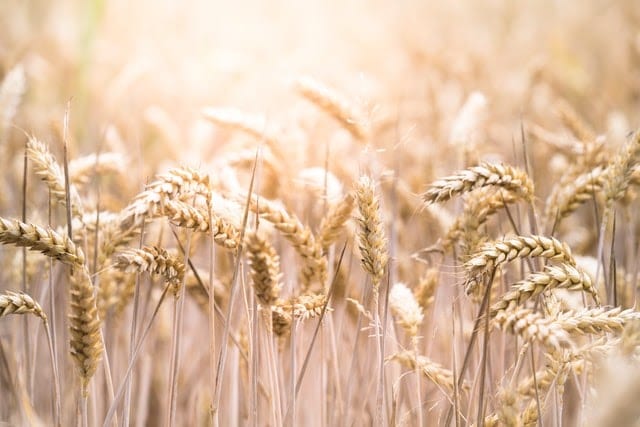
What does Lammas really mean? Image by Evi Radauscher via Unsplash.
The same way that endless children’s Christmas specials try to help young Christians understand that the holiday isn’t just about gifts, we need to make explicit the deeper work being done throughout the Wheel’s celebrations. We suggest diving deeper into the core meaning of the Sabbats—not just what the books suggest the holiday is about—what it means for you and your family or community, right here and now.
What Does Lammas Really Mean?
Lammas (or Lughnasadh) is sometimes illusive to many modern witches: there isn’t a popular secular or religious near-equivalent being celebrated in the overculture, and many of us are in summer vacation mode or getting ready to hunker down into another school year. It feels strange to be told to celebrate the first harvest (unless you’ve been working hard at your quarantine garden this year) when in America our Thanksgiving harvest isn’t until the end of November.
Lammas is often described as the first harvest holiday of three (Mabon and Samhain being the other two), but for many of us our gardens, farmer’s markets, and CSA shares have been producing food for weeks. Why should we have a harvest holiday now? In a presentation that Kathryn and Arthur Hinds gave at Circle Sanctuary’s Green Spirit festival a few years ago, they explained that back when we actually relied on what was grown nearby for the bulk of our diets, the time in high summer just before the first harvest was one of the leaner times of the year. Seeds were in the ground and the sun was shining, but the people were still subsisting on the last of the food stored the previous year. Thus, the first harvest of grain was sacred, shared in joy and offered to the gods in thanksgiving.
In our less-agrarian lives now, we can draw inspiration for Lammas in the greater cycle as well: many of us have set larger intentions at different parts of the year, be it during various New Year celebrations, at Imbolc, or other significant moments, and we have worked hard, putting in the mental and physical labor to see them manifested. This is the time we might start finally seeing some of the fruits of that labor, in whatever form they’re going to arrive. Our work was not in vain—it’s time to celebrate! The lesson of Lammas is one of what we can accomplish with planning, effort, and time.
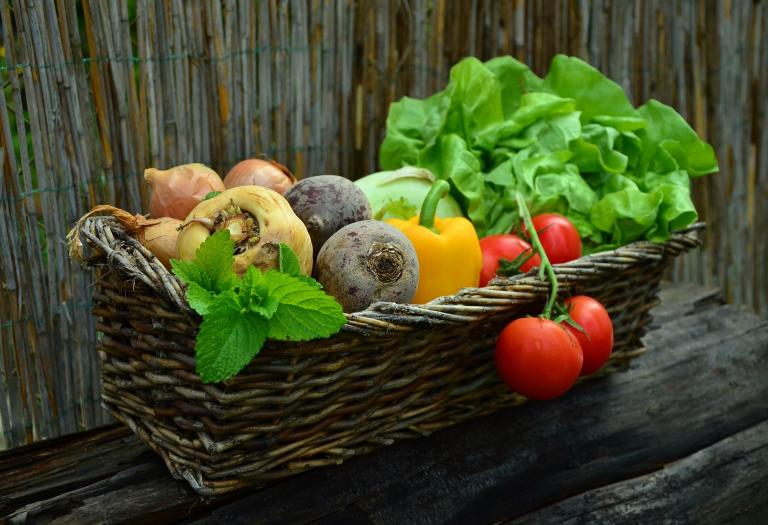
Our work was not in vain—it’s time to celebrate! Photo by congerdesign via Pixabay.
Everyone, regardless of age, can benefit from practicing delayed gratification, persistence, and setting and achieving goals. Our modern world is driven by instant gratification on every level. As much fun as it can be to see something online, purchase it and have it in your hands in a matter of hours or days, that practice isn’t exactly character building.
Lammas isn’t just an early Thanksgiving celebration—it’s a time of deep gratitude towards our past selves for planning ahead, putting in the work, having patience, and sometimes praying for the right outcome. Children need that lesson reinforced at every age. Parenting experts often tell us “praise the effort, not the accomplishment.” Youth is about living in the moment, but we owe it to our descendents to teach them these very practices, and to celebrate the results of their labor. On Lammas we remind them and ourselves of this lesson.
But of course, kids are going to respond to a lecture about the rewards of persistence about as well as they would to any other “pronouncement from on high.” Many of us became Pagans in part because we did not respond to a “preachy” method of teaching, so we can’t expect our children to learn in a way that does not serve us. Paganism is experiential and hands-on. And there’s nothing that we Pagans love better than a good metaphor. For Lammas, one of the most popular symbols/metaphors is BREAD.
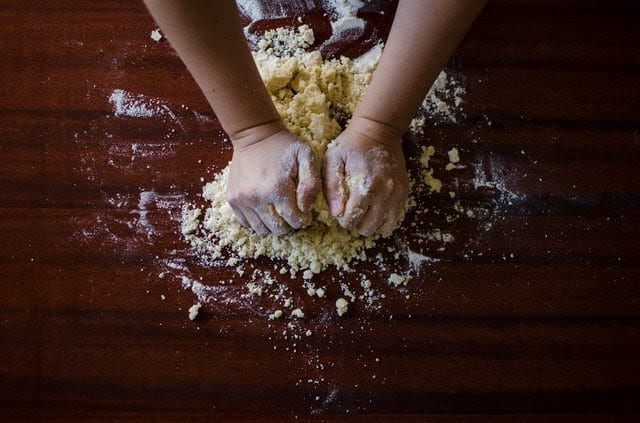
For Lammas, one of the most popular symbols/metaphors is BREAD. Photo by Life of Pix via Pexels.
The Core of Lammas: Bread as a Metaphor for the Results of Effort
For those of us who came from much of Europe, bread was a staple part of our ancestors’ diets. For the same reason that people on low carb diets avoid it now, (it is quickly and easily digested and turned into sugar in the bloodstream) bread was critical for people for whom avoiding starvation was the primary goal. Lammas (coming from the Anglo-Saxon words for “loaf mass”) is the holiday when people had new flour to make bread, and thus starvation was avoided.
Bread was the staple of many peoples in Europe, but loaf bread is far from universal. In agricultural societies all around the world people similarly had to plan ahead to make sure they had staple crops to eat. In many parts of East Asia, rice was the staple crop, and it required planning not only seasons, but generations ahead, to carve and flood new paddies to cultivate rice plants. In North America wild rice played a similar staple role in diets.
In central America and the land that’s now Mexico and the American Southwest, corn became a staple crop, and it needed extensive cultivation and milling to turn it into a nutritious base for the diets of a growing population. Nearly every agrarian culture and people has a tradition of cultivating grains and making them into a staple product, including khobz, pita, tortillas, frybreads, mochi, roti, and many others. If you don’t trace your cultural roots back to a “loaf mass” people, you should feel free to substitute the culturally appropriate food of your choice for bread in your Lammas work, as the message of cultivation and labor over time is the same around the world and across time.
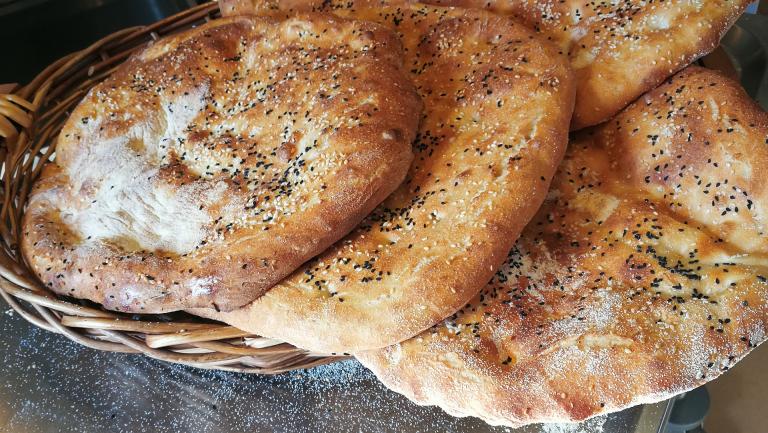
Feel free to substitute the culturally appropriate food of your choice. Photo by croogle via Pixabay.
Making bread (or whatever other staple food you choose to focus on) takes a lot of time and effort. Like in the story of the Little Red Hen, first you have to till the ground, plant the seed, tend to the new plant, wait for it to ripen, harvest it, strip and grind the grain, and only then do you have flour to combine with other ingredients, knead, let rise, shape, and bake. When we teach our kids about the role bread played for our ancestors we can connect it to the ideas that really good things can only happen when we plan ahead and work step by step to make what we need come to pass.
Crafting the Sacred Carb: Lammas Activities for All Ages
While a craft for craft’s sake isn’t a great way to teach Pagan practice, because many of us (especially kids) are kinetic learners, you can use a bread-making (or other culturally-appropriate sacred carb of your choice) activity to help teach the lesson at the core of Lammas. Introduce the idea of the season, and then suggest that for Lammas, you’re going to work together to create something special for your family celebration.
Activity Ideas for the Labor of Lammas, based on age/ability:
- For the youngest set, don’t even try to make actual bread. There are too many steps, and too many opportunities for disappointment. Instead, try working with shaping pre-made dough or the ever-popular playdough. You can buy premade, or make your own from one of the hundreds of recipes online. Small hands can work to knead and shape loaves (or flatten to tortillas, make balls of rice, etc). Provide a model and work alongside your child. If you’re using real dough you can take it and bake it. If you’re using playdough let your child shape it and then pop it in the fridge or freezer to keep its shape. You really just need one decent loaf to use in the Lammas celebration, so allow children to improvise and choose their best product. Remember: keep the activity to 10-15 minutes, be prepared to try multiple times over a few days, and have a flexible idea of what the end product should look like.
- When kids get a little older, you can start getting them to help with preparing actual food. But don’t jump right into kneading and rising just yet. For a kid-centered bread activity, consider the humble box mix. You could make cake, muffins, or cornbread. The symbolism is less important than the activity. Go for a simple mix, one that only requires liquid, and maybe some eggs. Depending on your kid’s dexterity you could fill measuring cups and just let them dump it into the mix, or your kid could get involved in measuring and even breaking the eggs (into a separate bowl, so you can fish out bits of shell as needed.) This is a great time to bring out your biggest bowl, so your kid can take the lead on stirring without making a mess. You can try and work some chanting or intention into the stirring, but if that seems to be too much for your child, don’t force it. The point is to let them work at it, so that when whatever-it-is comes out of the oven they feel like they did the work. Remember: you might need to break this up into multiple sessions depending on attention spans and focus, be okay with some productive mess-making, and try to let your littles do as much of the work as possible here, even if you need to stick your hands in your pockets or bite your tongue occasionally.
- Slightly older kids can work with supervision and/or assistance to prepare their own dough or cake from scratch. Check out rebus/picture recipes for the pre-literate chef in your house to offer them more independence as well. Or for an early reader, there are lots of recipe books for kids. You can play sous chef for them, and help them assemble the ingredients or clean up as they go. Alternatively, if your child has a more limited attention span, but likes working with their hands, skip the recipe part, and get them pre-made pizza dough (make it yourself, buy it at a grocery, or ask your local pizzeria if you can buy some raw dough off them) and get your child to braid or sculpt it into cool sculptures that you can brush with olive oil and bake and then use to decorate your Lammas altar.
- Older children and teens can work on creating actual bread from scratch, with or without the assistance of a bread machine. Get them to find a recipe they like (there are good tutorials on YouTube) and provide the ingredients and tools, but let them do the work as much as possible. Once again, keep the temperament and interests of your child in mind. Some teens will be motivated after watching half of an episode of the Great British Bakeoff, others might never get motivated to make bread, but if you suggest that they make pizza dough for DIY pizzas they’ll get into it. If your Lammas sacred carb is a pizza (maybe with different colors of cheese arranged in a solar pattern) there is absolutely nothing wrong with that. Keep in mind that the point isn’t the end-product it’s the labor needed to create it.
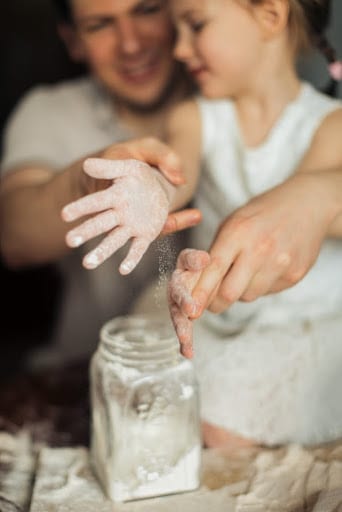
Check out picture recipes for the pre-literate chef. Photo by Elly Fairytale via Pexels.
A few pointers to consider in choosing and carrying out the work:
- You know your kid best. Choose something that will be engaging as well as just challenging enough that they’ll need to actually work at it, but not so hard that they become frustrated and abandon ship. It’s okay to help, especially with the younger set, but the work is not for the caregivers here.
- Be thoughtful about the timing of the activity. We suggest you don’t plan it to be done the morning of your Lammas celebration—allow for things to go wrong, need repeating, moods and naps and other hard to plan moments to occur. Give yourself and your family a buffer and choose a time of day when they can really focus. For example, don’t expect your toddler to be focused right before nap time, or for you to return to a clean and calm kitchen in time to make dinner after your teen has been baking that afternoon.
- If your young Pagans aren’t creating something edible (or even if they are) we highly encourage you to find a way to include this sacred carb as part of your Lammas ritual or family celebration.
- Don’t be shy about praising their effort, their ability to ask for assistance if it was needed, their willingness to start over, etc. All of those things are part of productive struggle, and that labor is required to make their “bread” special. The key is to praise the effort, not the product. It doesn’t really matter if their final product is less than perfect—not everything manifests perfectly no matter how hard we work for it.
- Make it fun! Remember this is a holiday, not a strange yearly chore. Sacred work for kids is not like sacred work for adults. Don’t even try to be meditative, somber or “work with intention.” Instead, tap into the aspect of the sacred that is joyous and whimsical. Put on some music, have some special snacks, and lean into the family time. Take some pictures and remember that you’re also modeling the joy found in good work.
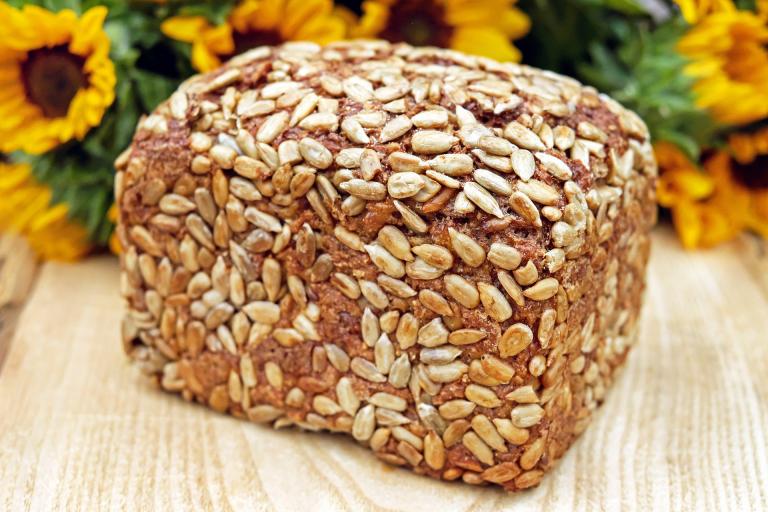
The key is to praise the effort, not the product. Photo by Couleur via Pixabay.
Incorporating Your Child’s Creation into Family Lammas Ritual
Whatever your little ones created as their bread is now powerfully symbolic of their labors. If you’ve chosen the right level of challenge for them they will rightly be feeling proud of themselves. Now their loaf will take a starring role in the ritual, emphasizing the importance of their efforts no matter how young they are. It’s one thing to praise our children’s work, it’s another for them to see us offer it to our Gods.
Whatever your altar for Lammas looks like, make space for your fanciest servingware, altar plate or special offering dish. Add the bread(s) and cover with a nice cloth if practical while you prepare for any other parts of your celebration. As is appropriate during your family ritual, take time to bless the loaf/loaves. You can do this however it feels appropriate to you. In Bee’s house, we often do “magic fingers” over the thing to be blessed and say “Magicmagicmagic!” or “Specialspecialspecial!”
Then remind everyone how your ancestors would face uncertain and lean times as they waited for their crops to grow, and the joy and excitement they would feel as they were able to finally taste the fruits of their labor. Have your child explain the process they went through to make their bread—such as measuring, kneading, forming the loaves—if they can and add some emphasis on a step that was intimidating, frustrating, or that they needed help with. Spend a moment to show how they were uncertain or struggling, but they persevered if they don’t include those things on their own. This can be prompting a young toddler by asking leading questions like “It was hard to get the dough in the right shape at first, right? But you kept trying, didn’t you?” or asking your tween “What part of baking your bread was the most difficult? How did you feel or how did you handle it?”
If you also baked your own loaf, follow suit and meditate on what frustrated you or worried you as well. This needn’t take long—nobody comes to Paganism looking for a sermon, especially kids—just take a few moments to explain why this loaf in particular is special and then you can connect the work to the larger message: Lammas is about giving thanks and celebrating the first fruits of our labors.

Have your child explain the process they went through. Photo by Tanaphong Toochinda via Unsplash.
Sharing the Gift
The best way to celebrate what we’ve manifested is always together. Offer the first piece(s) back to the Divine, ancestors, or whoever you give thanks to. Then share it as a family. Allow your kid to cut or tear the bread as is fitting and pass it out. If the end result of their work was less food and more sculpture, you can present it to the directions or the divine and then pass it around for everyone to admire. Take time to truly celebrate here, and make sure you tell your small celebrants how proud you are when you see them work hard and love celebrating their successes with them. Thank them for their efforts—you get to enjoy a delicious treat, or your altar is beautifully decorated because of them!
Remember, the quality isn’t the point. Whether you’re “eating” the playdough or actually munching on a hunk of bread, it’s always appropriate to remember that we can celebrate even imperfect loaves as we learn and grow. And if a younger baker has grown so attached that they can’t bear to see their creation consumed, that’s fine too. Save the constructive criticism for another time, or if your older baker has noticed it’s not up to their taste, use it as a teaching moment to celebrate a step in the learning process and commit to trying again another time.
Labor Without, Labor Within
Even as your kids labor to produce their carb of choice, take a moment to connect with the lesson that this festival has for us as parents or caregivers: the act of raising a child is a long-term project of intense labor and long-term planning. Planting a wheat field to bake bread is a short-term project compared to the raising of a child into a responsable, caring, autonomous adult. As they’re laboring at their project, reflect that you’re laboring at yours. If there are meltdowns or disinterest, don’t take it as a failure of parenting or teaching your Paganism; reflect on it as just part of the labor that you’ve taken on. And savor the moments of triumph, when your child finally gets enthusiastic about an activity they might have found intimidating or boring as your very own “bread.” Lammas reminds us to seek out the sacredness in the labor, and to savor the moments of achievement as they come.
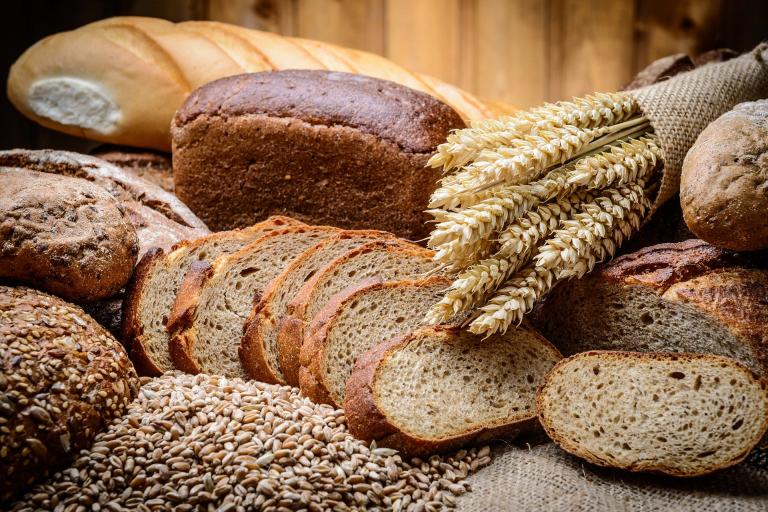
Lammas reminds us to seek out the sacredness in the labor. Photo by marco aurelio via Pixabay.
Conclusion
This is just a starting point. This sequence of work-bless-share can be the entire ritual, or just a piece of the whole Sabbat celebration. Do what feels appropriate and manageable, spread it out over the Sabbat weekend, and keep it relaxed and enjoyable. Make it suit your family’s current traditions, heritage, and interests. Because ultimately, many of us are looking to create lasting traditions and this approach to Lammas might help us find something flexible that works. The craft-for-craft’s sake approach can be entertaining for some young Pagans, but won’t contain the depth of meaning an exercise like this one can. Little Pagans are ready for this deeper work, we just need to make it accessible and concrete for them; and like your family, this type of work can and will grow over the years.
Reading list:
If you want to enhance your lesson through reading there are some fantastic picture books that teach about bread and other foods with cultural significance. A few favorites are:
- Blue Bowl Down, an Appalachian Rhyme by C.M. Millen, illustrated by Holly Meade. With simple language and engaging pictures, a young boy and his mother laboriously and lovingly prepare bread over the course of two days in a house that doesn’t appear to have electricity or running water. Suitable for younger children, but older children may pick up more on the context of the family’s life.
- Sun Bread by Elisa Kleven, in rhymes, an anthropomorphic dog bakes a huge loaf of bread that helps bring joy and warmth to her town. The book includes a recipe to make sun bread. Suitable for younger children, although older kids may get more out of the bread recipe. The “return of the sun” theme makes this a great book for Imbolc or Yule too. Read it though first, and see how you want to use it with your children.
- Who Made My Lunch: From Wheat to Bread by Bridget Heos, illustrated by Stephanie Fizer Coleman. An illustrated guide to the industrial agriculture and baking process that creates the kind of bread that can be bought at grocery stores. It doesn’t get into any of the problematic aspects of industrial food production, but it’s a good look into the way much food is created and contrasts well with teaching about home baking. A good read-aloud book for younger-grade students.
- Fry Bread: A Native American Family Story by Kevin Noble Maillard, Illustrated by Juana Martinez-Neal. A delicious book that celebrates both the place of fry bread in Native American families, but also the diversity within the families themselves. The characters have different skin tones, body types, and hair textures but are all shown as one loving family. This book will have particular meaning for Native families, but is also a great teaching tool for non-native children to introduce them to modern native peoples. The author includes a recipe for fry bread as well as extensive information for grownups or older kids on the history and cultural importance of fry bread.
About Florence Edwards-Miller
Florence is a mom of small children, with a passion for helping families pass on Pagan teachings to children. She is an ordained minister with Circle Sanctuary in Wisconsin, where she coordinates family programming for Circle’s festivals and events, including Pagan Spirit Gathering. You can read more about the author here.
Previous Post
July 26, 2020
Living the Liminal: Modern Spells and the Threshing Floor
Next Post
July 28, 2020 Living the Liminal: A Local 2020 Lughnasadh
Browse Our Archives
Select a Category A Lakeside Hearth Adventures in Wortcunning Alone In Her Presence Arts, Crafts & Cooking Birthing Hereditary Witchcraft Book of Blackbirds Book Reviews Born-Again Witch Cauldron, Sword, Spear, & Stone Cermony and Liturgy Columns Community Dandelion Seeds Dear Jasmine Druid Thoughts Editor's Picks Everyday Pagan Family & Household Practice Family Traditions Full Frontal Magic Gateway Goddess Guest Articles Happily Heathen Health and Wellness Hearth of Hellenism Heathen Woman Hills of the Horizon History Holidays Horse Goddesses Interfaith Interviews Irish-American Witchcraft Jewish Witch Lamp & Labyrinth Letters from Midgard Literature, Media, Film, Music Loop of Brighid Love, Sex & Relationships Magic or Magick Making Light Naturalistic Traditions Nature News Outside The Circle Pantheisticon Politics Prayers, Poems, Blessings & Stories Queer Femme Mystic Queer of Swords Recipes Ritual and Practice Science and Research Seekers and Guides Seeking the Grail Socially Responsible Magic Spear of Athena Star Made Witch Syncretic Electric Technology The Blooming Staff The Busy Witch The Cartomancer The Crow's Nest The Dance of Pagan Recovery The Hearth of Hellenism The Lady's Quill The Other Side of the Hedge The Path of She The Rantin' Raven The Witches Next Door The Zen Pagan Theology, Ethics, Philosophy Tree City Witch Urban Earthwitch Wayfaring Woman Witch on Fire Wyrd Words
Select a Month January 2026 March 2025 December 2024 June 2024 April 2024 March 2024 January 2024 December 2023 November 2023 October 2023 August 2023 July 2023 May 2023 April 2023 March 2023 February 2023 January 2023 December 2022 November 2022 October 2022 September 2022 August 2022 July 2022 June 2022 May 2022 March 2022 February 2022 January 2022 December 2021 November 2021 October 2021 September 2021 August 2021 July 2021 June 2021 May 2021 April 2021 March 2021 February 2021 January 2021 December 2020 November 2020 October 2020 September 2020 August 2020 July 2020 June 2020 May 2020 April 2020 March 2020 February 2020 January 2020 December 2019 November 2019 October 2019 September 2019 August 2019 July 2019 June 2019 May 2019 April 2019 March 2019 February 2019 January 2019 December 2018 November 2018 October 2018 September 2018 August 2018 July 2018 June 2018 May 2018 April 2018 March 2018 February 2018 January 2018 December 2017 November 2017 October 2017 September 2017 August 2017 July 2017 June 2017 May 2017 April 2017 March 2017 February 2017 January 2017 December 2016 November 2016 October 2016 September 2016 August 2016 July 2016 June 2016 May 2016 April 2016 March 2016 February 2016 January 2016 December 2015 November 2015 October 2015 September 2015 August 2015 July 2015 June 2015 May 2015 April 2015 March 2015 February 2015 January 2015 December 2014 November 2014 October 2014 September 2014 August 2014 July 2014 June 2014 May 2014 April 2014 March 2014 February 2014 January 2014 December 2013 November 2013 October 2013 September 2013 August 2013 July 2013 June 2013 May 2013 April 2013 March 2013 February 2013 January 2013 December 2012 November 2012 October 2012 September 2012 August 2012 July 2012 June 2012 May 2012 April 2012 March 2012 February 2012 January 2012
Follow Us!
TAKE THE
Religious Wisdom Quiz
What does James say about friendship with the world?
Select your answer to see how you score.
It is foolishness It creates emnity with God It pulls you from God It is dangerous
Related posts from Agora

Simple Witchery: To Keep Silent

Simple Witchery: Leaning On The Four Pillars


TRENDING AT PATHEOS Pagan

I was recently chatting with someone on Instagram. She asked me what...

While there are many people who share their results, the end of...

On July 23, I saw Christopher Nolan's The Odyssey which is Homer’s...

As I write this two big events have just finished up. One...

Restoring the Watershed of Divine Love
Perhaps cooperation is not something we manufacture through legislation, ideology, or moral...

Many UUs don’t pray because of bad experiences in a previous religion,...
view all Pagan blogs
Ad-Free & Subscriber Log-In Subscription Support
- About Us
- 2026 Calendar
- Videos
- Podcasts
- Library of World Religions
- Faith In Media Tracker
- Advertise With Us
- Write for Us
- Privacy Policy
- Terms of Service
- Do Not Sell My Data
- Contact Us
- Radiant Digital
- Manage Newsletter Subscriptions
- Unsubscribe From Notifications
- Sitemap
Copyright 2008-2026, Patheos. All rights reserved.
Subscription Support Ad-Free & Subscriber Log-In
Follow Patheos