
BuddhistCatholicContemplativeEvangelicalGeneral ChristianHinduJewishLatter-day SaintMuslimNew VisionsProgressive Christian
Beliefs
- Buddhist
- Catholic
- Contemplative
- Evangelical
- General Christian
- Hindu
- Jewish
- Latter-day Saint
- More Voices
- Muslim
- New Visions
- Pagan
- Progressive Christian
Topics
- Religion News
- Food and Religion
- Sports and Religion
- Religious Art
- Religious Music and Entertainment
- Religious Events
- History and Religion
- Style and Religion
- Politics and Religion
- Women in Religion
- Recreation Outdoors and Religion
- Business Finance and Religion
- Careers Workplace and Religion
- Education and Religion
- Family Parenting and Religion
- Health Fitness and Religion
- Home and Religion
- Relationships and Religion
- Technology and Religion
- Travel and Religion
Columnists
- Buddhist Columnists
- Business Finance and Religion Columnists
- Careers Workplace and Religion Columnists
- Catholic Columnists
- Contemplative Columnists
- Education and Religion Columnists
- Evangelists Columnists
- Family Parenting and Religion Columnists
- General Christian Columnists
- Health Fitness and Religion Columnists
- Hindu Columnists
- History and Religion Columnists
- Home and Religion Columnists
- Jewish Columnists
- More Voices Columnists
- Latter Day Columnists
- Muslim Columnists
- New Visions Columnists
- Nonreligious Columnists
- Pagan Columnists
- Politics and Religion Columnists
- Progressive Columnists
- Recreation Outdoors and Religion Columnists
- Relationships and Religion Columnists
- Religion News Columnists
- Religious Art Columnists
- Religious Events Columnists
- Religious Music and Entertainment Columnists
- Sports and Religion Columnists
- Style and Religion Columnists
- Technology and Religion Columnists
- Travel and Religion Columnists
- Women in Religion Columnists
Resource Library
- 2026 Calendar
- Library of World Religions
- The 100 Most Holy Places on Earth
- Patheos Answers
- Podcasts
- Videos
- Faith Leaders Database
- Anglican Episcopalian
- Bahai
- Baptist
- Buddhism
- Christianity
- Confucianism
- Eastern Orthodoxy
- Hinduism
- Holiness and Pentecostal
- ISKCON
- Islam
- Judaism
- Lutheran
- Methodist
- The Church of Jesus Christ of Latter-day Saints
- New Age
- Paganism
- Presbytarian and Reformed
- Protestantism
- Religion Behind the Scenes
- Roman Catholic
- Scientology
- Shia Islam
- Sikhism
- Sufism
- Sunni Islam
- Taoism
- Zen
- See all religions
Research Tools
 Ad-Free & Subscriber Log-In Subscription Support
Ad-Free & Subscriber Log-In Subscription Support
Follow Patheos 

- Trending:
- Forgiveness
- |
- Marriage
- |
- Consciousness
- |
- Death Penalty
- |
- Election
- |
- Halloween

- Home
- Pagan
- The Balancing Path: Elemental Spirit and Animism
The Balancing Path: Elemental Spirit and Animism
Last updated on: January 4, 2022 at 8:35 am by Sidney Eileen
The Balancing Path: Elemental Spirit and Animism 2022-01-04T08:35:48+00:00 Sidney Eileen
Patheos Explore the world's faith through different perspectives on religion and spirituality! Patheos has the views of the prevalent religions and spiritualities of the world.
Last week I posted about interelementalism, the interconnected and interdependent nature of the elements: Fire, Water, Earth, and Air. I see all elements in all things, and all things in all elements, even each other. They are all balanced, with their greater or lesser areas of influence, rather than being isolated and oppositional. This article builds on that idea, so if you’re not sure what I’m talking about, please go read that article as well.
Spirit is hard to define, since it is intangible and subject to personal experience and cosmological views. My animistic perspective leads me to define the element of Spirit as the intangible spark which is each individual soul or consciousness, found in everything and everywhere. It both is divinity, and connects everything to divinity.
Spirit both embodies and transcends physical beings, objects, and spaces. Spirit entities very often do not have a physical form to embody, but they can nonetheless influence the physical plane.

Spirit is the spark which is each individual soul. Image by Enrique Meseguer via Pixabay.
Depending upon your cosmological views, you may or may not see Spirit in all things. You might see it solely in beings who have biological consciousness, or, put another way, animals with brains. You might see it in all complex living beings, including plants, fungus, and animals without brains. You might see it in all living beings, including microorganisms and bacteria. You might see Spirit in noncorporeal beings like deities, spirits, ancestors, and so on, or you might view them as archetypes rather than independent entities. You might view the entire universe as having one great consciousness which Knows and Plans all. Your viewpoint might include some combination of these items, or something else entirely.
All of those views are valid, and common, across multiple religions and traditions.
But when I look at the world around me, I don’t see limitations on Spirit. I see Spirit (and spirits) in all things and all places, in a beautiful, profoundly complex web of overlapping influences.
Animism
Animism is the belief that even inanimate objects and places have individual souls, be they pebbles under your feet, a mountain looming overhead, your phone, the moon, and even the universe as a whole.
As embodied beings we express our souls through conscious physical interaction with the world, so for some of us the idea that inanimate things have souls is bizarre and counter to personal experience. You might find yourself asking, “How can a rock have a soul, if it cannot move or act or even have consciousness?”
My answer to that is, the rock’s soul is not one that would be suited to being embodied as a human being. If it found itself suddenly transited into a human body, it would most likely find the idea of moving flesh and blood, engaging in daily activities, with so many cares and concerns, infinitely foreign and baffling. The soul of the rock is the soul of something that is capable of living for tremendous spans of time, and just being. It is most likely not the least bit concerned with where it came from, or where its existence might end, for such things are trivial and inevitable.
A rock has a “birth” where it came into existence, be that formation from primordial magma, separation from a larger rock, manufacture by modern humans, or something else entirely. It may not feel pain, but it can be hurt, fractured, split, carved, smoothed, worn down, ground to dust. Eventually, it will cease to exist and “die”, as all things do. It might be very much like every other rock of the same geological type, or it might have a strong personality all its own. If you have ever picked up a perfectly normal looking rock that just “felt neat”, you were probably tapping into the nature of the soul of that rock, which liked you as much as you liked it.

Interspecies friendship is a beautiful thing. Image by Ingo Jakubke via Pixabay.
If you are new to the concept of animism, electronics and machines might be an easier philosophical leap. They are capable of action (even actions we didn’t want) and modern science fiction is overflowing with the idea that computers can gain consciousness and personality through artificial intelligence programs. There are fictional synthetic characters who are people in every practical regard, with complex motivations and even romantic relationships (like The Vision in Marvel comics and movies).
You might not be able to have a complex cognitive relationship with your car or computer, but it’s not unusual to give them names, assign them genders, and talk to them, especially when they are being difficult. When they are brand new, their souls are undeveloped. The more you put into them, the more “animated” they can become and the easier it is to read the subtle energies which allow them to communicate with us. Even if you don’t deliberately interact with them as independent beings, they tend to develop personalities based in part on the experiences they have with the passage of time.
I have even observed that whenever my partner upgrades her phone, the soul of the old phone will transit to the new device along with all the data. It’s never quite the same (just as we are not the same when we move from one life and body to the next), but many of its quirks remain the same. The most obvious of these is the fact that it has separation anxiety, so if she leaves it playing music in the car to run into a store, the music will skip and glitch until she gets back. This has happened consistently with her current phone, and the prior two, for no explicable mundane reason.
Spaces and Places
Since the soul is often embodied, but is not constrained by physical boundaries, the personal energy of each soul tends to fill spaces, often extending well outside the physical form. They also overlap. My personal energy overlaps with that of my computer and the chair I’m sitting on, with my home, with the property, the city, the county, the state, the country, the continent, the Earth, the solar system, the galaxy, and so on…
Even if you do not assign true animism to the inanimate objects and places around you, if you are reading this article, odds are pretty good that you recognize that those items and places have unique energies which overlap. From an animistic perspective, those energies have their origins in, and are a reflection of, the souls of those objects and places.

The river, the waterfall, and the surrounding landscape, are all spiritually distinct and comingled. Image by kareni via Pixabay.
Let’s say we have a river which starts from a spring high up a mountain. From an animistic perspective, I see the entire river as having a soul, but there is also a soul for the spring, and a soul for different stretches of the river, especially where it changes course, splits or joins with other rivers, changes speed, or travels through dramatically different environments. The overall soul of the river is constantly moving and responds to changing conditions not unlike the way we respond to changing conditions throughout our day, but those other places have their own souls and natures as well, which can be visited and communed with independently of the soul of the entire river.
Since the souls of spaces and places don’t always have a strong sense of self, their souls tend to be multi-faceted and interconnected in a way that I find fascinating.
Elemental Spirit
When you are looking at the element of Spirit, you are looking at the spark of consciousness and divinity. It’s pretty rare to see someone state that Spirit cannot be found everywhere, but what exactly that means varies dramatically depending upon your cosmological views. A deist will see the ever-present Spirit as an expression of their One Deity. A polytheist may see the ever-present Spirit as reflecting an overwhelmingly huge array of individual deities and spirits.
I see Spirit as reflecting the divinity and individuality of all things and all spaces and all deities and all spirits. That’s a lot of individual sparks of Spirit.
Regardless of the source you attribute to Spirit, Spirit is present in all things, and all things are present in Spirit. The nature of our universe is such that even the building blocks of physical reality contain the spark of the divine, and all things are simultaneously sacred and mundane to some degree.
When we tap into Spirit, we are emphasizing and calling upon that divine spark. Its exact nature will vary dramatically, and yet it is still sacred.
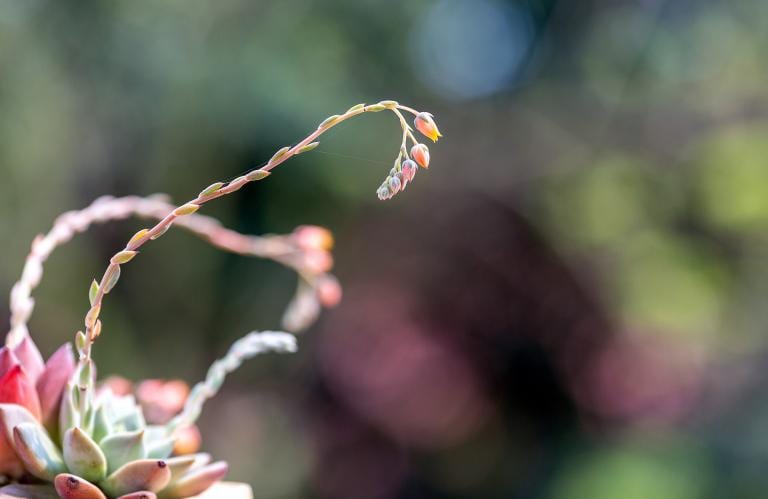
Spirit, and the divine, can be found anywhere, in everything. Image by DuyCong1080 via Pixabay.
An Exercise
The goal of this exercise is to help you be more consciously aware of the objects you use every day, and their intangible natures. Depending upon your personal practice and cosmological views, these questions might be difficult, baffling, or perfectly natural. Just answer what questions you can, and if you feel yourself getting frustrated or confused, move on. This isn’t a test, and it is more important to make observations (even if you feel like you are guessing) than to be “right” on every point.
These kinds of discernments are skills which can be developed, so you can always come back and try again, either with the same objects or different ones. It is very likely that some of your answers will change each time you do, since magical and spiritual experiences are inherently unique and cannot be precisely reproduced.
Choose three objects. You may also want to have a journal or piece of paper handy for jotting notes.
Object 1 should be a mundane object which is new to you, or which you have no emotional attachment to.
Object 2 should be a mundane object which is beloved or important to you.
Object 3 should be an object which you have consecrated or otherwise magically empowered.
Start with Object 3, your magical object. Set it in front of you.
Look at it closely. Examine the physical details of the object. Pick it up and feel its weight, its shape, its texture(s). Does it have an odor? Does it make noise? Be mindful of all the features of its physical being.
If it makes sense to do so, contemplate how its physical form is a reflection of the four embodied elements: Earth, Air, Fire, and Water. Write down your thoughts.
Reflect on the more abstract properties of the object. Do you feel or see its energy? What does it look or feel like? Is it warm or cool, light or dense? Does it vibrate? Is it solid? Is it active or passive? Is it in a state of waiting, or is it impatient to do something? Write down your observations.
Reflect on the energetic and magical nature of the object. What exactly is it consecrated or charged to? What purposes do you typically and atypically put it towards? What did you expect of it when you first consecrated or charged it, and how have your expectations changed over time? How much of those changes are a result of changes in you and your practice, and how much is a result of the natural affinities of the object? How do your purposes and uses compare to the purposes and uses which were intended when the object was first created? Write down your observations.
Reflect on the Spirit of the object. Do you sense emotions from it? How strongly do you feel the intangible qualities of the embodied elements in this object (Fire, Water, Earth, Air)? Do you feel it has a gender, multiple genders, or no gender? How aware of your questions and observations does it seem to be? Do you get an impression of how it feels about this exercise, and of the purposes you put it towards? Do you get an impression of how it feels about you? Write down your observations.
Can you see divinity in the nature of the object? How apparent is it? What does its divine nature seem to be, and how does that interplay with your purposes for the object? Write down your observations.
Thank your object, and set it aside.
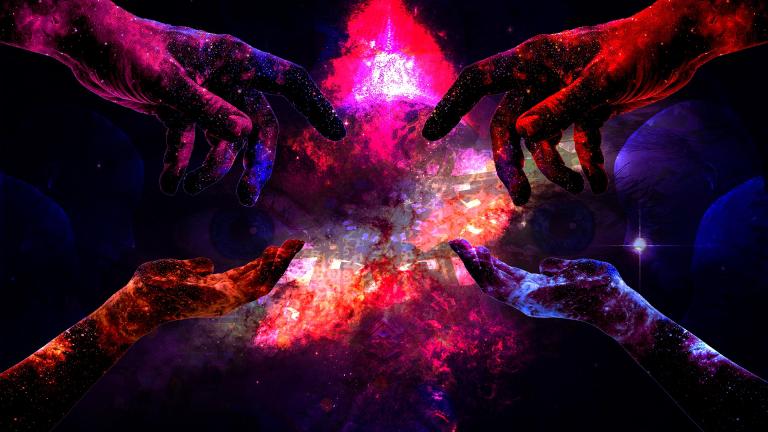
Can you see divinity in the nature of the object? Image by Calerox88 via Pixabay.
Pick up Object 2, your mundane and important object, and put it in front of you.
Look at it closely. Examine the physical details of the object. Pick it up and feel its weight, its shape, its texture(s). Does it have an odor? Does it make noise? Be mindful of all the features of its physical being.
If it makes sense to you to do so, contemplate how its physical form is a reflection of the four embodied elements: Earth, Air, Fire, and Water. Write down your thoughts.
Reflect on the more abstract properties of the object. Do you feel or see its energy? What does it look or feel like? Is it warm or cool, light or dense? Does it vibrate? Is it solid? Is it active or passive? Is it in a state of waiting, or is it impatient to do something? Write down your observations.
Reflect on the energetic and magical nature of the object. What purposes do you typically and atypically put it towards? What did you expect of it when you first came to possess it, and how have your expectations changed over time? How much of those changes are a result of changes in you, and how much is a result of the natural affinities of the object? Have you subconsciously put magical intent into it through use and affection? Write down your observations.
Reflect on the Spirit of the object. Do you sense emotions from it? How strongly do you feel the intangible qualities of the embodied elements in this object? Do you feel it has a gender, multiple genders, or no gender? How aware of your questions and observations does it seem to be? Do you get an impression of how it feels about this exercise, and of the purposes you put it towards? Do you get an impression of how it feels about you? How do your purposes and uses compare to the purposes and uses which were intended when the object was first created? Write down your observations.
Can you see divinity in the nature of the object? How apparent is it? What does its divine nature seem to be, and how does that interplay with your purposes for the object? Write down your observations.
Thank your object, and set it aside.

Thank your object, and set it aside. Image by Gerd Altmann via Pixabay.
Pick up Object 1, your mundane object which is new to you, or which you have no emotional attachment to, and put it in front of you.
Look at it closely. Examine the physical details of the object. Pick it up and feel its weight, its shape, its texture(s). Does it have an odor? Does it make noise? Be mindful of all the features of its physical being.
If it makes sense to do so, contemplate how its physical form is a reflection of the four embodied elements: Earth, Air, Fire, and Water. Write down your thoughts.
Reflect on the more abstract properties of the object. Do you feel or see its energy? What does it look or feel like? Is it warm or cool, light or dense? Does it vibrate? Is it solid? Is it active or passive? Is it in a state of waiting, or is it impatient to do something? Write down your observations.
Reflect on the energetic and magical nature of the object. Why do you own it? If you have had it for a while, has your use of it changed over time, and how? If it is new, do you expect its use to change over time, and how? How much of those changes are a result of changes in you, and how much is a result of the natural affinities of the object? Are you subconsciously putting magical intent into it through use? How do your purposes and uses compare to the purposes and uses which were intended when the object was first created? Write down your observations.
Reflect on the Spirit of the object. Is the object entirely new, or just new to you? Do you sense emotions from it? Does it feel like it is dormant or undeveloped? How strongly do you feel the intangible qualities of the embodied elements in this object? Do you feel it has a gender, multiple genders, or no gender? How aware of your questions and observations does it seem to be? Do you get an impression of how it feels about this exercise, and of the purposes you put it towards? Do you get an impression of how it feels about you? Write down your observations.
Can you see divinity in the nature of the object? How apparent is it? What does its divine nature seem to be, and how does that interplay with your purposes for the object? Write down your observations.
Thank your object, and set it aside.
How does its divine nature seem to be, and how does that interplay with your purposes for the object? Image by 40038 via Pixabay.
Examine all three objects together.
What are the physical differences between the objects?
How do their reflections of the embodied elements differ, both physically and energetically? How do those differences make them more or less suited to their individual purposes?
How potent and active are they energetically? Do you see more activity with use, or with intent? How does that potency affect the use of the object, and its suitability to its tasks?
How apparent is the soul and individuality of each object? Do you feel that has changed in the time you have had the object?
How apparent is the divine spark of Spirit in each object? How much does that seem to relate to your uses and investment in the objects?
What other observations do you have about the objects, and how your actions and intents interact with their own natures and souls?
Are your observations through this exercise likely to change how you make use of the objects, or how emotionally invested you are in them? Why and how do you feel different about each?
Thank all of the objects.
You can come back and revisit these questions at any time to develop your ability to perceive and consciously understand the objects you use, on both a physical and metaphysical level.
———
Want email notification for things I write or create, here and elsewhere? Sign up for blog notifications at SidneyEileen.com ———
SidneyEileen.com Facebook * Instagram * Twitter
———

About Sidney Eileen
Sidney Eileen is a non-binary, asexual, animistic, polytheist witch and artist. They acknowledge divinity and unique natures in not just the gods, but in all manner of ephemeral and supernatural beings, spirits, living beings, and the souls that embody the physical objects and spaces around us. Their practice is lifelong and of an intuitive nature, seeking fulfillment through mutable asymmetrical balance. You can read more about the author here.
Previous Post
May 18, 2020
The Corner Crone: Working with Nuummite
Next Post

May 21, 2020 Irish-American Witchcraft: Aesthetic Witches, Basic Witches & Gatekeeping
Browse Our Archives
Select a Category A Lakeside Hearth Adventures in Wortcunning Alone In Her Presence Arts, Crafts & Cooking Birthing Hereditary Witchcraft Book of Blackbirds Book Reviews Born-Again Witch Cauldron, Sword, Spear, & Stone Cermony and Liturgy Columns Community Dandelion Seeds Dear Jasmine Druid Thoughts Editor's Picks Everyday Pagan Family & Household Practice Family Traditions Full Frontal Magic Gateway Goddess Guest Articles Happily Heathen Health and Wellness Hearth of Hellenism Heathen Woman Hills of the Horizon History Holidays Horse Goddesses Interfaith Interviews Irish-American Witchcraft Jewish Witch Lamp & Labyrinth Letters from Midgard Literature, Media, Film, Music Loop of Brighid Love, Sex & Relationships Magic or Magick Making Light Naturalistic Traditions Nature News Outside The Circle Pantheisticon Politics Prayers, Poems, Blessings & Stories Queer Femme Mystic Queer of Swords Recipes Ritual and Practice Science and Research Seekers and Guides Seeking the Grail Socially Responsible Magic Spear of Athena Star Made Witch Syncretic Electric Technology The Blooming Staff The Busy Witch The Cartomancer The Crow's Nest The Dance of Pagan Recovery The Hearth of Hellenism The Lady's Quill The Other Side of the Hedge The Path of She The Rantin' Raven The Witches Next Door The Zen Pagan Theology, Ethics, Philosophy Tree City Witch Urban Earthwitch Wayfaring Woman Witch on Fire Wyrd Words
Select a Month January 2026 March 2025 December 2024 June 2024 April 2024 March 2024 January 2024 December 2023 November 2023 October 2023 August 2023 July 2023 May 2023 April 2023 March 2023 February 2023 January 2023 December 2022 November 2022 October 2022 September 2022 August 2022 July 2022 June 2022 May 2022 March 2022 February 2022 January 2022 December 2021 November 2021 October 2021 September 2021 August 2021 July 2021 June 2021 May 2021 April 2021 March 2021 February 2021 January 2021 December 2020 November 2020 October 2020 September 2020 August 2020 July 2020 June 2020 May 2020 April 2020 March 2020 February 2020 January 2020 December 2019 November 2019 October 2019 September 2019 August 2019 July 2019 June 2019 May 2019 April 2019 March 2019 February 2019 January 2019 December 2018 November 2018 October 2018 September 2018 August 2018 July 2018 June 2018 May 2018 April 2018 March 2018 February 2018 January 2018 December 2017 November 2017 October 2017 September 2017 August 2017 July 2017 June 2017 May 2017 April 2017 March 2017 February 2017 January 2017 December 2016 November 2016 October 2016 September 2016 August 2016 July 2016 June 2016 May 2016 April 2016 March 2016 February 2016 January 2016 December 2015 November 2015 October 2015 September 2015 August 2015 July 2015 June 2015 May 2015 April 2015 March 2015 February 2015 January 2015 December 2014 November 2014 October 2014 September 2014 August 2014 July 2014 June 2014 May 2014 April 2014 March 2014 February 2014 January 2014 December 2013 November 2013 October 2013 September 2013 August 2013 July 2013 June 2013 May 2013 April 2013 March 2013 February 2013 January 2013 December 2012 November 2012 October 2012 September 2012 August 2012 July 2012 June 2012 May 2012 April 2012 March 2012 February 2012 January 2012
Follow Us!
TAKE THE
Religious Wisdom Quiz
What does "Jireh" mean in Hebrew?
Select your answer to see how you score.
Provider Savior Redeemer Protector
Related posts from Agora

Simple Witchery: To Keep Silent

Simple Witchery: Leaning On The Four Pillars


Simple Witchery: Resistance and Resilience in Hard Times
TRENDING AT PATHEOS Pagan

I was recently chatting with someone on Instagram. She asked me what...

While there are many people who share their results, the end of...

On July 23, I saw Christopher Nolan's The Odyssey which is Homer’s...

As I write this two big events have just finished up. One...

Restoring the Watershed of Divine Love
Perhaps cooperation is not something we manufacture through legislation, ideology, or moral...

Many UUs don’t pray because of bad experiences in a previous religion,...
view all Pagan blogs
Ad-Free & Subscriber Log-In Subscription Support
- About Us
- 2026 Calendar
- Videos
- Podcasts
- Library of World Religions
- Faith In Media Tracker
- Advertise With Us
- Write for Us
- Privacy Policy
- Terms of Service
- Do Not Sell My Data
- Contact Us
- Radiant Digital
- Manage Newsletter Subscriptions
- Unsubscribe From Notifications
- Sitemap
Copyright 2008-2026, Patheos. All rights reserved.
Subscription Support Ad-Free & Subscriber Log-In
Follow Patheos