
BuddhistCatholicContemplativeEvangelicalGeneral ChristianHinduJewishLatter-day SaintMuslimNew VisionsProgressive Christian
Beliefs
- Buddhist
- Catholic
- Contemplative
- Evangelical
- General Christian
- Hindu
- Jewish
- Latter-day Saint
- More Voices
- Muslim
- New Visions
- Pagan
- Progressive Christian
Topics
- Religion News
- Food and Religion
- Sports and Religion
- Religious Art
- Religious Music and Entertainment
- Religious Events
- History and Religion
- Style and Religion
- Politics and Religion
- Women in Religion
- Recreation Outdoors and Religion
- Business Finance and Religion
- Careers Workplace and Religion
- Education and Religion
- Family Parenting and Religion
- Health Fitness and Religion
- Home and Religion
- Relationships and Religion
- Technology and Religion
- Travel and Religion
Columnists
- Buddhist Columnists
- Business Finance and Religion Columnists
- Careers Workplace and Religion Columnists
- Catholic Columnists
- Contemplative Columnists
- Education and Religion Columnists
- Evangelists Columnists
- Family Parenting and Religion Columnists
- General Christian Columnists
- Health Fitness and Religion Columnists
- Hindu Columnists
- History and Religion Columnists
- Home and Religion Columnists
- Jewish Columnists
- More Voices Columnists
- Latter Day Columnists
- Muslim Columnists
- New Visions Columnists
- Nonreligious Columnists
- Pagan Columnists
- Politics and Religion Columnists
- Progressive Columnists
- Recreation Outdoors and Religion Columnists
- Relationships and Religion Columnists
- Religion News Columnists
- Religious Art Columnists
- Religious Events Columnists
- Religious Music and Entertainment Columnists
- Sports and Religion Columnists
- Style and Religion Columnists
- Technology and Religion Columnists
- Travel and Religion Columnists
- Women in Religion Columnists
Resource Library
- 2026 Calendar
- Library of World Religions
- The 100 Most Holy Places on Earth
- Patheos Answers
- Podcasts
- Videos
- Faith Leaders Database
- Anglican Episcopalian
- Bahai
- Baptist
- Buddhism
- Christianity
- Confucianism
- Eastern Orthodoxy
- Hinduism
- Holiness and Pentecostal
- ISKCON
- Islam
- Judaism
- Lutheran
- Methodist
- The Church of Jesus Christ of Latter-day Saints
- New Age
- Paganism
- Presbytarian and Reformed
- Protestantism
- Religion Behind the Scenes
- Roman Catholic
- Scientology
- Shia Islam
- Sikhism
- Sufism
- Sunni Islam
- Taoism
- Zen
- See all religions
Research Tools
 Ad-Free & Subscriber Log-In Subscription Support
Ad-Free & Subscriber Log-In Subscription Support
Follow Patheos 

- Trending:
- Forgiveness
- |
- Marriage
- |
- Consciousness
- |
- Death Penalty
- |
- Election
- |
- Halloween

- Home
- Pagan
- The Balancing Path: (Not So) Arbitrary Symbolic Correspondences
The Balancing Path: (Not So) Arbitrary Symbolic Correspondences
Last updated on: January 4, 2022 at 8:47 am by Sidney Eileen
The Balancing Path: (Not So) Arbitrary Symbolic Correspondences 2022-01-04T08:47:16+00:00 Sidney Eileen
Patheos Explore the world's faith through different perspectives on religion and spirituality! Patheos has the views of the prevalent religions and spiritualities of the world.
Symbolic correspondences are almost never arbitrary, especially in magical or religious context, but they sure can seem like it! This is especially true if you are new to a system, or if you don’t understand the history and context of the symbolism involved.
One example is directions and elements. It is core to many pagan traditions that each element is associated with a particular direction, and those direction-element symbolic associations can be central to ritual setup. The reasons for these particular direction-elemental associations are not immediately apparent to the vast majority of people, so instead of understanding why the associations exist, it is often treated as arbitrary and rote memorized.
Symbolic associations are central to human cognition, communication, and understanding of the world. This is true whether you consciously realize it or not. We communicate through words and symbols (alphabets, characters, logos, signs, etc.), which can seem extremely arbitrary if you don’t understand the context. Language is collections of sounds or scribbles that we understand to represent various things, but if you don’t understand the language someone else is speaking, it is probably going to sound a lot like arbitrary gibberish.
Yet, despite the amazing array of languages used by humans throughout our existence, the conscious thoughts of most people are composed in the languages they are fluent in, including visual languages like sign language. There is no particular language or symbology inherent to our biology. Instead, the building blocks for the foundations of our ability to communicate are learned, usually from birth.
Symbols have meaning because we, consciously or not, understand that something which is inherently abstract (like a sound, letter, character, or rune), can have the meaning of something else entirely. These symbols are not static, but instead their meanings change over time as culture and language shift, and as our collective understanding of things change.

Symbols have meaning because humans naturally apply meaning to things which are inherently abstract. Image by Harish Sharma via Pixabay.
It’s Not Arbitrary
Let’s look at the swastika. Like most relatively simple drawings humans can make, it has a very long history in many different cultures. For most of that history, and across many cultures, it had very positive associations with health, luck, success, and divinity.
Then in the 1930’s it was co-opted by white supremacist fascists, who waved it as a banner while committing genocide. They twisted those positive meanings by applying those well wishes only to themselves, and turning it into a symbol of hate and murder towards anyone they considered “other”. The symbolism of hate became so dominant that today, not even a century later, it is a primary symbol of white supremacy, and a lot of people don’t realize it ever had another meaning.
There are people who want to “reclaim” the swastika as a positive symbol, but at this point in time that’s not possible because it is still very actively used as a symbol for hate. If you see a swastika spray-painted on a street corner, you know it was done by someone who wishes misery and death on anyone who isn’t white, heteronormative, and fully abled. It’s not even a question. Displaying a swastika as a “reclaimed” symbol only serves to shelter and excuse and facilitate the massively more common use as a hate symbol.
The development of the swastika as a positive symbol was very organic. Historians and archaeologists can say when we have evidence that it first appeared or became common in different places, but they can’t point to a particular person or event as the origination of the symbol. I say “organic” because that development was slow and grew over time within various cultures. It wasn’t random, and the initial uses were likely inspired by the shapes in the world around the people who first drew it.
We can point to the specific point in time when it became a hate symbol. It was a very deliberate choice by the Nazis to emphasize themselves as the only rightful recipients of the boons associated with the swastika. This created a new association of Us vs. Them, which was further emphasized by mass genocide against many different groups of people, cementing an overriding association with the physical acts committed under it.
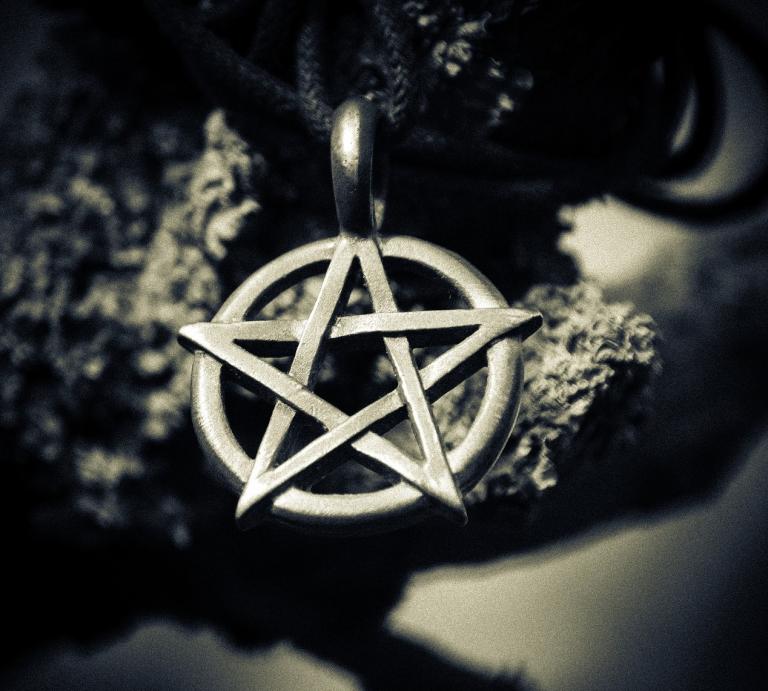
The pentagram is an example of a symbol that is being successfully reclaimed. Image by Ruth Archer via Pixabay, slightly cropped by author.
The pentagram is an example of a symbol that is being successfully reclaimed, but much of that reclaiming is possible because it was never widely used to promote evil acts, despite assertions to the contrary. Like the swastika, the pentagram is a very old symbol which is found in many disparate cultures across human history. In Europe, it was generally a positive symbol with rich associations in religious and mystical practices, with known codified meanings dating back at least to Hellenistic Greece.
Unlike the swastika, the pentagram was (and is) said to be used by evil people for evil acts, but aside from small isolated incidents, it never has actually been used in that way. There is a huge difference between saying something is a certain way, and it being used in that way. Even the use of the swastika by the Nazis might have been but a blip in its history, if not for the mass genocide and ongoing use as a hate symbol.
Context matters. History matters. They both inform the current associations of the symbols we use, and in what ways we can consciously manipulate those associations, especially in a public context.
Esoteric Symbology
There are a lot of symbolic associations in pagan and magical practice which are often taken for granted. One such association is directions and elements. Another is gender and elements.
I mention these two in particular because they don’t make sense to a lot of modern practitioners, myself included. Rather than having any foundation in modern culture or experience, they are based in European traditions of ceremonial magic, which in turn drew on older esoteric traditions going all the way back to Hellenistic Greece.
We can point to a particular Greek philosopher, Empedocles, who wrote about the elements we commonly use in modern paganism and magical practice. Among other things, he associated each with a particular god or goddess: Earth-Hera, Air-Zeus, Fire-Hades, Water-Nestis (Persephone). As is discussed in this article, those associations had more to do with the overall traits of the deities in question, and their marital relationships, than whether they were male or female. However, over time (and departure from the religious systems of those pantheons), the deeper meanings were lost and the correspondences simplified to Earth-Female, Air-Male, Fire-Male, Water-Female.
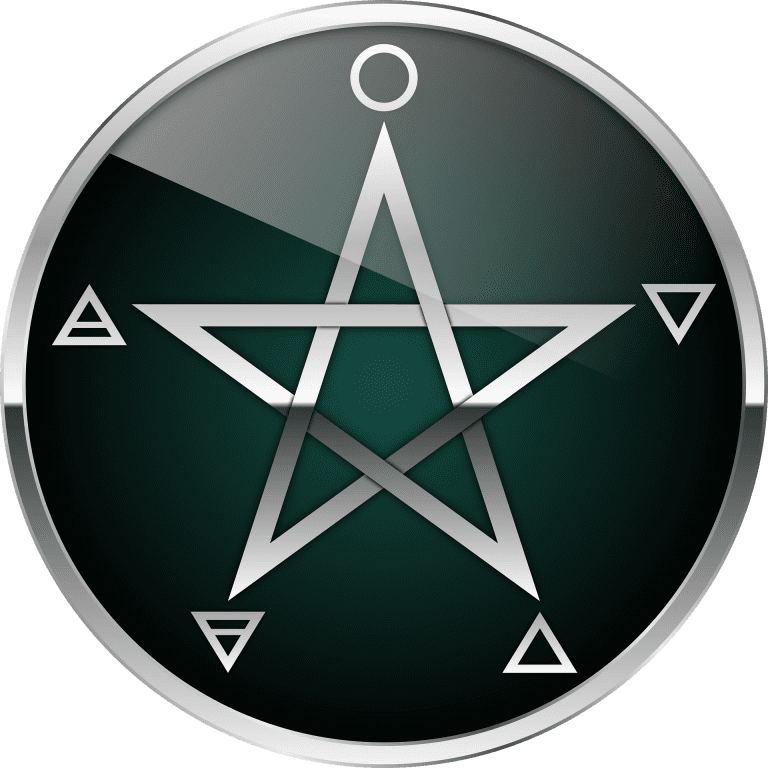
Over time, correspondences were simplified to Earth-Female, Air-Male, Fire-Male, Water-Female. Image by Peter Lomas via Pixabay.
Other ancient Greek philosophers suggested other deity associations (Fire-Ares, Water-Aphrodite is a common one I’ve seen). These would have had a similar depth in the context of their time and religious culture, but later mostly just reinforced the idea of each element being associated with a particular gender.
In the modern context, that leads to correspondence lists which place a gender with each element, completely out of context from the deeper meanings from which those correspondences came. This can be confusing and even jarring if you are like me and find aggressive gendering very off-putting. And I know I’m not alone on that, because it is a very common question, and it can be difficult for even dedicated newbies to rote memorize what is supposed to go with what.
For my part, understanding the history of the correspondence means that I can find depth of meaning by corresponding elements with particular deities. However, it reinforces my feeling that it is inappropriate to make a hard association between particular genders and particular elements. I see all elements in all genders, and all genders (or no genders) in all elements, so artificial partitioning creates unnecessary limitations.
Elemental correspondences with directions can be a similar sticking point. Again, the origin of those correspondences is very distant from our modern context, leading to rote memorization. I see all elements in all directions, and despite my best efforts when I was a newbie, I never could memorize or effectively make use of such correspondences.
Not All Correspondences Are Useful
An excellent litmus test for the usefulness of correspondences is simply asking, “Does this make sense?”
If your answer is “Yes”, then it is probably a solid correspondence you can easily use in your personal practice.
If your answer is “No”, then your next question is, “Why does that correspondence exist?”
This one can be harder. You might be able to get your answer with a few simple web searches, or it might require some real research involving libraries and academic texts. If you want to use a correspondence that doesn’t make sense to you, doing that research might be key to your ability to integrate that correspondence into your personal symbology, and then be able to use it effectively in your personal practice.
If you don’t like the correspondence, or worse, it is counter to your personal understandings of the symbols you are using, then you are completely valid in ignoring, or even reversing, that correspondence in your personal practice.

When symbols are understood viscerally by the practitioner, they will come from a place of core power. Image by Free-Photos via Pixabay.
Personal Symbology
Personal symbology and associations can be literally anything, because they are based in personal experience and understanding. They can even go wildly against the symbolic associations understood by the majority of people. Those meanings are important, and profoundly powerful in personal practice. This is particularly true in magical areas like sigil work, wards, and banishing. When the symbols and their useful correspondences are understood viscerally by the practitioner, they will come from a place of core power.
It is possible to create arbitrary associations and correspondences in your personal symbology, but I don’t recommend it. Arbitrary meanings will never have the depth and richness of correspondences based in knowledge and understanding, and they definitely won’t have meaning to anyone else if you ever want to share them.
Instead, I encourage you to look at the correspondences and associations you use every day, and seek to bring them fully into conscious understanding. Explore the depth and richness that is there, because those correspondences didn’t spring forth arbitrarily out of history. Instead, delve into it, seek to fully understand it, and then either embrace it into your personal symbology, or let it go in favor of something else that does add depth and richness to your understanding.
———
Want email notification for things I write or create, here and elsewhere? Sign up for blog notifications at SidneyEileen.com ———
SidneyEileen.com Facebook * Instagram * Twitter
———

About Sidney Eileen
Sidney Eileen is a non-binary, asexual, animistic, polytheist witch and artist. They acknowledge divinity and unique natures in not just the gods, but in all manner of ephemeral and supernatural beings, spirits, living beings, and the souls that embody the physical objects and spaces around us. Their practice is lifelong and of an intuitive nature, seeking fulfillment through mutable asymmetrical balance. You can read more about the author here.
Previous Post

March 3, 2020
Cross and Crossroads: 3 Candle Tricks You Really Should Know...
Next Post
March 4, 2020 The Corner Crone: Book Review – Witch’s Wheel of the Year
Browse Our Archives
Select a Category A Lakeside Hearth Adventures in Wortcunning Alone In Her Presence Arts, Crafts & Cooking Birthing Hereditary Witchcraft Book of Blackbirds Book Reviews Born-Again Witch Cauldron, Sword, Spear, & Stone Cermony and Liturgy Columns Community Dandelion Seeds Dear Jasmine Druid Thoughts Editor's Picks Everyday Pagan Family & Household Practice Family Traditions Full Frontal Magic Gateway Goddess Guest Articles Happily Heathen Health and Wellness Hearth of Hellenism Heathen Woman Hills of the Horizon History Holidays Horse Goddesses Interfaith Interviews Irish-American Witchcraft Jewish Witch Lamp & Labyrinth Letters from Midgard Literature, Media, Film, Music Loop of Brighid Love, Sex & Relationships Magic or Magick Making Light Naturalistic Traditions Nature News Outside The Circle Pantheisticon Politics Prayers, Poems, Blessings & Stories Queer Femme Mystic Queer of Swords Recipes Ritual and Practice Science and Research Seekers and Guides Seeking the Grail Socially Responsible Magic Spear of Athena Star Made Witch Syncretic Electric Technology The Blooming Staff The Busy Witch The Cartomancer The Crow's Nest The Dance of Pagan Recovery The Hearth of Hellenism The Lady's Quill The Other Side of the Hedge The Path of She The Rantin' Raven The Witches Next Door The Zen Pagan Theology, Ethics, Philosophy Tree City Witch Urban Earthwitch Wayfaring Woman Witch on Fire Wyrd Words
Select a Month January 2026 March 2025 December 2024 June 2024 April 2024 March 2024 January 2024 December 2023 November 2023 October 2023 August 2023 July 2023 May 2023 April 2023 March 2023 February 2023 January 2023 December 2022 November 2022 October 2022 September 2022 August 2022 July 2022 June 2022 May 2022 March 2022 February 2022 January 2022 December 2021 November 2021 October 2021 September 2021 August 2021 July 2021 June 2021 May 2021 April 2021 March 2021 February 2021 January 2021 December 2020 November 2020 October 2020 September 2020 August 2020 July 2020 June 2020 May 2020 April 2020 March 2020 February 2020 January 2020 December 2019 November 2019 October 2019 September 2019 August 2019 July 2019 June 2019 May 2019 April 2019 March 2019 February 2019 January 2019 December 2018 November 2018 October 2018 September 2018 August 2018 July 2018 June 2018 May 2018 April 2018 March 2018 February 2018 January 2018 December 2017 November 2017 October 2017 September 2017 August 2017 July 2017 June 2017 May 2017 April 2017 March 2017 February 2017 January 2017 December 2016 November 2016 October 2016 September 2016 August 2016 July 2016 June 2016 May 2016 April 2016 March 2016 February 2016 January 2016 December 2015 November 2015 October 2015 September 2015 August 2015 July 2015 June 2015 May 2015 April 2015 March 2015 February 2015 January 2015 December 2014 November 2014 October 2014 September 2014 August 2014 July 2014 June 2014 May 2014 April 2014 March 2014 February 2014 January 2014 December 2013 November 2013 October 2013 September 2013 August 2013 July 2013 June 2013 May 2013 April 2013 March 2013 February 2013 January 2013 December 2012 November 2012 October 2012 September 2012 August 2012 July 2012 June 2012 May 2012 April 2012 March 2012 February 2012 January 2012
Follow Us!
TAKE THE
Religious Wisdom Quiz
In Hebrews, what was the veil in the temple?
Select your answer to see how you score.
The law of Moses The old covenant Christ's flesh The separation from God
Related posts from Agora

Simple Witchery: To Keep Silent

Simple Witchery: Leaning On The Four Pillars


TRENDING AT PATHEOS Pagan

I was recently chatting with someone on Instagram. She asked me what...

While there are many people who share their results, the end of...

On July 23, I saw Christopher Nolan's The Odyssey which is Homer’s...

As I write this two big events have just finished up. One...

Restoring the Watershed of Divine Love
Perhaps cooperation is not something we manufacture through legislation, ideology, or moral...

Many UUs don’t pray because of bad experiences in a previous religion,...
view all Pagan blogs
Ad-Free & Subscriber Log-In Subscription Support
- About Us
- 2026 Calendar
- Videos
- Podcasts
- Library of World Religions
- Faith In Media Tracker
- Advertise With Us
- Write for Us
- Privacy Policy
- Terms of Service
- Do Not Sell My Data
- Contact Us
- Radiant Digital
- Manage Newsletter Subscriptions
- Unsubscribe From Notifications
- Sitemap
Copyright 2008-2026, Patheos. All rights reserved.
Subscription Support Ad-Free & Subscriber Log-In
Follow Patheos