
BuddhistCatholicContemplativeEvangelicalGeneral ChristianHinduJewishLatter-day SaintMuslimNew VisionsProgressive Christian
Beliefs
- Buddhist
- Catholic
- Contemplative
- Evangelical
- General Christian
- Hindu
- Jewish
- Latter-day Saint
- More Voices
- Muslim
- New Visions
- Pagan
- Progressive Christian
Topics
- Religion News
- Food and Religion
- Sports and Religion
- Religious Art
- Religious Music and Entertainment
- Religious Events
- History and Religion
- Style and Religion
- Politics and Religion
- Women in Religion
- Recreation Outdoors and Religion
- Business Finance and Religion
- Careers Workplace and Religion
- Education and Religion
- Family Parenting and Religion
- Health Fitness and Religion
- Home and Religion
- Relationships and Religion
- Technology and Religion
- Travel and Religion
Columnists
- Buddhist Columnists
- Business Finance and Religion Columnists
- Careers Workplace and Religion Columnists
- Catholic Columnists
- Contemplative Columnists
- Education and Religion Columnists
- Evangelists Columnists
- Family Parenting and Religion Columnists
- General Christian Columnists
- Health Fitness and Religion Columnists
- Hindu Columnists
- History and Religion Columnists
- Home and Religion Columnists
- Jewish Columnists
- More Voices Columnists
- Latter Day Columnists
- Muslim Columnists
- New Visions Columnists
- Nonreligious Columnists
- Pagan Columnists
- Politics and Religion Columnists
- Progressive Columnists
- Recreation Outdoors and Religion Columnists
- Relationships and Religion Columnists
- Religion News Columnists
- Religious Art Columnists
- Religious Events Columnists
- Religious Music and Entertainment Columnists
- Sports and Religion Columnists
- Style and Religion Columnists
- Technology and Religion Columnists
- Travel and Religion Columnists
- Women in Religion Columnists
Resource Library
- 2026 Calendar
- Library of World Religions
- The 100 Most Holy Places on Earth
- Patheos Answers
- Podcasts
- Videos
- Faith Leaders Database
- Anglican Episcopalian
- Bahai
- Baptist
- Buddhism
- Christianity
- Confucianism
- Eastern Orthodoxy
- Hinduism
- Holiness and Pentecostal
- ISKCON
- Islam
- Judaism
- Lutheran
- Methodist
- The Church of Jesus Christ of Latter-day Saints
- New Age
- Paganism
- Presbytarian and Reformed
- Protestantism
- Religion Behind the Scenes
- Roman Catholic
- Scientology
- Shia Islam
- Sikhism
- Sufism
- Sunni Islam
- Taoism
- Zen
- See all religions
Research Tools
 Ad-Free & Subscriber Log-In Subscription Support
Ad-Free & Subscriber Log-In Subscription Support
Follow Patheos 

- Trending:
- Forgiveness
- |
- Marriage
- |
- Consciousness
- |
- Death Penalty
- |
- Election
- |
- Halloween

- Home
- Pagan
- The Balancing Path: Including Queer and Genderqueer Fertility
The Balancing Path: Including Queer and Genderqueer Fertility
Last updated on: January 4, 2022 at 8:46 am by Sidney Eileen
The Balancing Path: Including Queer and Genderqueer Fertility 2022-01-04T08:46:40+00:00 Sidney Eileen
Patheos Explore the world's faith through different perspectives on religion and spirituality! Patheos has the views of the prevalent religions and spiritualities of the world.
Ostara through Beltane in pagan circles tends to include a deluge of fertility themes. This makes sense, since a huge portion of us center natural cycles in our observances, and spring is the time of year when the world wakes up from winter, baby animals abound, most plants are blooming, and those who keep gardens are often busy starting seeds or planting.
Sadly, this time of year also usually includes a dominating emphasis on male-female sexual pairing, especially cis binary sexual pairing. Certainly, such pairings are important, and very common, but they are far from the only kind of pairing or fertility that exists. Yet male-female sexual pairings are exclusively emphasized so commonly that it can easily and leave those of us who are queer or genderqueer feeling left out in the cold (not to mention people who choose not to have or can’t have children). I believe that in most cases that exclusion is unintentional, but those good intentions do not prevent it from causing problems for those who feel excluded from the dominant rites and symbology of this season.
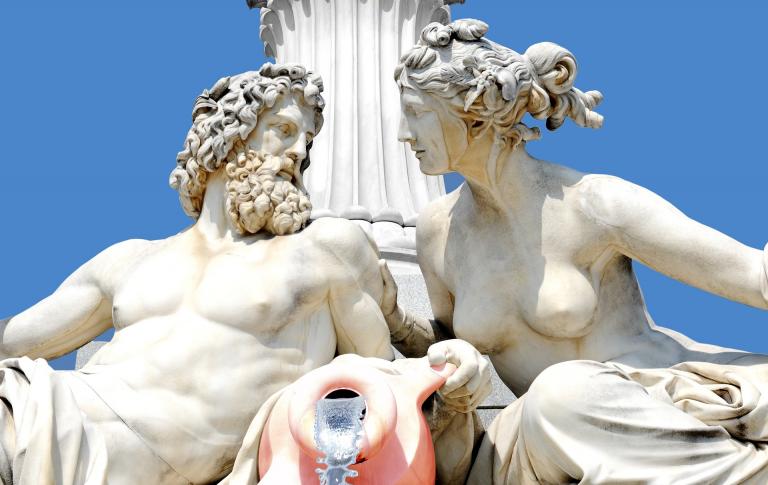
This time of year usually includes an emphasis on male-female sexual pairing. Image by Margit Wallner via Pixabay.
I think much of the emphasis on sexual union probably stems from the fact that most people find sex pleasurable, and, from what I understand, giving birth is usually not. Plus, carrying a human fetus to term and giving birth falls solely on the human with a working womb. Looking at it culturally, placing all emphasis for fertility on the fetus and act of birth centers women and sidelines men, which can be a very uncomfortable thing if you are a man who is a product of patriarchal ideals and expects to be included and emphasized at all times. As a result, in a patriarchal framework, it is philosophically far more palatable and equitable to go all the way back to the moment of sexual intercourse, and the introduction of seed to womb through physical union.
Sexual Union and Fertility are Not the Same
It is not necessary to go all the way back to the act of sexual union to celebrate new life and new possibilities. In fact, when we think about the energies of this season, aside from the symbolic emphasis on intercourse as the moment of fertilization, we are usually looking at youth and new growth, and the nurturing which allows them to thrive.
The act of birth and the growth of new life are quite separate from fleeting acts of sexual pleasure. It is a disservice to both new life, and to the non-reproductive benefits of sex (pleasure, stress relief, exercise, bonding, validation, to name just a few), to draw an absolutist connection between the act of sex and the act of birth. The two can be connected, but they are not always connected. Overemphasizing that potential connection as if it is universal and immutable can actually distract from the energies of fertility, birth, and growth.
For humans, even those in heterosexual relationships, sexual union usually does not result in pregnancy (especially if you practice safe sex and family planning), and many pregnancies are achieved without sexual intercourse (In Vitro Fertilization is quite common).
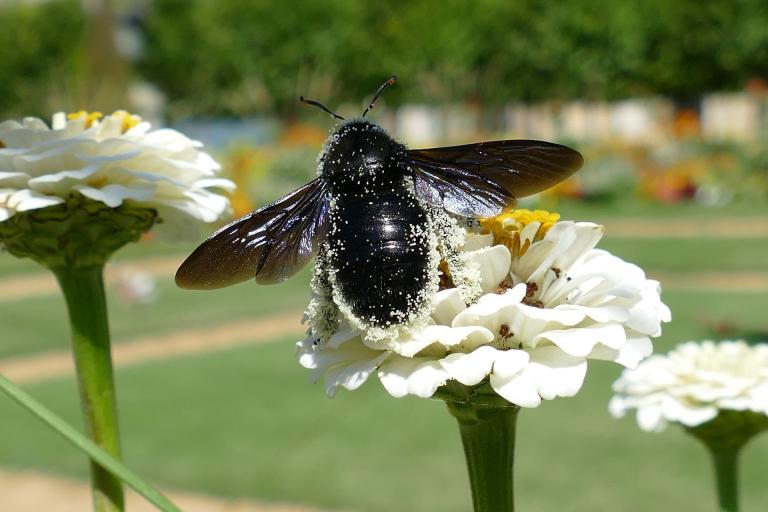
Plants very often need an intermediary for fertilization to occur. Image by MrsBrown via Pixabay.
Not only that, but most new life outside of mammals does not actually involve binary sexual union at all. Plants very often need an intermediary to connect pollen and pistil (wind and bees are just two such intermediaries), and many plant species do not have distinct males and females. Still other plants (like potatoes) reproduce by division, meaning no zygote is involved, and the offspring are genetically identical to the parent plant. Some species of animals which lay eggs have sex, but many do not. Instead the male directly fertilizes the eggs after the female has laid them. It is common for fungus to have far more than 2 sexes, with one particular species, Schizophyllum commune, clocking in at more than 20,000 sexes.
We are human, and the majority of humans have male or female biology, so from our perspective binary union can seem like the obvious answer, but not only does that ignore intersex and genderqueer humans, it is incredibly limiting and speciest. If respecting the natural world outside the human species is important in your tradition or practice, you might want to acknowledge that male-female sexual union is not a perfect example of fertility. If it is important to you to respect your fellow humans who are queer, genderqueer, infertile, or simply choose not to have children, then it’s even more important to not put fertile binary sexual union on the highest pedestal you can find or create.
Non-Sexual Fertility
An extremely valid solution is to emphasize non-sexual fertility. That is, use the rampant sexual fertility of nature as a metaphor for other kinds of fertility in our observances and workings. This can be done in conjunction with sexual fertility observances, or independently of them, and applies to all humans, regardless of their gender or sexual orientation.
Fertility is the foundation upon which new things can grow, any new things. It might be a job search, increased prosperity, spiritual growth, mental or physical health, new relationships, creative pursuits, new roommates or a new home, repair projects, and so on. If it is growth or the start of a change for the better, it can be celebrated as a form of fertility.
Exactly what form those celebrations take will vary dramatically depending upon your tradition and personal practice, but I recommend at a minimum lighting a candle or saying a few words in honor of non-sexual fertility alongside sexual fertility. Another option is to center non-sexual fertility in your observances, and support that with items or words that acknowledge the new life springing forth in the world around you.
This is also an excellent time of year for magical and spiritual workings to bring new and better things into your life. If you keep a seasonal altar, that can be a fantastic place to leave any ephemera related to your fertility, manifestation, or growth working (like sigils, jar spells, herbs, offerings, etc.), as it will naturally be supported by the growing energies of the season.

Fertility is the foundation upon which any new things can grow. Image by Ghinzo via Pixabay.
Genderqueer Sexual Fertility
Not all humans are male or female, let alone cis male or cis female. When ritual or symbolic structures put forth male and female sexual union as a “perfect union”, it can feel like a slap in the face to those who don’t fit that bill. By saying the female-male union is “perfect”, you are effectively saying that everything else is not perfect, or, to put it more bluntly, that anyone who is not heterosexual and cis male or cis female is flawed and inferior. That is the message you are sending, whether or not it is the message you intend.
If you wish to perform a rite that celebrates or emphasizes biological sexual union, it is far more inclusive (and accurate), to refer to the actual biology, the sperm and the egg, or the seed and the womb. It is an undeniable fact that for humans to reproduce naturally, you need sperm and an egg. Whether that egg and its womb exist in a cis woman, a nonbinary or intersex person, or a trans man, is immaterial. By the same token, the seed can come from a cis man, a nonbinary or intersex person, or a trans woman.
Nowhere near all intersex people are infertile. Nonbinary gendered people are as likely to be fertile as their cis counterparts. Not all transgender men and women undergo full reassignment surgery, so many retain the fertility of their birth sex. Other transgender men and women have children while still living as their assigned birth sex, before transitioning. When you explicitly emphasize male-female coupling, you are inadvertently ignoring all of those other possibilities for human biological fertility, and by extension excluding individuals who fall under those labels.
If you want to go all the way back to the moment of conception, when the sperm meets the egg, creating a zygote, and cellular division starts to build a fetus, then be specific about what you are celebrating. If you want to celebrate sex, celebrate sex, but realize that it, too, does not require a man and a woman to be perfect. If you want to call sexual union perfect, call all consenting sexual union perfect, not just the heterosexual variety.

If you want to call sexual union perfect, call all consenting sexual union perfect, not just the heteronormative variety. Public Domain image by Daniel Quasar.
Queer Sexual Fertility
Emphasizing the binary union can also be problematic for people who are not straight. If you are gay and are only attracted to people of the same gender as yourself, you probably don’t want to be told that your relationships are inferior to heterosexual ones (odds are you get enough of that from society in general, and don’t need it in your spiritual life as well).
If you are attracted to people of multiple genders, solely emphasizing female-male unions says those relationships which are not straight-passing are inferior to the ones that do pass. Polyamorous people are also valid, and their fertility is not necessarily tied to having a single partner. Even asexual people are as likely as anyone else to be fertile, and many do have children.
The Value of Inclusivity
If you are genuinely interested in celebrating fertility, then you must acknowledge and include for the possibility that fertility is not limited to the sexual joining of a man and a woman.
The moment of conception might be between sperm and egg, but the process of fertility does not end there. When people are trying to have a baby, they often hold off making any announcements for at least two months because miscarriages are not uncommon in the first trimester. The carrying parent and fetus need to be cared for, and babies thrive when they are loved and cared for, regardless of whether or not that nurturing comes from a male-female coupling.
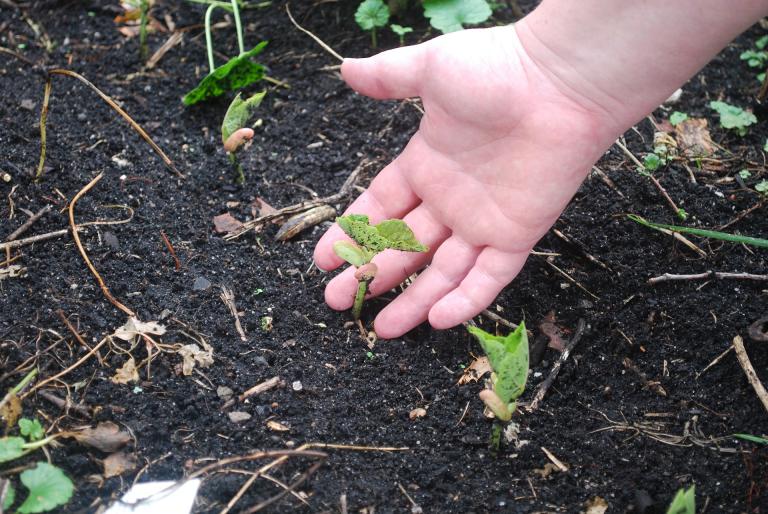
If you want a prosperous garden, you need to do more than just plant seeds. Image by sara-kangas via Pixabay.
By the same token, when we seek non-sexual fertility, it usually involves long-term work. It’s not enough to just get the ball rolling. If you want a job, not only do you need to research job openings, but you must put in your resume, go to interviews, and then actually do the job once you get it. If you want a garden, you must prepare the soil, plant your seeds or seedlings, and tend it throughout the growing season.
New wild plants that come forth into the world need a good spot to grow, where they get the right amounts of heat, light, water, and nutrients. Just sprouting isn’t enough to make sure life continues. Newborn animals are often looked after by their parents or family groups, and even if they are independent, they must find adequate food, shelter, and water, and avoid predation, or they do not survive to adulthood.
The moment of fertilization results in nothing without nurturing so that new life can grow. Nurturing is as important for the continuation of life as the act of insemination. That means nurturing, caring, youth, and growing are each just as important as the moment of fertilization.
When you look beyond an arbitrary emphasis on binary sexual coupling, you open yourself to a much more whole and realistic world, not just in the human species, but in nature itself. If your statuette of male-female union has beautiful meaning for you, by all means keep it! Just make sure to take the time to explicitly acknowledge that other kinds of perfect unions also exist, and that the process of fertility doesn’t end at the moment of conception.

I suggest either meditation, or sitting down with a journal. Image by hudsoncrafted via Pixabay.
A Thought Exercise
I challenge you to think about what exactly you are celebrating when you call upon female-male coupling in your observations. I suggest either meditation, or sitting down with a journal or notebook so you can jot notes.
Think about your typical fertility observations or rituals (solitary or group), or an observation or ritual you are thinking about doing this Ostara or Beltane. If you do not typically make fertility observations, instead think about the kinds of observances you have done in the past, or watched or read about other people doing.
What exactly do you do for this observation or ritual? Take note of each step, in your head or on your paper. Be as detailed as possible, specifying each individual action like a bulleted list (light the candle, recite words, make X offering, etc.).
Go through that list, identifying why each action exists. What is your specific intention? Why are you doing it? What do you want to accomplish or observe or celebrate?
Contemplate the action in relation to your intention. Does the action truly and completely reflect your intention? What parts of it are exclusionary or problematic or off topic? Would a change to the action help it to better embody your intent? If so, what form might that change take? What action would better reflect your intention?
Make changes accordingly, so your observation or ritual better accomplishes your intention.
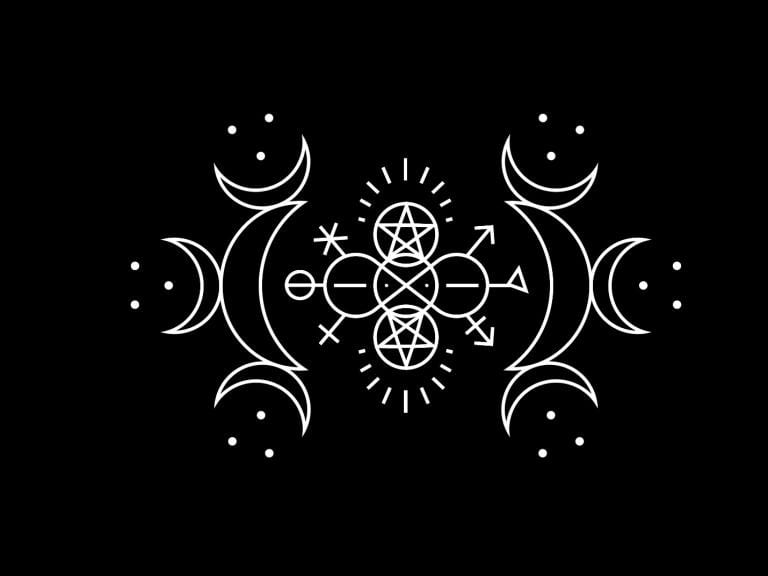
Gender Diversity Sigil. Image by Author.
This is a sigil for gender diversity, acceptance, and inclusion in pagan and magical spaces, community, rituals, and workings.
This has been magically charged with intent for:
*learning
*welcoming
*community
*crossroads and bridges
*inclusion and full acceptance
*open to other perspectives
*wards against hate and bigotry
You can read more about the sigil, what it means, suggestions for how to use it, details about its creation and the specific symbology used, and download high resolution image files.
———
Want email notification for things I write or create, here and elsewhere? Sign up for blog notifications at SidneyEileen.com ———
SidneyEileen.com Facebook * Instagram * Twitter
———

About Sidney Eileen
Sidney Eileen is a non-binary, asexual, animistic, polytheist witch and artist. They acknowledge divinity and unique natures in not just the gods, but in all manner of ephemeral and supernatural beings, spirits, living beings, and the souls that embody the physical objects and spaces around us. Their practice is lifelong and of an intuitive nature, seeking fulfillment through mutable asymmetrical balance. You can read more about the author here.
Previous Post

March 8, 2020
Irish-American Witchcraft: 'Celtic' Paganism and Ancestry
Next Post

March 17, 2020 The Corner Crone: A Prayer to Brigid for Protection and Health
Browse Our Archives
Select a Category A Lakeside Hearth Adventures in Wortcunning Alone In Her Presence Arts, Crafts & Cooking Birthing Hereditary Witchcraft Book of Blackbirds Book Reviews Born-Again Witch Cauldron, Sword, Spear, & Stone Cermony and Liturgy Columns Community Dandelion Seeds Dear Jasmine Druid Thoughts Editor's Picks Everyday Pagan Family & Household Practice Family Traditions Full Frontal Magic Gateway Goddess Guest Articles Happily Heathen Health and Wellness Hearth of Hellenism Heathen Woman Hills of the Horizon History Holidays Horse Goddesses Interfaith Interviews Irish-American Witchcraft Jewish Witch Lamp & Labyrinth Letters from Midgard Literature, Media, Film, Music Loop of Brighid Love, Sex & Relationships Magic or Magick Making Light Naturalistic Traditions Nature News Outside The Circle Pantheisticon Politics Prayers, Poems, Blessings & Stories Queer Femme Mystic Queer of Swords Recipes Ritual and Practice Science and Research Seekers and Guides Seeking the Grail Socially Responsible Magic Spear of Athena Star Made Witch Syncretic Electric Technology The Blooming Staff The Busy Witch The Cartomancer The Crow's Nest The Dance of Pagan Recovery The Hearth of Hellenism The Lady's Quill The Other Side of the Hedge The Path of She The Rantin' Raven The Witches Next Door The Zen Pagan Theology, Ethics, Philosophy Tree City Witch Urban Earthwitch Wayfaring Woman Witch on Fire Wyrd Words
Select a Month January 2026 March 2025 December 2024 June 2024 April 2024 March 2024 January 2024 December 2023 November 2023 October 2023 August 2023 July 2023 May 2023 April 2023 March 2023 February 2023 January 2023 December 2022 November 2022 October 2022 September 2022 August 2022 July 2022 June 2022 May 2022 March 2022 February 2022 January 2022 December 2021 November 2021 October 2021 September 2021 August 2021 July 2021 June 2021 May 2021 April 2021 March 2021 February 2021 January 2021 December 2020 November 2020 October 2020 September 2020 August 2020 July 2020 June 2020 May 2020 April 2020 March 2020 February 2020 January 2020 December 2019 November 2019 October 2019 September 2019 August 2019 July 2019 June 2019 May 2019 April 2019 March 2019 February 2019 January 2019 December 2018 November 2018 October 2018 September 2018 August 2018 July 2018 June 2018 May 2018 April 2018 March 2018 February 2018 January 2018 December 2017 November 2017 October 2017 September 2017 August 2017 July 2017 June 2017 May 2017 April 2017 March 2017 February 2017 January 2017 December 2016 November 2016 October 2016 September 2016 August 2016 July 2016 June 2016 May 2016 April 2016 March 2016 February 2016 January 2016 December 2015 November 2015 October 2015 September 2015 August 2015 July 2015 June 2015 May 2015 April 2015 March 2015 February 2015 January 2015 December 2014 November 2014 October 2014 September 2014 August 2014 July 2014 June 2014 May 2014 April 2014 March 2014 February 2014 January 2014 December 2013 November 2013 October 2013 September 2013 August 2013 July 2013 June 2013 May 2013 April 2013 March 2013 February 2013 January 2013 December 2012 November 2012 October 2012 September 2012 August 2012 July 2012 June 2012 May 2012 April 2012 March 2012 February 2012 January 2012
Follow Us!
TAKE THE
Religious Wisdom Quiz
Who was told to prophesy to the mountains and valleys of Israel?
Select your answer to see how you score.
Hosea Micah Daniel Ezekiel
Related posts from Agora

Simple Witchery: To Keep Silent

Simple Witchery: Leaning On The Four Pillars


TRENDING AT PATHEOS Pagan

I was recently chatting with someone on Instagram. She asked me what...

While there are many people who share their results, the end of...

On July 23, I saw Christopher Nolan's The Odyssey which is Homer’s...

As I write this two big events have just finished up. One...

Restoring the Watershed of Divine Love
Perhaps cooperation is not something we manufacture through legislation, ideology, or moral...

Many UUs don’t pray because of bad experiences in a previous religion,...
view all Pagan blogs
Ad-Free & Subscriber Log-In Subscription Support
- About Us
- 2026 Calendar
- Videos
- Podcasts
- Library of World Religions
- Faith In Media Tracker
- Advertise With Us
- Write for Us
- Privacy Policy
- Terms of Service
- Do Not Sell My Data
- Contact Us
- Radiant Digital
- Manage Newsletter Subscriptions
- Unsubscribe From Notifications
- Sitemap
Copyright 2008-2026, Patheos. All rights reserved.
Subscription Support Ad-Free & Subscriber Log-In
Follow Patheos