
BuddhistCatholicContemplativeEvangelicalGeneral ChristianHinduJewishLatter-day SaintMuslimNew VisionsProgressive Christian
Beliefs
- Buddhist
- Catholic
- Contemplative
- Evangelical
- General Christian
- Hindu
- Jewish
- Latter-day Saint
- More Voices
- Muslim
- New Visions
- Pagan
- Progressive Christian
Topics
- Religion News
- Food and Religion
- Sports and Religion
- Religious Art
- Religious Music and Entertainment
- Religious Events
- History and Religion
- Style and Religion
- Politics and Religion
- Women in Religion
- Recreation Outdoors and Religion
- Business Finance and Religion
- Careers Workplace and Religion
- Education and Religion
- Family Parenting and Religion
- Health Fitness and Religion
- Home and Religion
- Relationships and Religion
- Technology and Religion
- Travel and Religion
Columnists
- Buddhist Columnists
- Business Finance and Religion Columnists
- Careers Workplace and Religion Columnists
- Catholic Columnists
- Contemplative Columnists
- Education and Religion Columnists
- Evangelists Columnists
- Family Parenting and Religion Columnists
- General Christian Columnists
- Health Fitness and Religion Columnists
- Hindu Columnists
- History and Religion Columnists
- Home and Religion Columnists
- Jewish Columnists
- More Voices Columnists
- Latter Day Columnists
- Muslim Columnists
- New Visions Columnists
- Nonreligious Columnists
- Pagan Columnists
- Politics and Religion Columnists
- Progressive Columnists
- Recreation Outdoors and Religion Columnists
- Relationships and Religion Columnists
- Religion News Columnists
- Religious Art Columnists
- Religious Events Columnists
- Religious Music and Entertainment Columnists
- Sports and Religion Columnists
- Style and Religion Columnists
- Technology and Religion Columnists
- Travel and Religion Columnists
- Women in Religion Columnists
Resource Library
- 2026 Calendar
- Library of World Religions
- The 100 Most Holy Places on Earth
- Patheos Answers
- Podcasts
- Videos
- Faith Leaders Database
- Anglican Episcopalian
- Bahai
- Baptist
- Buddhism
- Christianity
- Confucianism
- Eastern Orthodoxy
- Hinduism
- Holiness and Pentecostal
- ISKCON
- Islam
- Judaism
- Lutheran
- Methodist
- The Church of Jesus Christ of Latter-day Saints
- New Age
- Paganism
- Presbytarian and Reformed
- Protestantism
- Religion Behind the Scenes
- Roman Catholic
- Scientology
- Shia Islam
- Sikhism
- Sufism
- Sunni Islam
- Taoism
- Zen
- See all religions
Research Tools
 Ad-Free & Subscriber Log-In Subscription Support
Ad-Free & Subscriber Log-In Subscription Support
Follow Patheos 

- Trending:
- Forgiveness
- |
- Marriage
- |
- Consciousness
- |
- Death Penalty
- |
- Election
- |
- Halloween

- Home
- Pagan
- Irish-American Witchcraft: Popular Questions About Fairies
Irish-American Witchcraft: Popular Questions About Fairies
Last updated on: March 20, 2020 at 8:42 pm by Morgan Daimler
Irish-American Witchcraft: Popular Questions About Fairies 2020-03-20T20:42:02+00:00 Morgan Daimler
Patheos Explore the world's faith through different perspectives on religion and spirituality! Patheos has the views of the prevalent religions and spiritualities of the world.
I get a lot of private messages and social media comments asking me about various aspects of things relating to fairies. I thought it might be helpful to publicly ask on social media what questions people might have that I could answer, and the response was a lot more enthusiastic than I had expected. Below I’ll share the questions and my answers for anyone else who is interested; these do represent the main types of questions I get on the subject so would seem to indicate the more popular questions out there.

Where do you start and how do you do it all safely? Photo by Artodidact via Pixabay.
Connecting to The OtherCrowd
Many people are interested in connecting to fairies and want to know about how to do that properly or respectfully. I get a variety of questions relating to this, from where to start to how to do it all safely. I’ve written books on my own approach to this, through the lens of the Fairy Witchcraft that I practice, so my answers will reflect both what I know from folklore and my own experience.
Shaelyn asks: What is the best way to communicate with Fae especially if you struggle with meditation? What is the best place to start if you are new?
My answer: They are said to pass invisibly around humans whenever they choose and the reason euphemisms were used is because it is believed that they may overhear you speaking about them and you’d want them to hear something good. So simply speaking out loud to them as if they were there, even if you can’t see or sense them, is one way to communicate if meditation isn’t your strong suit. There’s also folklore of them communicating in dreams so you can ask for that to happen, although I’d proceed cautiously since what happens in dreams is just as binding as what happens when you are awake. The best place overall to start when you are new in my opinion is to read and listen to as much folklore as possible. That I think gives people a grounding in who and what they are dealing with.
Derek asks: Is it possible for fairies to communicate or call out to someone specific and no one else is able to hear it? Example: hearing singing in the early hours clear as day but no one else can?
My answer: Yes, definitely. There are many anecdotal accounts like that where only one person hears or experiences speaking or fairy music. In the oldest Irish example of a story with fairies in it, the Echtra Condla, a fairy woman approaches Connla and speaks to him but no one else can see or hear her.
Dakyndre asks: What would you suggest is the best offering to give the Fae or does it vary from species to species?
My answer: It can vary but dairy products are the most common across the board.
Secondary to that Anneliese asks: And is cow milk preferred, or any hoofed mammal?
My answer: Cow’s milk is what’s most commonly used (or products made from it like butter).
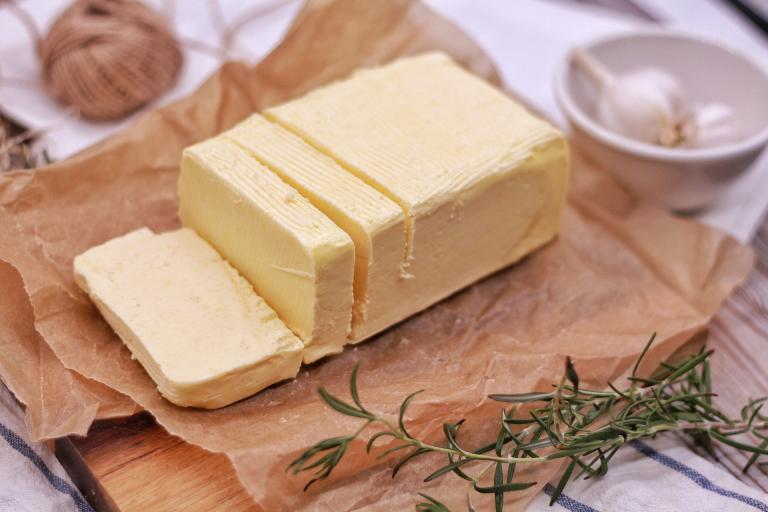
MMmmmm . . . butter, beloved of fairies and regular folx alike. Photo by rodeopix via Pixabay.
Expanding on this I’d like to add that there are a variety of offerings we find in folklore. Milk and butter are the most common, but other acceptable options may include bread, cake, honey, fruit, or water. I am aware that modern sources which view fairies more exclusively as tiny winged beings emphasize candy or sugary things, and I can only say that personally I find the traditional offerings work well and that things with a lot of chemicals or additives don’t tend to work as well (for me).
Suzanne asks: How do you handle the various requests/needs/prohibitions/threats from the various types of Fae who inhabit your daily space? ‘Cuz it seems that often they conflict!
My answer: Short answer: very carefully.
Long answer: Personally I have a bit of a tiered system based on giving primacy to the ones I have the strongest connection to and working down from there. But it is a careful and cautious system that has to take into account what different beings may want or need and why and the repercussions for me in doing or not doing things.
John-Paul asks: What’s the most dangerous mistake one could make when dealing with a fairy?
My answer: I’d say there’re three main ones that tend to screw people over in folklore: break a promise, eat fairy food, insult them.
Modern Fairies
Another subject that many people are curious about is fairies in the modern human world. This topic has a variety of expressions in people’s questions, but usually hinges on how fairies may have changed from older folklore or how they currently relate to humans in the world today.
Kris asks: Have some Fae evolved into Tech Fae?
My answer: I would say so. There’s strong indications that they do evolve in line with humans and since humans are so tech reliant in many places it only follows that you’d get crossover there.
Anneliese asks: Do they actively hate us, are they indifferent, or is it more an individual basis based on the inclination/nature/personality of the Fae in relation to the inclination/nature/personality of the human?
My answer: I would say on an individual basis. There are certainly some that are not on Team Humanity, who strongly dislike humans or see them as a resource; but there are also others who are much more pro-humanity and inclined to benevolence or random acts of kindness. The way that McNeill described the division between the Seelie and Unseelie courts is predicated on this, with the Seelie being those who may help humans in need or rescue those in distress and who give warnings before causing harm, while the Unseelie are malicious without cause (from the human perspective anyway).
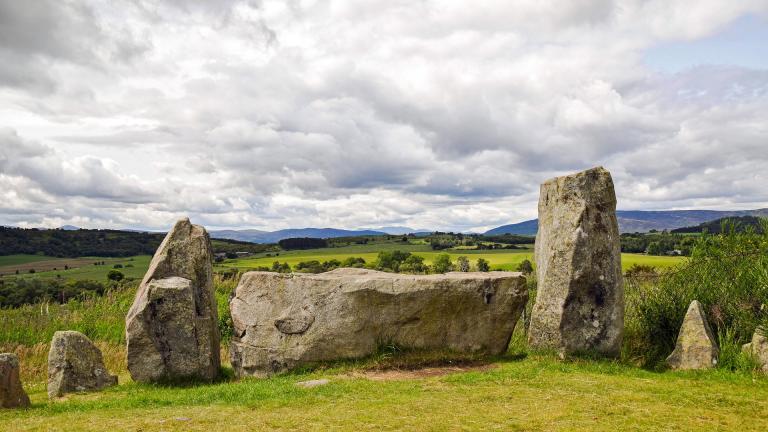
Aberdeenshire, Scotland, one of the homes of the seelie and unseelie courts. Photo by kolibri5 via Pixabay.
Chelly asks: What are some of the best ways to determine what type of being you’re dealing with?
My answer: It can be a slow process to be honest. Mostly working from context clues and how they behave. What adds a layer of difficulty is that while fairies in my experience and in most folklore won’t lie other spirit beings do, so you can’t necessarily just ask them and trust the answer.
Sylvain asks: Question regarding cultural diversity amongst fairy peoples: would European fairies have come to the New World with our ancestors? Or would there only be fairies connected with Aboriginal peoples on the lands we now occupy? Or both… in sort of a fairy multiculturalism?
My answer: Both. There are definitely beings here that appear in the folklore of various tribes that loosely fit the wider category of fairies, and there are also anecdotal accounts going back hundreds of years of people encountering or experiencing European fairies in the Americas. The main theory is that they travel with populations that believe in them or are connected to them.
Alder asks: Interested to hear what you think of the relationship or correspondence between fairies as you understand them and the popular notion of aliens on the one hand and nature spirits (a la the communities of Findhorn, Damanhur, etc.) on the other. Different ways of perceiving the same entities? Entirely different otherworldly beings?
My answer: My personal opinion: I think that alien encounters are likely modern fairy encounters, with fairies using the human imagination to their own advantage. Nature spirits, I would see as a separate but related category of beings, although I appreciate that at this point the two have been merged in mainstream consciousness.
Are there or can there be familial fae? Photo by christels via Pixabay.
Fairies, Humans, And Family Lines
The most common questions I get asked, hands down, relate to fairies and humans procreating or otherwise having sexual relationships and the results of that. At this point I think I have heard every possible iteration of the theme. Although some people sneer at the concept it is quite well established in folklore and there is an abundance of material to look to on the subject.
Bríd asks: Are there or can there be familial Fae? Like fairies attached to a family line?
My answer: Definitely. There’s various accounts of specific beings who attach themselves to either an entire family line, like the Mná sidhe (aka banshees) who follow specific families like the McCarthys, or beings who follow one specific family like from grandparent to parent to child. Fairies being attached to a family line is often protective but not always and sometimes can be dangerous or troublesome. We do have accounts for example of boggarts attached to a family that bedevil the family and follows them even if they move.
Anita asks: Are there fairy/human hybrids?
My answer: Yes. That is something we find across folklore and into modern anecdotal accounts.
Christy then asked: Can you give some examples? I’d love to read them. Do you know of any stories about these offspring afterwards, as to what they may have inherited from their fairy parent?
My answer: Every selkie wife story includes hybrid children. Some versions of the story of the fairy flag of the MacLeod’s claim it was given by the fairy mother of a child born to one the MacLeod lords. In Hrolf Kraki’s Saga the princess Skuld is half human and half alfar and the same for the hero Hogni in Thidrekksaga. Some kelpie stories tell of a kelpie either kidnapping or falling in love with a human and producing a child (usually a son) with them. There’s a traditional song in Scotland called the Kelpie’s song or Song of the Water-horse that’s about a kelpie/water horse singing a lullabye to his half-human child and wishing for the human mother to return. For an example of what these children can be like I’d check out Orkneyjar’s ‘children of the selkie folk‘

Selkie Statue in Mikladalur. Public Domain photo by Siegfried Rabanser via Wikimedia.

Suzanne asks: Are there people who have fairy DNA or genetic links in their bloodlines? If so, how would you recognize that?
My answer: Yes, according to folklore. Usually in stories those people are notable for being odd by human standards: unusually beautiful or ugly, having the sort of affinity their non-human parent would (like part-selkie children may have webbed feet or fingers, be excellent fishermen, have a pull to the sea, etc.), being uncanny in some sense, often very charismatic.
Haileigh asks: I heard about the Tuatha de Dannan. I don’t know much. I was told O’Brien’s (my bloodline) are descendants and have Fae traces in blood.
My answer: The Tuatha De Danann are the old gods of Ireland but mythology tells us they went into the fairy hills and joined the beings of the Otherworld there. Several families, including the O’Briens, McCarthys, and Fitzgeralds, claim to be descended from or related to these beings.
Protections
The subject of protections against fairies and of iron in particular is another topic that shows up often.
Chris asks: What is the best defense against the Fae?
My answer: Traditionally iron, secondarily salt.
Ragnar asks: Is iron an actual bane to the Fae folk?
My answer: Some of them. Both the Norse alfar and Irish (and Scottish) Good Neighbours as well as various other fairy beings – the welsh ellyllon, Scottish Baobhan sithe, kelpies – are averse to iron across a range of folklore and anecdotal accounts. These accounts do sometimes include these beings being killed by iron or seriously injured by it.
Jaime asks: What are your thoughts as to why fairies have aversions to certain objects like salt, iron, steel or the cross, etc.?
My answer: It would vary from item to item. For salt and iron or steel I would personally suspect it has to do with the grounding properties of it, but it could as easily be a literal physical aversion based in a physiological reaction. The aversion to the cross and other Christian imagery or prayer seems to be rooted in an atavistic aversion to the religion itself. However, this is all supposition – in the end we don’t know for sure why certain things work just that they do.
Wales, home to an ancient Welsh goddess upon whom the fictional character of Morgan le Fey may have been based. Photo by David Mark via Pixabay.
Miscellaneous
And of course there are lots of questions that don’t fill a full category. Here are the miscellaneous questions that were asked.
Dana asks: What different types of Fae courts exist? Like are there just nature courts or are there other one? Day, Night…
My answer: It varies, honestly. The whole seasonal courts/times of day courts/directional courts thing is 21st century, although I won’t say that doesn’t mean some are following that. In older Scottish lore there are two, the Seelie (lucky, blessed) and Unseelie (unholy, unlucky) but that is strictly Scottish. In Ireland every Fairy King or Queen would have their own royal court without any specific name. In Wales, as far as I know, it’s just the one, the Plant Annwn.
Rebecca asks: Morgan le Fey – real Fairy Queen, or literary character?
My answer: Both. Possibly based in an older Welsh goddess but Morgan le Fey as such started as a literary character. However, she’s been around a long time and someone certainly seems to have adopted the name.
Shaelyn asks: Do they have rituals and holidays? Do they have a deity; if they do how do they worship them?
My answer: Folklore and anecdotal accounts make references to fairies having both rituals and holidays but the details are scarce; in some cases they appear to follow a kind of paganism – the Fairy Dwelling on Selena Moor mentions them being star worshipers – while others seem to have a kind of Christian faith (or Muslim for the Jinn) – such as we see in a story from the Duchas archive where a man is invited in to a fairy baptism. Who they might worship is difficult to say with any certainty based on folklore. I have my own personal gnosis there but that’s just my impressions.

The term Naga in Hinduism, Buddhism and Jainism denotes divine. Public Domain photo by Dmitry Makeev via Wikimedia.

Lucya asks: What folklore is there relating to fairies and pandemics/plagues?
My answer: They are certainly strongly connected to illness and inflicting illness on people. I’ll have to dig into if there are any pandemic/plague connections specifically.
Kerri asks: What is the relationship between Fae and Nagas? I’m Buddhist, so Nagas are big in our world view. I’ve been following your writing and Youtube talks about Fae, and a lot seems to cross over, especially the potentially harmful interactions. Melusine, for instance, is a “fairy,” but she reminds me of the Lu, or Nagas.
My answer: My friend Seo Helrune would be a better one to speak to this, but as I understand it there is a lot of similarity in character, behaviour, offerings, powers, etc.
Christy asks: Other than Ireland, what countries/cultures have strong fairy traditions? (Iceland, Scotland, Wales, Cornwall, I know – what about further from western Europe?)
My answer: As far as I know, all cultures have some type of being that would fit the loose definition of ‘fairy’. The term itself is often applied specifically to these beings in Celtic language-speaking cultures, but is also used as an equivalent term to translate other beings into English, like yojeong.
Shane asks: Any opinions on Brian Froud’s books?
My answer: I love them. I think Froud’s art is really diverse and depicts fairy as I understand it.
Conclusion
Those were the bulk of the questions that came in and my answers to them. If you have any questions feel free to drop them in the comments here and I will try to weigh in or point you to sources.
Previous Post

March 19, 2020
Simple Witchery: Witchcraft In The Time Of Coronavirus . . .
Next Post

March 25, 2020 The Balancing Path: Seeking Balance During Extremes
Browse Our Archives
Select a Category A Lakeside Hearth Adventures in Wortcunning Alone In Her Presence Arts, Crafts & Cooking Birthing Hereditary Witchcraft Book of Blackbirds Book Reviews Born-Again Witch Cauldron, Sword, Spear, & Stone Cermony and Liturgy Columns Community Dandelion Seeds Dear Jasmine Druid Thoughts Editor's Picks Everyday Pagan Family & Household Practice Family Traditions Full Frontal Magic Gateway Goddess Guest Articles Happily Heathen Health and Wellness Hearth of Hellenism Heathen Woman Hills of the Horizon History Holidays Horse Goddesses Interfaith Interviews Irish-American Witchcraft Jewish Witch Lamp & Labyrinth Letters from Midgard Literature, Media, Film, Music Loop of Brighid Love, Sex & Relationships Magic or Magick Making Light Naturalistic Traditions Nature News Outside The Circle Pantheisticon Politics Prayers, Poems, Blessings & Stories Queer Femme Mystic Queer of Swords Recipes Ritual and Practice Science and Research Seekers and Guides Seeking the Grail Socially Responsible Magic Spear of Athena Star Made Witch Syncretic Electric Technology The Blooming Staff The Busy Witch The Cartomancer The Crow's Nest The Dance of Pagan Recovery The Hearth of Hellenism The Lady's Quill The Other Side of the Hedge The Path of She The Rantin' Raven The Witches Next Door The Zen Pagan Theology, Ethics, Philosophy Tree City Witch Urban Earthwitch Wayfaring Woman Witch on Fire Wyrd Words
Select a Month January 2026 March 2025 December 2024 June 2024 April 2024 March 2024 January 2024 December 2023 November 2023 October 2023 August 2023 July 2023 May 2023 April 2023 March 2023 February 2023 January 2023 December 2022 November 2022 October 2022 September 2022 August 2022 July 2022 June 2022 May 2022 March 2022 February 2022 January 2022 December 2021 November 2021 October 2021 September 2021 August 2021 July 2021 June 2021 May 2021 April 2021 March 2021 February 2021 January 2021 December 2020 November 2020 October 2020 September 2020 August 2020 July 2020 June 2020 May 2020 April 2020 March 2020 February 2020 January 2020 December 2019 November 2019 October 2019 September 2019 August 2019 July 2019 June 2019 May 2019 April 2019 March 2019 February 2019 January 2019 December 2018 November 2018 October 2018 September 2018 August 2018 July 2018 June 2018 May 2018 April 2018 March 2018 February 2018 January 2018 December 2017 November 2017 October 2017 September 2017 August 2017 July 2017 June 2017 May 2017 April 2017 March 2017 February 2017 January 2017 December 2016 November 2016 October 2016 September 2016 August 2016 July 2016 June 2016 May 2016 April 2016 March 2016 February 2016 January 2016 December 2015 November 2015 October 2015 September 2015 August 2015 July 2015 June 2015 May 2015 April 2015 March 2015 February 2015 January 2015 December 2014 November 2014 October 2014 September 2014 August 2014 July 2014 June 2014 May 2014 April 2014 March 2014 February 2014 January 2014 December 2013 November 2013 October 2013 September 2013 August 2013 July 2013 June 2013 May 2013 April 2013 March 2013 February 2013 January 2013 December 2012 November 2012 October 2012 September 2012 August 2012 July 2012 June 2012 May 2012 April 2012 March 2012 February 2012 January 2012
Follow Us!
TAKE THE
Religious Wisdom Quiz
In 2 Thessalonians, what does Paul say the man of lawlessness will proclaim himself to be?
Select your answer to see how you score.
God A prophet The Messiah King of the world
Related posts from Agora

Simple Witchery: To Keep Silent

Simple Witchery: Leaning On The Four Pillars


Simple Witchery: Resistance and Resilience in Hard Times
TRENDING AT PATHEOS Pagan

I was recently chatting with someone on Instagram. She asked me what...

While there are many people who share their results, the end of...

On July 23, I saw Christopher Nolan's The Odyssey which is Homer’s...

As I write this two big events have just finished up. One...

Restoring the Watershed of Divine Love
Perhaps cooperation is not something we manufacture through legislation, ideology, or moral...

Many UUs don’t pray because of bad experiences in a previous religion,...
view all Pagan blogs
Ad-Free & Subscriber Log-In Subscription Support
- About Us
- 2026 Calendar
- Videos
- Podcasts
- Library of World Religions
- Faith In Media Tracker
- Advertise With Us
- Write for Us
- Privacy Policy
- Terms of Service
- Do Not Sell My Data
- Contact Us
- Radiant Digital
- Manage Newsletter Subscriptions
- Unsubscribe From Notifications
- Sitemap
Copyright 2008-2026, Patheos. All rights reserved.
Subscription Support Ad-Free & Subscriber Log-In
Follow Patheos