
BuddhistCatholicContemplativeEvangelicalGeneral ChristianHinduJewishLatter-day SaintMuslimNew VisionsProgressive Christian
Beliefs
- Buddhist
- Catholic
- Contemplative
- Evangelical
- General Christian
- Hindu
- Jewish
- Latter-day Saint
- More Voices
- Muslim
- New Visions
- Pagan
- Progressive Christian
Topics
- Religion News
- Food and Religion
- Sports and Religion
- Religious Art
- Religious Music and Entertainment
- Religious Events
- History and Religion
- Style and Religion
- Politics and Religion
- Women in Religion
- Recreation Outdoors and Religion
- Business Finance and Religion
- Careers Workplace and Religion
- Education and Religion
- Family Parenting and Religion
- Health Fitness and Religion
- Home and Religion
- Relationships and Religion
- Technology and Religion
- Travel and Religion
Columnists
- Buddhist Columnists
- Business Finance and Religion Columnists
- Careers Workplace and Religion Columnists
- Catholic Columnists
- Contemplative Columnists
- Education and Religion Columnists
- Evangelists Columnists
- Family Parenting and Religion Columnists
- General Christian Columnists
- Health Fitness and Religion Columnists
- Hindu Columnists
- History and Religion Columnists
- Home and Religion Columnists
- Jewish Columnists
- More Voices Columnists
- Latter Day Columnists
- Muslim Columnists
- New Visions Columnists
- Nonreligious Columnists
- Pagan Columnists
- Politics and Religion Columnists
- Progressive Columnists
- Recreation Outdoors and Religion Columnists
- Relationships and Religion Columnists
- Religion News Columnists
- Religious Art Columnists
- Religious Events Columnists
- Religious Music and Entertainment Columnists
- Sports and Religion Columnists
- Style and Religion Columnists
- Technology and Religion Columnists
- Travel and Religion Columnists
- Women in Religion Columnists
Resource Library
- 2026 Calendar
- Library of World Religions
- The 100 Most Holy Places on Earth
- Patheos Answers
- Podcasts
- Videos
- Faith Leaders Database
- Anglican Episcopalian
- Bahai
- Baptist
- Buddhism
- Christianity
- Confucianism
- Eastern Orthodoxy
- Hinduism
- Holiness and Pentecostal
- ISKCON
- Islam
- Judaism
- Lutheran
- Methodist
- The Church of Jesus Christ of Latter-day Saints
- New Age
- Paganism
- Presbytarian and Reformed
- Protestantism
- Religion Behind the Scenes
- Roman Catholic
- Scientology
- Shia Islam
- Sikhism
- Sufism
- Sunni Islam
- Taoism
- Zen
- See all religions
Research Tools
 Ad-Free & Subscriber Log-In Subscription Support
Ad-Free & Subscriber Log-In Subscription Support
Follow Patheos 

- Trending:
- Forgiveness
- |
- Marriage
- |
- Consciousness
- |
- Death Penalty
- |
- Election
- |
- Halloween

- Home
- Pagan
- Cross and Crossroads: 3 Candle Tricks You Really Should Know…
Cross and Crossroads: 3 Candle Tricks You Really Should Know…
Last updated on: March 3, 2020 at 2:30 pm by J. Allen Cross
Cross and Crossroads: 3 Candle Tricks You Really Should Know… 2020-03-03T14:30:22+00:00 J. Allen Cross
Patheos Explore the world's faith through different perspectives on religion and spirituality! Patheos has the views of the prevalent religions and spiritualities of the world.
I teach a lot, and the bulk of my classes center around candle magic as it’s my preferred method of working. In this work, I get to hear a lot of questions and I get a good sense about where folks tend to have weaknesses in their knowledge base.
Across the board I’ve noticed that folks don’t know about three major candle magic techniques: butting, loading, and waking/programming. Most of these are done with coach candles or medium- to large-style stick candles. Some of these can be done with chimes, votives, tapers and vigils but not all of them. Let’s discuss…
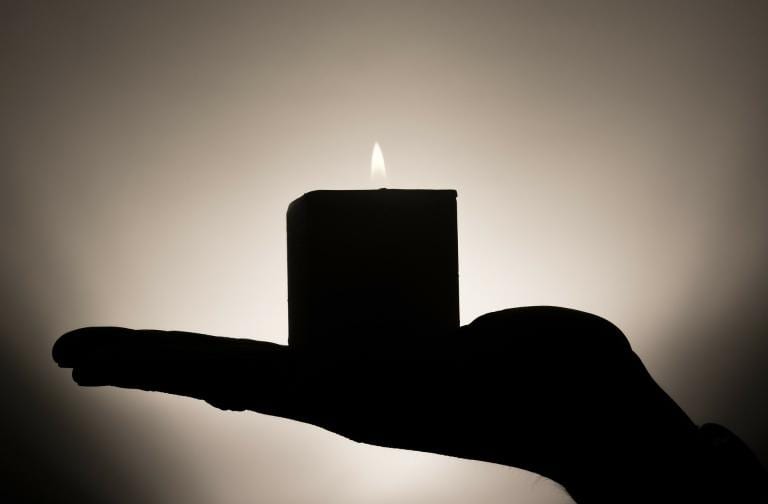
Candle magic is my preferred method of working. Photo by Thomas Muhl via Pixabay.
First up is butting. It’s okay to giggle, it’s a funny word! Despite its comedic flair, it is a powerful technique used to turn something on its head. In fact, it’s how you do the famous witches’ trick of “burning candles upside down”. To begin hold your candle upright and look at the top; notice that most candles are a cylinder with a crayon-like tip.
With a sharp knife, (carefully) cut off the tip so it’s now flat. This way the candle becomes a cylinder with two flat ends (or as flat as you can make it). Then turn it upside down so the base points up and the old tip is pointing down forming the new flat base. The old base is now the top and needs to be carved.
Using the same knife, whittle the wax into a point exposing the wick, thus creating a new tip. Or in short, cut off the top, flip it over, carve the bottom into the new tip. This way the candle is flipped upside down and burned as such. This is useful when doing reversal work, as most double-action candles (where the bottom is black and the top is a color like white, red, or green) are meant to be butted (*giggle*) to create the reversing effect.
A lot of folks don’t know this and I see it a lot across Instagram where folks are missing this step. Now certainly there are instances in which you’d want to burn them colored side up. However, the point is that you should be burning them right side up when you want to for a reason, not just because you don’t know there’s an alternative.

Loading is the act of putting things inside the candle. Photo by Monfocus via Pixabay.
The second thing folks often don’t understand is the act of loading a candle. Loading is different than dressing which is largely done on the outside of the candle. Loading is the act of putting things inside the candle. This is often done one of two ways.
Most commonly the bottom of the candle (the flat part) is carefully hollowed out with a sharp knife. Don’t get carried away, this should simply be a small crater, no bigger than you absolutely need. If you make it too wide, you risk cracking the candle. If your candle is really narrow, you may want to use a flathead screwdriver instead.
Using this technique you can add herbs, oils, personal concerns (hair, photos, fingernails etc.), petition papers, etc. inside the candle. The second method is very similar but instead of going up through the base you tunnel in through the side. This is often done with pillar candles or votives as they tend to be thicker. You risk cracking your candle in half with anything thinner.
Either way you go about it, be sure to close up the hole when you are done, so the items are fully inside. I do this by lighting a smaller candle of the same color and dripping the wax over it to seal it once more.
I tend to use the loading technique to set the core tone for slightly more complicated work. For instance, combining a love spell and a luck spell in one candle to produce a lucky in love spell, I would choose a pink or red candle and load it with love herbs and oils. I would then dress the outside of the candle with luck herbs and oils. This way the core of the spell is based on love, but is influenced with luck. Or if I’m doing protection work, I’ll put some of their hair or their photo inside the candle and dress it with protection oil and herbs.
Hold the awakened candle to your mouth and speak your intention into it. Photo by geralt via Pixabay.
The last technique I find that people really don’t know about is waking and programming your candle. This is found frequently in folk magic where there’s a tendency to treat everything like it’s alive. The idea being that you wake the candle up so that its spirit is active and then you give it instructions.
The waking portion can be done a few different ways but most the most common method is to tap it on a hard surface (like your altar top) three times. Simple as that. The next step is to program it in one way or another.
This part also varies between traditions but there are two methods I prefer. The first is rolling the candle. Roll it across a surface (your work table or altar is fine) to set the overall energetic intention. Candle wax absorbs and records energy and instructions really well so you don’t have to overthink it.
Roll it away from you three times if you are getting rid of something, or doing work that you consider outwardly projective (banishing, hotfoot, blasting, cleansing, cursing, etc.). Roll the candle toward you three times if you want to bring something in (love, prosperity, protection, etc.). This simply lets the candle know if you want it to pull in, or push away.
The other method of doing this is to simply hold the awakened candle to your mouth and speak your intention into it. This is a fairly modern method, the rolling is old school, but both work well. No matter which you choose, they set the tone for the rest of the dressing and fixing you do with the candle before you light it up.
Remember, it’s a novena, not a pipe bomb. Photo by PublicDomainPictures via Pixabay.
Before I let you go, I want to cover one last thing. This is more of a novena candle thing, but it really needs to be said; DON’T OVERFILL YOUR NOVENA CANDLES!
There’s this thing that happens (mostly on Instagram) where people fill their novena candles to the brim with dried herbs and oil, and then light them resulting in a bonfire. Then folks post them online with captions about how powerful they are but that’s not how this works at all. These are also the same folks who tend to have exploding novenas on the regular which they also chalk up to their immense power.
We all know that a tall strong candle flame indicates powerful work. However, this is not the result of power, it’s a result of pyromania and it’s quite dangerous! Remember, it’s a novena, not a pipe bomb. Lightly dress your novenas, and let the flame speak for itself. This will also help prevent your house from burning down.
I hope this article has helped you learn something new, and added at least one more tool to your magical arsenal. If you have any questions, feel free to send me a DM on Instagram @Oregon_Wood_Witch. Stay safe, and don’t burn anything down.

About J. Allen Cross
J. Allen Cross is a practicing witch of Mexican, Native American, and European descent whose craft was shaped by his Catholic upbringing and mixed family culture. Living in his home state of Oregon, he works as Psychic Medium/Occult Specialist for a well-known Paranormal Investigation team. When he’s not investigating, he enjoys providing spells and potions to his local community, teaching classes for budding witches, and serving up piping hot tea, for his insta-familia. He has looked forward to sharing his love of Folk Magic, and unorthodox spiritual ideas on this platform for some time and hopes you enjoy all that’s to come. You can read more about the author here.
Previous Post

February 27, 2020
Beyond Binary Witchcraft: In Praise of Pagan Social Justice Warriors
Next Post

March 4, 2020 The Balancing Path: (Not So) Arbitrary Symbolic Correspondences
Browse Our Archives
Select a Category A Lakeside Hearth Adventures in Wortcunning Alone In Her Presence Arts, Crafts & Cooking Birthing Hereditary Witchcraft Book of Blackbirds Book Reviews Born-Again Witch Cauldron, Sword, Spear, & Stone Cermony and Liturgy Columns Community Dandelion Seeds Dear Jasmine Druid Thoughts Editor's Picks Everyday Pagan Family & Household Practice Family Traditions Full Frontal Magic Gateway Goddess Guest Articles Happily Heathen Health and Wellness Hearth of Hellenism Heathen Woman Hills of the Horizon History Holidays Horse Goddesses Interfaith Interviews Irish-American Witchcraft Jewish Witch Lamp & Labyrinth Letters from Midgard Literature, Media, Film, Music Loop of Brighid Love, Sex & Relationships Magic or Magick Making Light Naturalistic Traditions Nature News Outside The Circle Pantheisticon Politics Prayers, Poems, Blessings & Stories Queer Femme Mystic Queer of Swords Recipes Ritual and Practice Science and Research Seekers and Guides Seeking the Grail Socially Responsible Magic Spear of Athena Star Made Witch Syncretic Electric Technology The Blooming Staff The Busy Witch The Cartomancer The Crow's Nest The Dance of Pagan Recovery The Hearth of Hellenism The Lady's Quill The Other Side of the Hedge The Path of She The Rantin' Raven The Witches Next Door The Zen Pagan Theology, Ethics, Philosophy Tree City Witch Urban Earthwitch Wayfaring Woman Witch on Fire Wyrd Words
Select a Month January 2026 March 2025 December 2024 June 2024 April 2024 March 2024 January 2024 December 2023 November 2023 October 2023 August 2023 July 2023 May 2023 April 2023 March 2023 February 2023 January 2023 December 2022 November 2022 October 2022 September 2022 August 2022 July 2022 June 2022 May 2022 March 2022 February 2022 January 2022 December 2021 November 2021 October 2021 September 2021 August 2021 July 2021 June 2021 May 2021 April 2021 March 2021 February 2021 January 2021 December 2020 November 2020 October 2020 September 2020 August 2020 July 2020 June 2020 May 2020 April 2020 March 2020 February 2020 January 2020 December 2019 November 2019 October 2019 September 2019 August 2019 July 2019 June 2019 May 2019 April 2019 March 2019 February 2019 January 2019 December 2018 November 2018 October 2018 September 2018 August 2018 July 2018 June 2018 May 2018 April 2018 March 2018 February 2018 January 2018 December 2017 November 2017 October 2017 September 2017 August 2017 July 2017 June 2017 May 2017 April 2017 March 2017 February 2017 January 2017 December 2016 November 2016 October 2016 September 2016 August 2016 July 2016 June 2016 May 2016 April 2016 March 2016 February 2016 January 2016 December 2015 November 2015 October 2015 September 2015 August 2015 July 2015 June 2015 May 2015 April 2015 March 2015 February 2015 January 2015 December 2014 November 2014 October 2014 September 2014 August 2014 July 2014 June 2014 May 2014 April 2014 March 2014 February 2014 January 2014 December 2013 November 2013 October 2013 September 2013 August 2013 July 2013 June 2013 May 2013 April 2013 March 2013 February 2013 January 2013 December 2012 November 2012 October 2012 September 2012 August 2012 July 2012 June 2012 May 2012 April 2012 March 2012 February 2012 January 2012
Follow Us!
TAKE THE
Religious Wisdom Quiz
Which Christian group is known for not celebrating holidays or birthdays?
Select your answer to see how you score.
Episcopalians Orthodox Methodists Jehovah's Witnesses
Related posts from Agora

Simple Witchery: To Keep Silent

Simple Witchery: Leaning On The Four Pillars


Simple Witchery: Resistance and Resilience in Hard Times
TRENDING AT PATHEOS Pagan

I was recently chatting with someone on Instagram. She asked me what...

While there are many people who share their results, the end of...

On July 23, I saw Christopher Nolan's The Odyssey which is Homer’s...

As I write this two big events have just finished up. One...

Restoring the Watershed of Divine Love
Perhaps cooperation is not something we manufacture through legislation, ideology, or moral...

Many UUs don’t pray because of bad experiences in a previous religion,...
view all Pagan blogs
Ad-Free & Subscriber Log-In Subscription Support
- About Us
- 2026 Calendar
- Videos
- Podcasts
- Library of World Religions
- Faith In Media Tracker
- Advertise With Us
- Write for Us
- Privacy Policy
- Terms of Service
- Do Not Sell My Data
- Contact Us
- Radiant Digital
- Manage Newsletter Subscriptions
- Unsubscribe From Notifications
- Sitemap
Copyright 2008-2026, Patheos. All rights reserved.
Subscription Support Ad-Free & Subscriber Log-In
Follow Patheos