
BuddhistCatholicContemplativeEvangelicalGeneral ChristianHinduJewishLatter-day SaintMuslimNew VisionsProgressive Christian
Beliefs
- Buddhist
- Catholic
- Contemplative
- Evangelical
- General Christian
- Hindu
- Jewish
- Latter-day Saint
- More Voices
- Muslim
- New Visions
- Pagan
- Progressive Christian
Topics
- Religion News
- Food and Religion
- Sports and Religion
- Religious Art
- Religious Music and Entertainment
- Religious Events
- History and Religion
- Style and Religion
- Politics and Religion
- Women in Religion
- Recreation Outdoors and Religion
- Business Finance and Religion
- Careers Workplace and Religion
- Education and Religion
- Family Parenting and Religion
- Health Fitness and Religion
- Home and Religion
- Relationships and Religion
- Technology and Religion
- Travel and Religion
Columnists
- Buddhist Columnists
- Business Finance and Religion Columnists
- Careers Workplace and Religion Columnists
- Catholic Columnists
- Contemplative Columnists
- Education and Religion Columnists
- Evangelists Columnists
- Family Parenting and Religion Columnists
- General Christian Columnists
- Health Fitness and Religion Columnists
- Hindu Columnists
- History and Religion Columnists
- Home and Religion Columnists
- Jewish Columnists
- More Voices Columnists
- Latter Day Columnists
- Muslim Columnists
- New Visions Columnists
- Nonreligious Columnists
- Pagan Columnists
- Politics and Religion Columnists
- Progressive Columnists
- Recreation Outdoors and Religion Columnists
- Relationships and Religion Columnists
- Religion News Columnists
- Religious Art Columnists
- Religious Events Columnists
- Religious Music and Entertainment Columnists
- Sports and Religion Columnists
- Style and Religion Columnists
- Technology and Religion Columnists
- Travel and Religion Columnists
- Women in Religion Columnists
Resource Library
- 2026 Calendar
- Library of World Religions
- The 100 Most Holy Places on Earth
- Patheos Answers
- Podcasts
- Videos
- Faith Leaders Database
- Anglican Episcopalian
- Bahai
- Baptist
- Buddhism
- Christianity
- Confucianism
- Eastern Orthodoxy
- Hinduism
- Holiness and Pentecostal
- ISKCON
- Islam
- Judaism
- Lutheran
- Methodist
- The Church of Jesus Christ of Latter-day Saints
- New Age
- Paganism
- Presbytarian and Reformed
- Protestantism
- Religion Behind the Scenes
- Roman Catholic
- Scientology
- Shia Islam
- Sikhism
- Sufism
- Sunni Islam
- Taoism
- Zen
- See all religions
Research Tools
 Ad-Free & Subscriber Log-In Subscription Support
Ad-Free & Subscriber Log-In Subscription Support
Follow Patheos 

- Trending:
- Forgiveness
- |
- Marriage
- |
- Consciousness
- |
- Death Penalty
- |
- Election
- |
- Halloween

- Home
- Pagan
- Irish-American Witchcraft: A Beginner’s Guide To Studying Irish Mythology
Irish-American Witchcraft: A Beginner’s Guide To Studying Irish Mythology
Last updated on: February 11, 2020 at 9:39 pm by Morgan Daimler
Irish-American Witchcraft: A Beginner’s Guide To Studying Irish Mythology 2020-02-11T21:39:25+00:00 Morgan Daimler
Patheos Explore the world's faith through different perspectives on religion and spirituality! Patheos has the views of the prevalent religions and spiritualities of the world.
A really common question I see from people just starting out in Irish paganism is “where do I begin learning the mythology?” because there is so much out there it can be overwhelming. Usually there will be a variety of answers people give but I’d like to offer my suggestions here. I’m going to talk a bit about things to watch out for and then look at good places to start. I know the subject can be very confusing when people are just starting out so hopefully this will help a bit.
Understanding Irish Myths
So the first thing to know is that Irish mythology is divided into groups of related stories, usually referred to as ‘cycles’. There are four main ones: The mythological cycle, the Ulster cycle, the Fenian or Ossianic cycle, and the cycle of kings. There are, of course, other miscellaneous tales and different ways to group the stories but the cycles are common and cover a lot of material. By looking at the stories as they are grouped together in the cycles you have a clear arc to follow that links the individual episodes together and lends cohesion to everything.
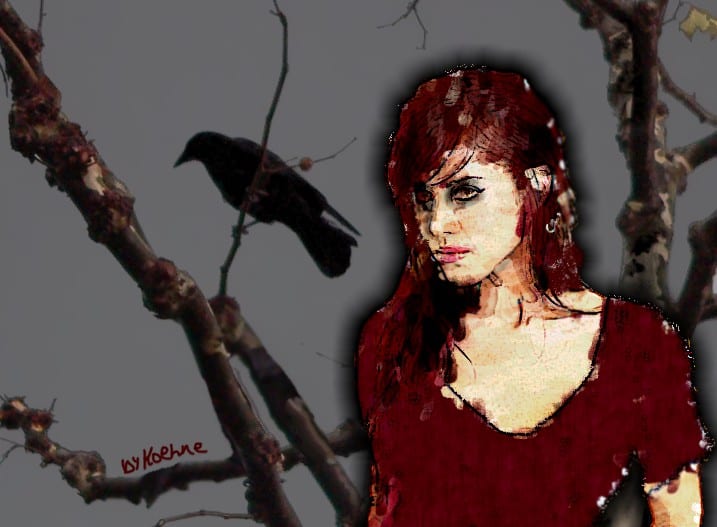
In one version it might be the Morrigan. Public domain image by Andre Koehne via Wikimedia.

It’s also important to understand that there isn’t any one definitive version of many of these stories and it’s very common to have multiple versions, or redactions, of various tales. The one exception is the Cath Maige Tuired, or Battle of the Plain of Pillars, which we only have one existing manuscript for. This means that it’s possible to have the same story show important differences between accounts, for example in one version it might be the Morrigan who does a thing while in another that same actions may be attributed to Badb. This can be a bit confusing at first but it shows the regional variations that the stories had when they were written down.
Discernment
Although I do think it’s important for people to read a diverse array of written material (or listen to audio material as the case may be) when we’re looking at mythology, particularly Irish, it is important to consider the quality of the material. Not all sources are created equal and sadly there’s a lot of bad material out there. Many of the easiest to access translations were done in a period when accuracy wasn’t necessarily a high priority and the translator freely added or edited out material.
For example in the public domain version of the Cath Maige Tuired the translator calls the Morrigan a lamia, which isn’t in the original text, and edits out a reference to her washing her genitals. This is not uncommon and it’s very important to understand that what you are reading in English may not reflect the original story but the translator’s opinion or mores. I suggest looking at things like when the material (in English) was printed, who wrote it and what their background is, and what audience they were writing for. All of these things can make a difference. You can also ask around among people who know about these things and get opinions about specific versions (for example I never recommend anything by Whitley Stokes if it can be avoided).

Many retellings are flawed and heavily altered. Photo by Bohdan Chreptak via Pixabay.
The Problem with ReTellings
Now to be clear there are very good retellings out there, so I am in no way trying to say they should be avoided altogether, and in fact the good ones are recommended. But it is necessary to go into retellings with an awareness that many of them are flawed and heavily altered. Lady Gregory’s Gods and Fighting Men takes some extreme liberties with the stories she tells, often changing details out of all recognition or adding things found nowhere else. Peter Berresford Ellis’s Celtic Myths and Legends adds a fictional Irish creation story which he wrote in with his other retellings without making it explicitly clear that it doesn’t exist in any older source.* So extra caution is needed with anything labelled as a ‘retelling’.
Where To Start
So, all of that covered. Where do you start? I recommend beginning with the mythological cycle which tells of the arrival of the Tuatha De Danann in Ireland and many of their stories. I think that beginning there will give a person a good grounding in the stories and in the Gods themselves. Key stories here would be the Cath Maige Tuired Cunga (first battle of the plain of pillars), the Cath Maige Tuired (battle of the plain of pillars), Tuatha De Danann Na Set Soim (Jewels of the Tuatha De Danann), How the Dagda got His Magic Staff, De Gabáil an t-Sida (the Taking of the Sidhe), Aislinge Oenguso (Angus’s Dream), and Oidheadh Chloinne Lir (Fate of the Children of Lir) and the Fate of the Children of Tuireann. This selection offers a firm grounding in the Tuatha De Danann, from their arrival in Ireland to some of the most significant events while they were there before the Gaels came. From there you can expand into other stories and other cycles.
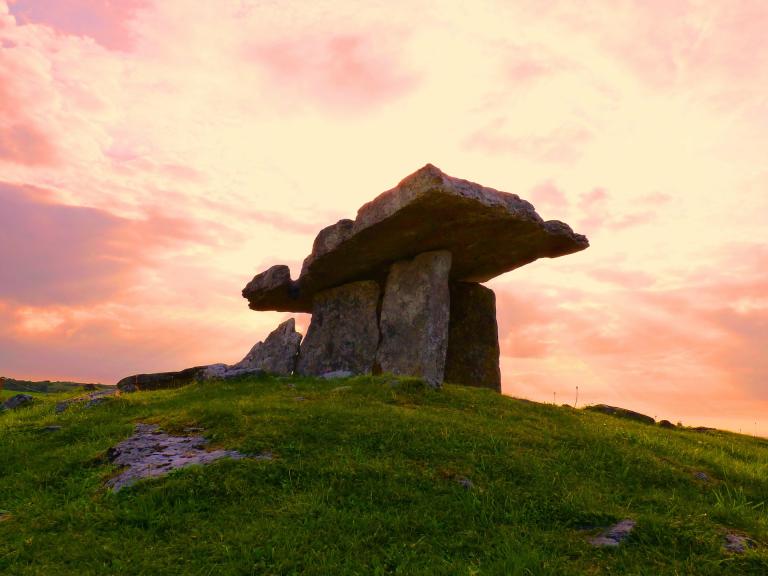
Irish mythology is steeped in the land and is rich and multifaceted. Photo by Julia Schwab via Pixabay.
Recommended Resources
Mary Jones Celtic Literature Collective – a fairly comprehensive website that groups the stories by cycle and includes English translations of many of the important texts.
Corpus of Electronic Texts (aka CELT) – harder to navigate but tons of great material.
MacAlister’s translations of the Lebor Gabala Erenn (book of the taking of Ireland) – one of the best versions available.
For more on the various Irish deities I do have a book called Pagan Portals Gods and Goddesses of Ireland that may be of interest. I also suggest looking to authors and folklorists in Ireland, as they are usually better sources than people who grew up outside the folklore and the myths.
*there is no Irish creation story in any existing text or manuscript
Previous Post

February 11, 2020
Living the Liminal: The Still Slumbering Goddess
Next Post
February 12, 2020 Dance of the Maenad: What Are Inner Spaces & Why Should I Have One?
Browse Our Archives
Select a Category A Lakeside Hearth Adventures in Wortcunning Alone In Her Presence Arts, Crafts & Cooking Birthing Hereditary Witchcraft Book of Blackbirds Book Reviews Born-Again Witch Cauldron, Sword, Spear, & Stone Cermony and Liturgy Columns Community Dandelion Seeds Dear Jasmine Druid Thoughts Editor's Picks Everyday Pagan Family & Household Practice Family Traditions Full Frontal Magic Gateway Goddess Guest Articles Happily Heathen Health and Wellness Hearth of Hellenism Heathen Woman Hills of the Horizon History Holidays Horse Goddesses Interfaith Interviews Irish-American Witchcraft Jewish Witch Lamp & Labyrinth Letters from Midgard Literature, Media, Film, Music Loop of Brighid Love, Sex & Relationships Magic or Magick Making Light Naturalistic Traditions Nature News Outside The Circle Pantheisticon Politics Prayers, Poems, Blessings & Stories Queer Femme Mystic Queer of Swords Recipes Ritual and Practice Science and Research Seekers and Guides Seeking the Grail Socially Responsible Magic Spear of Athena Star Made Witch Syncretic Electric Technology The Blooming Staff The Busy Witch The Cartomancer The Crow's Nest The Dance of Pagan Recovery The Hearth of Hellenism The Lady's Quill The Other Side of the Hedge The Path of She The Rantin' Raven The Witches Next Door The Zen Pagan Theology, Ethics, Philosophy Tree City Witch Urban Earthwitch Wayfaring Woman Witch on Fire Wyrd Words
Select a Month January 2026 March 2025 December 2024 June 2024 April 2024 March 2024 January 2024 December 2023 November 2023 October 2023 August 2023 July 2023 May 2023 April 2023 March 2023 February 2023 January 2023 December 2022 November 2022 October 2022 September 2022 August 2022 July 2022 June 2022 May 2022 March 2022 February 2022 January 2022 December 2021 November 2021 October 2021 September 2021 August 2021 July 2021 June 2021 May 2021 April 2021 March 2021 February 2021 January 2021 December 2020 November 2020 October 2020 September 2020 August 2020 July 2020 June 2020 May 2020 April 2020 March 2020 February 2020 January 2020 December 2019 November 2019 October 2019 September 2019 August 2019 July 2019 June 2019 May 2019 April 2019 March 2019 February 2019 January 2019 December 2018 November 2018 October 2018 September 2018 August 2018 July 2018 June 2018 May 2018 April 2018 March 2018 February 2018 January 2018 December 2017 November 2017 October 2017 September 2017 August 2017 July 2017 June 2017 May 2017 April 2017 March 2017 February 2017 January 2017 December 2016 November 2016 October 2016 September 2016 August 2016 July 2016 June 2016 May 2016 April 2016 March 2016 February 2016 January 2016 December 2015 November 2015 October 2015 September 2015 August 2015 July 2015 June 2015 May 2015 April 2015 March 2015 February 2015 January 2015 December 2014 November 2014 October 2014 September 2014 August 2014 July 2014 June 2014 May 2014 April 2014 March 2014 February 2014 January 2014 December 2013 November 2013 October 2013 September 2013 August 2013 July 2013 June 2013 May 2013 April 2013 March 2013 February 2013 January 2013 December 2012 November 2012 October 2012 September 2012 August 2012 July 2012 June 2012 May 2012 April 2012 March 2012 February 2012 January 2012
Follow Us!
TAKE THE
Religious Wisdom Quiz
In 2 Thessalonians, what does Paul say the man of lawlessness will proclaim himself to be?
Select your answer to see how you score.
God A prophet The Messiah King of the world
Related posts from Agora

Simple Witchery: To Keep Silent

Simple Witchery: Leaning On The Four Pillars


Simple Witchery: Resistance and Resilience in Hard Times
TRENDING AT PATHEOS Pagan

I was recently chatting with someone on Instagram. She asked me what...

While there are many people who share their results, the end of...

On July 23, I saw Christopher Nolan's The Odyssey which is Homer’s...

As I write this two big events have just finished up. One...

Restoring the Watershed of Divine Love
Perhaps cooperation is not something we manufacture through legislation, ideology, or moral...

Many UUs don’t pray because of bad experiences in a previous religion,...
view all Pagan blogs
Ad-Free & Subscriber Log-In Subscription Support
- About Us
- 2026 Calendar
- Videos
- Podcasts
- Library of World Religions
- Faith In Media Tracker
- Advertise With Us
- Write for Us
- Privacy Policy
- Terms of Service
- Do Not Sell My Data
- Contact Us
- Radiant Digital
- Manage Newsletter Subscriptions
- Unsubscribe From Notifications
- Sitemap
Copyright 2008-2026, Patheos. All rights reserved.
Subscription Support Ad-Free & Subscriber Log-In
Follow Patheos