
BuddhistCatholicContemplativeEvangelicalGeneral ChristianHinduJewishLatter-day SaintMuslimNew VisionsProgressive Christian
Beliefs
- Buddhist
- Catholic
- Contemplative
- Evangelical
- General Christian
- Hindu
- Jewish
- Latter-day Saint
- More Voices
- Muslim
- New Visions
- Pagan
- Progressive Christian
Topics
- Religion News
- Food and Religion
- Sports and Religion
- Religious Art
- Religious Music and Entertainment
- Religious Events
- History and Religion
- Style and Religion
- Politics and Religion
- Women in Religion
- Recreation Outdoors and Religion
- Business Finance and Religion
- Careers Workplace and Religion
- Education and Religion
- Family Parenting and Religion
- Health Fitness and Religion
- Home and Religion
- Relationships and Religion
- Technology and Religion
- Travel and Religion
Columnists
- Buddhist Columnists
- Business Finance and Religion Columnists
- Careers Workplace and Religion Columnists
- Catholic Columnists
- Contemplative Columnists
- Education and Religion Columnists
- Evangelists Columnists
- Family Parenting and Religion Columnists
- General Christian Columnists
- Health Fitness and Religion Columnists
- Hindu Columnists
- History and Religion Columnists
- Home and Religion Columnists
- Jewish Columnists
- More Voices Columnists
- Latter Day Columnists
- Muslim Columnists
- New Visions Columnists
- Nonreligious Columnists
- Pagan Columnists
- Politics and Religion Columnists
- Progressive Columnists
- Recreation Outdoors and Religion Columnists
- Relationships and Religion Columnists
- Religion News Columnists
- Religious Art Columnists
- Religious Events Columnists
- Religious Music and Entertainment Columnists
- Sports and Religion Columnists
- Style and Religion Columnists
- Technology and Religion Columnists
- Travel and Religion Columnists
- Women in Religion Columnists
Resource Library
- 2026 Calendar
- Library of World Religions
- The 100 Most Holy Places on Earth
- Patheos Answers
- Podcasts
- Videos
- Faith Leaders Database
- Anglican Episcopalian
- Bahai
- Baptist
- Buddhism
- Christianity
- Confucianism
- Eastern Orthodoxy
- Hinduism
- Holiness and Pentecostal
- ISKCON
- Islam
- Judaism
- Lutheran
- Methodist
- The Church of Jesus Christ of Latter-day Saints
- New Age
- Paganism
- Presbytarian and Reformed
- Protestantism
- Religion Behind the Scenes
- Roman Catholic
- Scientology
- Shia Islam
- Sikhism
- Sufism
- Sunni Islam
- Taoism
- Zen
- See all religions
Research Tools
 Ad-Free & Subscriber Log-In Subscription Support
Ad-Free & Subscriber Log-In Subscription Support
Follow Patheos 

- Trending:
- Forgiveness
- |
- Marriage
- |
- Consciousness
- |
- Death Penalty
- |
- Election
- |
- Halloween

- Home
- Pagan
- Irish-American Witchcraft: Random Q and A
Irish-American Witchcraft: Random Q and A
Last updated on: January 14, 2020 at 7:08 pm by Morgan Daimler
Irish-American Witchcraft: Random Q and A 2020-01-14T19:08:59+00:00 Morgan Daimler
Patheos Explore the world's faith through different perspectives on religion and spirituality! Patheos has the views of the prevalent religions and spiritualities of the world.
For this post I decided to do another question and answer, and to simply open the floor on social media to any questions that people might have for me. This is the result.
Fairies
Colin asks: What one overarching piece of advice would you given to Pagans, polytheists, and other such folk interested in learning more about the Other Crowd?
My answer: Be very discerning with your sources.
Seriously, fairies tend to be a hot topic every few years in paganism and when they are there will inevitably be sudden upswings in material published about them. The problem is that a lot – a lot a lot – of what is out there can really be described as one person’s opinion or ideas presented as pre-existing folklore or belief. And listen I’m not telling you not to go with that one person’s unique beliefs if you want to but you really need to be aware that’s what they are. I see so much out there online, in pagan books, and in groups that’s put forth as ‘Irish’ or what-have-you fairy belief and it isn’t. And that matters. There’s also an overdependence in my opinion on public domain works about fairies which results in people thinking that the opinion of some wealthy dilettante writing about a culture they weren’t part of has more weight than it should.
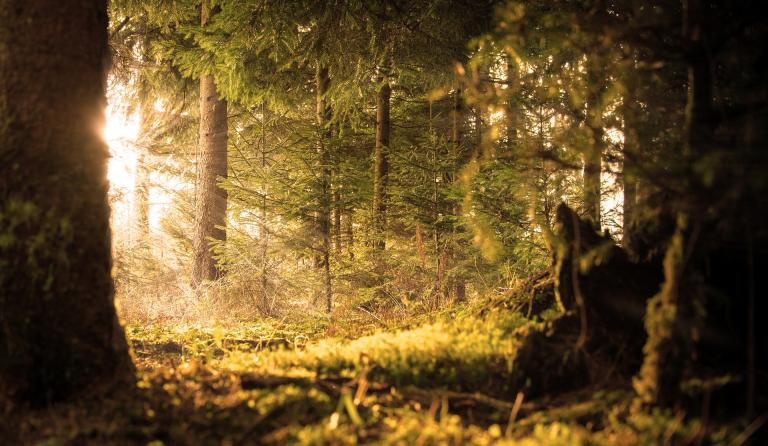
Fairies tend to be a hot topic every few years in paganism. Photo by EliasSch via Pixabay.
When it comes to learning more about fairies I firmly believe you should put some kind of research into it before just leaping into interaction, but also that the research you do needs to be discerning. And yes this applies equally to people looking at my work. Look at when the material was written, what sources it’s drawing on, whether the author is part of the culture they are writing about or outside of it, what their biases are (we all have them), whether they speak the language of the culture they are writing about. Is the author being honest about the material they are relaying – i.e. are they clear it’s their own ideas, is it cited from other sources, is it unclear, is it assumed to be cultural, all of that.
It really does matter, especially on this topic where there has long been the idea in paganism that it’s alright to treat it as a kind of creative concept or fiction and simply make up what you like and slap a cultural label on it for validity. There are pagans who are incorporating and perpetuating ideas taken from role-playing games and fiction series as legitimate older cultural belief, for example, without seeming to be aware that they aren’t.
And again, you do you if that’s what you want to believe but we really need to be aware of the actual sources – one of the big issues with some of this is that these newer ideas in mainstream US culture are overwriting the actual folk beliefs and then spreading back to the original country and eroding the older beliefs there, and colonialism is really not a good look. We can avoid that by just being honest about sources, and, for people newer to the subject, by doing research to verify something if it’s claimed in a book, and making sure you go to solid sources.

What’s the deal with Faeries and Iron? Image by jarmoluk via Pixabay.
Silvio asks: What’s the deal with Faeries and Iron? If the Fae are deeply connected to nature and Iron is a natural element why would they be afraid of it?
My answer: There’s a couple things to touch on here which contribute to some common confusions, so let’s start with those. Firstly, not all fairies are averse to iron although many do seem to be and it’s the most commonly referenced protection against them in Celtic language cultural folklore. Secondly, although it’s very popular now in some demographics to conflate fairies with nature or nature spirits it’s more complicated than that, and what we tend to see is that the more distinctly Otherworldly beings are the ones that can’t stand iron, while beings that are more obviously bound to our world sometimes can.
In other words some people may say that fairies are all deeply connected to our natural world but like most things with this subject that’s only true for some of the Good Folk, not all. It may be worth noting here that the idea that iron drove out spirits goes back at least 2,000 years, with Pliny the Elder making note of the belief that to cut any herb with an iron blade would drive out the spirit of the plant from it, so this is certainly not something new.
As to the wider question of what the deal is with fairies and iron, the short answer is no one knows for certain. In the past as far as I know it was simply taken as a given. In the last hundred years or so a multitude of theories have sprung up usually based in how that individual understands what fairies are. These theories run the gamut from esoteric, to physical, to anthropological (or pseudo-anthropological anyway). However, there really is no way to know for sure.

I’m moving to a new area; how should I build relationships with the Others there? Photo by Jill Wellington via Pixabay.
Amy asks: What advice would you give to someone moving to an entirely different area of their country for a year in terms of finding out what to look out for regarding local Others, ways that protecting self/home/car might be different, building relationships with the land respectfully (without inviting anything to eat you), and so on? What process would you use (other than Googling legends and reading folklore from the area)?
My answer: When going into a new area it’s good to start by both researching what has previously been known in that area and also if possible talking to people there now about what they may be experiencing. I know people are very concerned about appropriating Native American beliefs but you can respectfully look into what the local or historic tribe believes (or believed) about the spirits in the area. You can also research cryptid sightings and unexplained phenomena in the area. This may sound like a lot of effort and I do realize not everyone is a fan of deep research but it is helpful. The process I use tends to be a blend of book research (despite the format I am currently writing in, I am always skeptical of Google results on these topics) and talking to people who may have direct experience.
Actually moving forward – research or no research – is a bit like getting to know your new human neighbours: go slow, be friendly, respect existing boundaries and that sometimes the answer will be ‘go away’. It’s a process and it can be a slow one but the results come from the effort you put in.
Lucya asks: What are the best libraries in the world for researching fairy folklore? (I mean physical libraries holding physical books, not online resources.)
My answer: I wish I knew! I’ve been actively collecting books on the topic for years because it is hard to find them in quantity even in university libraries.

I cleanse pretty regularly, usually asperging with salt water. Photo by cocoparisienne via Pixabay.
Magic
Echo asks: What do you do to magically/energetically protect yourself and your family/home?
My answer: Honestly, lots of things. I have a horseshoe over my front and back doors, as well as rowan and red thread. I cleanse pretty regularly, usually asperging with salt water and burning a fumigant like mugwort. I have a couple of things I wear that are protective in nature, and I’ve written before about some witchy life hacks I use related to clothing and hair which can be used for protection.
Spiritual
Will asks: What advice would you give to people who honour Gods from different pantheons?
My answer: A couple things, as someone who has been there done that and who still works to find a balance between spirits from different cultural backgrounds.
Firstly, I’d say that yes it is possible to do this. I say that first because I know that there are viewpoints out there that argue against it. Historically there has always been a certain fluidity where deities are concerned and we do see examples of multi-pantheon worship or of the incorporation of an outside deity into a pantheon.
Secondly I’d say that the key to doing it successfully is twofold. Do your research about the different cultures in question and how they got along because that can be helpful in understanding how those pantheons or groups of deities may do together. Obviously if the cultures in question were antagonistic then the deities aren’t necessarily going to get on well, while if the cultures tended to be allied or connected it would go better. In some cases we even have recorded stories of cross-cultural deities not getting along, for example Thor and Jesus were described as being opponents to each other in Iceland.
Next, trust your intuition and be open to listening to what the deities in question want. I was honouring Odin and also the Morrigan for many years and I wouldn’t necessarily say the two got along marvelously but as long as I gave them their own spaces it worked out – of course this may be different for others. If you do those two things I think the odds are better for it to work out well to include different pantheons in your spirituality.

How does being goth influence your spiritual path? Photo by Blackhart via Pixabay.
Miscellaneous
Rebecca asks: How does being goth influence your spiritual path? And vice versa?
My answer: Interesting question. I suppose it makes me more open to seeing the beauty in the macabre aspects of folklore and appreciating that grim doesn’t mean terrible. I think my aesthetic probably does explain in part why I tend to dislike the twee and to argue for the value of the lore that contrast it, focusing on things that are dangerous or antithetical to humanity; I don’t believe in cutting those stories or beliefs out just because they are unpleasant or uncomfortable or in sanitizing them into something gentler. I’m not sure how my spiritual path influences my approach to being Goth, although I’m sure it probably does. I’ve been pagan about 4 or 5 years longer than I’ve been Goth, but I’ve been doing both since the 1990’s so it can be difficult now to pick those threads apart.
Previous Post

January 10, 2020
Living the Liminal: Does My Potion Bottle Collection Offend You?
Next Post

January 15, 2020 Of Light & Shadow: What Raven Has Taught Me
Browse Our Archives
Select a Category A Lakeside Hearth Adventures in Wortcunning Alone In Her Presence Arts, Crafts & Cooking Birthing Hereditary Witchcraft Book of Blackbirds Book Reviews Born-Again Witch Cauldron, Sword, Spear, & Stone Cermony and Liturgy Columns Community Dandelion Seeds Dear Jasmine Druid Thoughts Editor's Picks Everyday Pagan Family & Household Practice Family Traditions Full Frontal Magic Gateway Goddess Guest Articles Happily Heathen Health and Wellness Hearth of Hellenism Heathen Woman Hills of the Horizon History Holidays Horse Goddesses Interfaith Interviews Irish-American Witchcraft Jewish Witch Lamp & Labyrinth Letters from Midgard Literature, Media, Film, Music Loop of Brighid Love, Sex & Relationships Magic or Magick Making Light Naturalistic Traditions Nature News Outside The Circle Pantheisticon Politics Prayers, Poems, Blessings & Stories Queer Femme Mystic Queer of Swords Recipes Ritual and Practice Science and Research Seekers and Guides Seeking the Grail Socially Responsible Magic Spear of Athena Star Made Witch Syncretic Electric Technology The Blooming Staff The Busy Witch The Cartomancer The Crow's Nest The Dance of Pagan Recovery The Hearth of Hellenism The Lady's Quill The Other Side of the Hedge The Path of She The Rantin' Raven The Witches Next Door The Zen Pagan Theology, Ethics, Philosophy Tree City Witch Urban Earthwitch Wayfaring Woman Witch on Fire Wyrd Words
Select a Month January 2026 March 2025 December 2024 June 2024 April 2024 March 2024 January 2024 December 2023 November 2023 October 2023 August 2023 July 2023 May 2023 April 2023 March 2023 February 2023 January 2023 December 2022 November 2022 October 2022 September 2022 August 2022 July 2022 June 2022 May 2022 March 2022 February 2022 January 2022 December 2021 November 2021 October 2021 September 2021 August 2021 July 2021 June 2021 May 2021 April 2021 March 2021 February 2021 January 2021 December 2020 November 2020 October 2020 September 2020 August 2020 July 2020 June 2020 May 2020 April 2020 March 2020 February 2020 January 2020 December 2019 November 2019 October 2019 September 2019 August 2019 July 2019 June 2019 May 2019 April 2019 March 2019 February 2019 January 2019 December 2018 November 2018 October 2018 September 2018 August 2018 July 2018 June 2018 May 2018 April 2018 March 2018 February 2018 January 2018 December 2017 November 2017 October 2017 September 2017 August 2017 July 2017 June 2017 May 2017 April 2017 March 2017 February 2017 January 2017 December 2016 November 2016 October 2016 September 2016 August 2016 July 2016 June 2016 May 2016 April 2016 March 2016 February 2016 January 2016 December 2015 November 2015 October 2015 September 2015 August 2015 July 2015 June 2015 May 2015 April 2015 March 2015 February 2015 January 2015 December 2014 November 2014 October 2014 September 2014 August 2014 July 2014 June 2014 May 2014 April 2014 March 2014 February 2014 January 2014 December 2013 November 2013 October 2013 September 2013 August 2013 July 2013 June 2013 May 2013 April 2013 March 2013 February 2013 January 2013 December 2012 November 2012 October 2012 September 2012 August 2012 July 2012 June 2012 May 2012 April 2012 March 2012 February 2012 January 2012
Follow Us!
TAKE THE
Religious Wisdom Quiz
Who said, "The Spirit of the Lord is upon me"?
Select your answer to see how you score.
Elijah Jesus Isaiah Paul
Related posts from Agora

Simple Witchery: To Keep Silent

Simple Witchery: Leaning On The Four Pillars


Simple Witchery: Resistance and Resilience in Hard Times
TRENDING AT PATHEOS Pagan

I was recently chatting with someone on Instagram. She asked me what...

While there are many people who share their results, the end of...

On July 23, I saw Christopher Nolan's The Odyssey which is Homer’s...

As I write this two big events have just finished up. One...

Restoring the Watershed of Divine Love
Perhaps cooperation is not something we manufacture through legislation, ideology, or moral...

Many UUs don’t pray because of bad experiences in a previous religion,...
view all Pagan blogs
Ad-Free & Subscriber Log-In Subscription Support
- About Us
- 2026 Calendar
- Videos
- Podcasts
- Library of World Religions
- Faith In Media Tracker
- Advertise With Us
- Write for Us
- Privacy Policy
- Terms of Service
- Do Not Sell My Data
- Contact Us
- Radiant Digital
- Manage Newsletter Subscriptions
- Unsubscribe From Notifications
- Sitemap
Copyright 2008-2026, Patheos. All rights reserved.
Subscription Support Ad-Free & Subscriber Log-In
Follow Patheos