
BuddhistCatholicContemplativeEvangelicalGeneral ChristianHinduJewishLatter-day SaintMuslimNew VisionsProgressive Christian
Beliefs
- Buddhist
- Catholic
- Contemplative
- Evangelical
- General Christian
- Hindu
- Jewish
- Latter-day Saint
- More Voices
- Muslim
- New Visions
- Pagan
- Progressive Christian
Topics
- Religion News
- Food and Religion
- Sports and Religion
- Religious Art
- Religious Music and Entertainment
- Religious Events
- History and Religion
- Style and Religion
- Politics and Religion
- Women in Religion
- Recreation Outdoors and Religion
- Business Finance and Religion
- Careers Workplace and Religion
- Education and Religion
- Family Parenting and Religion
- Health Fitness and Religion
- Home and Religion
- Relationships and Religion
- Technology and Religion
- Travel and Religion
Columnists
- Buddhist Columnists
- Business Finance and Religion Columnists
- Careers Workplace and Religion Columnists
- Catholic Columnists
- Contemplative Columnists
- Education and Religion Columnists
- Evangelists Columnists
- Family Parenting and Religion Columnists
- General Christian Columnists
- Health Fitness and Religion Columnists
- Hindu Columnists
- History and Religion Columnists
- Home and Religion Columnists
- Jewish Columnists
- More Voices Columnists
- Latter Day Columnists
- Muslim Columnists
- New Visions Columnists
- Nonreligious Columnists
- Pagan Columnists
- Politics and Religion Columnists
- Progressive Columnists
- Recreation Outdoors and Religion Columnists
- Relationships and Religion Columnists
- Religion News Columnists
- Religious Art Columnists
- Religious Events Columnists
- Religious Music and Entertainment Columnists
- Sports and Religion Columnists
- Style and Religion Columnists
- Technology and Religion Columnists
- Travel and Religion Columnists
- Women in Religion Columnists
Resource Library
- 2026 Calendar
- Library of World Religions
- The 100 Most Holy Places on Earth
- Patheos Answers
- Podcasts
- Videos
- Faith Leaders Database
- Anglican Episcopalian
- Bahai
- Baptist
- Buddhism
- Christianity
- Confucianism
- Eastern Orthodoxy
- Hinduism
- Holiness and Pentecostal
- ISKCON
- Islam
- Judaism
- Lutheran
- Methodist
- The Church of Jesus Christ of Latter-day Saints
- New Age
- Paganism
- Presbytarian and Reformed
- Protestantism
- Religion Behind the Scenes
- Roman Catholic
- Scientology
- Shia Islam
- Sikhism
- Sufism
- Sunni Islam
- Taoism
- Zen
- See all religions
Research Tools
 Ad-Free & Subscriber Log-In Subscription Support
Ad-Free & Subscriber Log-In Subscription Support
Follow Patheos 

- Trending:
- Forgiveness
- |
- Marriage
- |
- Consciousness
- |
- Death Penalty
- |
- Election
- |
- Halloween

- Home
- Pagan
- The Balancing Path: Touching in Ritual
The Balancing Path: Touching in Ritual
Last updated on: January 4, 2022 at 8:57 am by Sidney Eileen
The Balancing Path: Touching in Ritual 2022-01-04T08:57:42+00:00 Sidney Eileen
Patheos Explore the world's faith through different perspectives on religion and spirituality! Patheos has the views of the prevalent religions and spiritualities of the world.
When is it OK to touch another person in ritual? The answer is the same as at any other time: unless it is an emergency, only with consent. Not everyone is comfortable being touched, under any circumstances.
It is very likely that at some point you will have encountered discussion about huggers vs non-huggers. Basically, some people are huggers, and when greeting or departing from other people they are inclined to hug instead of shaking hands or waving. At the opposite end of the spectrum there are people who are completely uncomfortable being touched or shaking hands at all, let alone hugged. Most of us fall somewhere in between, and will either hug or not depending upon what the other person initiates.
Problems happen when a hugger goes in for the hug, without consent, and the other person is a non-hugger. This can leave the non-hugger potentially feeling uncomfortable, violated, anxious, or traumatized, even if they like the hugger. That is why, in consent culture, the hugger will acknowledge that not everyone is a hugger, and always ask permission before hugging another person.

Some people are huggers, and others are not. Photo by StockSnap via Pixabay.
Even when a handshake is offered, a non-toucher can usually provide alternate greetings, like a fist bump, elbow touch, a bow, a smile and head nod, an enthusiastic wave, or something else altogether. It is actually very likely you have had these sorts of encounters in the past, and you might not have given it any thought at the time.
Not wanting to be touched is valid. There are a huge assortment of reasons why a person might not want to be touched, including fear of germs, sensory issues, energetic issues, PTSD, neurodiversity, and many others. But the reason really doesn’t matter. No one should have to validate themselves to your satisfaction, and if someone tells you they don’t want to be touched, they don’t owe you an explanation. Sure, it’s probably not a big deal to explain it once, but “once” is only your point of view. It isn’t “once” for them, and it is exhausting to constantly justify your existence to other people. So, just accept it and move on. Interrogating people isn’t friendly.
In small groups or a private ritual, or especially coven practice, it’s easy to obtain consent. You probably already know each other’s comfort levels, and can establish details like whether or not to touch before the ritual ever begins.
Other times, permission is implicit. Certain established or pre-planned rituals, like Drawing Down the Moon, explicitly include touching as part of the ritual. If the touching is going to be a problem, it can be addressed during the planning stage, and the ritual adjusted as needed. Touch can be powerful, but it is also never necessary. Energy connects us and extends beyond us even when we do not physically touch.
Problems with obtaining consent for touching are much more likely to happen at very large or public rituals. You most likely will not know some of the people attending, and won’t have time to greet every single person beforehand, let alone obtain permission to touch. Besides, touching may never come up in ritual, and it would likely come across as really creepy if you individually approached the attendees to ask them if they are OK being touched.
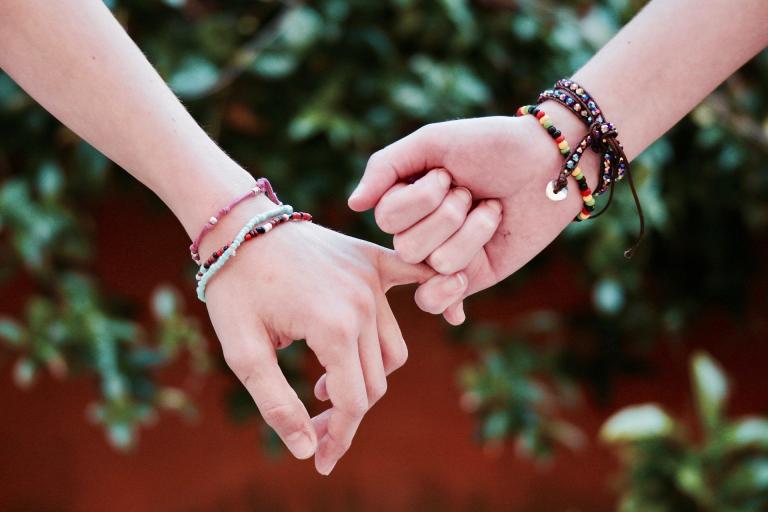
The most common kind of touching I have seen in ritual is holding hands. Photo by sweetlouise via Pixabay.
Far and away the most common kind of touching I have seen in ritual is holding hands. I have participated in and led rituals where this happened. At the most basic level, the act of holding hands can help with raising or focusing energy, and connecting those who are in attendance.
Other public ritual structures where touching can easily come up include channeling, ecstatic, healing, mediumship, and anything involving trance. When we enter into altered states during ritual, it becomes very hard to predict exactly what will happen, and attempting to do so can quickly kill the magic involved.
So, the problem isn’t whether or not consent should always be exercised, but how to obtain that consent. You might stop the flow of energy in a ritual by pausing and asking everyone if they are OK holding hands. It might interrupt a trance to pause and explicitly ask someone if you are allowed to enter their personal space. However, it is still critical to somehow make sure that consent is given, in the moment.
The easiest and most common solution to this problem is deciding that participation in the ritual is implicit permission to be touched, but that is extremely problematic and exclusionary. Some people are never OK being touched, so that kind of an attitude is going to completely exclude them from participating, even though it is an easy need to accommodate. Other people might be OK with holding hands, but not want a hug. Or, during ritual they might change their mind about how much contact is OK.
Consent isn’t a lifetime contract. Past or future consent is irrelevant. The only consent that matters is the consent in the moment, and it can change, so confirming in advance that everyone is OK being touched still leaves the potential for violation of consent during the ritual itself.
So, how do you get permission in ritual, in the moment, without breaking the flow?
There was a viral video circulating a while back that showed kindergarten students greeting their teacher before entering the classroom. She had put a poster on the wall next to her door with indicators for touching. They were for a hug, a high five, or dancing. Each child would indicate their consent that particular morning, and then be greeted by their teacher accordingly.
The video is powerful because the granting of consent was part of the morning greeting ritual, and it happened in a way that was engaging and fun. It wasn’t some inconvenience or chore, like signing a lease for your new apartment. It also wasn’t done in a pretentious way, to emphasize how woke the teacher is by not assuming.
By making the granting of consent an integral part of the ritual, it becomes one more element adding to the power of the ritual, and it ensures inclusion for those who may not want to be touched. Exactly how consent can be added as a ritual element will depend greatly upon the structure of the ritual, but here are a few ideas to help you out.
Holding Hands
This is probably one of the most common kinds of touching that happens in just about any kind of ritual, and for good reasons. Our hands are predominantly how we interact with the physical world, manipulate things, and are also our primary source of touch sensory input. Our hands are one of the key factors that defines the experience of being a human. By connecting hands in ritual, we facilitate connecting with each other, and with the overall experiences of the ritual. But, there are more ways to accomplish these goals than insisting everyone hold hands.

Physically touching is not required to create a flow of energy around a circle. Image by Jonny Lindner via Pixabay.
Energetic forces connect us and extend beyond our physical bodies, even when we are not touching. The act of reaching out and being in proximity to one another can create the same connection. So, instead of telling everyone to join hands, these are suggested verbal directions to lead into potential hand holding. Of course, change and adapt them as suits your ritual and style. I tend not to be very poetic in ritual, so if that is important to you, you’ll want to adapt it accordingly.
Close your eyes and breath.
Feel the energy around you.
Feel the energy within you.
Breath into it, listen to it, feel it, see it, accept it, be one with it.
Now, reach your hands out towards your neighbor’s, but don’t touch.
Let your hands come close.
Feel the energy around and within you.
Feel the energy of your neighbors.
Feel the warmth of the energy between your hands.
Feel the flow of the energy of the circle as it moves from your neighbor, through you, and on to your other neighbor.
Feel how you are all connected.
We are all in this together.
Let the energy flow between you, growing and adding to the energy and purpose of the ritual.
If you would like, you can touch or hold hands, but it isn’t necessary.
We are all here. We are all connected. We are all integral. We are all powerful. We are all important.
There are a few advantages I see to this approach beyond just ensuring consent. At a large public ritual it is incredibly likely that at least some, if not most of the participants will be less than proficient with sensing and manipulating energy. By walking them through the process, you are giving them firm directions to be able to fully participate in the experience of the ritual, and also hopefully helping them to develop their own skills and practice. For those who are more experienced, it certainly doesn’t hurt to have the extra direction to keep everyone focused in the same places.
Don’t forget to give the energy a purpose once it is raised and focused like this. Exactly what that means depends upon the overall focus and intent of the ritual.

Sometimes ritual calls for participants to dance, move, or pair off. Photo by StockSnap via Pixabay.
Pairing or Dancing During Ritual
There are times when a ritual might call for participants dividing up into pairs or small groups, or otherwise needing to move around during ritual, potentially touching as part of the movement. For example, at a Beltaine ritual participants might weave in and out between each other in a large circle (even without a maypole), or break into smaller groups to dance a small circle together (think the 3 of cups in the Rider Waite tarot). In community celebration ritual, I have on occasion had people group off to pass and share energy as a way to foster greater understanding, compassion, and appreciation of diversity.
While not as common as the whole circle holding hands, there are a lot of reasons a ritual might contain segments with smaller groups or pairings. It is easier to create focus in smaller groups, and those smaller groups all contribute to the overall energy of the ritual.
It would break the flow of ritual to declare at everyone that they need to individually ask for permission to touch the other participants. Instead, you need to get creative about incorporating consent into the ritual structure, like the posters outside the classroom. In most cases the consent indicators will need to be outlined before the ritual begins, so all participants understand what they look like and how they work. The easiest indicators will be objects that are easily visible, unencumbering, and can be swapped mid-ritual if the person’s current consent changes.
If there is going to be a lot of movement or dancing, one option is ribbons or cords for the participants to hold in their hands or tie around their wrists or somewhere else prominently visible. Offer different colors to indicate different levels of comfort with touching. In other words, if you expect that people might touch hands while dancing around a circle, one color should indicate “I can be touched”, and another color should indicate “please don’t touch me”.
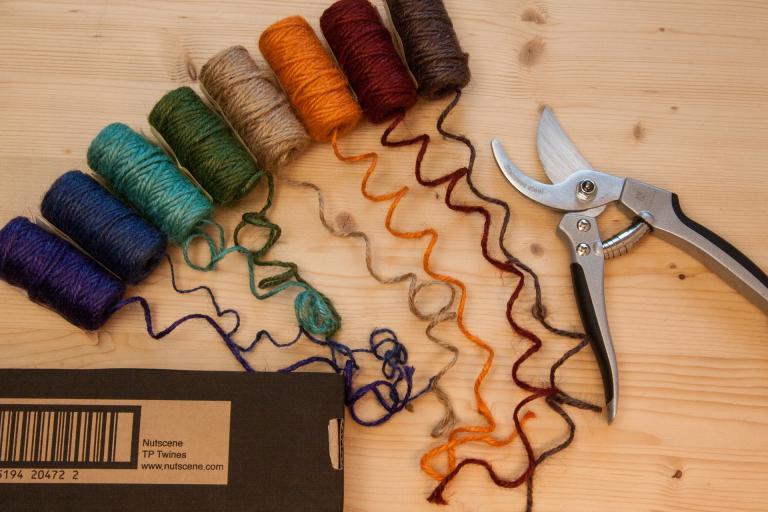
If you want to get more detailed, you can give three or more consent level indicators. Photo by stux via Pixabay.
If you want to get more detailed, you can follow the example in the teacher’s video, and give three, or even more options, depending upon what can be expected in the context of that particular ritual. For example, when movement is involved, add a third for “only touch my hand”, to clearly delineate who is not open to a hug or a hand on hip or shoulder or back.
Also, be sure to emphasize during setup that the color indicates maximum contact, not minimum contact. Someone who is using a color indicating “I can be touched” is under no obligation to touch anyone else. They are simply open to the possibility.
Give everyone attending the ritual all colors or indicator objects. That way no one is singled out, and if they change their mind during ritual, they can swap visible ribbons or objects without breaking the flow of the ritual.
If the object given is more substantial than a lightweight ribbon, like a handkerchief, or even a small rod, touching the object can be used in place of touching the person. In other words, if my handkerchief color indicates that I don’t want to be touched, we can instead both hold the handkerchief while dancing or standing in a circle. If the cord or ribbon is long enough, it can also be used in this manner, but expect a few giggles from participants missing the mark when trying to touch the object while moving.

The indicator can be a colored ribbon, handkerchief, or piece of fabric. Image by Myriam Zilles via Pixabay.
If you use small rods as your indicator, be sure to paint the different colors on either end. In all likelihood there will be participants who do not have large enough pockets to store the alternate rod (if they have pockets at all). By painting both ends, the indicator color can be easily visible, and the other color hidden in the hand.
You can get creative with different indicator objects (flowers, herbs, dyed feathers for crafting, etc.) instead of colors, or even body paint or sharpie to indicate consent. However, bear in mind that your participants will need to hold any objects throughout ritual, and the incorrect indicator will need to be easily hidden. Also, drawing on the body is difficult or impossible to change if the participant changes their consent part way through ritual.
Another important consideration is whether or not the indicator objects are reusable. Does it become a token that the participant takes with them when they leave? Most of us have limited budgets, and it can get expensive really fast if the objects are not reused. On the other hand, tokens can be valuable take-aways for participants in any ritual, especially if the work done in the ritual is relevant to work they are doing independently.
Another potential indicator is hand position, defined to the participants before ritual starts. This one doesn’t work as well if people are dancing or actively using their hands during ritual, so I will explain it in detail below instead of here.
Trance, Ecstatic, and Public Healing Rituals
While these types or rituals can be incredibly different, they bear a lot of similarities when talking about consent for touching, mostly because they are all difficult to predict and plan. The meat of such rituals is usually determined while they are happening, and will be different every time. It might be easy to dismiss concerns about touch consent by declaring that the energy, spirit, deity, etc. will not move people to touch unless it needs to happen, but that’s not necessarily the case. Besides, why leave open the possibility of violation when it is easy to incorporate mechanisms for obtaining consent?

Healing rituals don’t inherently require touching, but it can be helpful. Photo by ivanovgood via Pixabay.
I am including public healing rituals here because spiritual and energetic healing doesn’t inherently require touching, but it can be helpful. When the ritual is small and private, it can be planned out and consent obtained in advance, but that’s not possible with large public rituals. I have included healing in public community rituals before, and participated in rituals with healing aspects.
One option is to use the colored ribbons or handkerchiefs, or other indicator objects as described above. This can add an additional dimension to the ritual by giving the participants something to fidget with, wave around, or braid or tie into knots during the ritual. Unless the objects you are using are very durable, it is likely that they will become a sacrifice for the ritual, and a token for the participants. If you plan to take them back at the end, be sure to tell everyone that at the beginning.
Another option is using hand positions as signals. There are two huge advantages to using this method. First, it requires absolutely zero money. Second, the participant changing their level of consent is a simple as moving their hands.
When using hand signals, it is extra important to lay it out before ritual, and make sure everyone understands how it works. The hand signal I like to use is one or both palms facing into the body, or both palms facing out from the body. Turning both hands in has the potential to slow the flow of energy between a participant and the ritual, so if just one hand is turned in, that is your indicator not to touch. By giving the participant complete freedom otherwise, they can still fully engage with the energy of the ritual. They can lift their arms, hold out one hand with the second on their torso, hold both hands to their heart, hold their hands together, etc.
As the person in trance or conducting the healing moves around the ritual, they can do a quick visual scan of the person they are drawn to. If one hand is facing in, they know all interactions must avoid skin-to-skin contact. They are still very capable of interacting with each other, while respecting consent.
Holding arms wide or outstretched can be an indicator of full contact, as the body language naturally indicates. If, for example, the person in trance is channeling Freya, a hand turned in tells Them (capitalized gender neutral singular pronoun here is the combination of tranced human and Freya working as a single unit) that They can lock eyes, dance, or tease the participant. If both hands are facing out, They know They can give a hand clasp, gentle touch, reassuring grip on the shoulder, etc. If hands are outstretched towards Them, They know that They are allowed to hug, or otherwise fully enter the participant’s personal space.

You can use hand positions to indicate consent. Photo by Gerd Altmann via Pixabay.
In ecstatic ritual, especially if all participants are expected to achieve a trance state, having clearly defined indicators allows them all to easily gauge the consent levels of their fellow participants without breaking trance or ritual.
Sexual Fertility Rituals
I am very firmly of the opinion that sexual fertility rituals, whether or not they include actual or simulated sex, should be preceded by a group discussion of boundaries and consent, just like a well-conducted fetish party or event. You don’t want people walking away from your fertility ritual feeling violated. Also, no one should be excluded from a fertility ritual just because they don’t want to be touched.
This one is in some ways both harder, and easier than other kinds of ritual. It is easier because discussion and on-the-spot verbal consent can and should be part of the ritual structure, especially if the ritual includes kissing or touching in a suggestive manner. It is harder because there are a lot more layers to consent when sexuality (even suggestive sexuality) is involved. It is likely that participants will be fine with one level of contact with one person, but not another, making attempts at overall consent or consent indicators problematic. For example, it might seem like a good idea to put a kiss mark on the cheek to indicate that kissing is OK, but what do you do when that one person you really don’t want to kiss comes in for a smooch?
If you are planning on officiating or participating in a sexual fertility ritual, I highly recommend reading up on consent. The fetish community is an excellent resource for how to approach consent for group gatherings. This is a complex problem unto itself, worthy of its own article (or multiple articles), so I implore you, please take it seriously that consent is especially critical whenever sex, even suggestive sex, is involved.
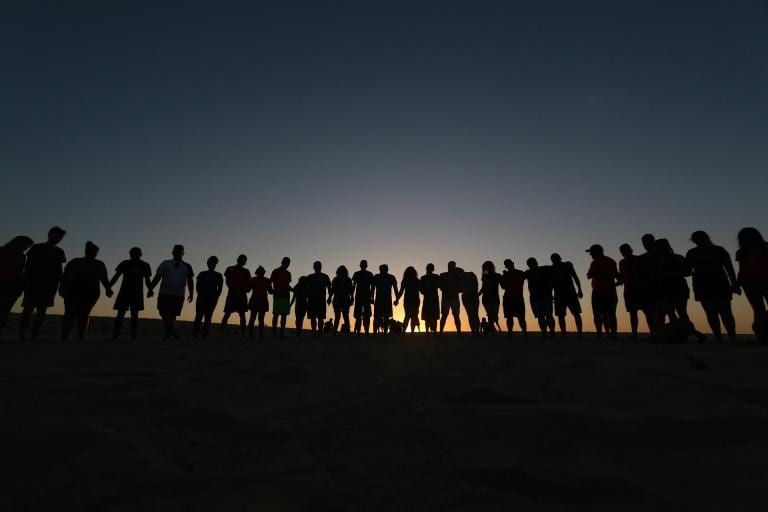
Make sure consent is planned into your ritual. No one likes feeling violated. Image by Joseph Redfield Nino via Pixabay.
Regardless of the kind of ritual you are holding, make sure consent is part of the setup of the ritual and planned into the ritual itself. No one likes feeling violated.
Further Reading About Consent in Paganism
- Pagans, Hugging, and the Fine Art of Consent: A PSA by Thorn Mooney
- Erotic Ethics and Pagan Consent Culture by Christine Kraemer
- Consent Culture 101: Basic Practices and Teaching Games by Christine Kraemer
———
Want email notification for things I write or create, here and elsewhere? Sign up for blog notifications at SidneyEileen.com ———
SidneyEileen.com Facebook * Instagram * Twitter
———

About Sidney Eileen
Sidney Eileen is a non-binary, asexual, animistic, polytheist witch and artist. They acknowledge divinity and unique natures in not just the gods, but in all manner of ephemeral and supernatural beings, spirits, living beings, and the souls that embody the physical objects and spaces around us. Their practice is lifelong and of an intuitive nature, seeking fulfillment through mutable asymmetrical balance. You can read more about the author here.


Next Post

December 11, 2019 Radical Pantheist: The Radical’s Guide to Surviving Family Holidays
Browse Our Archives
Select a Category A Lakeside Hearth Adventures in Wortcunning Alone In Her Presence Arts, Crafts & Cooking Birthing Hereditary Witchcraft Book of Blackbirds Book Reviews Born-Again Witch Cauldron, Sword, Spear, & Stone Cermony and Liturgy Columns Community Dandelion Seeds Dear Jasmine Druid Thoughts Editor's Picks Everyday Pagan Family & Household Practice Family Traditions Full Frontal Magic Gateway Goddess Guest Articles Happily Heathen Health and Wellness Hearth of Hellenism Heathen Woman Hills of the Horizon History Holidays Horse Goddesses Interfaith Interviews Irish-American Witchcraft Jewish Witch Lamp & Labyrinth Letters from Midgard Literature, Media, Film, Music Loop of Brighid Love, Sex & Relationships Magic or Magick Making Light Naturalistic Traditions Nature News Outside The Circle Pantheisticon Politics Prayers, Poems, Blessings & Stories Queer Femme Mystic Queer of Swords Recipes Ritual and Practice Science and Research Seekers and Guides Seeking the Grail Socially Responsible Magic Spear of Athena Star Made Witch Syncretic Electric Technology The Blooming Staff The Busy Witch The Cartomancer The Crow's Nest The Dance of Pagan Recovery The Hearth of Hellenism The Lady's Quill The Other Side of the Hedge The Path of She The Rantin' Raven The Witches Next Door The Zen Pagan Theology, Ethics, Philosophy Tree City Witch Urban Earthwitch Wayfaring Woman Witch on Fire Wyrd Words
Select a Month January 2026 March 2025 December 2024 June 2024 April 2024 March 2024 January 2024 December 2023 November 2023 October 2023 August 2023 July 2023 May 2023 April 2023 March 2023 February 2023 January 2023 December 2022 November 2022 October 2022 September 2022 August 2022 July 2022 June 2022 May 2022 March 2022 February 2022 January 2022 December 2021 November 2021 October 2021 September 2021 August 2021 July 2021 June 2021 May 2021 April 2021 March 2021 February 2021 January 2021 December 2020 November 2020 October 2020 September 2020 August 2020 July 2020 June 2020 May 2020 April 2020 March 2020 February 2020 January 2020 December 2019 November 2019 October 2019 September 2019 August 2019 July 2019 June 2019 May 2019 April 2019 March 2019 February 2019 January 2019 December 2018 November 2018 October 2018 September 2018 August 2018 July 2018 June 2018 May 2018 April 2018 March 2018 February 2018 January 2018 December 2017 November 2017 October 2017 September 2017 August 2017 July 2017 June 2017 May 2017 April 2017 March 2017 February 2017 January 2017 December 2016 November 2016 October 2016 September 2016 August 2016 July 2016 June 2016 May 2016 April 2016 March 2016 February 2016 January 2016 December 2015 November 2015 October 2015 September 2015 August 2015 July 2015 June 2015 May 2015 April 2015 March 2015 February 2015 January 2015 December 2014 November 2014 October 2014 September 2014 August 2014 July 2014 June 2014 May 2014 April 2014 March 2014 February 2014 January 2014 December 2013 November 2013 October 2013 September 2013 August 2013 July 2013 June 2013 May 2013 April 2013 March 2013 February 2013 January 2013 December 2012 November 2012 October 2012 September 2012 August 2012 July 2012 June 2012 May 2012 April 2012 March 2012 February 2012 January 2012
Follow Us!
TAKE THE
Religious Wisdom Quiz
True or False: John's Gospel identifies Jesus as 'the Lamb of God' in the first chapter.
Select your answer to see how you score.
FALSE TRUE
Related posts from Agora

Simple Witchery: To Keep Silent

Simple Witchery: Leaning On The Four Pillars


TRENDING AT PATHEOS Pagan

I was recently chatting with someone on Instagram. She asked me what...

While there are many people who share their results, the end of...

On July 23, I saw Christopher Nolan's The Odyssey which is Homer’s...

As I write this two big events have just finished up. One...

Restoring the Watershed of Divine Love
Perhaps cooperation is not something we manufacture through legislation, ideology, or moral...

Many UUs don’t pray because of bad experiences in a previous religion,...
view all Pagan blogs
Ad-Free & Subscriber Log-In Subscription Support
- About Us
- 2026 Calendar
- Videos
- Podcasts
- Library of World Religions
- Faith In Media Tracker
- Advertise With Us
- Write for Us
- Privacy Policy
- Terms of Service
- Do Not Sell My Data
- Contact Us
- Radiant Digital
- Manage Newsletter Subscriptions
- Unsubscribe From Notifications
- Sitemap
Copyright 2008-2026, Patheos. All rights reserved.
Subscription Support Ad-Free & Subscriber Log-In
Follow Patheos