
BuddhistCatholicContemplativeEvangelicalGeneral ChristianHinduJewishLatter-day SaintMuslimNew VisionsProgressive Christian
Beliefs
- Buddhist
- Catholic
- Contemplative
- Evangelical
- General Christian
- Hindu
- Jewish
- Latter-day Saint
- More Voices
- Muslim
- New Visions
- Pagan
- Progressive Christian
Topics
- Religion News
- Food and Religion
- Sports and Religion
- Religious Art
- Religious Music and Entertainment
- Religious Events
- History and Religion
- Style and Religion
- Politics and Religion
- Women in Religion
- Recreation Outdoors and Religion
- Business Finance and Religion
- Careers Workplace and Religion
- Education and Religion
- Family Parenting and Religion
- Health Fitness and Religion
- Home and Religion
- Relationships and Religion
- Technology and Religion
- Travel and Religion
Columnists
- Buddhist Columnists
- Business Finance and Religion Columnists
- Careers Workplace and Religion Columnists
- Catholic Columnists
- Contemplative Columnists
- Education and Religion Columnists
- Evangelists Columnists
- Family Parenting and Religion Columnists
- General Christian Columnists
- Health Fitness and Religion Columnists
- Hindu Columnists
- History and Religion Columnists
- Home and Religion Columnists
- Jewish Columnists
- More Voices Columnists
- Latter Day Columnists
- Muslim Columnists
- New Visions Columnists
- Nonreligious Columnists
- Pagan Columnists
- Politics and Religion Columnists
- Progressive Columnists
- Recreation Outdoors and Religion Columnists
- Relationships and Religion Columnists
- Religion News Columnists
- Religious Art Columnists
- Religious Events Columnists
- Religious Music and Entertainment Columnists
- Sports and Religion Columnists
- Style and Religion Columnists
- Technology and Religion Columnists
- Travel and Religion Columnists
- Women in Religion Columnists
Resource Library
- 2026 Calendar
- Library of World Religions
- The 100 Most Holy Places on Earth
- Patheos Answers
- Podcasts
- Videos
- Faith Leaders Database
- Anglican Episcopalian
- Bahai
- Baptist
- Buddhism
- Christianity
- Confucianism
- Eastern Orthodoxy
- Hinduism
- Holiness and Pentecostal
- ISKCON
- Islam
- Judaism
- Lutheran
- Methodist
- The Church of Jesus Christ of Latter-day Saints
- New Age
- Paganism
- Presbytarian and Reformed
- Protestantism
- Religion Behind the Scenes
- Roman Catholic
- Scientology
- Shia Islam
- Sikhism
- Sufism
- Sunni Islam
- Taoism
- Zen
- See all religions
Research Tools
 Ad-Free & Subscriber Log-In Subscription Support
Ad-Free & Subscriber Log-In Subscription Support
Follow Patheos 

- Trending:
- Forgiveness
- |
- Marriage
- |
- Consciousness
- |
- Death Penalty
- |
- Election
- |
- Halloween

- Home
- Pagan
- The Balancing Path: Unconventional Tools and Altar Supplies
The Balancing Path: Unconventional Tools and Altar Supplies
Last updated on: January 4, 2022 at 9:01 am by Sidney Eileen
The Balancing Path: Unconventional Tools and Altar Supplies 2022-01-04T09:01:36+00:00 Sidney Eileen
Patheos Explore the world's faith through different perspectives on religion and spirituality! Patheos has the views of the prevalent religions and spiritualities of the world.
When someone is new to witchcraft and/or p-word practice, it is completely natural to ask, “How do I do this right?” That’s a respectful question to have when exploring a new tradition, because you hopefully don’t want to bumble around like a fool committing taboos and offending everyone. The problem comes in the dizzying array of answers to that question, but there is a very good reason for the lack of consensus. Unless you are joining in on a formalized practice like Wicca, our practices are very much individual, tailored to our specific, unique paths. However, even in traditions like Wicca, practices can vary greatly from group to group, to best meet the needs of their members. The exact physical and metaphysical nature of our tools are almost limitless.

The exact physical and metaphysical nature of our tools are almost limitless. Image by Karina Mannott via Pixabay.
Honestly, that’s one of the things I love most about p-word paths, how individual they tend to be. It’s beautiful. Embrace diversity in every form it takes.
There are, however, quite a few tools that are fairly consistent across the board in their representation and symbology. This is because traditional pagan tools and altar supplies have their roots in ceremonial magical practices of Europe, which in turn took inspiration from things like biblical sources, the kabbalah, and Greek and Roman mythology. Since the most common pagan and witchcraft tools stem from essentially the same source (European ceremonial magic), they bear a lot of similarity across many traditions.
Those similarities are great for giving us shared symbology, but that symbology doesn’t work for everyone, and it tends to omit some wonderfully potent options for your tools. Just because everyone else is doing it one way, doesn’t mean you can’t do it another. Your most effective magical tool will always be the one that has the most meaning for you, regardless of how much sense it makes to someone else.
The only essential for magical or p-word practice is yourself. Everything else is icing on the cake, tools which can be used to aid in achieving focus for your magical or devotional practice. Are they fun? Sure. Inspiring? Absolutely. Useful? Undoubtedly. Essential? No. So, don’t sweat it if you don’t have the funds or the situation to buy and display all the “proper” tools.
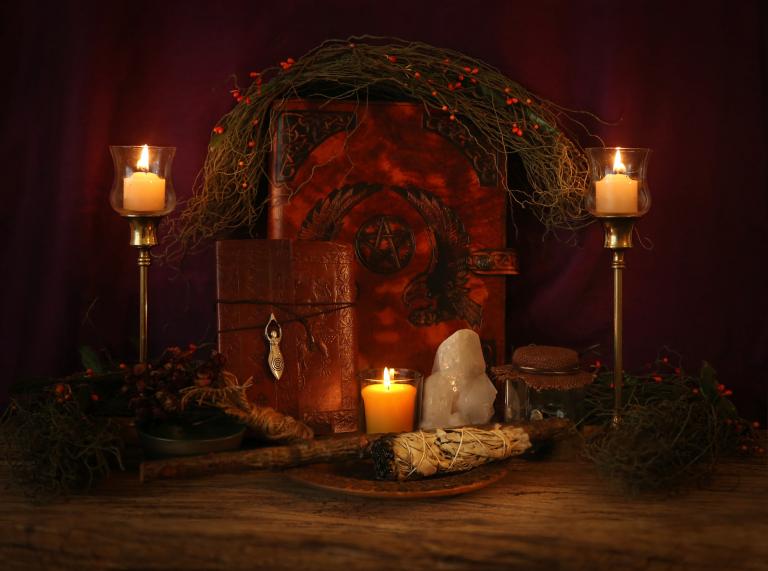
The only essential for magical or p-word practice is yourself. Image by Tracy Lundgren via Pixabay.
It very much upsets me when someone tells a newbie that they MUST buy certain things in order to be valid as a practitioner. It’s classist and exclusionary. Spiritual paths are not the sole purveyance of those with disposable income to spend on trinkets, nor should they ever exclude those who need to stay in the proverbial broom closet. Your practice is valid, whether you can spend unlimited amounts of money buying impressive works of art and expensive ingredients, or have no money at all to spend. You are valid, whether you have pentagrams hung throughout your home and a bold publicly visible altar, or a box tucked in a drawer which protects your small collection of tools and devotional items.
The tools we use and the devotional items we have exist to help us connect with the liminal and reach outside this physical plane to perform works of magic or devotion. They help us focus to better achieve our intent or reach a trance state. When you pick up an athame and start to cast a circle, you are telling your mind This is What We Are Doing, that now you will put your all into creating a space and building energy. The feel of the hilt of the blade in your hand, the smell of incense, specially chosen music or deliberate silence, the words we chant, the motion of walking the circle, these things all bring us into focus by engaging the senses together towards one purpose.
But no one part of that is necessary to successfully cast a circle or conduct a ritual. A circle can be cast through the sheer will of the caster, with no tools, no motion, no externalized ritual. The tools just make it easier. Engaging all the senses makes it easier. There is nothing inherent in a blade that makes it cast a circle, or all blades would be associated with witchcraft. If you look critically at why certain tools are used for certain things, and how they work in that role, you can decide for yourself what alternate tools can serve the same function in your practice, and if those alternate tools might even work better for you.
There are two main things to consider when choosing a magical tool or devotional item: symbology and practicality.
Symbolic Meaning
Symbology is important because it gives depth to the item. For example, an athame isn’t just an athame. It is a symbol of clarity, knowledge, and action. Its energetic uses mirror its practical uses, making it ideal for things like cutting ties, setting a defensive barrier, or hailing a deity. A cup is a literal vessel for liquids and brews, and thus a symbolic vessel for gathered energy, emotion, bounty, and creation.
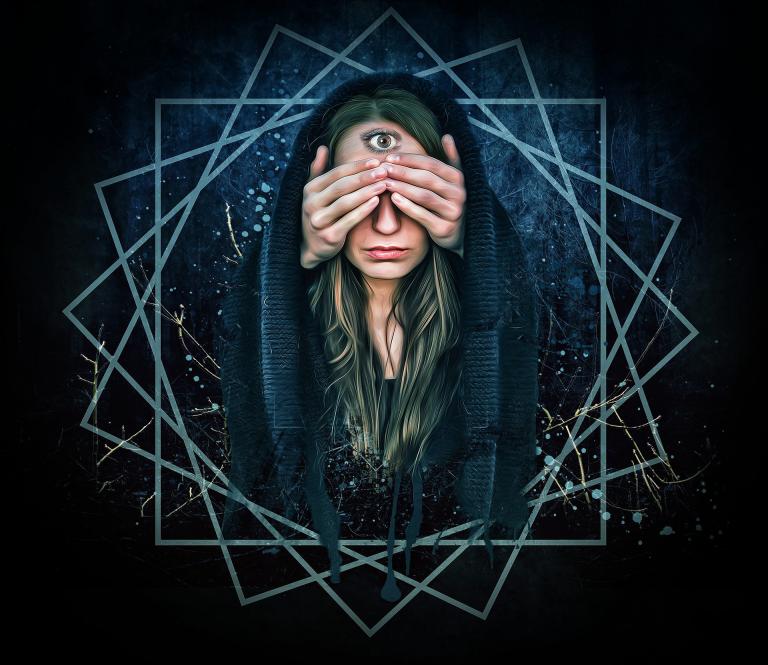
Symbology is important because it gives depth to the item. Image by Enrique Meseguer via Pixabay.
Everything has symbology and associations that have the potential to be applied to metaphysics, even if it is not something we normally think of as a magical tool. For example, a pencil is associated with creation, study, work, productivity, writing, and doodling, and thus could be consecrated as a magical tool in those arenas, or used as an ingredient in a spellworking. An electric lamp has physical electricity in it, and can be turned on or off to help illuminate and make things clear. A favorite mug will likely have a great many personal associations and symbology, making it potentially more effective for some workings than an ornate chalice. A walking cane symbolizes mobility, perseverance, and adaptation, as well as disability, pain, and illness.
Sometimes the symbology that comes pre-packaged with a traditional tool doesn’t work for an individual practitioner. Sometimes that symbology can be ignored, and other times it taints the waters too deeply for the traditional tool to be used. For example, most tools have been parsed out with male or female gender associations, which never made any sense to me. Anything proactive or vaguely phallic seems to be associated with male, and anything that is a receptacle or passive is associated with female. This can be jarring if you are non-binary (and thus erased because you are not represented), or are bothered by the casual misogyny and gender stereotypes that are echoed by traditional gender associations. If the symbology of your tools is jarring, or otherwise feels forced, instead of helping you to achieve focus, it can easily take you out of the moment, making your working more difficult or impossible.
Sometimes the practitioner has personal associations that make a traditional tool unsuitable to their practice. If someone overwhelmingly associates all weapons, athames included, with death and violence, and are disinclined to use anything that is vaguely weapon-like, an alternative tool will be needed to fill the role normally reserved for the athame (wands often work fantastically in the same roles). If a practitioner is phobic of fire, they are probably not going to be using traditional candles. LED candles and small lamps or nightlights are likely to function great as a substitute with some small adjustments due to the fact that the electric light is not a sacrifice like consumable candles. If you have overwhelmingly bad associations with any object, you are probably not going to want to include it in your practice.
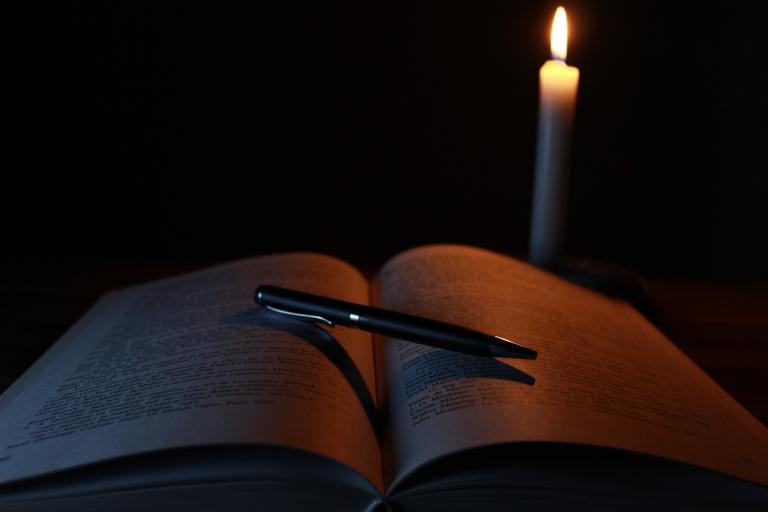
Sometimes the practitioner has personal associations that make a traditional tool unsuitable to their practice. Image by Pedra6_Photos via Pixabay.
Practical Issues
Practicality is important because our situations and resources and goals very much affect our choices of tools and dedicatory items. If you don’t have a lot of disposable income, you’re not going to be able to go out and spend $200-$2000 on that beautiful hand-forged dagger with ornate decorations, no matter how much you might covet it. If you do all your working in a kitchen, you probably wouldn’t want it, because it would be useless compared to your trusty chef’s knife. If you express your path through gardening, a garden knife would be a much more practical choice in an athame.
If you are out and proud, having visible altar spaces and pagan decorations in your home is likely a natural choice. If you need to be in the broom closet, for whatever reason (all reasons are valid), then all your tools and dedicatory items need to be either easily hidden, or subtle enough a casual observer wouldn’t realize their intended purpose. Of maybe you are somewhere between the two, not closeted, but also not inclined to use your practice as a decorative motif.
If you live in a very small space, have lots of roommates or other people living in the same space, restrictions due to lease agreements or local laws, allergies, or pets to consider, those things are all going to change what is and is not practical to have and use in your living space. Someone with a large yard in a rural area may not have any problem lighting up a huge bonfire. Someone living in a small, inexpensive apartment might be violating their lease just lighting one candle.
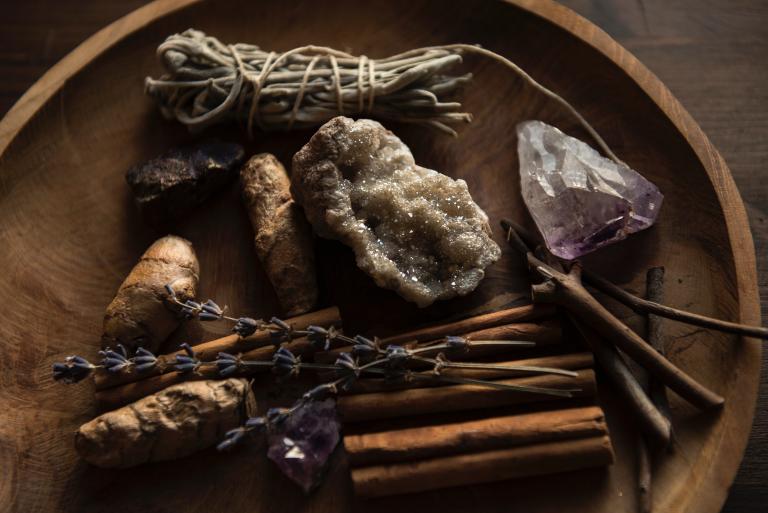
If you have pets or allergies, you need to be cautious about what essential oils, incenses, and other ingredients you use and how. Image by Joanna Kosinska via Unsplash.
If you have pets or allergies, you need to be cautious about what essential oils, incenses, and other ingredients you use and how, lest you accidentally hurt or kill someone (seriously – many common essential oils can be toxic to animals). If you have a cat or small child that can’t resist knocking items off surfaces, you need to place your altar where the little critter can’t reach, or make sure all items are durable enough to survive taking a plunge now and again. If you have a dog or child that needs to taste everything, anything that is potentially within reach needs to be non-toxic.
Don’t buy into anyone who tells you that you must use specific ingredients to achieve the desired effect. Be courteous of other people in your working vicinity who might have allergies even if you do not (especially before burning incense or smudge – it travels). There are always other options.
Choose Tools That Have Meaning to You
When choosing your magical tools and altar supplies, take into consideration the traditional tools which are applicable to your practice, their symbology, and their purpose. Think critically about how well those factors mesh with your personal situation, symbology, and needs. The traditional tool may work great, or something else might work better. You might want multiple similar tools with slightly different affinities to use in different situations. Consider what items you associate with the tasks or intents of the traditional tools. Is there something atypical or unusual that would have more meaning for you and your practice?
Always go for what is practical for your situation and has the most meaning to you in association with its intended purpose.
I have a folding pocket knife for one of my athames, which I use for utilitarian magical purposes, like gathering herbs or cutting cords. I consider myself a very accomplished seamstress and fiber worker, so one of my wands is a metal stiletto with a marbled handle, which I purchased at an embroidery shop. It directs energy in a very precise way, even more so than my dagger athame. I also very much enjoy baking, even if I haven’t done it much in years due to medical dietary restrictions, so my other wand is a small stone rolling pin. It directs energy very diffusely and slowly, but with stability and impact. I have been known to use a hand fan in place of smudge or a broom when cleansing an area.

Always go for what is practical for your situation and has the most meaning to you in association with its intended purpose. Photo by freestocks on Unsplash.
Athames: An athame directs energy via the blade(s) and tip, so anything with that kind of a shape is a potential athame, and different materials will change the properties of how your energy moves through the athame. Potential alternatives are ceramic or stone knives (sharp or dull), wooden or bamboo knives or swords, shinai, kitchen knives or butter knives, or something you mold for yourself using oven bake clay or other craft material. Or you can usually forgo the athame entirely and instead use a wand or other energy-directing magical tool to achieve your purpose.
Wands: A wand is anything with a long shape that fits nicely in your hand. It is often tapered, but not always. Most of the time it is made out of wood, but it can be made out of anything. It can be an interesting stick that you like the feel of, a pencil, a laser pointer, a pipe (left hollow, or filled with other materials to create a myriad of properties), a walking cane, telescoping pointer, dowel (of any material), awl or stiletto, chopstick, skewer, molded oven bake clay, or even that costume unicorn horn laying around from a couple Halloweens ago (humor can be a powerful tool as well, my friends).
Cups and Chalices: A chalice is at heart drinking vessel, so personal associations will reign supreme in your choice of ritual tool. If it holds a liquid and is safe to drink out of, it can be used as a chalice. This includes, but is not limited to, fancy goblets, wine glasses, shot glasses, mugs, teacups, bowls, jars, steins, tankards, drinking horns, flasks, and drinking gourds. There is a lot of symbolic overlap between chalices and cauldrons, and in the grey area between the two you will find things like large bowls, pitchers, decanters, and coffee and tea pots.
Cauldrons: When we picture cauldrons, we usually see a giant iron pot with multiple witches stirring some strange magical brew. Any vessel shaped vaguely like a cauldron or in which you can make a brew is a potential cauldron, including mugs and bowls. This includes kitchen pots, pitchers, sun tea jars, canning jars, buckets, ceramic rice pots, electric rice cookers, dutch ovens, crockpots, and so on. Laura Tempest Zakroff has a lot of suggestions for non-traditional cauldrons.
Candles: I love candle magic, but it’s not always practical. Candles, especially fancy ones, can be expensive, and they are consumed and must be replaced, making them a sacrifice as well. LED candles, night lights, and small lamps are all non-candle alternatives. If you are buying small white candles in bulk to save money, they can be specialized by carving sigils and symbols into them, anointing them with oils or herbs, or wrapping them in colored ribbons (though be careful it won’t set your altar on fire). Waterslide decal paper can be used to print images and then transfer them onto the side of the candle. Also check the home goods section of thrift stores for unused candles. It’s amazing how many people will buy fancy candles, never use them, and then donate them to charity. From time to time I even find 100% beeswax candles. If you are so inclined, you can invest in molds and make your own candles from new wax, or by recycling unburned wax from used candles.
Smudging: My partner has asthma and is severely allergic to sage smoke. I have other breathing issues courtesy of chronic illness. Between the two of us, sage is not an option, and it’s best if we avoid the large amount of smoke generated by smudging, no matter the kind of herbs used. For a direct replacement I will use a stick of incense, and it is just as effective in my practice as billowing smoke. If the goal is to cleanse and banish, other alternatives are a broom, duster, hand fan, or whatever else feels appropriate that is normally used for cleaning.
Divination: Some of the most common kinds of divination are tarot and oracle decks, pendulums, palmistry, astrology, mirror scrying, rune casting, and reading tea leaves. However, there is a divination system using just about anything for the mode of reading. If you find yourself asking the question, “Can ____ thing be used for divination?” the answer is probably, Yes. Plug “_____ divination” into a search engine, and you’ll probably find a formal term for it which you can use to search for more specific information. Another option is to build a set of bones, creating your own divination system from small trinkets that have personal meaning or speak to you.
Statuary and Devotional Icons: Beautifully rendered statuary and paintings of deities and spirits are a wonderful thing, but they are often expensive, sometimes are too large or awkward for limited spaces, and can make a devotional altar obvious to casual observers. For alternatives, look to the symbology and associations of your chosen deity or spirit, and use those symbolic items in place of a statue or direct icon. For example, Aphrodite can be represented by a sea shell, The Morrigan can be represented by a crow or raven feather or statuette, Freya can be represented by cats or a flashy piece of jewelry, Ganesha can be represented by an elephant figurine, and Thoth can be represented by a pocket thesaurus or academic text.

As your practice evolves, so too will your tools. Photo by Alex Alvarez via Unsplash.
How Can You Be Sure an Unusual Magical Tool is OK to Use?
Education and experience over time will help you accurately evaluate when an unusual tool is OK to use, but here are some questions you can ask yourself to help you make a decision. As your practice evolves, so too will your tools. They can and will likely change over time.
- Are you practicing a formal tradition where the unusual tool would be considered inappropriate? If the answer is yes, do you have solid reasons for wanting to change the tradition in your personal practice?
- If the unusual tool originates in a culture other than your own, would its use be neutral, cultural appreciation, or cultural appropriation?
- Is it unsafe to use in the way you intend? If so, are there extra precautions you can take to use it safely?
- Do the physical properties of the tool mesh with your needs?
- Do the symbolic properties of the tool mesh with your personal symbolic associations?
- If the tool is to be used in a group setting, will it make sense to the other people involved?
What are some of the unusual tools you use, have used in the past, or have seen other practitioners use?
———
Want email notification for things I write or create, here and elsewhere? Sign up for blog notifications at SidneyEileen.com ———
SidneyEileen.com Facebook * Instagram * Twitter
———

About Sidney Eileen
Sidney Eileen is a non-binary, asexual, animistic, polytheist witch and artist. They acknowledge divinity and unique natures in not just the gods, but in all manner of ephemeral and supernatural beings, spirits, living beings, and the souls that embody the physical objects and spaces around us. Their practice is lifelong and of an intuitive nature, seeking fulfillment through mutable asymmetrical balance. You can read more about the author here.
Previous Post
November 18, 2019
Cross and Crossroads: A Guide to Using Magick for Social Justice
Next Post

November 22, 2019 The Balancing Path: Transgender Awareness and Living Personal Truths
Browse Our Archives
Select a Category A Lakeside Hearth Adventures in Wortcunning Alone In Her Presence Arts, Crafts & Cooking Birthing Hereditary Witchcraft Book of Blackbirds Book Reviews Born-Again Witch Cauldron, Sword, Spear, & Stone Cermony and Liturgy Columns Community Dandelion Seeds Dear Jasmine Druid Thoughts Editor's Picks Everyday Pagan Family & Household Practice Family Traditions Full Frontal Magic Gateway Goddess Guest Articles Happily Heathen Health and Wellness Hearth of Hellenism Heathen Woman Hills of the Horizon History Holidays Horse Goddesses Interfaith Interviews Irish-American Witchcraft Jewish Witch Lamp & Labyrinth Letters from Midgard Literature, Media, Film, Music Loop of Brighid Love, Sex & Relationships Magic or Magick Making Light Naturalistic Traditions Nature News Outside The Circle Pantheisticon Politics Prayers, Poems, Blessings & Stories Queer Femme Mystic Queer of Swords Recipes Ritual and Practice Science and Research Seekers and Guides Seeking the Grail Socially Responsible Magic Spear of Athena Star Made Witch Syncretic Electric Technology The Blooming Staff The Busy Witch The Cartomancer The Crow's Nest The Dance of Pagan Recovery The Hearth of Hellenism The Lady's Quill The Other Side of the Hedge The Path of She The Rantin' Raven The Witches Next Door The Zen Pagan Theology, Ethics, Philosophy Tree City Witch Urban Earthwitch Wayfaring Woman Witch on Fire Wyrd Words
Select a Month January 2026 March 2025 December 2024 June 2024 April 2024 March 2024 January 2024 December 2023 November 2023 October 2023 August 2023 July 2023 May 2023 April 2023 March 2023 February 2023 January 2023 December 2022 November 2022 October 2022 September 2022 August 2022 July 2022 June 2022 May 2022 March 2022 February 2022 January 2022 December 2021 November 2021 October 2021 September 2021 August 2021 July 2021 June 2021 May 2021 April 2021 March 2021 February 2021 January 2021 December 2020 November 2020 October 2020 September 2020 August 2020 July 2020 June 2020 May 2020 April 2020 March 2020 February 2020 January 2020 December 2019 November 2019 October 2019 September 2019 August 2019 July 2019 June 2019 May 2019 April 2019 March 2019 February 2019 January 2019 December 2018 November 2018 October 2018 September 2018 August 2018 July 2018 June 2018 May 2018 April 2018 March 2018 February 2018 January 2018 December 2017 November 2017 October 2017 September 2017 August 2017 July 2017 June 2017 May 2017 April 2017 March 2017 February 2017 January 2017 December 2016 November 2016 October 2016 September 2016 August 2016 July 2016 June 2016 May 2016 April 2016 March 2016 February 2016 January 2016 December 2015 November 2015 October 2015 September 2015 August 2015 July 2015 June 2015 May 2015 April 2015 March 2015 February 2015 January 2015 December 2014 November 2014 October 2014 September 2014 August 2014 July 2014 June 2014 May 2014 April 2014 March 2014 February 2014 January 2014 December 2013 November 2013 October 2013 September 2013 August 2013 July 2013 June 2013 May 2013 April 2013 March 2013 February 2013 January 2013 December 2012 November 2012 October 2012 September 2012 August 2012 July 2012 June 2012 May 2012 April 2012 March 2012 February 2012 January 2012
Follow Us!
TAKE THE
Religious Wisdom Quiz
Who was it that allowed the Israelites to return to Jerusalem from exile?
Select your answer to see how you score.
Nebuchadnezzar Artaxerxes Cyrus the Great Darius
Related posts from Agora

Simple Witchery: To Keep Silent

Simple Witchery: Leaning On The Four Pillars


Simple Witchery: Resistance and Resilience in Hard Times
TRENDING AT PATHEOS Pagan

I was recently chatting with someone on Instagram. She asked me what...

While there are many people who share their results, the end of...

On July 23, I saw Christopher Nolan's The Odyssey which is Homer’s...

As I write this two big events have just finished up. One...

Restoring the Watershed of Divine Love
Perhaps cooperation is not something we manufacture through legislation, ideology, or moral...

Many UUs don’t pray because of bad experiences in a previous religion,...
view all Pagan blogs
Ad-Free & Subscriber Log-In Subscription Support
- About Us
- 2026 Calendar
- Videos
- Podcasts
- Library of World Religions
- Faith In Media Tracker
- Advertise With Us
- Write for Us
- Privacy Policy
- Terms of Service
- Do Not Sell My Data
- Contact Us
- Radiant Digital
- Manage Newsletter Subscriptions
- Unsubscribe From Notifications
- Sitemap
Copyright 2008-2026, Patheos. All rights reserved.
Subscription Support Ad-Free & Subscriber Log-In
Follow Patheos