
BuddhistCatholicContemplativeEvangelicalGeneral ChristianHinduJewishLatter-day SaintMuslimNew VisionsProgressive Christian
Beliefs
- Buddhist
- Catholic
- Contemplative
- Evangelical
- General Christian
- Hindu
- Jewish
- Latter-day Saint
- More Voices
- Muslim
- New Visions
- Pagan
- Progressive Christian
Topics
- Religion News
- Food and Religion
- Sports and Religion
- Religious Art
- Religious Music and Entertainment
- Religious Events
- History and Religion
- Style and Religion
- Politics and Religion
- Women in Religion
- Recreation Outdoors and Religion
- Business Finance and Religion
- Careers Workplace and Religion
- Education and Religion
- Family Parenting and Religion
- Health Fitness and Religion
- Home and Religion
- Relationships and Religion
- Technology and Religion
- Travel and Religion
Columnists
- Buddhist Columnists
- Business Finance and Religion Columnists
- Careers Workplace and Religion Columnists
- Catholic Columnists
- Contemplative Columnists
- Education and Religion Columnists
- Evangelists Columnists
- Family Parenting and Religion Columnists
- General Christian Columnists
- Health Fitness and Religion Columnists
- Hindu Columnists
- History and Religion Columnists
- Home and Religion Columnists
- Jewish Columnists
- More Voices Columnists
- Latter Day Columnists
- Muslim Columnists
- New Visions Columnists
- Nonreligious Columnists
- Pagan Columnists
- Politics and Religion Columnists
- Progressive Columnists
- Recreation Outdoors and Religion Columnists
- Relationships and Religion Columnists
- Religion News Columnists
- Religious Art Columnists
- Religious Events Columnists
- Religious Music and Entertainment Columnists
- Sports and Religion Columnists
- Style and Religion Columnists
- Technology and Religion Columnists
- Travel and Religion Columnists
- Women in Religion Columnists
Resource Library
- 2026 Calendar
- Library of World Religions
- The 100 Most Holy Places on Earth
- Patheos Answers
- Podcasts
- Videos
- Faith Leaders Database
- Anglican Episcopalian
- Bahai
- Baptist
- Buddhism
- Christianity
- Confucianism
- Eastern Orthodoxy
- Hinduism
- Holiness and Pentecostal
- ISKCON
- Islam
- Judaism
- Lutheran
- Methodist
- The Church of Jesus Christ of Latter-day Saints
- New Age
- Paganism
- Presbytarian and Reformed
- Protestantism
- Religion Behind the Scenes
- Roman Catholic
- Scientology
- Shia Islam
- Sikhism
- Sufism
- Sunni Islam
- Taoism
- Zen
- See all religions
Research Tools
 Ad-Free & Subscriber Log-In Subscription Support
Ad-Free & Subscriber Log-In Subscription Support
Follow Patheos 

- Trending:
- Forgiveness
- |
- Marriage
- |
- Consciousness
- |
- Death Penalty
- |
- Election
- |
- Halloween

- Home
- Pagan
- Irish-American Witchcraft: Random Q & A – From Books to Fairies
Irish-American Witchcraft: Random Q & A – From Books to Fairies
Last updated on: September 14, 2019 at 8:33 pm by Morgan Daimler
Irish-American Witchcraft: Random Q & A – From Books to Fairies 2019-09-14T20:33:20+00:00 Morgan Daimler
Patheos Explore the world's faith through different perspectives on religion and spirituality! Patheos has the views of the prevalent religions and spiritualities of the world.
This month I thought it would be fun and a bit different to do a random question and answer on social media. I asked people to give me their questions and said I would answer them here on my Patheos blog. I like the idea of this because it lets people touch on subjects I might otherwise not think to discuss.
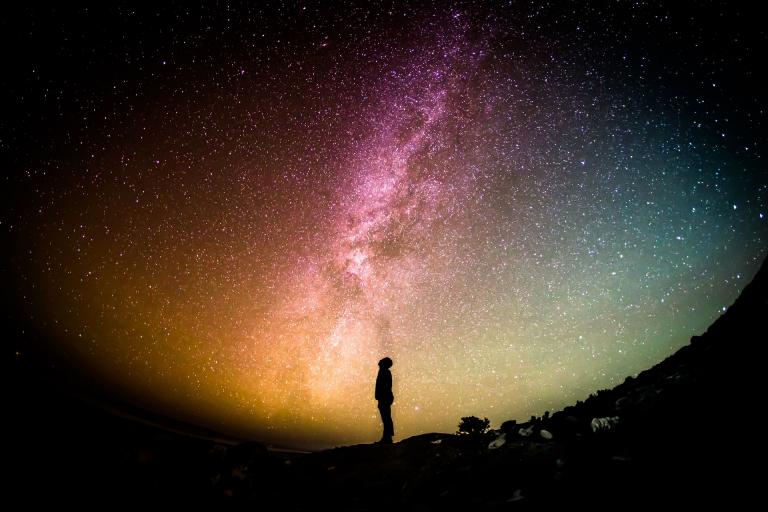
What are some sources for the Otherworld’s relationship with stars? Image by Free-Photos via Pixabay.
Rebecca asks: “What are some sources for the Otherworld’s relationship with stars? Mostly alluding to your work with the Pleiades and what prompted the change.”
My answer: For those who aren’t familiar this is referencing work I’ve been doing over the last year relating to the Pleiades constellation and creating a ritual cycle around it. There aren’t any direct references as far as I know connecting the Otherworld or the Othercrowd to the stars or specific constellations although we do have a few anecdotal accounts and comments which hint at such connections. Like a comment by someone being interviewed in the early 20th century in the Fairy Faith in Celtic Countries who talked about his belief that the Gentry came from the stars or a reference in the story of Selena Moor to the fairy folk as star worshippers. There are some neolithic monuments that have stellar alignments and we do know certain stars and constellations were important religiously, but most of my current interest in the subject is rooted in personal gnosis and shared gnosis.
What prompted my own change in focus from the usual neopagan solar-lunar focus to a stellar one was a profound experience I had in Iceland last year around the autumn equinox, which was shared with several other people. I’m working on a new holy day system purely from that place of personal experience and a belief that that constellation and dates aligned with it were and are significant in some ways to alignments with the Otherworld.
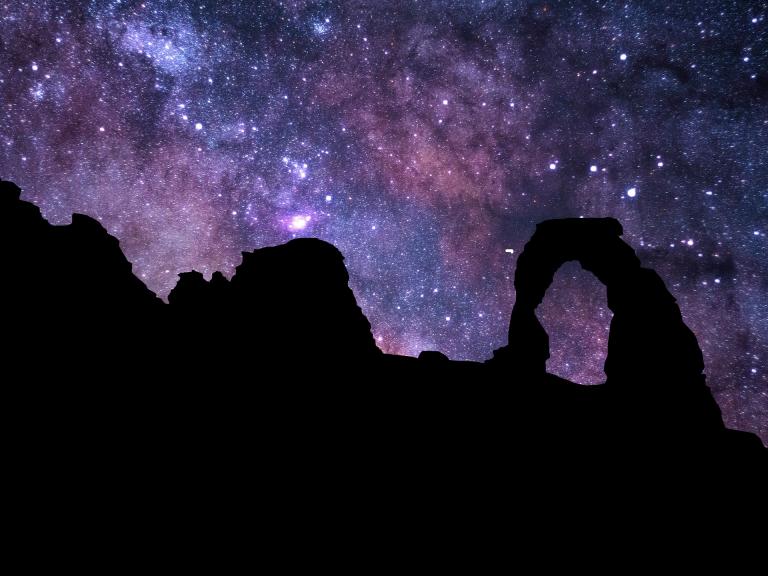
We do know certain stars and constellations were important religiously. Image by Rene Rauschenberger via Pixabay.
Meron asks: “Apart from the twee cutesy Disney-style fantasy… what is another cliché about the fae in fiction you wish wasn’t a thing? (you can name more than one cliché, sure)”
My answer: Probably the biggest current cliché that bothers me and I wish wasn’t a thing is the prevalent idea found in fiction and creeping into some pagan works that the unseelie court or particular fairy beings historically known to prey on humans are actually misunderstood ‘good guys’. It’s basically a trope now especially in young adult fantasy and also in television but I’ve also seen it in some books by pagan authors, and it gives the impression that the fairy in question doesn’t really want to hurt humans and just needs the right human to be their friend to help them change.
The reality is that there are plenty of beings in folklore that see humans as a food source or simply inconsequential and like a hungry bear or tornado will harm a human because the human is there, hugs and sympathy notwithstanding.

There are plenty of beings in folklore that see humans as simply inconsequential. Photo by Larisa Koshkina via Pixabay.
Becky asks: “What will your next book be about?”
My answer: The next book I have being published is Pagan Portals Fairy Queens which is out the beginning of October 2019, with two more books set to be published early next year. The next book I am writing is an installment in my fiction series, book 8, although I do also have a contract for a Pagan Portals book on Lugh with Moon Books that I will be working on soon as well.
Derek asks: “Would you ever do a book about Valkyries?”
My answer: Possibly, but its not on the current agenda. As I mentioned in the previous answer I’m working on a fiction piece right now and have a contract for a pagan portals on Lugh. I also am under contract for another book on the Morrigan and am seriously considering doing one on the Otherworlds. So I’d have to get through all of that before I considered anything about the Valkyries.
Robert asked about my approach to research and citation methodology.
My answer: I use the American Psychological Association (APA) citation format by preference. I learned APA when I was getting my degree and I have always liked it because it provides the basic citation information as you are reading, rather than making you stop to check a footnote or endnote to see who a source was. Of course not everyone likes this method, but since there’s no standard within pagan writing I’m free to use what I prefer so I do.
My research method is pretty straightforward I think. I look at sources that I think are pertinent to a subject and either paraphrase or quote relevant sections, citing the source as I go. If I’m giving my own opinion or my own understanding of material then I don’t cite any sources of course. I also always try to be very clear in differentiating between my opinion, facts, and things coming from other sources.
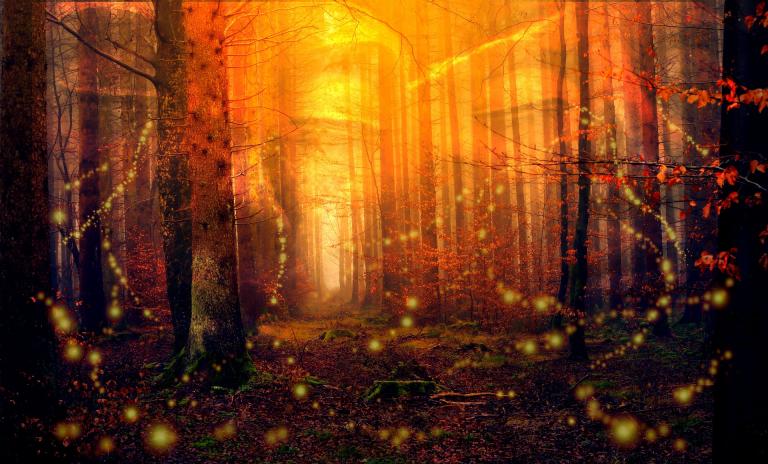
Fairies are inhuman beings who happen to look somewhat human in form. Image by Artie_Navarre via Pixabay.
R.M. asks: “What are the best portrayals of faeries in media?”
My answer: My personal opinion here of course, but if we’re talking television and movies then I’d probably say that Jonathan Strange and Mr. Norrell did a great job of portraying fairies in a way that is accurate to folklore. I also really liked the movie The Hallow, although it leans a bit into horror. And movies like the Secret of Roan Inish or even Labyrinth are very good. Books I’d say any of Terry Pratchett’s work like Lords and Ladies, Ruth Francis Long‘s Dubh Linn series, or Peadar Ò Guilín‘s ‘The Call’ are very good.
I realize things like Lost Girl and Carnival Row are immensely popular but honestly I didn’t like them as much as everyone else seemed to, in part because of the way the folklore was treated and also because the fairies in them are generally just humans in fancy dress rather than inhuman beings who happen to look somewhat human in form.
Shannon asks: “How did you go about learning Old Irish?”
My answer: I’m self taught. There’s a good amount of books on the market and also several online resources like this one offered by the University of Texas. No single resource will be enough but looking at a variety of them together is helpful.
Elizabeth asks: “What are the protocols for disposing of food offerings, like cake, fruit, a little glass of cream and a snifter of eau de vie?”
My answer: I don’t know that there are any agreed-on protocols as such but it’s usually understood looking at the older folk beliefs that it’s the vital essence or substance that’s consumed, not the physical item itself. There are a few references in Evans-Wentz and the like to animals later eating food or milk left out for the Good People, and at Imbolc when food was left out for Brighid it was sometimes eaten by indigent humans without judgment. Of course there are also references to eating such food having no nourishment or making people and animals sick. My point however in mentioning all of that is simply that it didn’t seem to really matter what was done with the physical object after it was believed the Power in question had taken the offering. My personal approach is to wait about a day after making the offering, then leave anything outside that is safe to put out around wildlife and children and to throw away anything else.
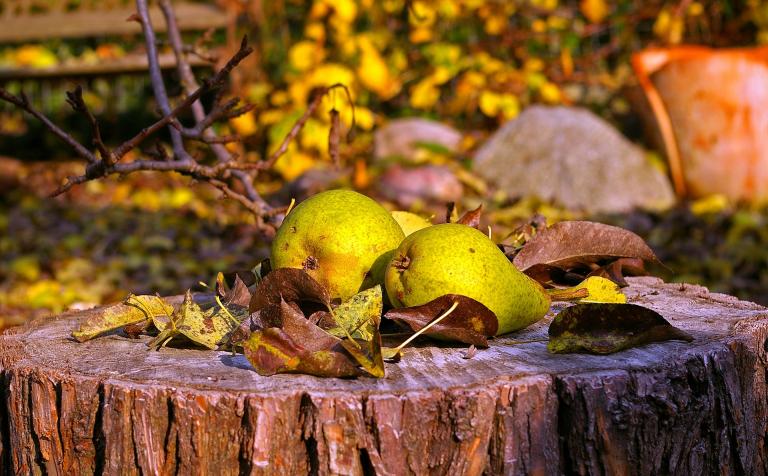
What are the protocols for disposing of food offerings? Photo by Kerstin Riemer via Pixabay.
Sheila asks: “How were you introduced to your path?”
My answer: My current path, such as it is, is an amalgam I developed over the last 30 years or so of personal practice. I was raised a secular agnostic but got into paganism and witchcraft around age 11 when I started reading Cunningham, Buckland, and Leek. A few years after that I segued into Celtic Reconstructionism and American Druidism, and later began connecting to American Heathenry. The one constant through everything was the Fair Folk and witchcraft in one form or another; eventually that all solidified into my own form of Fairy Witchcraft. I draw a lot on the Fairy Faith and am now looking at early modern witchcraft.
Although I suppose I could say the absolute short answer is that in middle school one of my best friends lent me a copy of Cunningham’s ‘Wicca for the Solitary Practitioner’ and it all started there. That was when I realized that paganism and witchcraft were even options as a religion.
Lucya asks: “What book about fairies would you say should be most avoided?”
My answer: What a delightfully dangerous question. Also a difficult one to answer. I’m honestly not sure I could toss out any one particular title but I will say that I would advise people to avoid any book that suggests that fairies are entirely and completely safe, good (by any measure), and intent on helping humanity at large. While it’s a comforting belief and I can see why people would want to embrace it, it’s also contradicted not only by literally all of folklore ever but also goes against common sense in my opinion – nothing in this world is wholly safe and even most religions acknowledge the potential dangers of helpful beings like angels and Gods. I think it’s a really bad idea to center humans in everything and also to ignore all existing folklore and folk beliefs in favour of a very modern notion that all those previous experiences are wrong but the person now has some new truth which coincidentally favours the human. It’s like if someone said that everything we know about wild bears being independent apex predators is wrong and bears are actually harmless animals who want to be domesticated pets and fetch our slippers; it’s nonsensical.
So, there you go. Questions asked and answered. I hope you all enjoyed this month’s blog and seeing a bit of these subjects which I might not otherwise have gotten into. Next time I’ll return to my usual blogging style and get back to my list of topics waiting to be tackled.
Previous Post

September 9, 2019
Magick IRL: I Can't Help Loving Myself
Next Post
September 17, 2019 The Corner Crone: Interview – Geology of the Soul
Browse Our Archives
Select a Category A Lakeside Hearth Adventures in Wortcunning Alone In Her Presence Arts, Crafts & Cooking Birthing Hereditary Witchcraft Book of Blackbirds Book Reviews Born-Again Witch Cauldron, Sword, Spear, & Stone Cermony and Liturgy Columns Community Dandelion Seeds Dear Jasmine Druid Thoughts Editor's Picks Everyday Pagan Family & Household Practice Family Traditions Full Frontal Magic Gateway Goddess Guest Articles Happily Heathen Health and Wellness Hearth of Hellenism Heathen Woman Hills of the Horizon History Holidays Horse Goddesses Interfaith Interviews Irish-American Witchcraft Jewish Witch Lamp & Labyrinth Letters from Midgard Literature, Media, Film, Music Loop of Brighid Love, Sex & Relationships Magic or Magick Making Light Naturalistic Traditions Nature News Outside The Circle Pantheisticon Politics Prayers, Poems, Blessings & Stories Queer Femme Mystic Queer of Swords Recipes Ritual and Practice Science and Research Seekers and Guides Seeking the Grail Socially Responsible Magic Spear of Athena Star Made Witch Syncretic Electric Technology The Blooming Staff The Busy Witch The Cartomancer The Crow's Nest The Dance of Pagan Recovery The Hearth of Hellenism The Lady's Quill The Other Side of the Hedge The Path of She The Rantin' Raven The Witches Next Door The Zen Pagan Theology, Ethics, Philosophy Tree City Witch Urban Earthwitch Wayfaring Woman Witch on Fire Wyrd Words
Select a Month January 2026 March 2025 December 2024 June 2024 April 2024 March 2024 January 2024 December 2023 November 2023 October 2023 August 2023 July 2023 May 2023 April 2023 March 2023 February 2023 January 2023 December 2022 November 2022 October 2022 September 2022 August 2022 July 2022 June 2022 May 2022 March 2022 February 2022 January 2022 December 2021 November 2021 October 2021 September 2021 August 2021 July 2021 June 2021 May 2021 April 2021 March 2021 February 2021 January 2021 December 2020 November 2020 October 2020 September 2020 August 2020 July 2020 June 2020 May 2020 April 2020 March 2020 February 2020 January 2020 December 2019 November 2019 October 2019 September 2019 August 2019 July 2019 June 2019 May 2019 April 2019 March 2019 February 2019 January 2019 December 2018 November 2018 October 2018 September 2018 August 2018 July 2018 June 2018 May 2018 April 2018 March 2018 February 2018 January 2018 December 2017 November 2017 October 2017 September 2017 August 2017 July 2017 June 2017 May 2017 April 2017 March 2017 February 2017 January 2017 December 2016 November 2016 October 2016 September 2016 August 2016 July 2016 June 2016 May 2016 April 2016 March 2016 February 2016 January 2016 December 2015 November 2015 October 2015 September 2015 August 2015 July 2015 June 2015 May 2015 April 2015 March 2015 February 2015 January 2015 December 2014 November 2014 October 2014 September 2014 August 2014 July 2014 June 2014 May 2014 April 2014 March 2014 February 2014 January 2014 December 2013 November 2013 October 2013 September 2013 August 2013 July 2013 June 2013 May 2013 April 2013 March 2013 February 2013 January 2013 December 2012 November 2012 October 2012 September 2012 August 2012 July 2012 June 2012 May 2012 April 2012 March 2012 February 2012 January 2012
Follow Us!
TAKE THE
Religious Wisdom Quiz
In 2 Thessalonians, what does Paul say the man of lawlessness will proclaim himself to be?
Select your answer to see how you score.
God A prophet The Messiah King of the world
Related posts from Agora

Simple Witchery: To Keep Silent

Simple Witchery: Leaning On The Four Pillars


Simple Witchery: Resistance and Resilience in Hard Times
TRENDING AT PATHEOS Pagan

I was recently chatting with someone on Instagram. She asked me what...

While there are many people who share their results, the end of...

On July 23, I saw Christopher Nolan's The Odyssey which is Homer’s...

As I write this two big events have just finished up. One...

Restoring the Watershed of Divine Love
Perhaps cooperation is not something we manufacture through legislation, ideology, or moral...

Many UUs don’t pray because of bad experiences in a previous religion,...
view all Pagan blogs
Ad-Free & Subscriber Log-In Subscription Support
- About Us
- 2026 Calendar
- Videos
- Podcasts
- Library of World Religions
- Faith In Media Tracker
- Advertise With Us
- Write for Us
- Privacy Policy
- Terms of Service
- Do Not Sell My Data
- Contact Us
- Radiant Digital
- Manage Newsletter Subscriptions
- Unsubscribe From Notifications
- Sitemap
Copyright 2008-2026, Patheos. All rights reserved.
Subscription Support Ad-Free & Subscriber Log-In
Follow Patheos