
BuddhistCatholicContemplativeEvangelicalGeneral ChristianHinduJewishLatter-day SaintMuslimNew VisionsProgressive Christian
Beliefs
- Buddhist
- Catholic
- Contemplative
- Evangelical
- General Christian
- Hindu
- Jewish
- Latter-day Saint
- More Voices
- Muslim
- New Visions
- Pagan
- Progressive Christian
Topics
- Religion News
- Food and Religion
- Sports and Religion
- Religious Art
- Religious Music and Entertainment
- Religious Events
- History and Religion
- Style and Religion
- Politics and Religion
- Women in Religion
- Recreation Outdoors and Religion
- Business Finance and Religion
- Careers Workplace and Religion
- Education and Religion
- Family Parenting and Religion
- Health Fitness and Religion
- Home and Religion
- Relationships and Religion
- Technology and Religion
- Travel and Religion
Columnists
- Buddhist Columnists
- Business Finance and Religion Columnists
- Careers Workplace and Religion Columnists
- Catholic Columnists
- Contemplative Columnists
- Education and Religion Columnists
- Evangelists Columnists
- Family Parenting and Religion Columnists
- General Christian Columnists
- Health Fitness and Religion Columnists
- Hindu Columnists
- History and Religion Columnists
- Home and Religion Columnists
- Jewish Columnists
- More Voices Columnists
- Latter Day Columnists
- Muslim Columnists
- New Visions Columnists
- Nonreligious Columnists
- Pagan Columnists
- Politics and Religion Columnists
- Progressive Columnists
- Recreation Outdoors and Religion Columnists
- Relationships and Religion Columnists
- Religion News Columnists
- Religious Art Columnists
- Religious Events Columnists
- Religious Music and Entertainment Columnists
- Sports and Religion Columnists
- Style and Religion Columnists
- Technology and Religion Columnists
- Travel and Religion Columnists
- Women in Religion Columnists
Resource Library
- 2026 Calendar
- Library of World Religions
- The 100 Most Holy Places on Earth
- Patheos Answers
- Podcasts
- Videos
- Faith Leaders Database
- Anglican Episcopalian
- Bahai
- Baptist
- Buddhism
- Christianity
- Confucianism
- Eastern Orthodoxy
- Hinduism
- Holiness and Pentecostal
- ISKCON
- Islam
- Judaism
- Lutheran
- Methodist
- The Church of Jesus Christ of Latter-day Saints
- New Age
- Paganism
- Presbytarian and Reformed
- Protestantism
- Religion Behind the Scenes
- Roman Catholic
- Scientology
- Shia Islam
- Sikhism
- Sufism
- Sunni Islam
- Taoism
- Zen
- See all religions
Research Tools
 Ad-Free & Subscriber Log-In Subscription Support
Follow Patheos 

- Trending:
- Advent
- |
- Forgiveness
- |
- Thanksgiving
- |
- Election
- |
- Seasonal Holidays
- |
- Marriage

- Home
- Pagan
- Of Light & Shadow: Epithets of Anubis
Of Light & Shadow: Epithets of Anubis
Last updated on: August 27, 2019 at 7:21 pm by Charlie Larson
Of Light & Shadow: Epithets of Anubis 2019-08-27T19:21:47+00:00 Charlie Larson
Patheos Explore the world's faith through different perspectives on religion and spirituality! Patheos has the views of the prevalent religions and spiritualities of the world.
Epithets are commonly used among modern pagans and witches who wish to connect with a particular aspect of a deity. They are names, or titles, given to the deity by their worshipers. Most of them are old and must be discovered through the study of old texts. They can be found prominently throughout Egyptian and Greek pantheons, and sometimes don’t even exist in other pantheons.

Ramses III and the three gods from Memphis. Public domain image via Wikimedia.

The choice of using a particular epithet is a personal choice. Many who follow a deity choose not to, simply using their name. However, should you choose to use an epithet, it can help you to connect to a particular aspect of a deity and deepen your relationship with them. You can still, of course, do this without the use of epithets, but, as previously stated, it is a personal decision.
I have only been using epithets for any given deity, including Anubis, for the last couple of years. It has made a difference in my practice; I feel that, and again this is a personal feeling, it has brought me closer to the deities that I follow by focusing on particular energies that they bring. It also gives me the feeling of understanding them on a deeper level.
Challenges
Deciphering epithets for Egyptian gods and goddesses can be a bit of a challenge. One challenge is simply that many of the writings that once existed have been long forgotten or lost over time. Who knows what secrets are buried in the lands of Egypt and surrounding areas. And who knows what has been lost forever due to natural or human forces (natural disasters, natural decay, thievery, and human destruction, just to name a few).
Another challenge is that hieroglyphics can be incredibly challenging to interpret and understand, so it becomes a matter of relying on those few who can read hieroglyphics and understand them. Years of study of hieroglyphics and their meaning can still leave one baffled as to what they actually mean. It absolutely takes a degree of trust that the individual knowledgeable in interpreting hieroglyphics is accurate in his or her translation (also taking into account the possibility of human error, personal interpretations, and bias).

The Weighing of the Heart from the Book of the Dead of Ani. Anubis is in the center. Public domain image via Wikimedia.

Beyond that, it’s even harder sometimes to fully comprehend the intended meaning of that particular epithet, simply because the everyday use of those epithets are sometimes thousands of years removed from our modern pagan, kemetic, and witch practices – and even academic understandings. It’s important to take into consideration, as much as possible, historical, cultural, geographical, religious, and environmental factors that may have contributed to the use and meaning of a particular epithet.
Epithets of Anubis
Do a Google search of this topic, and you’re going to find a bit of information, but perhaps a harder time finding the original source of the information. And even then, should you find source information, reading and understanding it is a bit of a chore in itself. Going through this sometimes lengthy process, though, can lead you to more specific answers and understandings.
Anubis holds many epithets, more than can possibly be found via a quick Google search. They refer to the various aspects of him as god of the dead, afterlife, protector, healer, holder of secrets, and more.
For the purpose of this article, I’m only going to choose three to look at. I’d like to take a look at their meaning and usage under the lens of a modern practitioner of witchcraft and/or paganism. It should be understood that I am a rather eclectic Kemetic pagan, meaning that I incorporate my own spiritual thoughts and understandings here. These are, while based on historical information, based on my own understandings and interpretations (UPG).
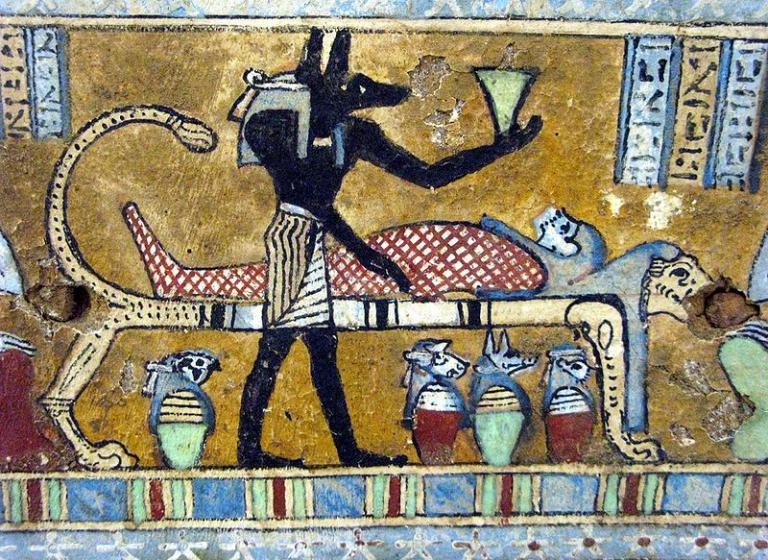
Anubis, supervisor of the mummification process. Public domain image via Wikimedia.

Khenty-Amentiu
“Foremost of the Westerners.” It is widely accepted among Egyptologists, scholars, and the majority of Kemetic practitioners that Khentiamentiu was a separate deity from Anubis; however, it was a name that later became associated with Anubis, whether that be as an aspect of Anubis, a loose association between the two deities, or perhaps a title.
Khentiamentiu was a deity associated with the necropolis, particularly at Abydos. He was often depicted as a mummified man with the crown of Egypt. Other depictions show him as a jackal-headed humanoid, similar to that of Anubis. Nowadays, it is widely an epithet that is associated with Anubis, mostly due to the meaning that ties it closely to Anubis’ energy.
The translation “Foremost of the Westerners” may sound like a bit of an odd name (which could partially be due to the translation), but it could refer to a number of meanings. One interpretation could refer to the dead themselves. The Egyptians believed that the sun died in the west each day and is reborn in the east. This association with death could be the intended meaning behind “Westerners” – those whose time on Earth has set. The title was reserved for one who was truly the ‘King of the Dead’.
Another possible interpretation refers to the fact that the entrance to the underworld was thought to lie in the west, again, perhaps because the west was directionally associated with the dead. One had to pass through the west, as did the sun, to enter the land of the dead.
Neb-Ta-Djeser
“Lord of the Sacred Land” – this likely a reference to the necropoli, the sacred burial grounds found throughout Egypt. This is another reference to Anubis as a deity associated with death. Anubis was called upon to watch over the dead, in both their body and spirit, and the necropoli were his lands.
Personally – and I have to stress this is more of a personal meaning for me – “Lord of the Sacred Land” could also be in reference to the Duat (Egyptian name for the Spirit World, Other Side – whatever name you give to it). Anubis, being a psychopomp, guided the spirits of the dead through the afterlife to the land of spirits (called the Field of Reeds in Egyptian worship). The afterlife having such a large role in Egypt could easily be seen as being the ‘sacred land’ referenced in this epithet. But again, that’s mostly my own interpretation and insight.

Beni Hassan Tombs. Public domain photograph via Wikimedia.

Hery-Sesheta
This epithet is heavily relying on my interpretation of it. From what I can find in research, this epithet, meaning “Master of Secrets”, was also a title that was given to priests and those who held some kind of administrative or leadership role in a temple, being seen as someone of authority or knowledge and thus being a “master of secrets”.
However, there have also been references of Anubis holding this title as well, and I really do connect with this aspect of him. As a god of death, Anubis would hold the secrets to life, the afterlife, and all of the secrets of death. This certainly includes the (what some might consider gruesome) process of embalming, with which he was also associated.
Connecting the two of these together priests, and those in charge of the embalming process, would also need to be knowledgeable in many areas. The embalmers would often wear a mask of Anubis in honor of him and to channel his being. They would need to be knowledgeable of human anatomy and have an understanding of physiology, including how the body decays after death.
Additionally, they would need a knowledge of how to properly preserve the body, including herbs, minerals, and oils. They would need to know the details of the long process of embalming, which could take over 2 months to complete. Spiritually, they would need to understand the journey to the afterlife and how to help a particular person get there.
It can be easily seen how the epithet Hery-Sesheta can be fitting of both Anubis and priests of a temple, really connecting the two well.
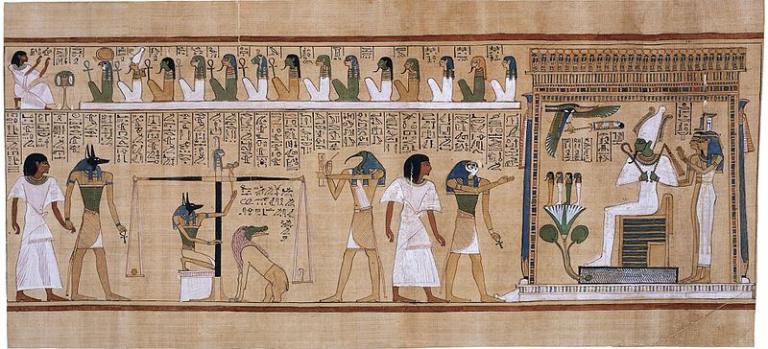
The judgement of the dead in the presence of Osiris. Public domain image via Wikimedia.

Taking it Further
There are plenty more epithets of Anubis, many of which are harder to find in usage in ancient texts. But these few above are, from my own personal experience, just a taste of some of the most used epithets
Learning to pronounce them can be a challenge, especially since we only have linguists’ and Egyptologists’ understanding of the language to rely on for pronunciation tips. That being said, use whatever you’re most comfortable with – the Egyptian version or the English translation. The intention behind it is what matters more, in my opinion.
Use them in prayers, invocations, and meditations. Speak to a particular aspect of Anubis to connect with him in a closer, more specialized manner. Etch them into a candle in a spell or draw a symbolic representation of them to use as a sigil. Have a little bit of creativity and do what you feel brings you closer to Anubis.

About Charlie Larson
Charlie Larson has been a practicing eclectic pagan and witch for nearly two decades. Though devoted to Anubis, he also works with a number of other deities. He is a linguist, a teacher, and a teacher trainer in the field of higher education, and he holds a Master’s degree in Applied Linguistics. He has been a writer of poetry and fiction for most of his life and is currently working on non-fictional works under the umbrella of paganism and witchcraft. He is a Reiki II practitioner and is currently learning Sekhem Heka. His practice is highly devotional, incorporating deities, ancestors, and other spirits into his practice. Charlie currently resides in San Francisco, California, and he enjoys reading, writing, hiking, gaming, enjoying art, and learning languages. You can read more about the author here.
Previous Post

August 27, 2019
Stirring the Brew: Fire Season
Next Post

August 29, 2019 Pan-Celtic Hoofbeats: Think Before You Appropriate
Browse Our Archives
Select a Category A Lakeside Hearth Adventures in Wortcunning Alone In Her Presence Arts, Crafts & Cooking Birthing Hereditary Witchcraft Book of Blackbirds Book Reviews Born-Again Witch Cauldron, Sword, Spear, & Stone Cermony and Liturgy Columns Community Dandelion Seeds Dear Jasmine Druid Thoughts Editor's Picks Everyday Pagan Family & Household Practice Family Traditions Full Frontal Magic Gateway Goddess Guest Articles Happily Heathen Health and Wellness Hearth of Hellenism Heathen Woman Hills of the Horizon History Holidays Horse Goddesses Interfaith Interviews Irish-American Witchcraft Jewish Witch Lamp & Labyrinth Letters from Midgard Literature, Media, Film, Music Loop of Brighid Love, Sex & Relationships Magic or Magick Making Light Naturalistic Traditions Nature News Outside The Circle Pantheisticon Politics Prayers, Poems, Blessings & Stories Queer Femme Mystic Queer of Swords Recipes Ritual and Practice Science and Research Seekers and Guides Seeking the Grail Socially Responsible Magic Spear of Athena Star Made Witch Syncretic Electric Technology The Blooming Staff The Busy Witch The Cartomancer The Crow's Nest The Dance of Pagan Recovery The Hearth of Hellenism The Lady's Quill The Other Side of the Hedge The Path of She The Rantin' Raven The Witches Next Door The Zen Pagan Theology, Ethics, Philosophy Tree City Witch Urban Earthwitch Wayfaring Woman Witch on Fire Wyrd Words
Select a Month January 2026 March 2025 December 2024 June 2024 April 2024 March 2024 January 2024 December 2023 November 2023 October 2023 August 2023 July 2023 May 2023 April 2023 March 2023 February 2023 January 2023 December 2022 November 2022 October 2022 September 2022 August 2022 July 2022 June 2022 May 2022 March 2022 February 2022 January 2022 December 2021 November 2021 October 2021 September 2021 August 2021 July 2021 June 2021 May 2021 April 2021 March 2021 February 2021 January 2021 December 2020 November 2020 October 2020 September 2020 August 2020 July 2020 June 2020 May 2020 April 2020 March 2020 February 2020 January 2020 December 2019 November 2019 October 2019 September 2019 August 2019 July 2019 June 2019 May 2019 April 2019 March 2019 February 2019 January 2019 December 2018 November 2018 October 2018 September 2018 August 2018 July 2018 June 2018 May 2018 April 2018 March 2018 February 2018 January 2018 December 2017 November 2017 October 2017 September 2017 August 2017 July 2017 June 2017 May 2017 April 2017 March 2017 February 2017 January 2017 December 2016 November 2016 October 2016 September 2016 August 2016 July 2016 June 2016 May 2016 April 2016 March 2016 February 2016 January 2016 December 2015 November 2015 October 2015 September 2015 August 2015 July 2015 June 2015 May 2015 April 2015 March 2015 February 2015 January 2015 December 2014 November 2014 October 2014 September 2014 August 2014 July 2014 June 2014 May 2014 April 2014 March 2014 February 2014 January 2014 December 2013 November 2013 October 2013 September 2013 August 2013 July 2013 June 2013 May 2013 April 2013 March 2013 February 2013 January 2013 December 2012 November 2012 October 2012 September 2012 August 2012 July 2012 June 2012 May 2012 April 2012 March 2012 February 2012 January 2012
Follow Us!
TAKE THE
Religious Wisdom Quiz
How many days and nights did it rain during the flood?
Select your answer to see how you score.
7 12 40 10
Related posts from Agora
Simple Witchery: To Keep Silent

Simple Witchery: Leaning On The Four Pillars
Pergamum Unfurled: Magic with the Greek Gods (Book...
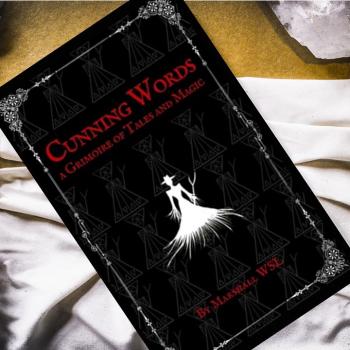
Pergamum Unfurled: Cunning Words (Review)
TRENDING AT PATHEOS Pagan

To help with the upcoming holiday season, I'm introducing the Holiday Helper...

10 years of the Power Sigil & Moving...
Last week while reorganizing my studio space, I found the sketchbook that...

Why are younger seekers drawn to Paganism and...
One of the things I've noticed the most is that I'm far...

When we talk about Greek religion, we often begin with the dodekatheion—the...

I was recently chatting with someone on Instagram. She asked me what...

On July 23, I saw Christopher Nolan's The Odyssey which is Homer’s...
view all Pagan blogs
Ad-Free & Subscriber Log-In Subscription Support
- About Us
- 2026 Calendar
- Videos
- Podcasts
- Library of World Religions
- Faith In Media Tracker
- Advertise With Us
- Write for Us
- Privacy Policy
- Terms of Service
- Do Not Sell My Data
- Contact Us
- Radiant Digital
- Manage Newsletter Subscriptions
- Unsubscribe From Notifications
- Sitemap
Copyright 2008-2026, Patheos, part of the Radiant Digital network of media brands. All rights reserved.
Subscription Support Ad-Free & Subscriber Log-In
Follow Patheos