
BuddhistCatholicContemplativeEvangelicalGeneral ChristianHinduJewishLatter-day SaintMuslimNew VisionsProgressive Christian
Beliefs
- Buddhist
- Catholic
- Contemplative
- Evangelical
- General Christian
- Hindu
- Jewish
- Latter-day Saint
- More Voices
- Muslim
- New Visions
- Pagan
- Progressive Christian
Topics
- Religion News
- Food and Religion
- Sports and Religion
- Religious Art
- Religious Music and Entertainment
- Religious Events
- History and Religion
- Style and Religion
- Politics and Religion
- Women in Religion
- Recreation Outdoors and Religion
- Business Finance and Religion
- Careers Workplace and Religion
- Education and Religion
- Family Parenting and Religion
- Health Fitness and Religion
- Home and Religion
- Relationships and Religion
- Technology and Religion
- Travel and Religion
Columnists
- Buddhist Columnists
- Business Finance and Religion Columnists
- Careers Workplace and Religion Columnists
- Catholic Columnists
- Contemplative Columnists
- Education and Religion Columnists
- Evangelists Columnists
- Family Parenting and Religion Columnists
- General Christian Columnists
- Health Fitness and Religion Columnists
- Hindu Columnists
- History and Religion Columnists
- Home and Religion Columnists
- Jewish Columnists
- More Voices Columnists
- Latter Day Columnists
- Muslim Columnists
- New Visions Columnists
- Nonreligious Columnists
- Pagan Columnists
- Politics and Religion Columnists
- Progressive Columnists
- Recreation Outdoors and Religion Columnists
- Relationships and Religion Columnists
- Religion News Columnists
- Religious Art Columnists
- Religious Events Columnists
- Religious Music and Entertainment Columnists
- Sports and Religion Columnists
- Style and Religion Columnists
- Technology and Religion Columnists
- Travel and Religion Columnists
- Women in Religion Columnists
Resource Library
- 2026 Calendar
- Library of World Religions
- The 100 Most Holy Places on Earth
- Patheos Answers
- Podcasts
- Videos
- Faith Leaders Database
- Anglican Episcopalian
- Bahai
- Baptist
- Buddhism
- Christianity
- Confucianism
- Eastern Orthodoxy
- Hinduism
- Holiness and Pentecostal
- ISKCON
- Islam
- Judaism
- Lutheran
- Methodist
- The Church of Jesus Christ of Latter-day Saints
- New Age
- Paganism
- Presbytarian and Reformed
- Protestantism
- Religion Behind the Scenes
- Roman Catholic
- Scientology
- Shia Islam
- Sikhism
- Sufism
- Sunni Islam
- Taoism
- Zen
- See all religions
Research Tools
 Ad-Free & Subscriber Log-In Subscription Support
Ad-Free & Subscriber Log-In Subscription Support
Follow Patheos 

- Trending:
- Forgiveness
- |
- Marriage
- |
- Consciousness
- |
- Death Penalty
- |
- Election
- |
- Halloween

- Home
- Pagan
- Irish-American Witchcraft: Fairies, Wishes, and Entitlement
Irish-American Witchcraft: Fairies, Wishes, and Entitlement
Last updated on: August 4, 2019 at 6:42 pm by Morgan Daimler
Irish-American Witchcraft: Fairies, Wishes, and Entitlement 2019-08-04T18:42:10+00:00 Morgan Daimler
Patheos Explore the world's faith through different perspectives on religion and spirituality! Patheos has the views of the prevalent religions and spiritualities of the world.
Last year Scarlet Magdalene wrote a great piece titled ‘The Gods Are Not Personal Vending Machines, Doing the Work is Crucial‘ the crux of which, I think, is that relationships with the Gods are reciprocal and that if we ask for something we need to put in effort as well. Re-reading it recently I was reminded not of the way that people treat the Gods like vending machines, which they do, but the way this same thought applies to the fairies. I’ve lost count of the number of articles and websites I’ve seen that suggest treating fairies like some sort of magical instant gratification: put in a request get out a response.

ATMs: great for cupcakes; not so much for fairies. Photo by Quinn Kampschroer via Pixabay.
This attitude is a problem for several reasons and these reasons illustrate wider issues with the ways that some people today approach the entire idea of fairies. Below I’d like to address several of these issues individually to take on this idea of fairies as beings who exist to serve humans or who desire to. Hopefully discussing the problems that come with this concept will help people reassess how they are engaging with these beings and potentially find new and more conducive approaches.
Not Our Servants
The first and most glaring thing that jumps out with this is the idea that the Good Folk are our servants and exist to fulfill our whims. Many of the things I see floating around have this concept embedded in them, from those who say all we have to do is go out on a certain night and make a wish which a fairy will then make happen to the ones encouraging people to call on fairies in spells to give them things. All of this is predicated on the Othercrowd being responsive to human whims and being willing to act to give us things we want, often without any offered payment.
I suspect this idea is rooted in several confusions between fairies with egregores and elementals. As opposed to seeing them as beings with their own agency and free will they are treated as mindless or simple beings which can be called up and directed. There may also be some confusion going on here with fairies as they were treated and invoked in ceremonial magic with the new age view of fairies as more benign creatures.
It is true that there are spells which explicitly invoked fairies to do a human magician’s bidding but these are not the type of spells we find in mainstream American witchcraft today, which treat beings that are invoked as allies of the witch by default; rather, the ceremonial spells assume the fairy must be called and bound to the magician in some way to be dealt with safely. This is usually done by invoking holy names against the fairy, by trapping them until they agree to the magician’s terms, or by making a deal with them*.
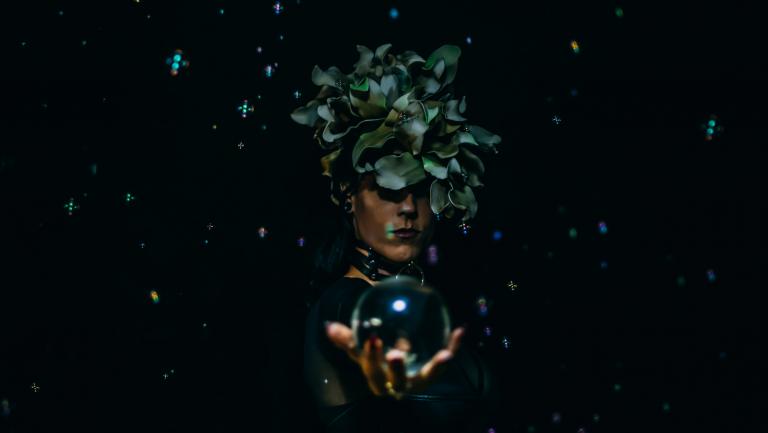
Ceremonial spells assume the fairy must be called and bound to the magician. Image by Simon Hajducki via Unsplash.
Nothing Is Free
The second issue that comes in with this idea which I touched on in point one is the concept that the Good People will do as humans ask them to for nothing or basically nothing. There seems to be a pervasive idea underlying a lot of this that fairies are simply hanging around waiting for some human to ask them to do something fairly tedious and mundane. I’ve seen spells asking the fairies to protect people’s pets, help plants grow, even bring joy into people’s lives. And I’m not saying they won’t or can’t do those things but I am asking why they should for nothing; just because a person really likes fairies and has a lot of windchimes isn’t the same as actual payment.
The idea of asking the Good Neighbours to do something for a person is, at best, frowned on in folklore and living cultural belief. It’s considered dangerous to invite them into your life and to ask them to do a thing for you because it’s understood they will expect to be paid; if you don’t clearly lay down the term of repayment, they will. In other words if you ask without offering in return you are giving them a blank check to fill out as they see fit.
People often don’t like it when I say that because it’s much nicer to believe that there are friendly little beings out there just waiting to do whatever we ask for nothing in return, but I encourage people to give this some serious thought. While it’s possible that you can run across a random act of Otherworldly kindness, of course, one should never assume on that kindness or take it for granted. Just like with our fellow humans or the plants and animals around us, we should strive to live in balance and that means giving as well as taking.
When all you do is take you are bound to cause yourself problems.

Balance means giving as well as taking. Photo by Gerd Altmann via Pixabay.
Trust
There’s also the issue of trust here, or perhaps I should say too much trust. Even a cursory study of folklore and living cultural beliefs will show that there are a wide range of beings falling under the general term ‘fairy’ and that these beings can be helpful or harmful. While the mainstream commercialized view has tried to narrow fairies down to just small winged sprites – or perhaps I should more accurately say has created them – these beings are still ambivalent in many stories. Let’s not forget that Barrie’s Tinkerbell tried to have Wendy killed after all. It’s only in the narrative of some specific approaches, particularly the more new age ones where fairies have been melded to a degree with modern views of angels, and pop culture stories of the last few decades that fairies have shifted into fully benevolent beings.
Spells or prayers that involve calling on the Good Folk generally or in vague terms should be viewed with the same caution you would treat the suggestion to throw open the front door to your house and put up a welcome sign. Just because it isn’t human doesn’t mean it has your best interests at heart, and even those who will be willing to help you may have very interesting ideas of what constitutes help. Be careful who and what you trust.
Entitlement
A lot of this can be boiled down to a sense of entitlement. People like the idea of being able to simply wish for a thing and have it handed to them, without any thought to how that works on the other end of the equation. We can parse this out however we like but ultimately it is entitlement to think that beings of another World would exist to do our bidding, would do so for nothing, and would do so out of pure helpful goodness. It’s a view that is extremely human-centric and predicated on the human in the equation for inexplicable reasons deserving the attention and favours they are asking for just because they are asking.

It’s entitlement to think that beings of another World exist to do our bidding. Photo by skeeze via Pixabay.
If I may be allowed a very pointed pop culture analogy, it’s like the wizards and house elves in Harry Potter, where the house elves’ lives revolve around serving the needs of the wizards who rarely even think of how their convenience is accomplished. I don’t happen to feel that the beings of Fairy are our servants, as I’ve already discussed, but even if they were this attitude of treating them like wish-vending machines would be concerning.
Folkloric Fairy Servants
So at this point those of you familiar with folklore might be saying ‘but what about brownies and other fairies known to work around human homes?‘. While it’s true that there are entire categories of folkloric fairies connected to humans in ways that can be interpreted as servants or the like, there are some key differences between these beings and the modern trope of the wish-granting fairy.
While in modern terms these beings are often seen as simply existing to make humans happy – and with no real consequences if you offend them – in folklore fairies like the Brownie have a very specific reciprocal relationship with a household. They clean and care for a place but they also expect a certain treatment and payment in response and if they are angered will wreak great havoc on the same people they previously helped. And they have a vested interest in either the place or the family. That is what ties them to their duty; there is a sense of ownership those fairies have towards the humans or place which often can’t be broken even when it sours.

Brownies have a very specific reciprocal relationship with a household. Photo by Anastasia Borisova via Pixabay.
I suppose for due diligence I should also mention that in many folkloric tales of fairies and humans it is the humans who play the role of the servant to the fairies, not the other way around. Although people may like to joke about wishing they had a Brownie of their own, and so that kind of household fairy is popularized, there are plenty of stories of a human taken into fairy to act as a servant or otherwise bound to play that role.
For example, in the story of The Fairy Dwelling on Selena Moor the human Grace is taken by the Cornish fairies and we see her playing music and serving food and drink to them. In another example given by Katherine Briggs we find a story of a girl who is engaged by a mysterious employer to care for his son; part of this job requires her to put an ointment on the child’s eyes every day. Naturally one day she touches her own eye with this ointment only to find that her employer and the child she is caring for are actually members of the Gentry and knowing their secret she is cast out – basically fired – and despite searching is never able to find them again.
Right Relationship Dealing With Fairies
What this all boils down to is that at a minimum we should treat the Good Folk the same way we should treat the Gods – emphasizing reciprocity and relationship. The Fair Folk are complex beings, an entire category of beings, and they should be understood broadly not homogenized into an almost meaningless mashup of modern stereotypes. In order to get out of this entitled, presumptive mindset simply approach dealing with the fairies the way you would a strange human – unless you want to go the ceremonial magic route and use ritual to force them to comply. Outside that however if you keep in mind that you can ask (but it’s not owed to you), you can offer a fair exchange for what you are asking for (nothing is free so pay for what you want one way or another), and you should be cautious in who and what you trust (because not everything means you well) then you’re going in the right direction.
Of course, not engaging at all is also always an option.
*see The Book of Oberon for examples or Harms article ‘Hell and Fairy: The Differentiation of Fairies and Demons Within British Ritual Magic of the Early Modern Period’ 2018 in the book ‘Knowing Demons, Knowing Spirits in the Early Modern Period’
Previous Post

August 2, 2019
9 of Beagles: Alcoholism
Next Post

August 6, 2019 Magick IRL: Word Up, Witches
Browse Our Archives
Select a Category A Lakeside Hearth Adventures in Wortcunning Alone In Her Presence Arts, Crafts & Cooking Birthing Hereditary Witchcraft Book of Blackbirds Book Reviews Born-Again Witch Cauldron, Sword, Spear, & Stone Cermony and Liturgy Columns Community Dandelion Seeds Dear Jasmine Druid Thoughts Editor's Picks Everyday Pagan Family & Household Practice Family Traditions Full Frontal Magic Gateway Goddess Guest Articles Happily Heathen Health and Wellness Hearth of Hellenism Heathen Woman Hills of the Horizon History Holidays Horse Goddesses Interfaith Interviews Irish-American Witchcraft Jewish Witch Lamp & Labyrinth Letters from Midgard Literature, Media, Film, Music Loop of Brighid Love, Sex & Relationships Magic or Magick Making Light Naturalistic Traditions Nature News Outside The Circle Pantheisticon Politics Prayers, Poems, Blessings & Stories Queer Femme Mystic Queer of Swords Recipes Ritual and Practice Science and Research Seekers and Guides Seeking the Grail Socially Responsible Magic Spear of Athena Star Made Witch Syncretic Electric Technology The Blooming Staff The Busy Witch The Cartomancer The Crow's Nest The Dance of Pagan Recovery The Hearth of Hellenism The Lady's Quill The Other Side of the Hedge The Path of She The Rantin' Raven The Witches Next Door The Zen Pagan Theology, Ethics, Philosophy Tree City Witch Urban Earthwitch Wayfaring Woman Witch on Fire Wyrd Words
Select a Month January 2026 March 2025 December 2024 June 2024 April 2024 March 2024 January 2024 December 2023 November 2023 October 2023 August 2023 July 2023 May 2023 April 2023 March 2023 February 2023 January 2023 December 2022 November 2022 October 2022 September 2022 August 2022 July 2022 June 2022 May 2022 March 2022 February 2022 January 2022 December 2021 November 2021 October 2021 September 2021 August 2021 July 2021 June 2021 May 2021 April 2021 March 2021 February 2021 January 2021 December 2020 November 2020 October 2020 September 2020 August 2020 July 2020 June 2020 May 2020 April 2020 March 2020 February 2020 January 2020 December 2019 November 2019 October 2019 September 2019 August 2019 July 2019 June 2019 May 2019 April 2019 March 2019 February 2019 January 2019 December 2018 November 2018 October 2018 September 2018 August 2018 July 2018 June 2018 May 2018 April 2018 March 2018 February 2018 January 2018 December 2017 November 2017 October 2017 September 2017 August 2017 July 2017 June 2017 May 2017 April 2017 March 2017 February 2017 January 2017 December 2016 November 2016 October 2016 September 2016 August 2016 July 2016 June 2016 May 2016 April 2016 March 2016 February 2016 January 2016 December 2015 November 2015 October 2015 September 2015 August 2015 July 2015 June 2015 May 2015 April 2015 March 2015 February 2015 January 2015 December 2014 November 2014 October 2014 September 2014 August 2014 July 2014 June 2014 May 2014 April 2014 March 2014 February 2014 January 2014 December 2013 November 2013 October 2013 September 2013 August 2013 July 2013 June 2013 May 2013 April 2013 March 2013 February 2013 January 2013 December 2012 November 2012 October 2012 September 2012 August 2012 July 2012 June 2012 May 2012 April 2012 March 2012 February 2012 January 2012
Follow Us!
TAKE THE
Religious Wisdom Quiz
In 2 Thessalonians, what does Paul say the man of lawlessness will proclaim himself to be?
Select your answer to see how you score.
God A prophet The Messiah King of the world
Related posts from Agora

Simple Witchery: To Keep Silent

Simple Witchery: Leaning On The Four Pillars


Pergamum Unfurled: Cunning Words (Review)
TRENDING AT PATHEOS Pagan

I was recently chatting with someone on Instagram. She asked me what...

While there are many people who share their results, the end of...

On July 23, I saw Christopher Nolan's The Odyssey which is Homer’s...

As I write this two big events have just finished up. One...

Restoring the Watershed of Divine Love
Perhaps cooperation is not something we manufacture through legislation, ideology, or moral...

Many UUs don’t pray because of bad experiences in a previous religion,...
view all Pagan blogs
Ad-Free & Subscriber Log-In Subscription Support
- About Us
- 2026 Calendar
- Videos
- Podcasts
- Library of World Religions
- Faith In Media Tracker
- Advertise With Us
- Write for Us
- Privacy Policy
- Terms of Service
- Do Not Sell My Data
- Contact Us
- Radiant Digital
- Manage Newsletter Subscriptions
- Unsubscribe From Notifications
- Sitemap
Copyright 2008-2026, Patheos. All rights reserved.
Subscription Support Ad-Free & Subscriber Log-In
Follow Patheos