
BuddhistCatholicContemplativeEvangelicalGeneral ChristianHinduJewishLatter-day SaintMuslimNew VisionsProgressive Christian
Beliefs
- Buddhist
- Catholic
- Contemplative
- Evangelical
- General Christian
- Hindu
- Jewish
- Latter-day Saint
- More Voices
- Muslim
- New Visions
- Pagan
- Progressive Christian
Topics
- Religion News
- Food and Religion
- Sports and Religion
- Religious Art
- Religious Music and Entertainment
- Religious Events
- History and Religion
- Style and Religion
- Politics and Religion
- Women in Religion
- Recreation Outdoors and Religion
- Business Finance and Religion
- Careers Workplace and Religion
- Education and Religion
- Family Parenting and Religion
- Health Fitness and Religion
- Home and Religion
- Relationships and Religion
- Technology and Religion
- Travel and Religion
Columnists
- Buddhist Columnists
- Business Finance and Religion Columnists
- Careers Workplace and Religion Columnists
- Catholic Columnists
- Contemplative Columnists
- Education and Religion Columnists
- Evangelists Columnists
- Family Parenting and Religion Columnists
- General Christian Columnists
- Health Fitness and Religion Columnists
- Hindu Columnists
- History and Religion Columnists
- Home and Religion Columnists
- Jewish Columnists
- More Voices Columnists
- Latter Day Columnists
- Muslim Columnists
- New Visions Columnists
- Nonreligious Columnists
- Pagan Columnists
- Politics and Religion Columnists
- Progressive Columnists
- Recreation Outdoors and Religion Columnists
- Relationships and Religion Columnists
- Religion News Columnists
- Religious Art Columnists
- Religious Events Columnists
- Religious Music and Entertainment Columnists
- Sports and Religion Columnists
- Style and Religion Columnists
- Technology and Religion Columnists
- Travel and Religion Columnists
- Women in Religion Columnists
Resource Library
- 2026 Calendar
- Library of World Religions
- The 100 Most Holy Places on Earth
- Patheos Answers
- Podcasts
- Videos
- Faith Leaders Database
- Anglican Episcopalian
- Bahai
- Baptist
- Buddhism
- Christianity
- Confucianism
- Eastern Orthodoxy
- Hinduism
- Holiness and Pentecostal
- ISKCON
- Islam
- Judaism
- Lutheran
- Methodist
- The Church of Jesus Christ of Latter-day Saints
- New Age
- Paganism
- Presbytarian and Reformed
- Protestantism
- Religion Behind the Scenes
- Roman Catholic
- Scientology
- Shia Islam
- Sikhism
- Sufism
- Sunni Islam
- Taoism
- Zen
- See all religions
Research Tools
 Ad-Free & Subscriber Log-In Subscription Support
Ad-Free & Subscriber Log-In Subscription Support
Follow Patheos 

- Trending:
- Forgiveness
- |
- Marriage
- |
- Consciousness
- |
- Death Penalty
- |
- Election
- |
- Halloween

- Home
- Pagan
- Hearth of Hellenism: Anti-Hellenism in the Pagan Community
Hearth of Hellenism: Anti-Hellenism in the Pagan Community
Last updated on: August 12, 2019 at 6:50 pm by Angelo Nasios
Hearth of Hellenism: Anti-Hellenism in the Pagan Community 2019-08-12T18:50:01+00:00 Angelo Nasios
Patheos Explore the world's faith through different perspectives on religion and spirituality! Patheos has the views of the prevalent religions and spiritualities of the world.
“We are overdue for a conversation about anti-Hellenism in the pagan community.”
Last month the Twitterverse was buzzing with heated conversation which drove me to write this entry for the Hearth of Hellenism, which is about anti-Hellenic attitudes in the pagan community. This entry builds on an earlier post, Who Defines Hellenism, where I first addressed negative attitudes directed towards Greeks. First, I need lay down some ground material and explain ethnic tradition yet again because it is often misunderstood.
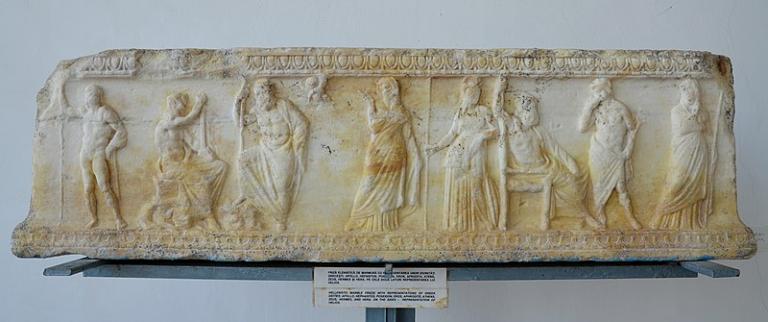
The Greek Gods are universal. Public domain photo by Carole Raddato via Wikimedia.

“Do you believe only ethnic Greeks can worship the Gods?” I am asked this a lot. My answer, which is representative of our tradition is: the Greek Gods are universal (they rule the whole Cosmos) and as such, worshiping Them has no ethnic prerequisite. You cannot gatekeep their worship; the Gods cannot be owned by anyone. This is the universal aspect of the Greek tradition (Ελληνική παράδοση). The ethnic aspect, what makes Hellenism an ethnic religion is its characteristics:
It is Indigenous. Its theology and religious practices were developed, through the millennia in this specific geographical area were the Hellenic Nation lived freely, as a unique religion specific to the character of the place and its people.
It is Natural. It developed logically and naturally through the systematic observation of the Cosmos, by countless enlightened and spiritual individuals who practiced continuously in approaching and understanding the divine.
It is Organic. It is not a religion which is separated from the common people and served by a professional priesthood. From the dawn of time until today it is an integral and organic part of the entire political and cultural substance of the Hellenes.
It is Polytheistic. It accepts the natural law of the requisite multiplicity of “Being.”
It is Ethnic in Nature. It recognizes its own specific ethnic Pantheon and its own unique body of cosmological narratives, reflecting its worldview, the ways and the tradition of the nation of the Hellenes.
The last characteristic, ‘ethnic in nature’ explains in simple terms that Hellenism is ethnic in that it reflects the worldview of the Hellenes; the Hellenic ethos. These characteristics are what make Hellenism and other polytheistic or indigenous traditions ‘natural religions’ as opposed to ‘revelatory religions.’

Natural religions understand the diversity and multiplicity that Nature demands. Photo by kareni via Pixabay.
In Hellenic Ethnic Religion: Theology and Practice, we read:
The truth of natural religions is intellectual. Humans understand the divine through the intellect that connects them. The truth of founded religions is revelatory, which means that the divine was revealed to a certain chosen people or a chosen person. Because of their distinct difference in the nature of the truth that each type of religion upholds, it is unavoidable that they behave very differently.
Natural religions understand the diversity and multiplicity that Nature demands and each one of them is content with the people that accept it, without looking to expand into other populations that already follow another religion. In other words, natural religions accept the concepts about the divine of other nations and regard them as true in the framework of that nation’s tradition.
It is my observation that the vast majority of contemporary pagans are operating outside the context of the characteristics and nature of a ‘natural religion’ and operating with a high reliance of ‘revelation.’ As a Greek, I operate to the best of my ability from tradition in the context of the Greek ethos (the characteristics which make it Greek) instead of various other means, for example, ideas from the New Religious Movements of the last several decades.
Because of this vast divide between the Greek ethos and everything else, there will be clashes in conversations because of our different vocabularies. Many who do not understand our positions assume we are ‘gatekeeping’ access to the Gods when we are only speaking from and passing on the ethos to others for consideration. Access to the Gods is not being restricted; what we are doing is keeping out ideologies, vocabulary, etc. that are incompatible with the tradition and the misassociation of those ideologies as the representative and authentic in the Hellenic ethos.
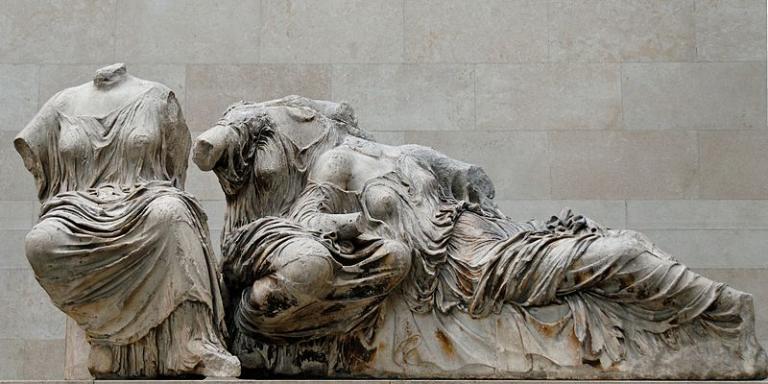
Hestia, Dione, and Aphrodite, Parthenon east pediment. Public domain photo by Marie-Lan Nguyen via Wikimedia.

If someone earnestly desires to learn and practice Hellenism (and claim their path to be Hellenism proper), then the appropriate outlook (ethos) is required. If you reject the ethos, please, by all means, continue along in your path, but don’t call it Hellenism. Massive kudos must be given to polytheist Kaye Boesme, after engaging in the Twitter conversations, she coined and adopted a new term “Hellenistic Syncretic Polytheism” to describe what she does:
“It means that I worship Greek gods, engage with philosophy and theology, and yet maintain some practices, outlooks, and fusions of all of the above with my root culture; it’s different from the religion practiced by Greek orgs like YSEE or LABRYS even though some/many of the ritual practices may look the same.”
All this has been laid out because in those Twitter conversations, not everyone was able to have the same understanding as Kaye. The Twitter threads revolved around the issue of personal experiences and the idea that the “Gods call whom they call.” This is a concept which is stressed frequently by pagans, the concept being that the reason people might feel they need a divine invitation is because it may be assumed that they are not welcomed to worship in the first place. Divine experience is invoked to provide legitimacy, as pointed out by a Hindu who commented on the thread:
“I can also see why this idea can be heart breaking for many pagan revivalists in the West. Being in a very protestant/atheistic culture, they have to keep justifying their traditions. They invariably have to resort to experience as a valid defense of their beliefs and practices.” Akash (@HeathenIndian)
Which makes sense; if you are an American in the United States, for example, and someone finds out you are pagan, they will probably ask why. The most likely acceptable response that someone could give would be to explain their spiritual experiences, their feeling of “being called” or “chosen” that made them follow a pagan path. When someone asks me why I am a polytheist I do not have to invoke spiritual experiences as justification. Personal experience is also heavily relied on in New Religious Movements, a counter to religious dogma.
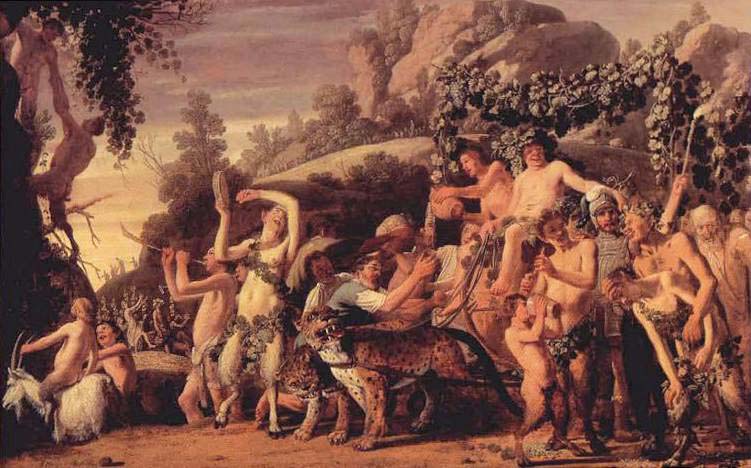
The Triumph of Bacchus by Moyeaert. Public domain image via Wikimedia.

I, and other Greeks, reject the notion that the Gods “call us” or that they come to us and pick us to worship Them. This is a very radical statement for most pagans to hear. By rejecting the concept of “calling”, I was attacked for denying the Gods’ agency, that Gods can do whatever they want, who am I to limit them? My position is also misunderstood as gatekeeping. Advocacy for divine agency on this issue serves, I think, as a means to:
1. To remove any guilty feelings of appropriation.
It is not ‘really’ your choice, the God called on you, you are just answering Their call – don’t blame me!
My response: Worshiping Gods is not appropriation so there should be no guilty feelings.
2. To provide a personal gnosis loophole around tradition.
Personal gnosis allows many to reject outside instruction. Don’t like what someone is telling you, just say “the God told me XYZ.” Attacking someone’s gnosis/experience is argued to be an attack on the Gods who gave said experience.
My response: Tradition provides context to experiences as experience is not meant to innovate the tradition in disharmonious ways. Instruction/exegesis is offered for your benefit, to lead you to understanding within context. Instruction and exegesis should not be misread as spiritual oppression.
I’ve found the preoccupation with experiences the most peculiar thing amongst pagans. The whole “being called on” and “chosen” is disturbing to my ear as it is a very Abrahamic way to think, even if used nonliterally. Yahweh has a ‘chosen people’ and calls on individuals to do something on his behalf (Abraham and Moses for example).
In Christianity, Paul claimed to have had a vision of Jesus, resulting in his conversion to the early Jesus movement and self-appointing himself as an apostle. Prior to his conversion, he persecuted followers of Jesus. Paul became the driving force behind proselyting the Roman world because of a vision.
Another disturbing thing was how Paul forced himself into the community led by the disciples, the so-called “pillars of the church” Peter, John, and James the Just, who knew Jesus. Paul never met Jesus, but because of a vision, he felt so inclined to be treated as an equal with those who had.
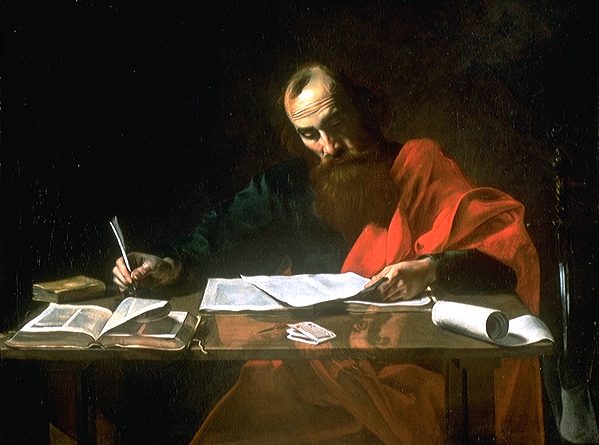
Saint Paul Writing Hi Epistles, by Boulogne. Public domain image via Wikimedia.

Our Hindu interlocutor on Twitter had something to say on the whole ‘experience’ topic which mirrors the Greek ethos. Link here, but I’ve copied the text for reading convenience:
“Don’t mean to be disrespectful to anyone in the slightest sense. Just a comment as a non-scholarly lay Hindu from lived experience. Hindus rarely, if ever, talk about experiences with Gods. Yes our traditions do talk of individuals who had such experiences but such individuals were always exceptional. They left behind the most sublime divine poetry and philosophical works to inspire all to come. Of course there are individual gurus now too who claim such experiences but not necessarily accepted by all Hindus. They are indifferent.”
I responded, “[w]ait, so you mean to tell me that it is rare to find a Hindu that claims they were ‘called to service’ or ‘chosen’ by a God? Does this language exist for you?”
“Never heard of such a thing as someone grown up in India. This language does not exist for me.”
I expanded on it as some clarification was needed; we were not talking about the “awe” experience of being in a temple in front of the image of a God. I asked, “[h]ave you ever been struck with the feeling that ‘Lakshmi wants you to make an offering’ instead of you wanting to make the offering because you want to.” Their response:
“Nope that language is pretty much new to me. Perhaps a personal story will be very revealing of the Hindu mental make-up. During undergrad, our institute had heavy preaching by a very bhakti-oriented sect. One of our fellow hostelites was very influenced by them. My friends overheard him exclaiming to his mother over phone, ‘today Krishna came to me Amma!’. My friends would recount this and make fun of him in abundance. Let me assure you, these were all temple-going Hindus. Not any atheistic kind. This was because we don’t hear such things.”
I felt elated when I read all this because my exact attitudes as a Greek were reflected by a Hindu who is giving testament to their culture and tradition. The fun part was that not one person in the Twitter threads tried to rebuke the Hindu as “limiting divine agency.”
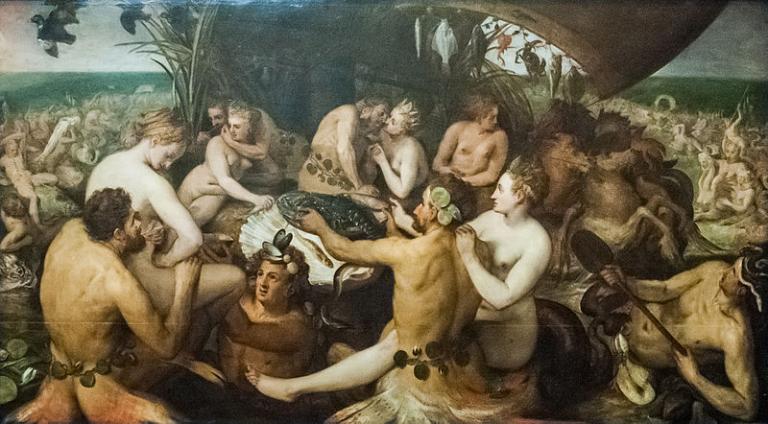
Feast of the Sea Gods, by Floris. Public domain image via Wikimedia.

I was left to wonder then, why is it that I am met with harsh resistance, when I reflect the same attitudes as a Hindu? Oh yes, I forgot, Greeks are the bastards in the pagan community with zero continuity, zero grasp on this whole Hellenism business. During the Twitter exchanges, the anti-Hellenic sentiment became visible with several blogs posts from Sannion, a self-proclaimed Orpheoteleste (specialist in Orphic rites) who described the Greeks as:
“mixed Slavic, Albanian and Turkic ancestry” “hypocritical, hairy-knuckled race-baiters” who are “pushing blood quotas.” – Sannion, The House of Vines
This person was not involved directly in the Twitter conversations; instead, he was getting it second-hand and or skimming parts of the threads. Because of his fragmentary understanding he jumped to conclusions and his discriminatory feelings towards Greeks became visible.
In the first post “The Gods are for all” (something I also state repeatedly) the author wrote “…people on Twitter are saying that you have to have an ethnic connection to Greece to practice Hellenismos…” No one said this but he thinks we did (biases) and continued with “funny how their arguments haven’t really changed much in all that time. But not as funny as people with mixed Slavic, Albanian and Turkic ancestry pushing blood quotas. (Yeah, as a lover of all things Greek I’ve read my Byzantine and Ottoman histories too; I know the dirty laundry you’d rather not be aired you hypocritical, hairy-knuckled race-baiters.)”
In his subsequent posts “Fuck off, racists!”, “Can you smell what’s cooking? Hint: it’s not baklava”, and “There are Black people in Nysa” the author attacks myself and another ethnic Greek as being racists because he is unable to read Twitter threads properly and, as far as I can tell, assumes we are being exclusionary on racial grounds, which is not the case. The author attempted to end his tirade on a sweet note with “Lick my cannoli”:
“Chill, dude. Chill. I take back whatever I said about your precious baklava.” “Plus, well, cannoli is a vastly superior dessert. That’s just the way things are. The sooner you accept this fact the happier you’ll be. Now just imagine how happy you’d be if you let go of your racism.”
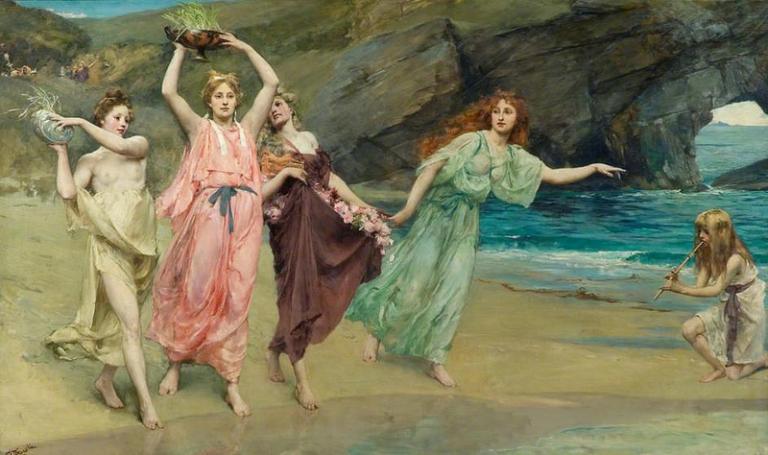
The Gardens of Adonis, by Weguelin. Public domain image via Wikimedia.

Under the comment section of “Fuck off, racists” the following comment was left by his wife Galina Krasskova:
“Their people rejected the Gods in favor of orthodox Christianity. Those Gods aren’t theirs anymore. Their people broke their contracts with the Gods and now they want that back, but only on their terms? That’s like spitting on the Gods all over again and puts them in no different a position than people who honor the Hellenic Gods anywhere else in the world.
You aren’t better than anyone else because of your blood. Try standing on your own accomplishments. History hurts, doesn’t it?”
“Those Gods aren’t theirs anymore” sounds more like something a Christian would write instead of a pagan. Early Christian rhetoric was effective at delegitimizing both Jews and Greeks from their respective traditions in order to become the new chosen people and authoritative representatives. I have never seen such explicitly vile anti-Hellenic comments and attitudes in the pagan community before. Everyone should be aware of these sentiments and combat them when they see it.
Unlike the folkish pagans that use ethnicity to exclude people, Hellenism doesn’t operate that way. Anyone who wishes to adopt the tradition along with the ethos is welcomed. The issue with this is that there are people who do not want Greeks to represent the ethos of our own tradition. Somehow Greeks are getting in the way of the other pagans because we express perspectives from a context not always easily explainable with a citation?
Maybe unbeknownst to us, Greeks are ruining all the fun because our ethos doesn’t match up with what is normative in paganism. I am starting to see why few Greeks engage in direct conversation with pagans, because we get attacked for simply speaking from our ethos and providing exegesis from that ethos. It is very sad that unlike Hindus, the Greeks are only authentic after consultation with the proper academic scholars’ sources.
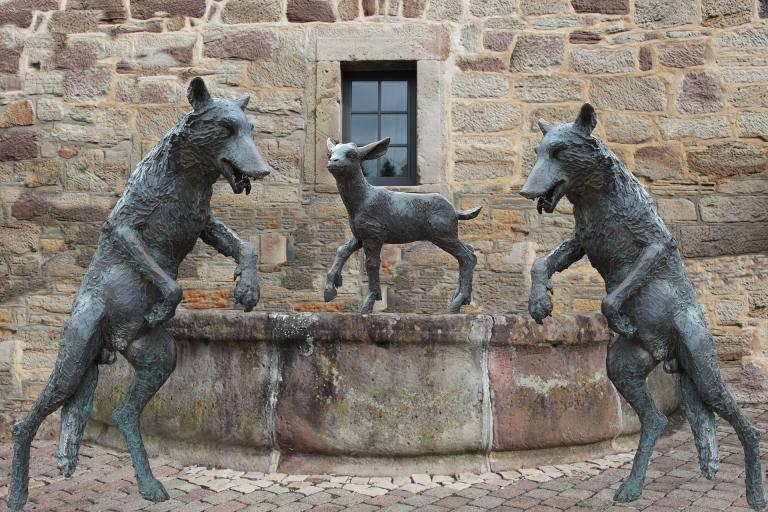
Wolves and lamb. Photo by Momentmal via Pixabay.
I will end this with the fable of the Wolf and the Lamb:
A stray Lamb stood drinking early one morning on the bank of a woodland stream. That very same morning a hungry Wolf came by farther up the stream, hunting for something to eat. He soon got his eyes on the Lamb. As a rule, Mr. Wolf snapped up such delicious morsels without making any bones about it, but this Lamb looked so very helpless and innocent that the Wolf felt he ought to have some kind of an excuse for taking its life.
“How dare you paddle around in my stream and stir up all the mud!” he shouted fiercely. “You deserve to be punished severely for your rashness!”
“But, your highness,” replied the trembling Lamb, “do not be angry! I cannot possibly muddy the water you are drinking up there. Remember, you are upstream and I am downstream.”
“You do muddy it!” retorted the Wolf savagely. “And besides, I have heard that you told lies about me last year!”
“How could I have done so?” pleaded the Lamb. “I wasn’t born until this year.”
“If it wasn’t you, it was your brother!”
“I have no brothers.”
“Well, then,” snarled the Wolf, “It was someone in your family anyway. But no matter who it was, I do not intend to be talked out of my breakfast.”
And without more words the Wolf seized the poor Lamb and carried her off to the forest.
The tyrant can always find an excuse for his tyranny.
The unjust will not listen to the reasoning of the innocent.

About Angelo Nasios
Angelo Nasios (New York) is an author and educator of the Hellenic tradition. He received his B.A in religion and is currently earning his M.A in ancient and classical history. You can read more about the author here.
Previous Post

August 9, 2019
The Corner Crone: Saying Goodbye to Hekate Brimo
Next Post

August 12, 2019 Walking the Path: Free Expression - The Pagan Legitimacy Paradox
Browse Our Archives
Select a Category A Lakeside Hearth Adventures in Wortcunning Alone In Her Presence Arts, Crafts & Cooking Birthing Hereditary Witchcraft Book of Blackbirds Book Reviews Born-Again Witch Cauldron, Sword, Spear, & Stone Cermony and Liturgy Columns Community Dandelion Seeds Dear Jasmine Druid Thoughts Editor's Picks Everyday Pagan Family & Household Practice Family Traditions Full Frontal Magic Gateway Goddess Guest Articles Happily Heathen Health and Wellness Hearth of Hellenism Heathen Woman Hills of the Horizon History Holidays Horse Goddesses Interfaith Interviews Irish-American Witchcraft Jewish Witch Lamp & Labyrinth Letters from Midgard Literature, Media, Film, Music Loop of Brighid Love, Sex & Relationships Magic or Magick Making Light Naturalistic Traditions Nature News Outside The Circle Pantheisticon Politics Prayers, Poems, Blessings & Stories Queer Femme Mystic Queer of Swords Recipes Ritual and Practice Science and Research Seekers and Guides Seeking the Grail Socially Responsible Magic Spear of Athena Star Made Witch Syncretic Electric Technology The Blooming Staff The Busy Witch The Cartomancer The Crow's Nest The Dance of Pagan Recovery The Hearth of Hellenism The Lady's Quill The Other Side of the Hedge The Path of She The Rantin' Raven The Witches Next Door The Zen Pagan Theology, Ethics, Philosophy Tree City Witch Urban Earthwitch Wayfaring Woman Witch on Fire Wyrd Words
Select a Month January 2026 March 2025 December 2024 June 2024 April 2024 March 2024 January 2024 December 2023 November 2023 October 2023 August 2023 July 2023 May 2023 April 2023 March 2023 February 2023 January 2023 December 2022 November 2022 October 2022 September 2022 August 2022 July 2022 June 2022 May 2022 March 2022 February 2022 January 2022 December 2021 November 2021 October 2021 September 2021 August 2021 July 2021 June 2021 May 2021 April 2021 March 2021 February 2021 January 2021 December 2020 November 2020 October 2020 September 2020 August 2020 July 2020 June 2020 May 2020 April 2020 March 2020 February 2020 January 2020 December 2019 November 2019 October 2019 September 2019 August 2019 July 2019 June 2019 May 2019 April 2019 March 2019 February 2019 January 2019 December 2018 November 2018 October 2018 September 2018 August 2018 July 2018 June 2018 May 2018 April 2018 March 2018 February 2018 January 2018 December 2017 November 2017 October 2017 September 2017 August 2017 July 2017 June 2017 May 2017 April 2017 March 2017 February 2017 January 2017 December 2016 November 2016 October 2016 September 2016 August 2016 July 2016 June 2016 May 2016 April 2016 March 2016 February 2016 January 2016 December 2015 November 2015 October 2015 September 2015 August 2015 July 2015 June 2015 May 2015 April 2015 March 2015 February 2015 January 2015 December 2014 November 2014 October 2014 September 2014 August 2014 July 2014 June 2014 May 2014 April 2014 March 2014 February 2014 January 2014 December 2013 November 2013 October 2013 September 2013 August 2013 July 2013 June 2013 May 2013 April 2013 March 2013 February 2013 January 2013 December 2012 November 2012 October 2012 September 2012 August 2012 July 2012 June 2012 May 2012 April 2012 March 2012 February 2012 January 2012
Follow Us!
TAKE THE
Religious Wisdom Quiz
I cleansed the temple in sixteen days and celebrated Passover so joyfully that we extended it another seven days. Who am I?
Select your answer to see how you score.
Asa Hezekiah Josiah Jehoshaphat
Related posts from Agora

Simple Witchery: To Keep Silent

Simple Witchery: Leaning On The Four Pillars


Simple Witchery: Resistance and Resilience in Hard Times
TRENDING AT PATHEOS Pagan

I was recently chatting with someone on Instagram. She asked me what...

While there are many people who share their results, the end of...

On July 23, I saw Christopher Nolan's The Odyssey which is Homer’s...

As I write this two big events have just finished up. One...

Restoring the Watershed of Divine Love
Perhaps cooperation is not something we manufacture through legislation, ideology, or moral...

Many UUs don’t pray because of bad experiences in a previous religion,...
view all Pagan blogs
Ad-Free & Subscriber Log-In Subscription Support
- About Us
- 2026 Calendar
- Videos
- Podcasts
- Library of World Religions
- Faith In Media Tracker
- Advertise With Us
- Write for Us
- Privacy Policy
- Terms of Service
- Do Not Sell My Data
- Contact Us
- Radiant Digital
- Manage Newsletter Subscriptions
- Unsubscribe From Notifications
- Sitemap
Copyright 2008-2026, Patheos. All rights reserved.
Subscription Support Ad-Free & Subscriber Log-In
Follow Patheos