
BuddhistCatholicContemplativeEvangelicalGeneral ChristianHinduJewishLatter-day SaintMuslimNew VisionsProgressive Christian
Beliefs
- Buddhist
- Catholic
- Contemplative
- Evangelical
- General Christian
- Hindu
- Jewish
- Latter-day Saint
- More Voices
- Muslim
- New Visions
- Pagan
- Progressive Christian
Topics
- Religion News
- Food and Religion
- Sports and Religion
- Religious Art
- Religious Music and Entertainment
- Religious Events
- History and Religion
- Style and Religion
- Politics and Religion
- Women in Religion
- Recreation Outdoors and Religion
- Business Finance and Religion
- Careers Workplace and Religion
- Education and Religion
- Family Parenting and Religion
- Health Fitness and Religion
- Home and Religion
- Relationships and Religion
- Technology and Religion
- Travel and Religion
Columnists
- Buddhist Columnists
- Business Finance and Religion Columnists
- Careers Workplace and Religion Columnists
- Catholic Columnists
- Contemplative Columnists
- Education and Religion Columnists
- Evangelists Columnists
- Family Parenting and Religion Columnists
- General Christian Columnists
- Health Fitness and Religion Columnists
- Hindu Columnists
- History and Religion Columnists
- Home and Religion Columnists
- Jewish Columnists
- More Voices Columnists
- Latter Day Columnists
- Muslim Columnists
- New Visions Columnists
- Nonreligious Columnists
- Pagan Columnists
- Politics and Religion Columnists
- Progressive Columnists
- Recreation Outdoors and Religion Columnists
- Relationships and Religion Columnists
- Religion News Columnists
- Religious Art Columnists
- Religious Events Columnists
- Religious Music and Entertainment Columnists
- Sports and Religion Columnists
- Style and Religion Columnists
- Technology and Religion Columnists
- Travel and Religion Columnists
- Women in Religion Columnists
Resource Library
- 2026 Calendar
- Library of World Religions
- The 100 Most Holy Places on Earth
- Patheos Answers
- Podcasts
- Videos
- Faith Leaders Database
- Anglican Episcopalian
- Bahai
- Baptist
- Buddhism
- Christianity
- Confucianism
- Eastern Orthodoxy
- Hinduism
- Holiness and Pentecostal
- ISKCON
- Islam
- Judaism
- Lutheran
- Methodist
- The Church of Jesus Christ of Latter-day Saints
- New Age
- Paganism
- Presbytarian and Reformed
- Protestantism
- Religion Behind the Scenes
- Roman Catholic
- Scientology
- Shia Islam
- Sikhism
- Sufism
- Sunni Islam
- Taoism
- Zen
- See all religions
Research Tools
 Ad-Free & Subscriber Log-In Subscription Support
Ad-Free & Subscriber Log-In Subscription Support
Follow Patheos 

- Trending:
- Forgiveness
- |
- Marriage
- |
- Consciousness
- |
- Death Penalty
- |
- Election
- |
- Halloween

- Home
- Pagan
- Babalon’s Cloister: “I’m not a Magician, I’m a Priestess.”
Babalon’s Cloister: “I’m not a Magician, I’m a Priestess.”
Last updated on: June 20, 2019 at 2:20 pm by Georgia van Raalte
Babalon’s Cloister: “I’m not a Magician, I’m a Priestess.” 2019-06-20T14:20:40+00:00 Georgia van Raalte
Patheos Explore the world's faith through different perspectives on religion and spirituality! Patheos has the views of the prevalent religions and spiritualities of the world.
Conversing with an old friend, a Magician, he describes his experiments with will, consciousness and identity. His words prompt in me a realisation: I still carry around a complex, a muddy pool left unstudied. I fear that I am not a real Magician, that I am an imposter of some sort. I berate myself, for I do not do magic as these others do, this playful causality of action and result.
When I delve this insecurity, and these secret thoughts are brought to light, I find something unexpected: they are true. Yet the deficiency lies not within my magic, but with the words by which I speak of it.
“I am not a Magician,” I say to him. “I’m a Priestess.”

I’m not a Magician; I’m a Priestess. Photo by Tyca via Pixabay.
It is funny to think, looking back on my life so far, that I have always been on the path.
I remember telling friends at college that I, the party-girl Scarlet-in-training, had decided to take four years of Theological Studies at a religious college for my Bachelor degree. I remember the bemusement of my classmates, the laughter of my drinking-buddies; I remember my teacher telling me that he was sure Philosophy would be a better fit. But to me there was no question. I was fascinated by faith.
When I was a girl, the only child not baptised in my little school in the North East, I mixed potions in the garden and dreamt of Egyptian gods. I always knew that belief meant more than a white beard and sin.
I knew, even as a child, the power of fantasy. I knew that when sceptics rejected superstition and God, that they had misunderstood something; that they were looking at a painting and complaining that the colours were too vibrant, the shapes too beautiful. I know now that when the sceptic or the scientist rejects superstition and God, they misunderstand something fundamental about the nature of the claims they are making, about the nature of their experience, about the nature of this world.
But we, who delve the worlds of magic, we are those who know the power of belief. For to believe means only: I acknowledge that this thing has the potential to become real through the acts concurrent with believing.
It is all a game. And this is the most important game that we can ever play.

It is all a game. Photo by Free-Photos via Pixabay.
This game of religious belief is the basis of all of our systems; it underpins every aspect of our lives. Money, politics, ethics, law, culture, beauty – words themselves. All these are games that are based on the simple fact that if you believe something, and act consistently as though it were true, it becomes real. We create truth. We are the arbiters of reality.
Modern magic is too often practiced as though a religion without a God. But the magical revival was supposed to herald the return of the Goddess. This both is and is not the same thing as not-God.
The centre of our current is the Mystery of Sex Difference, which is the Mystery of Menses and Miscarriage and Sperm and which becomes, under probing, the Mystery of the Infinity of Bodies that are Other than Mine. The physical that is irreducibly other, the fluid that my body cannot produce; the confounding of infinity in the finite physical body; this is the locus of magic.
Magic is the embodiment of God.
The Mystery of Mysteries is the Philosopher’s Stone; which is to say, it is the negotiation of the fluid of the Other. Reify the formula, and risk forgetting the structure: magic is the interrogation and use of structure, identity and othering.
I am the sperm eater; in my belly are the children of nations.
I am the sin eater; in my belly is the death of nations.
The problem with modern magic is its desperate agnosticism, its strident belief that belief doesn’t matter. But remember, atheism only means, “I believe there is No God.” There is no escaping belief. The problem with modern magic is its agnosticism. I can still be friends with an abuser. I can fail on the mundane plane. There is no ethical imperative, only what works best for me. What is easy, what is comfortable. These are all aspects of the belief that you don’t have to devote your entire life to the Path; but this is a lie.
“And behold! if by stealth thou keep unto thyself one thought of thine, then shalt thou be cast out into the abyss for ever; and thou shalt be the lonely one, the eater of dung, the afflicted in the Day of Be-with-Us.”[1]
Modern magic as it is too often practiced is like a religion without the Gods, a thought experiment of an insolent child. But immortality is a lie; Our Holy Mother comes for us all, in the end.
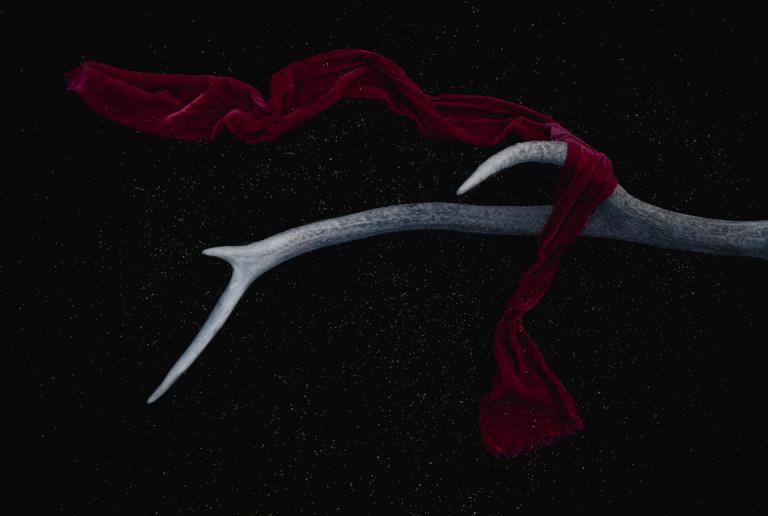
A Veil of its own pattern. Image by Free-Photos via Pixabay.
We parse Babalon as Innana, but this is a false equivalency.
Babalon is the Mystery of Mystery, distinct among the multiplicity, a Veil of its own pattern. She has Her roots, but these are not Her. She is a Mother Goddess and a Death Goddess and a Sex Goddess and She is as old as Time and She is a thoroughly Modern construction.
And I wonder, why do we think of the Mother Goddess as a calm, benevolent, passive deity? The mother is the woman without limit; her kindness is only outlasted by her cruelty. But this ye know not, for ye know not love[2].
The problem with parsing Our Lady as Innana is that it makes of our living, breathing reality a forgotten Goddess, a historical symbol. But She is not old and forgotten but new, and rising; She is unique to us, and our situation; for we are not repressed in the way we were before, but in new ways, insidious ways
And I see a theme appear; women who learn of Our Lady through a man too easily misunderstand. They clamber into the glass cage upon the altar in search of the crown. But the head with a crown in a glass cage is a desiccated mummy (however sweet she smells). A relic, whose infinite power has been met with an immortality that would make it powerless. The woman who learns only through a man has no direct contact; thus she cannot be mediator, priestess: only vassal, and sacrifice. These women, they allow the terms of their religious experience, the very boundaries of their body to be set out by someone else. These women, they are so determined that the Scarlet Woman is an archetype and a personal goal, that there needn’t necessarily be a goddess; they cannot see that all this is so many Word Games. We are so determined to be atheist, and rational, we have forgotten that rationality itself is a game, and the more we try to be serious, the more absurd the game becomes. Magic is play.
Yet, this point also exists independent of gender. Gurus and cults and religion are Big Business because people want a mediator, because they forget that it is direct experience that they seek. Mediation is necessary as a step upon the path; but remember, in the end, you will stand alone before your God.

The glass cage. Image by JL G via Pixabay.
The glass cage is this – the symbol without referent, the actor without act.
The pythoness without connection becomes only a puppet. No amount of makeup and bells will make of you a priestess; and if you are a priestess, you will be able to communicate it without any of these things. We use these things for increase and potency, but they are not the thing-in-itself. The accoutrements of glamour are symbolic, with symbolic potency; they point to things beyond. Since magic is all mediation, glamour alone is not sufficient. If there is naught but a face, then the symbol is empty. It is naught but a sign, an image. Thus constructed the glamour points to nothing; it is a closed circuit.
Remember, take to heart, embody Byron’s famous epithet:
“Her overpowering presence made you feel
It would not be idolatry to kneel.”[3]
The only way to avoid the circle-jerk is the radical intrusion of the goddess. And this too may well be glamour; but it is the symbol, not the sign, and it is not empty and barren but an infinity of potential. The glamour of the goddess is the glamour of the metaphysical held inside the symbol of the woman that is her very body – this impossibility, this mystery.
It is this too, that the magical child evokes, but does not contain – so too the Mother Goddess. For the mother holds within herself impossibility and eternity; not as symbol or sign, but as physical process. This is our fundamental divinity, the activity of generation (note, I did not say reproduction). Oh, poor passive male; it is the egg who chooses, as the Queen must choose her consort.
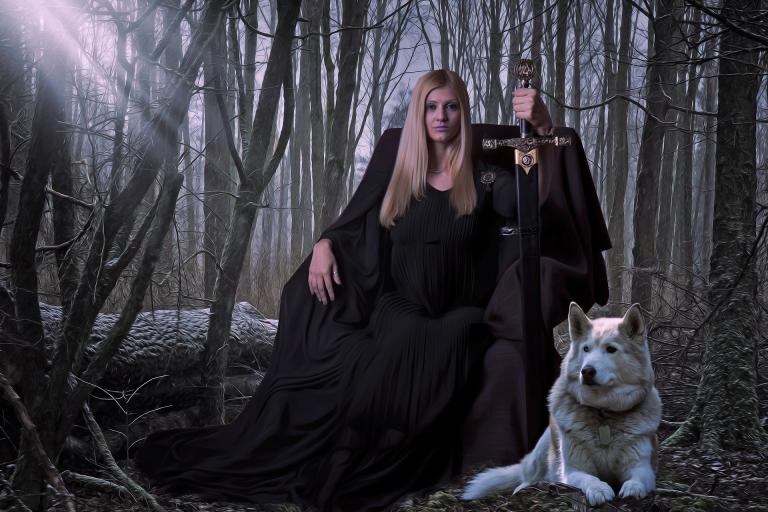
The Queen must choose her consort. Image by Enrique Meseguer via Pixabay.
The glamour of the shell, of the vessel; it is thus that woman robs herself of her own power, desecrates and renders empty the infinity of possibility inherent in the symbol, for she has replaced it with the sign. And this is why we must be wary. The very building of the armour exposes the need for protection. If everything, every flaw, has already been made public, offered upon the altar of the shameless goddess, then there is no need for armour. Thus then may glamour become a mantle and a crown, not a breast-plate and helmet.
It does not matter how beautiful the sandcastles are; when the tide comes in, they will disappear. I build my castle on the rocks of this cliff; it may be plain, but it is strong, and there is a beauty in its simplicity; and when the tide comes in, it will be a castle by the shore.
To be a Priestess; this is not a declaration or intention.
It is not a swearing-in ceremony with a certificate and a shiny hat. It is not a sigil tattoo and a sweep of red lipstick. It is a choosing-every-minute, until it is no longer a choice. It is a dedication of every act, every experience, every thought, every interface, every meditation. For the devotee, every verb is an act of devotion.
To devote: this is to give up the Will to the Goddess. This is not an act of faith, but a conscious choice to play a game; a game which becomes real in the playing.
To be devoted. This means: to give every moment to Her. To find Her in every moment. Every instance of the individual interacting with the world becomes a confrontation between the soul and her God.
To walk as Priestess is not a path, but a forest; or a vast, endless plane.
Will and Love have had their day. They lost too much in translation; they did not achieve what they were intended to. In our efforts to liberate ourselves from the bearded Moloch god, we denied the Real of the Divine. Will and Love, these two were never sufficient. Now it is time we try something truly new: Devotion and Service.

To walk as Priestess is not a path, but a forest. Photo by Lisa Runnels via Pixabay.
A Priestess is she who mediates between God and the World, between the public and the private; for God lives in the body, not disincarnate in the air, and this is the Mystery of the Christ. The Priestess is the archetype of the Living God in Man; she was the Christ before the Christ, Magdelyn. The Priestess is she who embodies the unembodied, who expresses the intimate. She is Mediatrix. Thus is she artist, poet, musician, writer, dancer; a thousand thousand ways to express the infinite single truth.
The priestess is not the Mystic, nor the Hermit (though sometimes she is, for she is Lady of Contradiction); for the Priestess is She Who Serves. It is her commitment to service, to mediating between the God and man, that makes of her a Priestess. Thus the Priestess is not the private consort of the God but the public servant of the Hidden One. The Priestess is, by definition, a public figure. But are not all women’s bodies public? The Priestess is the answer, the hidden key. All realms of fluctuation are hers.
To experiment with consciousness; this playing and drawing, geomancy in the sand, all this is not for me.
I like to experiment, to play, with the public and the private, with complex; to probe on these strange online platforms the lines of intimacy, the flexibility of intimate space. My use of this public platform to explore the intimate is a devotional act; an act of making my private public; the more private, the more I strive to make it public, the more intimate, the more I strive to separate it from me. This play, this negotiation, this is an act of worship for the Goddess who has no shame, who embodies the guttural, screaming flux. This simple act of taking the most private thing and making it the most public; this does not change consciousness. It changes the world.
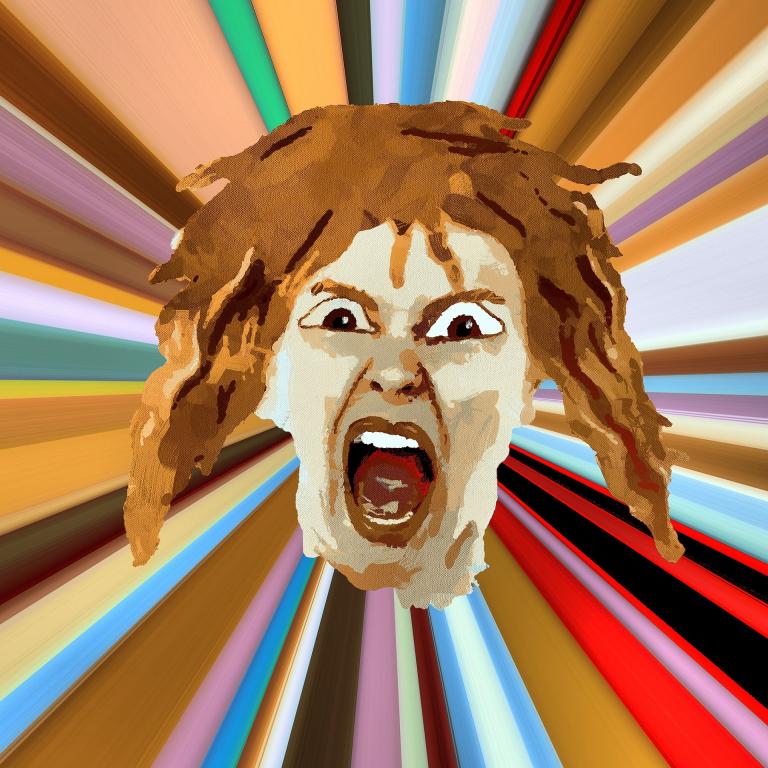
I am become the sin eater, she who takes all. Illustration by Prawny via Pixabay.
And now I am become the sin eater, she who takes all. And this, the sheer weight of confession, a hundred confessions of a reflection of my intimate experience, a hundred thousand women’s pain borne in my young body; thus I am become Persephone, and it is my task to make my women free.
What does it mean to be Initiatrix? To reach in and pull out. To find the most cherished desire and lay it bare, revealing its falsity, its opposition to the great work. To find the last shored up bit of identification, wherever it is buried, and to drag it up, knowing that when the hidden power of complex hits the light and air it will explode. To become a vehicle of pure instinct, to ignore danger and sense and know only love, in its most painful and horrifying aspects; this is what it is to be Initiatrix.
I define magic as the negotiation and renegotiation of personhood in the world.
Or perhaps, the negotiation and renegotiation of what is understood by ‘reality’ as the collection of personhood called ‘you’ interacts with all that might be called ‘not you’.
Seen in this way, there is no escaping the ethical dimensions of magic – the Great Work, which underpins all. It is impossible to be Priestess without treading this path.
Those who would resist, simply tread the path in the opposite direction, back towards the chaos of Chorozon, the mirror image that would reflect upon you all your fear.
I would even go further, and say: Personhood is constituted according to how we understand the play of magic and reality. To what extent do you recognise the god within you?
Now, all this word-play, this negotiation and renegotiation of concepts, this might be seen as the esoteric side of something that came to my attention at the recent Magickal Women’s Conference in London, this great public expression of the hidden private of women’s magic; the question of public and private space. And it strikes me that there is a fundamental parallel to put ten years of work into a twenty-minute conference paper, and the struggle to speak about the unspeakable experiences of intimate magic. But we must do this; we must do both these things.
We must take our place on the public stage, in public space. We must be loud, and messy, and thoughtful, and glamorous, and clever and spontaneous and instinctual. We must take our place on the public stage, not with Orders and corporation-owned Temples but in our own way; with interconnectivity, with the web of feminine power.
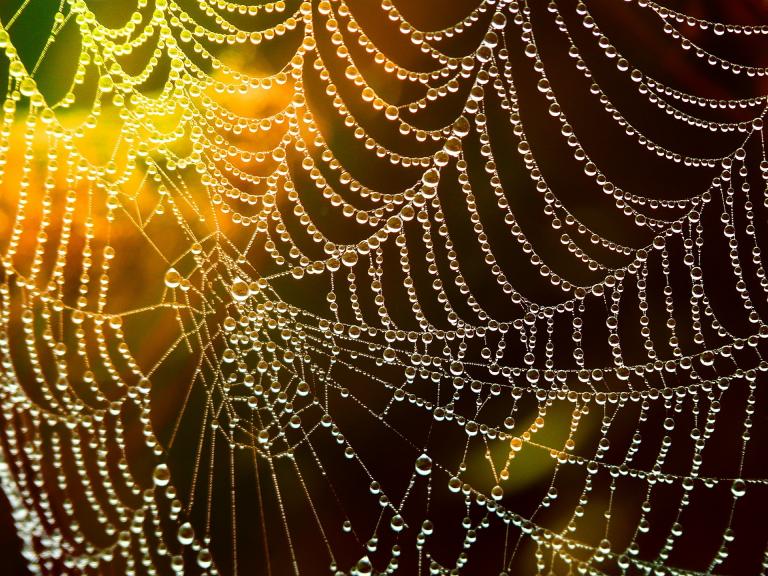
The web of feminine power. Photo by Pezibear via Pixabay.
We must take back the knowledge economy. We must find a feminine articulation of the Word: Sophia. We cannot allow Man to own the Word. Both men and women have intimate inexpressible knowledge, and both men and women can express; we women have been robbed of our confidence, but not our ability. It is thus our task to find new articulations, new modes of articulation, new paths through the joy of communication, which is Communion.
For, if we allow the Word to be masculine and the unspoken feminine then we have missed the nature of the priestess, and we will never rise.
Yet I know that we will rise; we are already rising. Women are the mourners, the mediators; we are those who wail. We are the wailers, who cry great cries of the pain on behalf of the community, that the gods might hear our throes, and expedite the journey of the spirit towards the mother of all (what else was #metoo but our collective wailing?). Women are the mediators; this is not new. But the new will come, it is already coming. And it will look like a subtle reformulation of the outlines of the arguments, a conversation about terminology and word and symbol on the edges which, once complete, will be revealed to be a renegotiation of the thing-in-itself, with the Grail Maiden kicking down the door of the sanctuary, and opening Her Holy Vulva with Strength and Lust and Chastity (which may also be parsed as Pride).
We must do this. We need a new language for speaking about the unspeakable. Renegotiate the terms, and you renegotiate the thing itself. For we are in the business of the Mysteries: the inner contradiction, the space of negotiation and impossible mediation, between the Symbol and the Real.
Now, it may appear that there are two disparate strands to what I speak of here: that of the Priestess and the Magician, and that of the negotiation of public and private space as a woman in magic. But these things are not separate, for understanding the role of the Priestess as Mediatrix will help us to understand what is really at stake in this question of public and private, and why it is so important to remember our heritage. This is not the heritage of the witch burnings, of fear and survival, but of the culture that preceded and underpinned even this; of the ancient world, where woman was mediator, mourner and medium, the public face of divinity.
Sometimes privacy has been necessary; has been a source of safety, and of power. But times are changing, and we are at the crux; and now there is a choice that is not a choice, for the whole world flows with a tide.

The whole world flows with a tide. Photo by Free-Photos via Pixabay.
Sometimes privacy has been necessary: but now it works against women. It allows us to be abused, and inhibits our resistance (for resistance needs solidarity); it allows us to be ignored, for we have reified the category of the voiceless.
A thousand years of work on the inner planes is meaningless if it is not accompanied by the radical movement of grace that breaks through the ongoing knowledge economy; if it is not accompanied by the Word, the act, the communication, the communion. Only thus may things move; this is the essence of magic, the Mystery of manifestation.
I have always been so frustrated when women speak of their practice as something that is only and exclusively private; intimate, between me and my God, not to be shared. And I wonder, how much of this is the inexpressibility of intimacy, and how much more is it fear; of being laughed at – of being killed.
Our memory is very long, so we women do our magic in private.
But by insisting on the privacy of our practice as something innate, rather than a survival mechanism, we are cutting ourselves off from our power. This is how late-stage patriarchy works, of course; turning us against ourselves.
We speak of the roles of women, the symbols and archetypes; but there is something lying beneath the Angel in the House and the Scarlet Woman alike, something resisted and yet reified in the figure of the High Priestess. Woman is a public figure. Every woman is the property of the socius. She is not a thing-in-itself, but her very womanness is a symbol of the infinity that lies within her. The woman does not have a private body, but a mediated one. Or rather, her body is the mediator between said and unsayable. Woman is a symbol; she has always been a way of describing the Mystery of the Other. This Mystery is the Mystery of fluid, the mystery of blood and sperm; the reason death and sex share an impulse: to act upon, to compound the otherness of the other; to seek to dissolve it, and in that act to find the irreducible truth of otherness.
However, what we practice is magical religion. The magic is in the collapse of the distinction between the symbol and the real in our embodied practice. The Mystic contemplates the symbol; the Priestess manifests the symbol as reality within the body.
Power and oppression are two sides of a silver coin. Woman as anima, the symbolic potency of womanhood, is both our greatest oppression, and the locus of our power. This is why we must be public. We must stop inspiring individual men to greatness, allowing them to use our potency. We must inspire other women, and in them the world. We must enter into service for the world, we must give the self up to be used in an ongoing act of joyful devotion to the Goddess. This is what makes of us Priestess: to feel the current of the divine, to see it in action in the world, manifested through our own two hands.
——–
[1] Liber Cheth vel Vallum Abiegni sub figurâ CLVI
[2] Liber Cheth
[3] Haidée, Don Juan, Canto iii. Stanzas 70–75, Lord Byron.

About Georgia van Raalte
Georgia van Raalte is a writer, ritualist and academic. Her writing explores topics around feminism, womanhood and magic. She has written and hosted a number of public rituals which attempt to re-centralise the divine feminine within ceremonial magic. She is also a speaker and presenter, and has given talks on a range of occult topics at events around the world. Georgia is an academic, whose work focuses on 20th century British occultism. She is currently a PhD candidate at the University of Surrey, where her research explores the textual initiation in the novels of Dion Fortune. You can read more about the author here.
Previous Post
June 11, 2019
Of Light & Shadow: Establishing a Daily Practice
Next Post

June 15, 2019 3 Pagans & A Cat: For Reasons of Your Own
Browse Our Archives
Select a Category A Lakeside Hearth Adventures in Wortcunning Alone In Her Presence Arts, Crafts & Cooking Birthing Hereditary Witchcraft Book of Blackbirds Book Reviews Born-Again Witch Cauldron, Sword, Spear, & Stone Cermony and Liturgy Columns Community Dandelion Seeds Dear Jasmine Druid Thoughts Editor's Picks Everyday Pagan Family & Household Practice Family Traditions Full Frontal Magic Gateway Goddess Guest Articles Happily Heathen Health and Wellness Hearth of Hellenism Heathen Woman Hills of the Horizon History Holidays Horse Goddesses Interfaith Interviews Irish-American Witchcraft Jewish Witch Lamp & Labyrinth Letters from Midgard Literature, Media, Film, Music Loop of Brighid Love, Sex & Relationships Magic or Magick Making Light Naturalistic Traditions Nature News Outside The Circle Pantheisticon Politics Prayers, Poems, Blessings & Stories Queer Femme Mystic Queer of Swords Recipes Ritual and Practice Science and Research Seekers and Guides Seeking the Grail Socially Responsible Magic Spear of Athena Star Made Witch Syncretic Electric Technology The Blooming Staff The Busy Witch The Cartomancer The Crow's Nest The Dance of Pagan Recovery The Hearth of Hellenism The Lady's Quill The Other Side of the Hedge The Path of She The Rantin' Raven The Witches Next Door The Zen Pagan Theology, Ethics, Philosophy Tree City Witch Urban Earthwitch Wayfaring Woman Witch on Fire Wyrd Words
Select a Month January 2026 March 2025 December 2024 June 2024 April 2024 March 2024 January 2024 December 2023 November 2023 October 2023 August 2023 July 2023 May 2023 April 2023 March 2023 February 2023 January 2023 December 2022 November 2022 October 2022 September 2022 August 2022 July 2022 June 2022 May 2022 March 2022 February 2022 January 2022 December 2021 November 2021 October 2021 September 2021 August 2021 July 2021 June 2021 May 2021 April 2021 March 2021 February 2021 January 2021 December 2020 November 2020 October 2020 September 2020 August 2020 July 2020 June 2020 May 2020 April 2020 March 2020 February 2020 January 2020 December 2019 November 2019 October 2019 September 2019 August 2019 July 2019 June 2019 May 2019 April 2019 March 2019 February 2019 January 2019 December 2018 November 2018 October 2018 September 2018 August 2018 July 2018 June 2018 May 2018 April 2018 March 2018 February 2018 January 2018 December 2017 November 2017 October 2017 September 2017 August 2017 July 2017 June 2017 May 2017 April 2017 March 2017 February 2017 January 2017 December 2016 November 2016 October 2016 September 2016 August 2016 July 2016 June 2016 May 2016 April 2016 March 2016 February 2016 January 2016 December 2015 November 2015 October 2015 September 2015 August 2015 July 2015 June 2015 May 2015 April 2015 March 2015 February 2015 January 2015 December 2014 November 2014 October 2014 September 2014 August 2014 July 2014 June 2014 May 2014 April 2014 March 2014 February 2014 January 2014 December 2013 November 2013 October 2013 September 2013 August 2013 July 2013 June 2013 May 2013 April 2013 March 2013 February 2013 January 2013 December 2012 November 2012 October 2012 September 2012 August 2012 July 2012 June 2012 May 2012 April 2012 March 2012 February 2012 January 2012
Follow Us!
TAKE THE
Religious Wisdom Quiz
What did God command Job to do after his friends were rebuked?
Select your answer to see how you score.
Offer more sacrifices Fast for 40 days Go to Uz Pray for his friends
Related posts from Agora

Simple Witchery: To Keep Silent

Simple Witchery: Leaning On The Four Pillars

Pergamum Unfurled: Magic with the Greek Gods (Book...

Pergamum Unfurled: Cunning Words (Review)
TRENDING AT PATHEOS Pagan

I was recently chatting with someone on Instagram. She asked me what...

While there are many people who share their results, the end of...

On July 23, I saw Christopher Nolan's The Odyssey which is Homer’s...

As I write this two big events have just finished up. One...

Restoring the Watershed of Divine Love
Perhaps cooperation is not something we manufacture through legislation, ideology, or moral...

Many UUs don’t pray because of bad experiences in a previous religion,...
view all Pagan blogs
Ad-Free & Subscriber Log-In Subscription Support
- About Us
- 2026 Calendar
- Videos
- Podcasts
- Library of World Religions
- Faith In Media Tracker
- Advertise With Us
- Write for Us
- Privacy Policy
- Terms of Service
- Do Not Sell My Data
- Contact Us
- Radiant Digital
- Manage Newsletter Subscriptions
- Unsubscribe From Notifications
- Sitemap
Copyright 2008-2026, Patheos. All rights reserved.
Subscription Support Ad-Free & Subscriber Log-In
Follow Patheos