
BuddhistCatholicContemplativeEvangelicalGeneral ChristianHinduJewishLatter-day SaintMuslimNew VisionsProgressive Christian
Beliefs
- Buddhist
- Catholic
- Contemplative
- Evangelical
- General Christian
- Hindu
- Jewish
- Latter-day Saint
- More Voices
- Muslim
- New Visions
- Pagan
- Progressive Christian
Topics
- Religion News
- Food and Religion
- Sports and Religion
- Religious Art
- Religious Music and Entertainment
- Religious Events
- History and Religion
- Style and Religion
- Politics and Religion
- Women in Religion
- Recreation Outdoors and Religion
- Business Finance and Religion
- Careers Workplace and Religion
- Education and Religion
- Family Parenting and Religion
- Health Fitness and Religion
- Home and Religion
- Relationships and Religion
- Technology and Religion
- Travel and Religion
Columnists
- Buddhist Columnists
- Business Finance and Religion Columnists
- Careers Workplace and Religion Columnists
- Catholic Columnists
- Contemplative Columnists
- Education and Religion Columnists
- Evangelists Columnists
- Family Parenting and Religion Columnists
- General Christian Columnists
- Health Fitness and Religion Columnists
- Hindu Columnists
- History and Religion Columnists
- Home and Religion Columnists
- Jewish Columnists
- More Voices Columnists
- Latter Day Columnists
- Muslim Columnists
- New Visions Columnists
- Nonreligious Columnists
- Pagan Columnists
- Politics and Religion Columnists
- Progressive Columnists
- Recreation Outdoors and Religion Columnists
- Relationships and Religion Columnists
- Religion News Columnists
- Religious Art Columnists
- Religious Events Columnists
- Religious Music and Entertainment Columnists
- Sports and Religion Columnists
- Style and Religion Columnists
- Technology and Religion Columnists
- Travel and Religion Columnists
- Women in Religion Columnists
Resource Library
- 2026 Calendar
- Library of World Religions
- The 100 Most Holy Places on Earth
- Patheos Answers
- Podcasts
- Videos
- Faith Leaders Database
- Anglican Episcopalian
- Bahai
- Baptist
- Buddhism
- Christianity
- Confucianism
- Eastern Orthodoxy
- Hinduism
- Holiness and Pentecostal
- ISKCON
- Islam
- Judaism
- Lutheran
- Methodist
- The Church of Jesus Christ of Latter-day Saints
- New Age
- Paganism
- Presbytarian and Reformed
- Protestantism
- Religion Behind the Scenes
- Roman Catholic
- Scientology
- Shia Islam
- Sikhism
- Sufism
- Sunni Islam
- Taoism
- Zen
- See all religions
Research Tools
 Ad-Free & Subscriber Log-In Subscription Support
Ad-Free & Subscriber Log-In Subscription Support
Follow Patheos 

- Trending:
- Forgiveness
- |
- Marriage
- |
- Consciousness
- |
- Death Penalty
- |
- Election
- |
- Halloween

- Home
- Pagan
- 3 Pagans & A Cat: Wildcrafting Your Yard
3 Pagans & A Cat: Wildcrafting Your Yard
Last updated on: May 17, 2019 at 5:15 pm by Gwyn
3 Pagans & A Cat: Wildcrafting Your Yard 2019-05-17T17:15:45+00:00 Gwyn
Patheos Explore the world's faith through different perspectives on religion and spirituality! Patheos has the views of the prevalent religions and spiritualities of the world.
When I think about growing up in rural Southwest Michigan, a lot of my memories are of times spent in the fields beside my home or tromping through the woods on our property. Summer days spent with a couple of neighbor kids, who lived across the street, picking wild black raspberries from vines growing in the dappled shade of black walnut and oak trees.
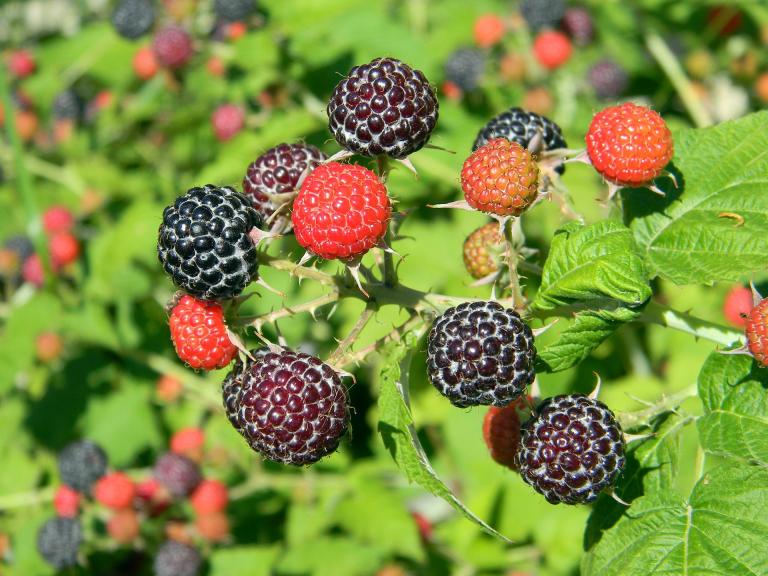
Raspberries, ready for foraging fingers. Photo by Alina Kuptsova via Pixabay.
We’d be sprayed with bug repellent and change into jeans and sneakers before meeting at the end of my driveway with coffee cups, bowls, or paper lunch bags in hand. We’d cross into the tall grasses and wooded areas which lined our quiet country road on the hunt for our plunder.
We never had to go far in our wanderings and the thorn-filled leafy vines, heavy with fruit, were easy to find. We’d pick enough fruit to carry back to our homes even while popping a few juicy morsels into our mouths as a reward for our labors. Then we’d take our treasures home to wash and eat sprinkled with sugar or with a dish of vanilla ice cream. Sometimes we’d even share the berries with the rest of our families.
My friends and I did not know what we were doing was called wildcrafting or foraging.
Wildcrafting is harvesting from plants in their natural or wild habitats to be used for food or medicinal purposes. These plants are not cultivated as you would find in a garden or on a farm but grow on their own in nature.
My family and I were fortunate that our house resided on five acres of land rich with apples, wild plums, pears, mulberries and black raspberries from which we could forage. I can remember years when the apples were so plentiful my mother would prepare and can enough applesauce to last a year. The black raspberries were my favorite to pick but I remember gathering wild pears to snack on as I traversed the woods. One year, my grandfather picked enough plums to be made into several quarts of jam. We took what we needed while leaving behind plenty of produce for the wildlife and so the plants would continue to flourish.
There are many good reasons to wildcraft from nature. People gather fruit, nut, leaf, root, and berry for food, medicine, and as in my case – witchcraft. However, it is very important to respect the land and ecosystem within which the plant, bush, or tree exists and know the do’s and don’ts of wildcrafting. Here are tips from an excellent article from Sierra Botanica – Safe and Ethical Guidelines for Wildcrafting if you decide to go wildcrafting in your local area:
- Follow the abundance of your local landscape. This book is helpful if you’re not sure which plants are safe or edible.
- Avoid picking unusual, threatened and endangered plants.
- Gather what you need and leave the rest.
- Know where and where not to harvest (don’t trespass on private or government property)
These are important, basic rules to follow when wildcrafting. However, you may be able to find plants to forage by taking a closer look at your own yard. People spray their lawns or property with chemicals to discourage “weeds” or “invasive plants” but do so without understanding the wonderful plant sources which could be available to them and within easy reach. Uncultivated plants brimming with nutritional, medicinal, and magickal value.
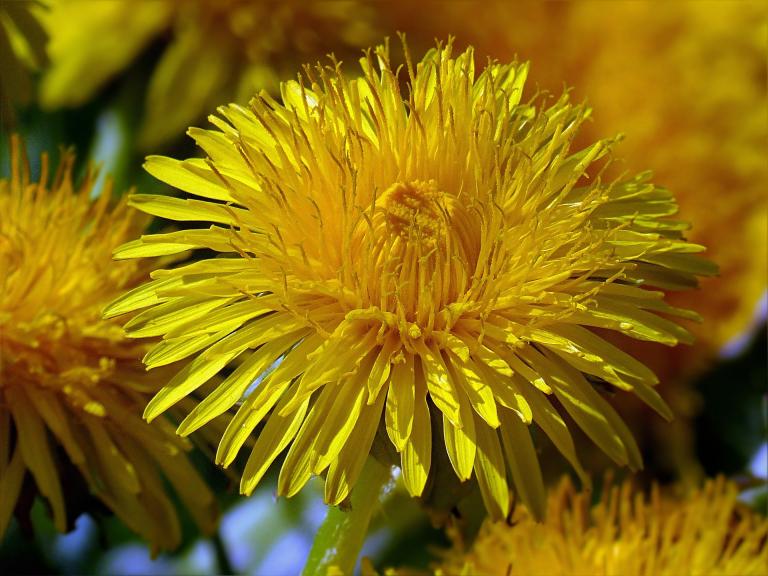
Dandelions are edible from root to blossom. Photo by Oldiefan via Pixabay.
Let me give you an example of a plant you can harvest with ease without even having to leave your home space: Dandelions. And unless you’ve sprayed weed killer in the desire for an immaculate lawn, this delightful (some say bothersome but what do they know) plant will grow in your yard or garden area.
Dandelions are a flowering plant which grows with abundance in many places around the world. They are a stubborn flower, which is why most people consider them weeds, but they are a plant which is edible from root to blossom. Here are a few reasons why you should love the dandelions growing dotting your lawn:
- Dandelions have a high nutrient value.
- Dandelions are high in vitamins, minerals, antioxidants and fiber.
- Dandelions can be eaten cooked as greens or raw in salads. They can be made into jelly, syrups, cookies, teas, coffee, and wine.
- Dandelions have medicinal uses and can be prepared as a tincture, decoction, tea, and salve.
In fact, if you have a bunch of dandelions and are not sure what to do with them, I recommend these 16 Dandelion Recipes. I also recommend reading this article, 13 Potential Health Benefits of Dandelion, to learn how this plant can benefit your life. And if you want to try dandelion without the work of harvesting and preparation, Dandelion Leaf & Root Tea from Traditional Medicinals (it’s great for flushing the kidneys and promotes healthy digestion) is a great start.
Here’s a caveat: Allow me to stress that before you harvest dandelions, or any wild plant, be sure the area where you pick has not been sprayed with chemicals or herbicides. For this reason, I prefer to stick to my own yard when wildcrafting. Also, if you have an allergy to ragweed, you may want to steer clear of dandelion.
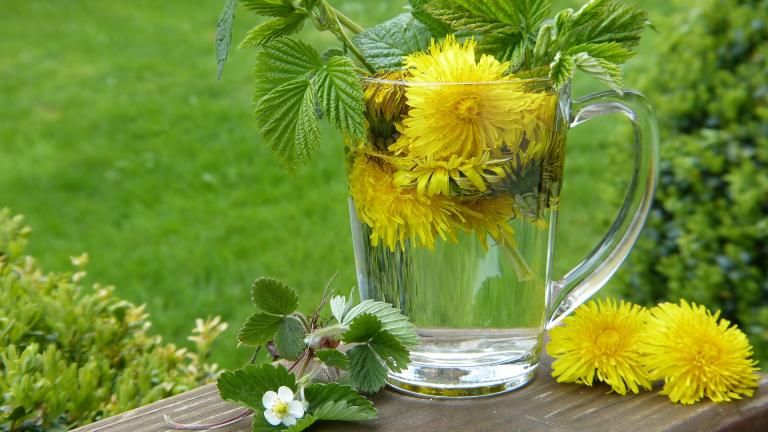
A tea can be made of dandelion blossoms and leaves to increase psychic ability. Photo by silviarita via Pixabay.
Now, let’s see about using Dandelion in magickal workings:
- The plant is associated with any solar deity, Hecate, Brighid and Belenos. A tea can be made of the blossoms and leaves to increase psychic ability.
- The roots can be used to make a tea which will aid invoking of spirits.
- Wishes can be made while blowing the seeds of the dandelion from the head of the flower.
- The flowers can be used for inspiration spells in Spring time or to break a creative block.
- Can be used in offerings to woodland or land spirits.
- Dandelion derives from the French word dent-de-lion or tooth of the lion. This makes the flower excellent in spell bags for confidence and courage.
- Use them as decoration for your Spring altar or Beltane rituals. Wear the blossoms in your hair for a handfasting (which is what I did) which occur during the Spring or Summer.
- Are good for driving out negative energy from your home.
Hopefully, you can see the value in taking a second look at your yard or back garden to see the plant allies which may exist or volunteer if given the opportunity to grow. Other valuable “weeds” you may find include Common Blue Violets, Purslane, Chickweed, Sorrel and Plantain (all delightful in their own way and edible). These plants will have growing seasons, some long and some short, so pay attention to what is available throughout the Spring, Summer, and Autumn. In temperate locals, there may be plants you can harvest during Winter as well.
Keep an eye out for wild edible fruits, mushrooms, and other produce but I must stress again – Be Careful! Take a course, read good books, or use a helpful and well-rated app which allows you to identify what are safe, edible plants to harvest and which are not. And if your lawn does not provide the plants you desire go forth and wildcraft while doing so in an ethical and safe manner. Above all, enjoy being in nature and remember to thank the Earth Mother for all she provides, as well as the plant allies which present themselves to you.
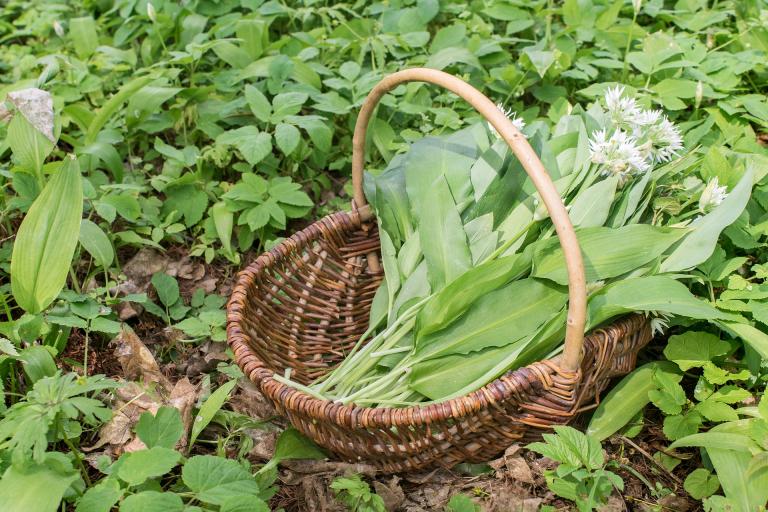
Go forth and wildcraft while doing so in an ethical and safe manner! Photo by scym via Pixabay.
Gwyn’s Dandelion Salve
This is a quick method for making Dandelion Salve which can be used to give relief to aching joints, sore muscles and dry skin.
Items Needed:
A clean pot filled with a cup or two of water.
A clean mason jar with lid and small storage jar with a lid.
Non-hydrogenated coconut oil
A Strainer
A couple of measuring pitchers (4 cup) or bowls with pouring spout.
Several squares of cheesecloth and/or coffee filters
Dandelion blossoms
Note: This is a salve I made after picking dandelions from my yard. You can use fresh or even frozen dandelions. However, they do retain a lot of water which can create a sediment or make the oil thick. If you use fresh or frozen dandelions, you will want to strain the oil three or four times through the cheesecloth and/or coffee filter. Also, as you go through the process, focus your intention for this salve as one which will heal and soothe.
- Put the pan of water on the stove and heat over a low to medium setting.
- While the water heats, fill the glass mason jar about ½ to ¾ full of dandelions.
- Scoop several large spoonfuls of non-hydrogenated coconut oil into the jar on top of the dandelions.
- Place the jar with dandelions and non-hydrogenated oil into the pan of water. Allow the oil to melt over the dandelions. Take a spoon and gently stir the dandelions to allow the oil to saturate the blossoms until the melted oil covers the blossoms by about a ¼ to ½ inch. If you need to add more oil that’s fine.
- Place the lid on the mason jar and tighten, then pick up the jar (be careful, use a towel or something to protect your hands) and rotate the jar so that the dandelions and oil are mixed and the oil still covers all the blossoms by a ¼ to ½.
- Remove the lid and place the jar back in the water over low heat for about 10 minutes. Then turn off the heat and let the jar sit in the water for another 10 minutes. Remove and let cool.
- Place several layers of cheesecloth into the strainer and place over the glass measuring pitcher/bowl. Slowly pour the dandelions and oil onto the cheesecloth, allowing it to strain into the pitcher/bowl. When the oil has strained through, pick up the edges of the cheesecloth and squeeze as much of the oil from the dandelion blossoms as you can then discard the dandelions and cheesecloth.
- Place several more layers of cheesecloth in the strainer and slowly pour the oil through the strainer into another glass receptacle. You can use the coffee filters for this as well.
- Repeat this process several times until the oil is as clear and golden as possible.
- Pour the dandelion oil into the small glass jar. You can add some additional essential oil such as Copaiba (about 30 drops). Place the lid on the jar, label the oil with date and store in a cool dark place.
The oil should solidify overnight to create the salve. Test on wrist for sensitivity before using. Do not use if you have a known ragweed allergy.

About Gwyn
Gwyn is one of the hosts of 3 Pagans and a Cat, a podcast about the questions and discussions between three pagan family members, each exploring different pagan paths and how their various traditions can intersect. The most practiced pagan on the path, Gwyn is an Eclectic Green Witch and Clairsentient Medium. She loves working with herbs, essential oils and plants. In the past, she has been a teacher, musician and published writer. Now, she just wants to be a free spirit and talk about life. You can read more about the author here.
Previous Post

May 16, 2019
Spooky in the South: The Hypocrisy of Religious Freedom in America
Next Post

May 18, 2019 Pan-Celtic Hoofbeats: Manannán mac Lir – Book Review
Browse Our Archives
Select a Category A Lakeside Hearth Adventures in Wortcunning Alone In Her Presence Arts, Crafts & Cooking Birthing Hereditary Witchcraft Book of Blackbirds Book Reviews Born-Again Witch Cauldron, Sword, Spear, & Stone Cermony and Liturgy Columns Community Dandelion Seeds Dear Jasmine Druid Thoughts Editor's Picks Everyday Pagan Family & Household Practice Family Traditions Full Frontal Magic Gateway Goddess Guest Articles Happily Heathen Health and Wellness Hearth of Hellenism Heathen Woman Hills of the Horizon History Holidays Horse Goddesses Interfaith Interviews Irish-American Witchcraft Jewish Witch Lamp & Labyrinth Letters from Midgard Literature, Media, Film, Music Loop of Brighid Love, Sex & Relationships Magic or Magick Making Light Naturalistic Traditions Nature News Outside The Circle Pantheisticon Politics Prayers, Poems, Blessings & Stories Queer Femme Mystic Queer of Swords Recipes Ritual and Practice Science and Research Seekers and Guides Seeking the Grail Socially Responsible Magic Spear of Athena Star Made Witch Syncretic Electric Technology The Blooming Staff The Busy Witch The Cartomancer The Crow's Nest The Dance of Pagan Recovery The Hearth of Hellenism The Lady's Quill The Other Side of the Hedge The Path of She The Rantin' Raven The Witches Next Door The Zen Pagan Theology, Ethics, Philosophy Tree City Witch Urban Earthwitch Wayfaring Woman Witch on Fire Wyrd Words
Select a Month January 2026 March 2025 December 2024 June 2024 April 2024 March 2024 January 2024 December 2023 November 2023 October 2023 August 2023 July 2023 May 2023 April 2023 March 2023 February 2023 January 2023 December 2022 November 2022 October 2022 September 2022 August 2022 July 2022 June 2022 May 2022 March 2022 February 2022 January 2022 December 2021 November 2021 October 2021 September 2021 August 2021 July 2021 June 2021 May 2021 April 2021 March 2021 February 2021 January 2021 December 2020 November 2020 October 2020 September 2020 August 2020 July 2020 June 2020 May 2020 April 2020 March 2020 February 2020 January 2020 December 2019 November 2019 October 2019 September 2019 August 2019 July 2019 June 2019 May 2019 April 2019 March 2019 February 2019 January 2019 December 2018 November 2018 October 2018 September 2018 August 2018 July 2018 June 2018 May 2018 April 2018 March 2018 February 2018 January 2018 December 2017 November 2017 October 2017 September 2017 August 2017 July 2017 June 2017 May 2017 April 2017 March 2017 February 2017 January 2017 December 2016 November 2016 October 2016 September 2016 August 2016 July 2016 June 2016 May 2016 April 2016 March 2016 February 2016 January 2016 December 2015 November 2015 October 2015 September 2015 August 2015 July 2015 June 2015 May 2015 April 2015 March 2015 February 2015 January 2015 December 2014 November 2014 October 2014 September 2014 August 2014 July 2014 June 2014 May 2014 April 2014 March 2014 February 2014 January 2014 December 2013 November 2013 October 2013 September 2013 August 2013 July 2013 June 2013 May 2013 April 2013 March 2013 February 2013 January 2013 December 2012 November 2012 October 2012 September 2012 August 2012 July 2012 June 2012 May 2012 April 2012 March 2012 February 2012 January 2012
Follow Us!
TAKE THE
Religious Wisdom Quiz
Where did Elisha multiply oil?
Select your answer to see how you score.
Shunem Samaria Zarephath Jericho
Related posts from Agora

Simple Witchery: To Keep Silent

Simple Witchery: Leaning On The Four Pillars


TRENDING AT PATHEOS Pagan

I was recently chatting with someone on Instagram. She asked me what...

While there are many people who share their results, the end of...

On July 23, I saw Christopher Nolan's The Odyssey which is Homer’s...

As I write this two big events have just finished up. One...

Restoring the Watershed of Divine Love
Perhaps cooperation is not something we manufacture through legislation, ideology, or moral...

Many UUs don’t pray because of bad experiences in a previous religion,...
view all Pagan blogs
Ad-Free & Subscriber Log-In Subscription Support
- About Us
- 2026 Calendar
- Videos
- Podcasts
- Library of World Religions
- Faith In Media Tracker
- Advertise With Us
- Write for Us
- Privacy Policy
- Terms of Service
- Do Not Sell My Data
- Contact Us
- Radiant Digital
- Manage Newsletter Subscriptions
- Unsubscribe From Notifications
- Sitemap
Copyright 2008-2026, Patheos. All rights reserved.
Subscription Support Ad-Free & Subscriber Log-In
Follow Patheos