
BuddhistCatholicContemplativeEvangelicalGeneral ChristianHinduJewishLatter-day SaintMuslimNew VisionsProgressive Christian
Beliefs
- Buddhist
- Catholic
- Contemplative
- Evangelical
- General Christian
- Hindu
- Jewish
- Latter-day Saint
- More Voices
- Muslim
- New Visions
- Pagan
- Progressive Christian
Topics
- Religion News
- Food and Religion
- Sports and Religion
- Religious Art
- Religious Music and Entertainment
- Religious Events
- History and Religion
- Style and Religion
- Politics and Religion
- Women in Religion
- Recreation Outdoors and Religion
- Business Finance and Religion
- Careers Workplace and Religion
- Education and Religion
- Family Parenting and Religion
- Health Fitness and Religion
- Home and Religion
- Relationships and Religion
- Technology and Religion
- Travel and Religion
Columnists
- Buddhist Columnists
- Business Finance and Religion Columnists
- Careers Workplace and Religion Columnists
- Catholic Columnists
- Contemplative Columnists
- Education and Religion Columnists
- Evangelists Columnists
- Family Parenting and Religion Columnists
- General Christian Columnists
- Health Fitness and Religion Columnists
- Hindu Columnists
- History and Religion Columnists
- Home and Religion Columnists
- Jewish Columnists
- More Voices Columnists
- Latter Day Columnists
- Muslim Columnists
- New Visions Columnists
- Nonreligious Columnists
- Pagan Columnists
- Politics and Religion Columnists
- Progressive Columnists
- Recreation Outdoors and Religion Columnists
- Relationships and Religion Columnists
- Religion News Columnists
- Religious Art Columnists
- Religious Events Columnists
- Religious Music and Entertainment Columnists
- Sports and Religion Columnists
- Style and Religion Columnists
- Technology and Religion Columnists
- Travel and Religion Columnists
- Women in Religion Columnists
Resource Library
- 2026 Calendar
- Library of World Religions
- The 100 Most Holy Places on Earth
- Patheos Answers
- Podcasts
- Videos
- Faith Leaders Database
- Anglican Episcopalian
- Bahai
- Baptist
- Buddhism
- Christianity
- Confucianism
- Eastern Orthodoxy
- Hinduism
- Holiness and Pentecostal
- ISKCON
- Islam
- Judaism
- Lutheran
- Methodist
- The Church of Jesus Christ of Latter-day Saints
- New Age
- Paganism
- Presbytarian and Reformed
- Protestantism
- Religion Behind the Scenes
- Roman Catholic
- Scientology
- Shia Islam
- Sikhism
- Sufism
- Sunni Islam
- Taoism
- Zen
- See all religions
Research Tools
 Ad-Free & Subscriber Log-In Subscription Support
Ad-Free & Subscriber Log-In Subscription Support
Follow Patheos 

- Trending:
- Forgiveness
- |
- Marriage
- |
- Consciousness
- |
- Death Penalty
- |
- Election
- |
- Halloween

- Home
- Pagan
- The Purple Spiral Turns: A Druid UU Speaks of Compassion
The Purple Spiral Turns: A Druid UU Speaks of Compassion
Last updated on: April 22, 2019 at 2:51 am by Ayliah Cannon
The Purple Spiral Turns: A Druid UU Speaks of Compassion 2019-04-22T02:51:16+00:00 Ayliah Cannon
Patheos Explore the world's faith through different perspectives on religion and spirituality! Patheos has the views of the prevalent religions and spiritualities of the world.
On April 22nd, 2019, environmentally-aware people around the world acknowledge Earth Day. This is a day to be consciously aware of the footprint we leave upon our planet, and it is meant to inspire people to work to protect our planet from further destruction.
The work of this priest and writer is inspired daily by the beauty and the tragedy that I see in the world. It is my sincerest belief that the effects of destruction we see in the environment are reflections of the destruction we see happening within society, and I see both our worlds – the natural and the human – inexplicably linked in the same struggle for survival, safety and peace. If we can learn compassion for our planet, we can use that lesson to become compassionate towards other humans who struggle, and vice versa.
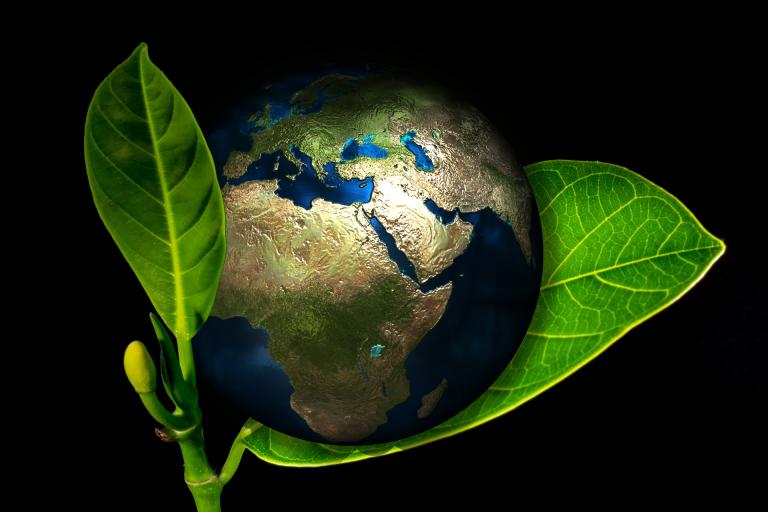
Can we learn compassion for our planet? Photo by Gerd Altmann via Pixabay.
When we become mindful of the suffering of nature from poisonous toxins, we can use this to understand the poisonous ideologies which weaken our community at all levels. When we begin working to heal the wounds in society, we can be more likely to work on caring for the environment with an equal understanding and concern. Every time we stop ourselves from throwing trash on the ground, to maintaining our vehicles to reduce emissions, we can make a personal impact on the suffering of the planet It is no different than catching ourselves before saying something disrespectful to another or asking before touching someone without consent. I am constantly asked “what can I do” and the answer is simple. You do what you can. By being aware of how your language and actions can impact others or the world, you ARE making a difference.
At the Spring Equinox this past season, I was asked to deliver a service to the Unitarian Universalist Congregation in Lakeland, Florida. I was tasked with speaking on the topic of compassion and tying it in druidry and nature, and my past experience as a Unitarian Universalist. What follows is what I delivered to them. Please bear in mind that it is written for a UU congregation but from a pagan perspective, so there may be some phraseology many pagans are not familiar with. I hope something of it will resonate with you, and perhaps, just perhaps, Earth Day will gain a bit more visibility in your calendar.

The fountains mingle with the river, and the rivers with the ocean. Photo by Free-Photos, via Pixabay.
The fountains mingle with the river,
And the rivers with the ocean,
The winds of Heaven mix forever
With a sweet emotion;
Nothing in the world is single;
All things by a law Divine,
In one spirit meet and mingle.
Why not I with thine –
“Loves Philosophy” Percy B Shelley
As a Druid priest, I am always fascinated with reading about how other people experience nature, and in my private practices, I find that my work with the environment requires a great deal of the same kind of compassion that I need when working with the human environment. Not too long ago, I came across a book in the UU bookstore called Braiding Sweetgrass by Robin Wall Kimmerer. I don’t suppose any of you have ever tried braiding sweetgrass? Or any kind of flowers? There are a few times I’ve tried braiding flowers to make wreaths like pagan girls wear in their hair this time of year. It’s not easy. Like any kind of braiding, it requires a certain amount of tension, not too much, not too little, but the just right balance. It certainly goes smoother if you have someone to hold the other end. As you might imagine, there are usually three strands, which can be very symbolic. Three is a significant number in many religions. In Kimmerer’s book, she identifies the three strands. The first strand is one’s indigenous way of knowing, one strand is scientific knowledge, and one strand represents the stories of our faith.
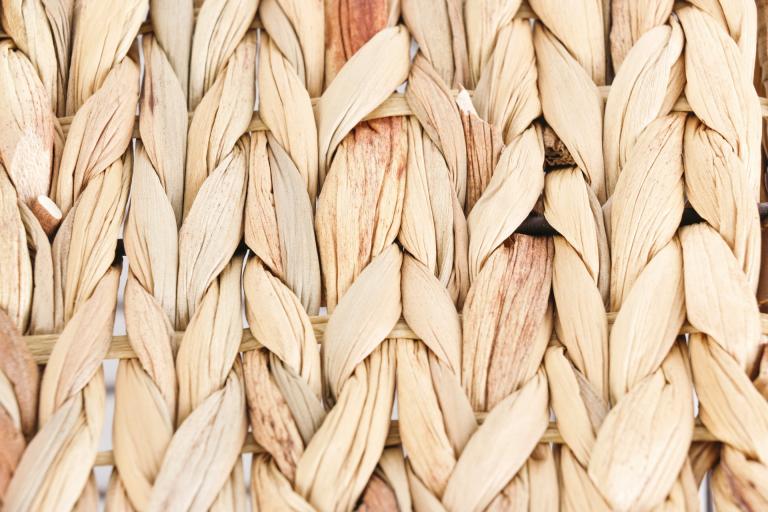
Woven straw, photo by dean7718 via Pixabay.
Now what about that first strand? The word “indigenous” can mean a couple different things. Indigenous can mean originating or characteristic of a particular area, and it can also refer to something innate – something inherent in a person’s nature or “way of knowing.” The Druids developed close relationships with their land, in the same manner that Native Americans developed close relationships with their lands. Though the Druids would not be considered indigenous, their connection was very intimate and inherent in their practices and interpretation of their faith. When I read this book, I couldn’t help but think of how our connection to our physical landscape, our faith and secular communities could be compared to the relationship the Druids and Native Americans formed with their surrounding world.
Let’s talk about the the third strand for a minute. Stories. How important are our stories to our interpretation of the world around us? Or how about this? How influential are our personal stories of our own lives in interpreting the UU covenant?
Here we have a second similarity between the Druids and the Native Americans. Both cultures passed on their traditions and knowledge through storytelling. The storytellers of the Druids were called the bards. Bards would travel from town to town, singing and rhyming about the deeds of others. They would recite poems that shared news from the battlefield. Their songs could memorialize a fallen hero, or ridicule a scoundrel into being cast out. These stories were very powerful and influenced how people interpreted their faith. The more stories we listen to, like the many sources of UUism, the better we are able to form our own perception of others and the world, and decide how we will approach it.

The strand of scientific knowledge. Photo by Gerd Altmann via Pixabay.
Let’s go back to that second strand, the strand of scientific knowledge. The author believes that science doesn’t explain our possibilities but rather it defines our limitations. Do you believe science limits us? Maybe that is something we can ponder later. Science does separate the observers from the observation, yet how we observe and interpret our stories will also influence how we pass them along to others.
There is a lesson we can take from nature, if you watch bees traveling from one flower to the next, always in search of the best source of pollen. Perhaps we should take the best sources of many stories to feed our spirituality. A balance of many flowers, like the six sacred sources of wisdom.
Druidry is not the only religion I’ve studied. A balance between wisdom and compassion is an essential goal in Buddhism. Wisdom relates to the comprehending side of our inherent nature, and compassion relates to the feeling side. For someone on the path of the Bodhisattva, it’s important to know that we must balance care for others with self-care. Compassion, often simply called “karuna” is a contemplative discipline that requires us to also exercise a skill of “even-mindedness.” A state of being even-minded can often be obstructed by feelings of hatred, fear, greed, or lust. When we let these feelings impair our compassion, we can not achieve equanimity, nor can we achieve another goal of the Bodhisattva, which is the ability to be in the moment. If we can find ourselves being in the moment, it is much easier to notice those who are struggling around us.
There is a quote from the Metta Sutta, “Radiate boundless love toward the entire world, above, below, and across – unhindered, without ill will, without enmity.”

Boundless love, photo by Ben Kerckx via Pixabay.
According to the stories of the Celts, which the bards told across the land, one of the greatest Irish kings was Cormac, grandson of Conn of a Hundred Battles. As much as his grandfather was known for being war-like, Cormac was renowned for his wisdom, intelligence and being mild-mannered. Cormac had a great influence on the laws which the Druids used for adjudicating in their role as law-bringers. These laws were created about the 2nd to third century of the Common Era. In one of Cormac’s writings about the proper conduct of a king, he gave the following advice, “Don’t ridicule the elderly, though you be young, Nor the poor, though you be rich, Nor the ragged, though you be wealthy, Nor the lame, though you be fleet, Nor the blind, though you can see, Nor the foolish, though you be wise. “
Cormac and his Druid advisers had a great influence on the Brehon Law, believed to be the oldest law system in Europe, which was passed down orally in poetic verse until it was written down about the 7th century. This ancient Irish law mandated that hospitality would be granted to travelers. Hospitality was to include bedding, food and entertainment and in exchange, the traveler was obliged to refrain from violence or quarrel while staying there. Hospitality; another form of kindness or compassion. Stories like those of King Cormac’s compassion are the stories that have shaped the way I try to help others.
Today’s druids, like myself, often take active roles in social justice to protect the environment, both the natural and the social landscape. When I took my oath as a minister, there is a line, “I pledge to serve the Gods, the folk and the land, with my head, my heart and hands.” As clergy members, we still strive for ideals of compassion. We consider a reciprocal relationship with the land and folk to have a sacred meaning that informs and defines our piety.

Protecting the environment, photo by Gerd Altmann via Pixabay.
In Ralph Waldo Emerson’s “Nature” essay, he claims people are distracted by the demands of the world, and so they do not fully appreciate the beauty of nature. That, in order to be whole, we must separate from society’s distractions. Emerson’s people did not understand what it is to be in the moment like the Bodhisattva. Do you agree society’s demands have made some of us less compassionate? I do. I like to think compassion and kindness are innate in many people who have lost touch with life beyond the daily grind.
But it must be re-awakened. I often wonder if a lack of awareness of nature’s beauty is collateral damage to the current social justice movement. After all, we have so many areas that need our attention. This goes back to that idea of even-mindedness; balance. How do we show compassion everywhere it’s needed? Maybe, just maybe we start small, within the congregation, within the areas we have the best access to helping, within our local environment, and where it most afflicts our heart.
Let’s go back to that other strand again, the science of knowledge. Is compassion a responsibility we have? As a priest, I feel I have a certain amount of responsibility to humankind, and helping society to achieve it’s best potential quality of life. I believe a compassionate relationship with the planet is necessary to achieve higher possibility. There is no scientific guarantee of an afterlife. Despite how good it sounds, I don’t think we can wait for a next life, or a second chance to take responsibility. I believe the time to act is now, and today – we aspire to that greater good.
On the first Thursday in May, is the National Day of Prayer. Side by side with this Day of Prayer, is held the National Day of Reason. The Day of Reason is promoted by the American Humanist Association to inspire the secular community to strive for positive change. There will always be people who need that supernatural, Divine spark of motivation to be more compassionate, but for others of us, the spark to make a change starts within our own individual being. You might say, it’s a feeling and desire indigenous to our make-up.
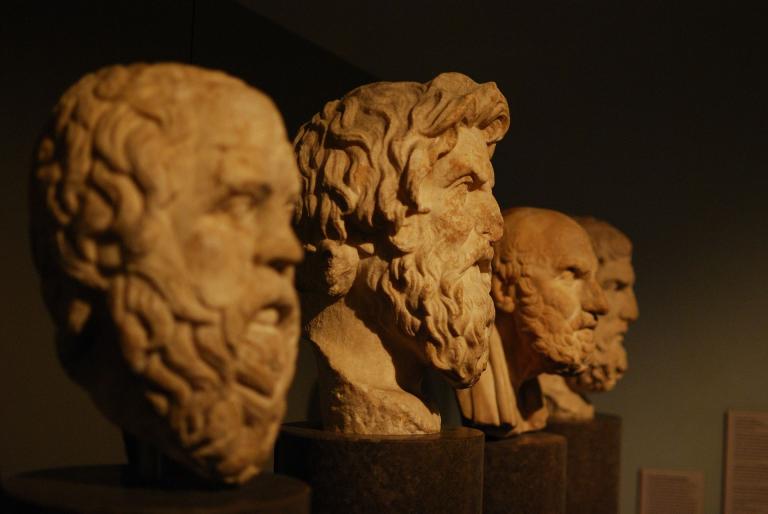
We all must seek for truth through reason. Photo by morhamedufmg via Pixabay.
Carl Sagan is said to have beheld that we all must seek for truth through reason, but decisions about right and wrong are based upon the individual.
And therefore it is we, as individuals who are responsible for our own motivation towards compassion, and it is up to the individuals where such compassion is directed. It is the act of being compassionate that grants us all a unity of purpose.
It is within that concept of a “Unity of Purpose,” we return yet again to the braided sweetgrass. Three strands that might as well be six sources of UU wisdom and teaching, or it might as well be one strand for each of us in this congregation, each of us bringing our own stories, our own intimate connections with the environment; all of us strands brought together in one mighty Unity of Purpose.
Around 1854, government agents approached Indian Chief Seneca to purchase land from the tribes. This was part of his response to them, he said, “Every part of this land is sacred to my people. Every shining pine needle, every sandy shore, every mist in the dark woods, every clearing, and every humming insect is holy in the memory and experience of my people. The sap which courses through the trees carries the memories of the tribe.”
We share a connection to the land, as much as we share a connection to our communities. Diversity of faith does not separate us, it grants us new stories for our faith. New ways of knowing others that we might achieve balance through understanding.
In my eyes, we are one connected family, community, congregation, or country, or countries. We are the braids of the sweetgrass, drawing on the best stories of many religions, with compassion as an integral belief. We balance our ideals with wisdom, and we seek to be present in the moment, and always, always present in this Unity of Purpose, may we be compassionate with ourselves and with each other. After all, WE are a community of the Living Tradition.

About Ayliah Cannon
Rev. Ayliah Cannon is a Senior Priest with ADF, an international druid fellowship that focuses on excellence in scholarship, building inclusivity, and fulfilling service to the land, Gods and Ancestral Spirits. More information on who they are can be found at www.ADF.org . Representation Matters! Ayliah is an intersex, pansexual woman who is very active in supporting the LGBTQIA communities and attempts to build bridges through the use of open, honest communication and education. She actively works to build intersex awareness and strongly encourages people to add the “Q-I-A” to their lgbt vocabulary. The “Q” is for queer or questioning. The “A” may represent asexual, agendered, or allies. The “I” is for the intersex community often forgotten and wrongfully conflated with being transgender. Ayliah works with many different deities from various pantheons, though she maintains close relationships with Frey and Freyja, Morrigan, Hecate, Aphrodite, Persephone and Astarte. Her work as a priest is part of her devotion to Brighid. She has identified as pagan for nearly thirty years and provides readings, rituals and classes for others, as often as she is able. She lives in sunny Florida with her partner and their two cats, and enjoys writing, singing, being outdoors, and competitive ballroom dancing. In the absence of an active druid grove, she is active in a local Unitarian Universalist congregation as a worship associate. You can read more about the author here.
Previous Post

April 18, 2019
3 Pagans & A Cat: You Are Witch Enough
Next Post

April 23, 2019 Grace Notes: Sacred Rubbish
Browse Our Archives
Select a Category A Lakeside Hearth Adventures in Wortcunning Alone In Her Presence Arts, Crafts & Cooking Birthing Hereditary Witchcraft Book of Blackbirds Book Reviews Born-Again Witch Cauldron, Sword, Spear, & Stone Cermony and Liturgy Columns Community Dandelion Seeds Dear Jasmine Druid Thoughts Editor's Picks Everyday Pagan Family & Household Practice Family Traditions Full Frontal Magic Gateway Goddess Guest Articles Happily Heathen Health and Wellness Hearth of Hellenism Heathen Woman Hills of the Horizon History Holidays Horse Goddesses Interfaith Interviews Irish-American Witchcraft Jewish Witch Lamp & Labyrinth Letters from Midgard Literature, Media, Film, Music Loop of Brighid Love, Sex & Relationships Magic or Magick Making Light Naturalistic Traditions Nature News Outside The Circle Pantheisticon Politics Prayers, Poems, Blessings & Stories Queer Femme Mystic Queer of Swords Recipes Ritual and Practice Science and Research Seekers and Guides Seeking the Grail Socially Responsible Magic Spear of Athena Star Made Witch Syncretic Electric Technology The Blooming Staff The Busy Witch The Cartomancer The Crow's Nest The Dance of Pagan Recovery The Hearth of Hellenism The Lady's Quill The Other Side of the Hedge The Path of She The Rantin' Raven The Witches Next Door The Zen Pagan Theology, Ethics, Philosophy Tree City Witch Urban Earthwitch Wayfaring Woman Witch on Fire Wyrd Words
Select a Month January 2026 March 2025 December 2024 June 2024 April 2024 March 2024 January 2024 December 2023 November 2023 October 2023 August 2023 July 2023 May 2023 April 2023 March 2023 February 2023 January 2023 December 2022 November 2022 October 2022 September 2022 August 2022 July 2022 June 2022 May 2022 March 2022 February 2022 January 2022 December 2021 November 2021 October 2021 September 2021 August 2021 July 2021 June 2021 May 2021 April 2021 March 2021 February 2021 January 2021 December 2020 November 2020 October 2020 September 2020 August 2020 July 2020 June 2020 May 2020 April 2020 March 2020 February 2020 January 2020 December 2019 November 2019 October 2019 September 2019 August 2019 July 2019 June 2019 May 2019 April 2019 March 2019 February 2019 January 2019 December 2018 November 2018 October 2018 September 2018 August 2018 July 2018 June 2018 May 2018 April 2018 March 2018 February 2018 January 2018 December 2017 November 2017 October 2017 September 2017 August 2017 July 2017 June 2017 May 2017 April 2017 March 2017 February 2017 January 2017 December 2016 November 2016 October 2016 September 2016 August 2016 July 2016 June 2016 May 2016 April 2016 March 2016 February 2016 January 2016 December 2015 November 2015 October 2015 September 2015 August 2015 July 2015 June 2015 May 2015 April 2015 March 2015 February 2015 January 2015 December 2014 November 2014 October 2014 September 2014 August 2014 July 2014 June 2014 May 2014 April 2014 March 2014 February 2014 January 2014 December 2013 November 2013 October 2013 September 2013 August 2013 July 2013 June 2013 May 2013 April 2013 March 2013 February 2013 January 2013 December 2012 November 2012 October 2012 September 2012 August 2012 July 2012 June 2012 May 2012 April 2012 March 2012 February 2012 January 2012
Follow Us!
TAKE THE
Religious Wisdom Quiz
A woman who had suffered bleeding for twelve years was healed by touching Jesus' what?
Select your answer to see how you score.
His hand The hairs of his head His cloak His feet
Related posts from Agora

Simple Witchery: To Keep Silent


Pergamum Unfurled: Magic with the Greek Gods (Book...

Pergamum Unfurled: Cunning Words (Review)
TRENDING AT PATHEOS Pagan

I was recently chatting with someone on Instagram. She asked me what...

While there are many people who share their results, the end of...

On July 23, I saw Christopher Nolan's The Odyssey which is Homer’s...

As I write this two big events have just finished up. One...

Restoring the Watershed of Divine Love
Perhaps cooperation is not something we manufacture through legislation, ideology, or moral...

Many UUs don’t pray because of bad experiences in a previous religion,...
view all Pagan blogs
Ad-Free & Subscriber Log-In Subscription Support
- About Us
- 2026 Calendar
- Videos
- Podcasts
- Library of World Religions
- Faith In Media Tracker
- Advertise With Us
- Write for Us
- Privacy Policy
- Terms of Service
- Do Not Sell My Data
- Contact Us
- Radiant Digital
- Manage Newsletter Subscriptions
- Unsubscribe From Notifications
- Sitemap
Copyright 2008-2026, Patheos. All rights reserved.
Subscription Support Ad-Free & Subscriber Log-In
Follow Patheos