
BuddhistCatholicContemplativeEvangelicalGeneral ChristianHinduJewishLatter-day SaintMuslimNew VisionsProgressive Christian
Beliefs
- Buddhist
- Catholic
- Contemplative
- Evangelical
- General Christian
- Hindu
- Jewish
- Latter-day Saint
- More Voices
- Muslim
- New Visions
- Pagan
- Progressive Christian
Topics
- Religion News
- Food and Religion
- Sports and Religion
- Religious Art
- Religious Music and Entertainment
- Religious Events
- History and Religion
- Style and Religion
- Politics and Religion
- Women in Religion
- Recreation Outdoors and Religion
- Business Finance and Religion
- Careers Workplace and Religion
- Education and Religion
- Family Parenting and Religion
- Health Fitness and Religion
- Home and Religion
- Relationships and Religion
- Technology and Religion
- Travel and Religion
Columnists
- Buddhist Columnists
- Business Finance and Religion Columnists
- Careers Workplace and Religion Columnists
- Catholic Columnists
- Contemplative Columnists
- Education and Religion Columnists
- Evangelists Columnists
- Family Parenting and Religion Columnists
- General Christian Columnists
- Health Fitness and Religion Columnists
- Hindu Columnists
- History and Religion Columnists
- Home and Religion Columnists
- Jewish Columnists
- More Voices Columnists
- Latter Day Columnists
- Muslim Columnists
- New Visions Columnists
- Nonreligious Columnists
- Pagan Columnists
- Politics and Religion Columnists
- Progressive Columnists
- Recreation Outdoors and Religion Columnists
- Relationships and Religion Columnists
- Religion News Columnists
- Religious Art Columnists
- Religious Events Columnists
- Religious Music and Entertainment Columnists
- Sports and Religion Columnists
- Style and Religion Columnists
- Technology and Religion Columnists
- Travel and Religion Columnists
- Women in Religion Columnists
Resource Library
- 2026 Calendar
- Library of World Religions
- The 100 Most Holy Places on Earth
- Patheos Answers
- Podcasts
- Videos
- Faith Leaders Database
- Anglican Episcopalian
- Bahai
- Baptist
- Buddhism
- Christianity
- Confucianism
- Eastern Orthodoxy
- Hinduism
- Holiness and Pentecostal
- ISKCON
- Islam
- Judaism
- Lutheran
- Methodist
- The Church of Jesus Christ of Latter-day Saints
- New Age
- Paganism
- Presbytarian and Reformed
- Protestantism
- Religion Behind the Scenes
- Roman Catholic
- Scientology
- Shia Islam
- Sikhism
- Sufism
- Sunni Islam
- Taoism
- Zen
- See all religions
Research Tools
 Ad-Free & Subscriber Log-In Subscription Support
Ad-Free & Subscriber Log-In Subscription Support
Follow Patheos 

- Trending:
- Forgiveness
- |
- Marriage
- |
- Consciousness
- |
- Death Penalty
- |
- Election
- |
- Halloween

- Home
- Pagan
- 3 Pagans & A Cat: Ode Speaks on Monsters, Monstrousness, and Love
3 Pagans & A Cat: Ode Speaks on Monsters, Monstrousness, and Love
Last updated on: April 27, 2019 at 10:43 pm by Ode
3 Pagans & A Cat: Ode Speaks on Monsters, Monstrousness, and Love 2019-04-27T22:43:56+00:00 Ode
Patheos Explore the world's faith through different perspectives on religion and spirituality! Patheos has the views of the prevalent religions and spiritualities of the world.
Often they don’t precisely know,
those who sit first in a house,
whose kinsmen they are who come (later):
no man is so good
that no fault follows him,
nor so bad that he is of no use.
Let us speak of monsters: there are three.
(There will always be outliers, of course. These are monsters. It is not in their nature to be orderly.)
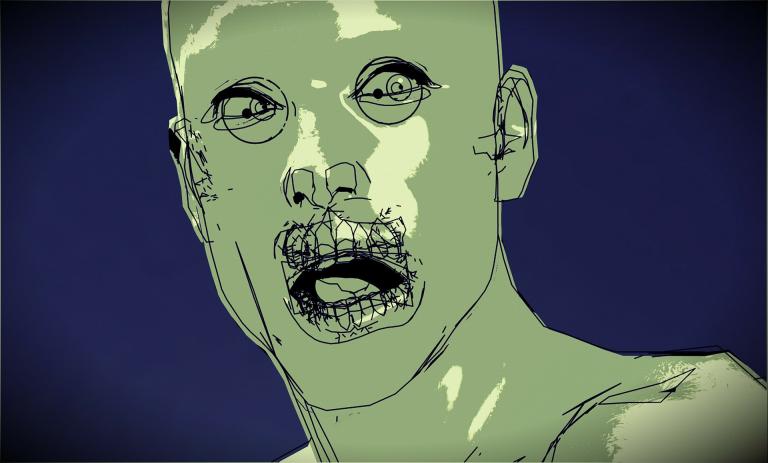
Let us speak of monsters. Image by Reimund Bertrams via Pixabay.
The first and least dangerous monster is the kind that you have made — the shunned child, the terrorized soldier, the desperate criminal. These are monsters of incidence, for without the inciting event and the grinding misery of life they would not be monsters at all. They are small monsters, and they are generally loud monsters, because their monstrousness comes from pain, and without expression pain is poison.
Do not suppose that this means they are limited in their capacity to inflict pain on others, or to destroy what is put before them, but understand that it is what makes them knowable. Somewhere, in these monsters, is a thorn which Androcles could remove. These are monsters which can, with effort on several parts (including that of the monster) be healed and become something less monstrous. The monsters you bred in them will always be part of them, now, but they need not always be the whole part, or the part with the most access to teeth.
(I hear you crying: but not everyone under such conditions as could make a monster becomes one. The fault is with the monster! The flaw is in them! So I will tell you: this is a comforting lie that we tell ourselves. It is a lie that we tell because it erodes our responsibility in the making of these monsters, and it makes them seem other than us. But they are not other. The fault is with us. The flaw is in us. When you subject something beautiful to stress to see if it might break, and it then shatters beyond repair, you are responsible for the destruction.
If your hands do violence, it is your violence.
This does not make monsters innocent. But neither are you.)
The second monster is the kind inborn. There is no event or action which creates this monster. It simply is, somewhere within a creature, and waits for its right time to bite and claw and cause chaos. It is the best shapeshifter of its like, and may linger beneath the skin forever, pacing between ribs, a hollow thing of hunger and violence. It is larger than the first monster, but it is also quieter, more inclined to subtlety, and to seek a position of authority and power before it slakes its appetite. It is, I believe, in all creatures somewhere — the only question is whether it is close to the skin, or buried in the place where shadows and forsaken dreams lie, or leashed to the purpose of its creature. It will always be a monster, because it was never anything else — it cannot unbe.
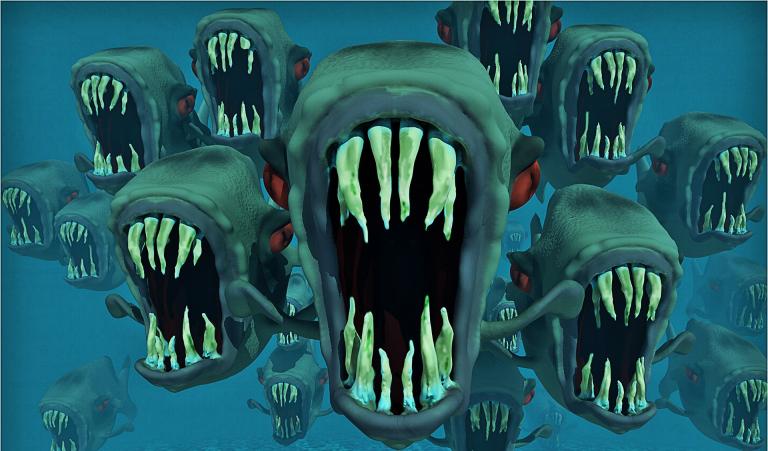
A Hollow Thing of Hunger. Image by Reimund Bertrams via Pixabay.
(This does not mean it should be destroyed– indeed, I do not believe it can be. There is a value to a thing which is always hungry, which does not know or understand fear, which is entirely teeth and danger. Given purpose and place, and constant attention and correction, it is a good guardian. Recall the many guardian monsters of the world — did you imagine they were always leashed? No: these were simply the monsters with good and clever masters, who saw value and worth in their existence. Recognizing that a monster cannot be allowed to rampage and cause unmitigated destruction does not mean that the monster must be slain. The monster is not the problem. The action is the problem. Behaviour can be modified, and failing that, channeled. This does not mean that no monsters should be slain. But it means you can probably send another monster to do it.)
The third monster is unknowable. It is basic, uncomplicated, innate chaos. It is Ginnungagap. It is the space between atomic particles. It is the space between stars. It is beyond comprehension, and thus beyond description. It is not my business, and my existence is very probably meaningless to it. It exists (and does not) and that is all (it is nothing).
(It is, like all monsters, an inextricable part of the weave. What? Did you forget the space between threads?)
The second thing to understand about monsters is that they will always exist. They always have existed, they exist today, and any fathomless paradise lacking monsters would stagnate and die on the vine, thus they must always exist in the ceaseless tomorrow.
The third thing to understand about monsters is that they, like all other things, can be loved.
I do not know if every kind of monster can feel or express love, although some of them certainly can. (We will speak of love another time.) But reciprocation is not, in fact, the point of love. If the monster loathes me, would bite and tear me, that has no bearing on whether or not I am able to love it, or even if I should love it. If there is love in me for a monster — strange, fearsome, untraceable love, which decides its own course; or the gentler affection that sometimes grows out of familiarity; or the deliberate choice of love, made with calculation and intent, sustained with effort and will — that is not the monster’s affair. Loving the monster does not even necessarily preclude destroying it, if it is sufficiently dangerous and sufficiently resistant to being healed or leashed as its nature warrants.
Like all emotions, and perhaps contrary to popular wisdom, love is a thing you feel, not a thing you do. What you do about love, how or even if you express it, is another matter entirely. You may even perform the actions of love without feeling it, if you are generous, or crafty, or a particular kind of monster, or all three.
Love does not tame monsters, or if it tames some, it does not tame all. It may, in fact, make monsters more dangerous, or focus them in a different way. Or they may ignore it entirely. Put aside this fairytale: love does not make monsters into men.
But it makes them beloved.
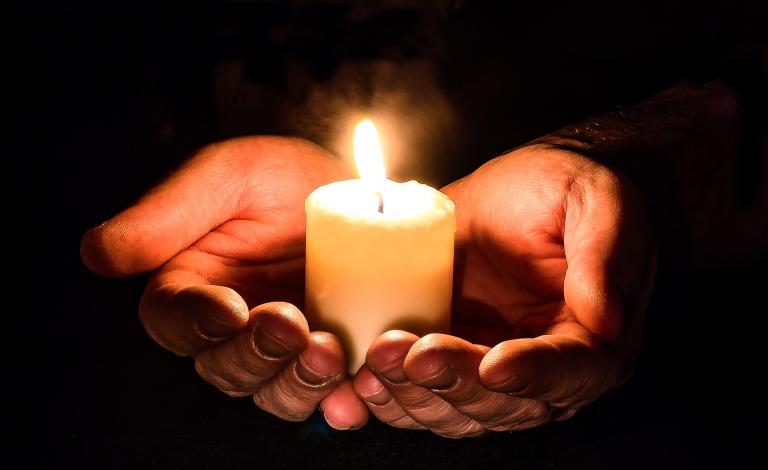
A Candlelight Sacredness. Photo by Myriams-Fotos via Pixabay.
This is a thing I am not certain how to translate into words: a thing I know marrow-deep, sourcelessly, the way that I know that some kind of power sleeps in bones, and honey is sacred, and the right kind of wind carries someone’s attention. Here is the thing: whatever is beloved is, in its own small way, sacred. Place, or item, or creature, it makes no nevermind; if there is love in it, that is a sacred thing. Childhood toys, and secret groves, and lovers, children, soulmates, monsters: sacred all. Not in the way that gods are sacred — that is a very large and profound sacredness — but a small, familiar, candlelight sacredness. The kind you can carry with you.
Do you understand?
Being loved, beloved, sacred does not make the monster worthier or less dangerous, but it builds a home around it. You, who love the monster, live with it in the place your love has made — not a physical place, necessarily, but a place nonetheless. In living with it, you make that monster kin, with all the obligations and advantages that entails.
This is a dangerous thing to do. It is also, sometimes, a necessary thing to do.
It is particularly necessary if the monster is in you.
And now here is the secret: it is.
You have a monster in you. Hide it, leash it, slay it, love it — you have a monster in you.
No man is so good that there is no fault in him.
No man is so wicked that he is of no use.
Now understand: there are no monsters.
There are people. There is entropy. There is raw, simple chaos. There is you.

About Ode
Ode is a Syncretic Heathen, and is probably The Enemy to a variety of people for different reasons. This is fine. Ode has a lot of teeth. Ode is partial to interesting rocks, bones, animals that people don't trust, the overlapping realities of meat and mind, and anything that is very, very small. You can read more about the author here.
Previous Post

April 26, 2019
Pan-Celtic Hoofbeats: Rhiannon. Queen of the May?
Next Post

April 29, 2019 Phoenix Rising: When Your Shadow Comes Calling . . .
Browse Our Archives
Select a Category A Lakeside Hearth Adventures in Wortcunning Alone In Her Presence Arts, Crafts & Cooking Birthing Hereditary Witchcraft Book of Blackbirds Book Reviews Born-Again Witch Cauldron, Sword, Spear, & Stone Cermony and Liturgy Columns Community Dandelion Seeds Dear Jasmine Druid Thoughts Editor's Picks Everyday Pagan Family & Household Practice Family Traditions Full Frontal Magic Gateway Goddess Guest Articles Happily Heathen Health and Wellness Hearth of Hellenism Heathen Woman Hills of the Horizon History Holidays Horse Goddesses Interfaith Interviews Irish-American Witchcraft Jewish Witch Lamp & Labyrinth Letters from Midgard Literature, Media, Film, Music Loop of Brighid Love, Sex & Relationships Magic or Magick Making Light Naturalistic Traditions Nature News Outside The Circle Pantheisticon Politics Prayers, Poems, Blessings & Stories Queer Femme Mystic Queer of Swords Recipes Ritual and Practice Science and Research Seekers and Guides Seeking the Grail Socially Responsible Magic Spear of Athena Star Made Witch Syncretic Electric Technology The Blooming Staff The Busy Witch The Cartomancer The Crow's Nest The Dance of Pagan Recovery The Hearth of Hellenism The Lady's Quill The Other Side of the Hedge The Path of She The Rantin' Raven The Witches Next Door The Zen Pagan Theology, Ethics, Philosophy Tree City Witch Urban Earthwitch Wayfaring Woman Witch on Fire Wyrd Words
Select a Month January 2026 March 2025 December 2024 June 2024 April 2024 March 2024 January 2024 December 2023 November 2023 October 2023 August 2023 July 2023 May 2023 April 2023 March 2023 February 2023 January 2023 December 2022 November 2022 October 2022 September 2022 August 2022 July 2022 June 2022 May 2022 March 2022 February 2022 January 2022 December 2021 November 2021 October 2021 September 2021 August 2021 July 2021 June 2021 May 2021 April 2021 March 2021 February 2021 January 2021 December 2020 November 2020 October 2020 September 2020 August 2020 July 2020 June 2020 May 2020 April 2020 March 2020 February 2020 January 2020 December 2019 November 2019 October 2019 September 2019 August 2019 July 2019 June 2019 May 2019 April 2019 March 2019 February 2019 January 2019 December 2018 November 2018 October 2018 September 2018 August 2018 July 2018 June 2018 May 2018 April 2018 March 2018 February 2018 January 2018 December 2017 November 2017 October 2017 September 2017 August 2017 July 2017 June 2017 May 2017 April 2017 March 2017 February 2017 January 2017 December 2016 November 2016 October 2016 September 2016 August 2016 July 2016 June 2016 May 2016 April 2016 March 2016 February 2016 January 2016 December 2015 November 2015 October 2015 September 2015 August 2015 July 2015 June 2015 May 2015 April 2015 March 2015 February 2015 January 2015 December 2014 November 2014 October 2014 September 2014 August 2014 July 2014 June 2014 May 2014 April 2014 March 2014 February 2014 January 2014 December 2013 November 2013 October 2013 September 2013 August 2013 July 2013 June 2013 May 2013 April 2013 March 2013 February 2013 January 2013 December 2012 November 2012 October 2012 September 2012 August 2012 July 2012 June 2012 May 2012 April 2012 March 2012 February 2012 January 2012
Follow Us!
TAKE THE
Religious Wisdom Quiz
Who was Noah's father?
Select your answer to see how you score.
Abel Seth Lamech Enoch
Related posts from Agora

Simple Witchery: To Keep Silent

Simple Witchery: Leaning On The Four Pillars


Pergamum Unfurled: Magic with the Greek Gods (Book...
TRENDING AT PATHEOS Pagan

I was recently chatting with someone on Instagram. She asked me what...

While there are many people who share their results, the end of...

On July 23, I saw Christopher Nolan's The Odyssey which is Homer’s...

As I write this two big events have just finished up. One...

Restoring the Watershed of Divine Love
Perhaps cooperation is not something we manufacture through legislation, ideology, or moral...

Many UUs don’t pray because of bad experiences in a previous religion,...
view all Pagan blogs
Ad-Free & Subscriber Log-In Subscription Support
- About Us
- 2026 Calendar
- Videos
- Podcasts
- Library of World Religions
- Faith In Media Tracker
- Advertise With Us
- Write for Us
- Privacy Policy
- Terms of Service
- Do Not Sell My Data
- Contact Us
- Radiant Digital
- Manage Newsletter Subscriptions
- Unsubscribe From Notifications
- Sitemap
Copyright 2008-2026, Patheos. All rights reserved.
Subscription Support Ad-Free & Subscriber Log-In
Follow Patheos