
BuddhistCatholicContemplativeEvangelicalGeneral ChristianHinduJewishLatter-day SaintMuslimNew VisionsProgressive Christian
Beliefs
- Buddhist
- Catholic
- Contemplative
- Evangelical
- General Christian
- Hindu
- Jewish
- Latter-day Saint
- More Voices
- Muslim
- New Visions
- Pagan
- Progressive Christian
Topics
- Religion News
- Food and Religion
- Sports and Religion
- Religious Art
- Religious Music and Entertainment
- Religious Events
- History and Religion
- Style and Religion
- Politics and Religion
- Women in Religion
- Recreation Outdoors and Religion
- Business Finance and Religion
- Careers Workplace and Religion
- Education and Religion
- Family Parenting and Religion
- Health Fitness and Religion
- Home and Religion
- Relationships and Religion
- Technology and Religion
- Travel and Religion
Columnists
- Buddhist Columnists
- Business Finance and Religion Columnists
- Careers Workplace and Religion Columnists
- Catholic Columnists
- Contemplative Columnists
- Education and Religion Columnists
- Evangelists Columnists
- Family Parenting and Religion Columnists
- General Christian Columnists
- Health Fitness and Religion Columnists
- Hindu Columnists
- History and Religion Columnists
- Home and Religion Columnists
- Jewish Columnists
- More Voices Columnists
- Latter Day Columnists
- Muslim Columnists
- New Visions Columnists
- Nonreligious Columnists
- Pagan Columnists
- Politics and Religion Columnists
- Progressive Columnists
- Recreation Outdoors and Religion Columnists
- Relationships and Religion Columnists
- Religion News Columnists
- Religious Art Columnists
- Religious Events Columnists
- Religious Music and Entertainment Columnists
- Sports and Religion Columnists
- Style and Religion Columnists
- Technology and Religion Columnists
- Travel and Religion Columnists
- Women in Religion Columnists
Resource Library
- 2026 Calendar
- Library of World Religions
- The 100 Most Holy Places on Earth
- Patheos Answers
- Podcasts
- Videos
- Faith Leaders Database
- Anglican Episcopalian
- Bahai
- Baptist
- Buddhism
- Christianity
- Confucianism
- Eastern Orthodoxy
- Hinduism
- Holiness and Pentecostal
- ISKCON
- Islam
- Judaism
- Lutheran
- Methodist
- The Church of Jesus Christ of Latter-day Saints
- New Age
- Paganism
- Presbytarian and Reformed
- Protestantism
- Religion Behind the Scenes
- Roman Catholic
- Scientology
- Shia Islam
- Sikhism
- Sufism
- Sunni Islam
- Taoism
- Zen
- See all religions
Research Tools
 Ad-Free & Subscriber Log-In Subscription Support
Ad-Free & Subscriber Log-In Subscription Support
Follow Patheos 

- Trending:
- Forgiveness
- |
- Marriage
- |
- Consciousness
- |
- Death Penalty
- |
- Election
- |
- Halloween

- Home
- Pagan
- The Purple Spiral Turns: The Law of Names and Words of Disempowering
The Purple Spiral Turns: The Law of Names and Words of Disempowering
Last updated on: March 19, 2019 at 3:48 am by Ayliah Cannon
The Purple Spiral Turns: The Law of Names and Words of Disempowering 2019-03-19T03:48:51+00:00 Ayliah Cannon
Patheos Explore the world's faith through different perspectives on religion and spirituality! Patheos has the views of the prevalent religions and spiritualities of the world.
“There is a voice that doesn’t use words; listen.” – Rumi
There is power in the words we use. What voice do you think Rumi was referring to in the above quote? Do you think it was the voice of reason? Maybe it was a voice of the heart. How could a voice without words have power? Books don’t speak like humans but they certainly have a voice. They carry the voice of their author. So perhaps this voice without words is the voice of knowledge, or just perhaps, it’s the voice of choice. The power isn’t the words we use but the words we choose to use. Words can become laws and decide fate in a court of justice, however, words also become stories that empower and enchant; therefore, the words we choose might also disempower.
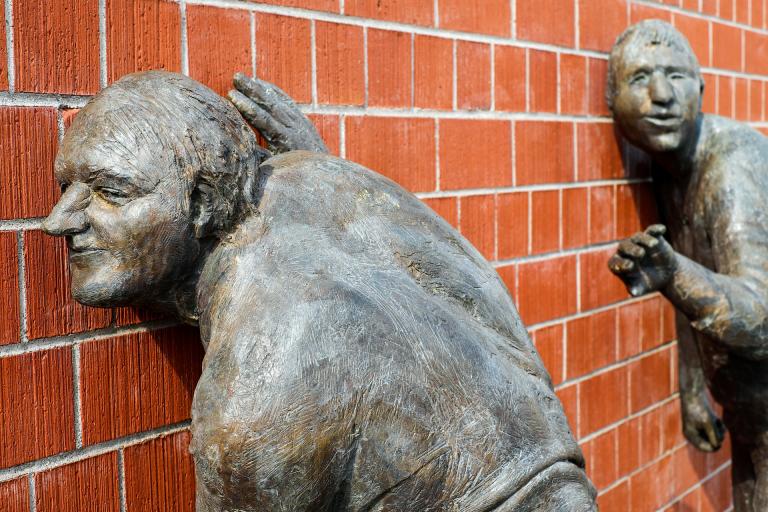
“There is a voice that doesn’t use words; listen.” Photo by Couleur via Pixabay.
The first time this writer realized the power of words outside of the public school, was reading Isaac Bonewits’ Real Magic. This book was my first encounter with laws pertaining to magic. There are a few laws that assist in understanding the value of the Law of Names. One which I will mention is the Law of Knowledge. It sounds pretty simple doesn’t it? The more you understand about something, the better qualified you are to choose the words which will gain you power over that thing. Then, there is the Law of Cause and Effect which states for every action there is a reaction. For every word you choose there is a reaction which we need to consider. The reactions you experience may well be the result of the choices you make.
The Law of Names suggests that knowing the complete name of an entity or phenomenon grants you power over it, but it is also based on the premise that knowing the full name comes from fully understanding the entity or phenomenon. How often do we choose to refer to things by powerful words without complete and full comprehension? Names can also be very symbolic, therefore the names, or words, which we apply to others can confer certain emotions or images. These words are called “associational devices” because we associate certain thoughts and feelings with them. Imagine for a moment that we changed these associational devices. Do you think we could change the positive or negative reaction to certain images?
The Law of Words of Power suggests that certain words can influence an inner and/or outer reality of the person using the word. Everything about the way a word of power is implemented can increase or decrease the effects. This includes inflections, accents, stressed syllables, tone and rhythm.
Another quote by Rumi, “ Life is a balance of holding on and letting go.”
The Law of Balance tells us we must strive to keep all aspects of our world in balance to avoid conflict and dissolution. When we balance our choices with knowledge and careful decision-making, we give ourselves and our communities the best possible chance at achieving goals and reaching our fullest potential. There are some things, some kinds of choices, which we must decide if they are worth holding on to, or consider the benefits of letting them go. Magic laws don’t have to remain confined to ritual space, and knowledge of them and their cause and effect can be used to improve everyday life and interpersonal relationships.

Balance, photo by realworkhard via Pixabay
“Let it go, let it go”
This is more than just the words to a Disney animated film. This is about the power of letting go of judgments and false perceptions that create bias, stereotypes, prejudice and exclusion. This process of letting go isn’t as easy as just saying the words. In “Frozen”, Elsa learns that she can gain full control of her powers by letting go of her past and all the restrictions she was expected to live by. This is a good lesson for anyone living in the shadow of their past, that by letting go they gain more power over how they live in the present. When our choices are no longer dictated by the expectations or past actions of others, we begin to realize how much potential we have. Choices is a word of special power. The phrase “let it go” becomes a phrase of empowerment.
Why can’t others learn this seemingly simple bit of magic? Oftentimes, a community that embraces restrictions on choices is what author Peter Block refers to as a “stuck community.” A stuck community will often broadcast many reasons to fear what they define as people or situations outside the mainstream. They choose words and names of bias to describe individuals whom they don’t understand. This is what I refer to as “words of disempowering.” The evening news focuses on crime and suffering, often with human interest stories only taking up a small fraction of air time. This type of reporting commercializes suffering. It focuses on ratings (causes) rather than on the reactions (effects) of the broadcast. In response, fear is justified, and an agenda based on retribution is promoted. These “words of power” from the media contribute to much of the division we see in the country’s social landscape. Suffering is often contrasted with spiritual values, creating a religious context for order and rules. This amplifies the argument against the value of diversity and inclusion by implying that anyone not the same is not of the same system of rules and order. Ask yourself, when was the last time you saw positive news coverage of someone from the LGBTQIA community appear on the evening news. Go ahead, I’ll wait. Back yet? Rather than focus on a community of possibilities, the result is focusing on a community of problems that need to be solved. Not that we don’t have problems, but when you change the context, you change how people react compassionately.
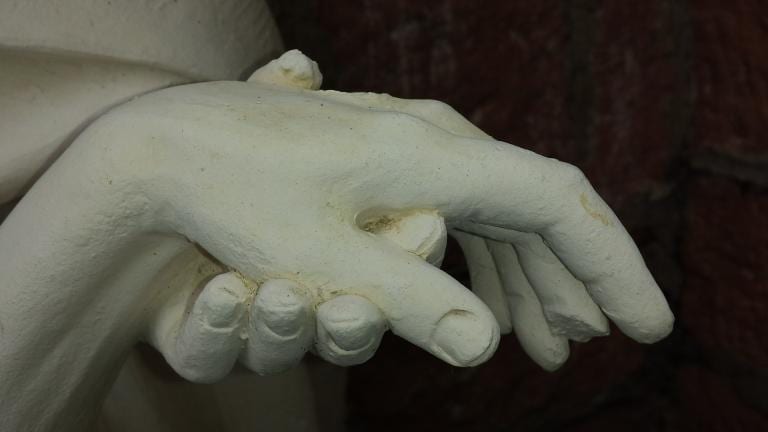
Compassion, photo by Sonnenstrahl via Pixabay
If we think of our culture in retributive terms, we may begin to understand why we have such a need for strong leaders that act quick and fast with a sense of authority. Rules and order breeds a certain amount of dependency in a community by reducing accountability on a personal level. If we are told how to think, act or restrict ourselves, we always know what is right and what is wrong. We never have to question anything, nor do we consider possibilities. Our vision is narrowed by the choices we make or by allowing others to make choices for us. The focus is no longer on the individual but the retributive agenda that becomes a never-ending cycle. Being in the “right” outweighs the potential value of being compassionate. This shouldn’t be conflated with the comparison of optimism to idealism. Idealistic is not always realistic. Optimism and possibility is about setting goals you can believe in and working for them.
Making the Descent
Another approach: In the descent of Inanna, she ventures to the Underworld to attend a funeral for Ereshkigal’s husband, Gugalanna. As she descends, she must pass through seven gates. At each gate, a piece of her regalia is stripped away, which eventually leaves her void of all identity and personal power. When she reaches the bottom of the descent, she is judged, albeit rather unfairly, and killed. For three days, she hangs on a hook as rotting flesh. Eventually, her trusted friend Ninshubur sends two beings to console Ereshkigal and encourage the release of Inanna. Inanna returns through the seven gates, regaining her regalia along the way and once back on top, begins a search for a scapegoat to take her place on the meat hook in the Underworld.
This myth has been used many times over and again as symbolic of initiation and the quest for renewal and knowledge. Inanna had to learn to let go of those things that defined her in order to regain her power and the knowledge necessary for her to be a powerful goddess. As a symbol of the vegetative process, the crops rise from the ground, bear fruit, and return to the rotting nothingness in the soil, only to arise again. Imagine a community that willingly descends. False perceptions are removed. Idealism is removed. The “words” are silenced and identity is suspended. Then, like Inanna, the community returns through the gates, transforming the way it identifies itself, using new words and language to shape its vision, and seeing everyone with new clarity and possibility.
As pagans, many of us are very familiar with rites of initiation, and for those who aren’t, anyone who has undergone rituals of growing up and leaving home, graduating college, getting married, all of which can be viewed as initiatory passages. The descent purifies the old self, the return initiates the transformation. This is just one way to ritualize the process of changing the choices we make and renewing our clarity of the choices available to us.
When we change our words, we change our power. We also affect others’ power. When we change the “names” by which we know others, we can effectively influence them, by perceiving them in a different light. This puts the idea of the Law of Names to work for us. Letting go of outmoded associational devices changes the way we empower or disempower our community.
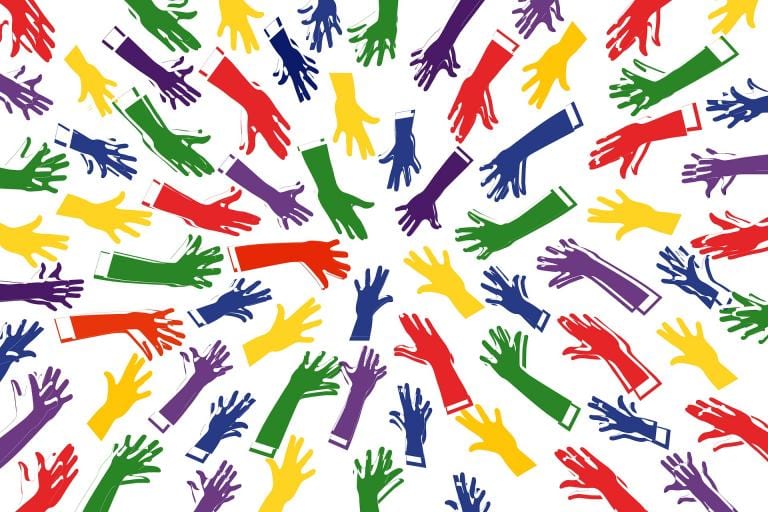
Inclusion, photo by geralt via Pixabay
Over the last couple articles, I have focused on ways of building inclusive communities. I have touched on building your connection with nature and with others. Once you’re starting to feel connected, however, the question is “what’s next?” The connection we form with others who are considered marginalized is only the beginning. We can’t rely on strong leaders to make decisions regarding what is right or wrong. We have an individual responsibility to change how we will meet the “marginalized” communities. When we stop using words of power to disempower others, we are letting go of the restrictions placed on who we accept or love. Then, we are building inclusion with more possibilities. Transforming the “Names” we use to know others ends the labeling practice which increases exclusion and separation.
Building Inclusive Communities
In today’s world, we encounter many forms of diversity which are not always well-understood or accepted. Far too often, people who do not fit the mainstream idea of the average man or woman, are seen as something to be avoided, shamed, harassed and are usually excluded from activities and conversations. These forms of diversity could include anything: religious, cultural, racial, physical or mobility challenges, learning challenges, sexual orientation, gender expression. The list goes on. Anything which makes someone appear different or differently-abled, is often a cause for exclusion. Below I am providing some tips to increase inclusivity. Some of these apply more directly to the LGBTQIA community, but can be adapted to reduce any form of exclusion.
What can a potential ally do:
- Say hello. Stop avoiding others. Don’t look away, make eye contact. Offer a friendly greeting. You don’t have to know a person’s background to begin reducing their invisibility.
- Be kind. You could compliment them some way or ask how their day is going, but be genuine, and not intrusive.
- Ask permission to ask questions. Think about what you say before you say it. Just because you are an open book doesn’t imply others are too. And if they say “no” don’t take it personally. Respect their privacy and acknowledge that their choices matter.
- Be tactful. Is the conversation you want to have coming from a place of compassion? If you really want to be a friend or ally, do you need to ask certain questions? Show them the same respect you would want others to show you. If a question offends, let it go. Respect their right to maintain boundaries.
- Be educated. Read articles about what people go through. Watch videos and documentaries. Learn about current issues regarding protections, and discrimination. Use your vote to support others’ rights. When you take the time to be informed, you take the next important step in becoming a good friend and ally.
Ready for the next level of building inclusion?
- Drop the labels. This author fully believes in the ability to recognize differences without using disempowering language that points out and underlines the differences. When we call someone marginalized, we are promoting the divisive language that keeps them marginalized. Language creates exclusion as much as the actions which often accompany it. When we refer to people as different, we are associating them as being different from what? Us? Who is us? This is the beginning of indifference that can lead to feelings of superiority and inferiority. In the words of Depeche Mode, “people are people.”
- See people for who they are. Once you’re able to view people as equally valid in their expression of their identity, you are in a better position to see them for their potential. All people are capable of contributing to make this better world, to making our communities more supportive and caring, to making our sacred spaces more holy. Our diverse community is no different; many hands bring many gifts; many eyes see many possibilities for our future.
- Start a discussion. Open a dialogue about inclusion in your coven or grove, your workplace, your church, wherever there is an opportunity for social interaction. Present a workshop on becoming inclusive. Attend a rally for equal rights. This is about taking your support off the couch and into the streets. When people start talking about the issues others face, more people will become aware, and more opportunities will present themselves to create a truly inclusive, mutually-supportive world.
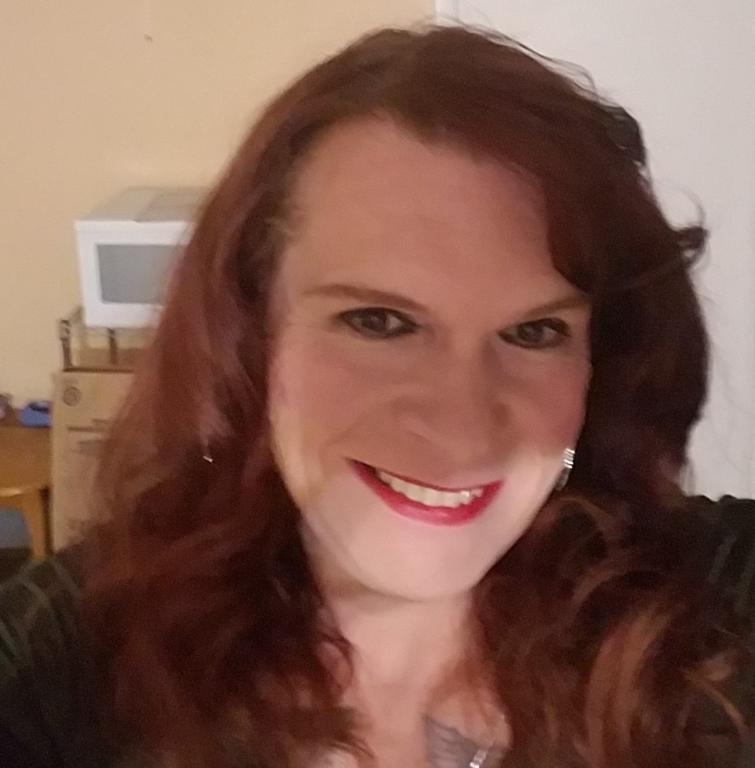
About Ayliah Cannon
Rev. Ayliah Cannon is a Senior Priest with ADF, an international druid fellowship that focuses on excellence in scholarship, building inclusivity, and fulfilling service to the land, Gods and Ancestral Spirits. More information on who they are can be found at www.ADF.org . Representation Matters! Ayliah is an intersex, pansexual woman who is very active in supporting the LGBTQIA communities and attempts to build bridges through the use of open, honest communication and education. She actively works to build intersex awareness and strongly encourages people to add the “Q-I-A” to their lgbt vocabulary. The “Q” is for queer or questioning. The “A” may represent asexual, agendered, or allies. The “I” is for the intersex community often forgotten and wrongfully conflated with being transgender. Ayliah works with many different deities from various pantheons, though she maintains close relationships with Frey and Freyja, Morrigan, Hecate, Aphrodite, Persephone and Astarte. Her work as a priest is part of her devotion to Brighid. She has identified as pagan for nearly thirty years and provides readings, rituals and classes for others, as often as she is able. She lives in sunny Florida with her partner and their two cats, and enjoys writing, singing, being outdoors, and competitive ballroom dancing. In the absence of an active druid grove, she is active in a local Unitarian Universalist congregation as a worship associate. You can read more about the author here.
Previous Post

March 19, 2019
Hearth of Hellenism: Discreet Devotion
Next Post
March 19, 2019 Dance of the Maenad: Bacchus- Liberator of Outsiders
Browse Our Archives
Select a Category A Lakeside Hearth Adventures in Wortcunning Alone In Her Presence Arts, Crafts & Cooking Birthing Hereditary Witchcraft Book of Blackbirds Book Reviews Born-Again Witch Cauldron, Sword, Spear, & Stone Cermony and Liturgy Columns Community Dandelion Seeds Dear Jasmine Druid Thoughts Editor's Picks Everyday Pagan Family & Household Practice Family Traditions Full Frontal Magic Gateway Goddess Guest Articles Happily Heathen Health and Wellness Hearth of Hellenism Heathen Woman Hills of the Horizon History Holidays Horse Goddesses Interfaith Interviews Irish-American Witchcraft Jewish Witch Lamp & Labyrinth Letters from Midgard Literature, Media, Film, Music Loop of Brighid Love, Sex & Relationships Magic or Magick Making Light Naturalistic Traditions Nature News Outside The Circle Pantheisticon Politics Prayers, Poems, Blessings & Stories Queer Femme Mystic Queer of Swords Recipes Ritual and Practice Science and Research Seekers and Guides Seeking the Grail Socially Responsible Magic Spear of Athena Star Made Witch Syncretic Electric Technology The Blooming Staff The Busy Witch The Cartomancer The Crow's Nest The Dance of Pagan Recovery The Hearth of Hellenism The Lady's Quill The Other Side of the Hedge The Path of She The Rantin' Raven The Witches Next Door The Zen Pagan Theology, Ethics, Philosophy Tree City Witch Urban Earthwitch Wayfaring Woman Witch on Fire Wyrd Words
Select a Month January 2026 March 2025 December 2024 June 2024 April 2024 March 2024 January 2024 December 2023 November 2023 October 2023 August 2023 July 2023 May 2023 April 2023 March 2023 February 2023 January 2023 December 2022 November 2022 October 2022 September 2022 August 2022 July 2022 June 2022 May 2022 March 2022 February 2022 January 2022 December 2021 November 2021 October 2021 September 2021 August 2021 July 2021 June 2021 May 2021 April 2021 March 2021 February 2021 January 2021 December 2020 November 2020 October 2020 September 2020 August 2020 July 2020 June 2020 May 2020 April 2020 March 2020 February 2020 January 2020 December 2019 November 2019 October 2019 September 2019 August 2019 July 2019 June 2019 May 2019 April 2019 March 2019 February 2019 January 2019 December 2018 November 2018 October 2018 September 2018 August 2018 July 2018 June 2018 May 2018 April 2018 March 2018 February 2018 January 2018 December 2017 November 2017 October 2017 September 2017 August 2017 July 2017 June 2017 May 2017 April 2017 March 2017 February 2017 January 2017 December 2016 November 2016 October 2016 September 2016 August 2016 July 2016 June 2016 May 2016 April 2016 March 2016 February 2016 January 2016 December 2015 November 2015 October 2015 September 2015 August 2015 July 2015 June 2015 May 2015 April 2015 March 2015 February 2015 January 2015 December 2014 November 2014 October 2014 September 2014 August 2014 July 2014 June 2014 May 2014 April 2014 March 2014 February 2014 January 2014 December 2013 November 2013 October 2013 September 2013 August 2013 July 2013 June 2013 May 2013 April 2013 March 2013 February 2013 January 2013 December 2012 November 2012 October 2012 September 2012 August 2012 July 2012 June 2012 May 2012 April 2012 March 2012 February 2012 January 2012
Follow Us!
TAKE THE
Religious Wisdom Quiz
Who was the oldest man recorded in the Bible?
Select your answer to see how you score.
Jared Methuselah Adam Noah
Related posts from Agora

Simple Witchery: To Keep Silent

Simple Witchery: Leaning On The Four Pillars


TRENDING AT PATHEOS Pagan

I was recently chatting with someone on Instagram. She asked me what...

While there are many people who share their results, the end of...

On July 23, I saw Christopher Nolan's The Odyssey which is Homer’s...

As I write this two big events have just finished up. One...

Restoring the Watershed of Divine Love
Perhaps cooperation is not something we manufacture through legislation, ideology, or moral...

Many UUs don’t pray because of bad experiences in a previous religion,...
view all Pagan blogs
Ad-Free & Subscriber Log-In Subscription Support
- About Us
- 2026 Calendar
- Videos
- Podcasts
- Library of World Religions
- Faith In Media Tracker
- Advertise With Us
- Write for Us
- Privacy Policy
- Terms of Service
- Do Not Sell My Data
- Contact Us
- Radiant Digital
- Manage Newsletter Subscriptions
- Unsubscribe From Notifications
- Sitemap
Copyright 2008-2026, Patheos. All rights reserved.
Subscription Support Ad-Free & Subscriber Log-In
Follow Patheos