
BuddhistCatholicContemplativeEvangelicalGeneral ChristianHinduJewishLatter-day SaintMuslimNew VisionsProgressive Christian
Beliefs
- Buddhist
- Catholic
- Contemplative
- Evangelical
- General Christian
- Hindu
- Jewish
- Latter-day Saint
- More Voices
- Muslim
- New Visions
- Pagan
- Progressive Christian
Topics
- Religion News
- Food and Religion
- Sports and Religion
- Religious Art
- Religious Music and Entertainment
- Religious Events
- History and Religion
- Style and Religion
- Politics and Religion
- Women in Religion
- Recreation Outdoors and Religion
- Business Finance and Religion
- Careers Workplace and Religion
- Education and Religion
- Family Parenting and Religion
- Health Fitness and Religion
- Home and Religion
- Relationships and Religion
- Technology and Religion
- Travel and Religion
Columnists
- Buddhist Columnists
- Business Finance and Religion Columnists
- Careers Workplace and Religion Columnists
- Catholic Columnists
- Contemplative Columnists
- Education and Religion Columnists
- Evangelists Columnists
- Family Parenting and Religion Columnists
- General Christian Columnists
- Health Fitness and Religion Columnists
- Hindu Columnists
- History and Religion Columnists
- Home and Religion Columnists
- Jewish Columnists
- More Voices Columnists
- Latter Day Columnists
- Muslim Columnists
- New Visions Columnists
- Nonreligious Columnists
- Pagan Columnists
- Politics and Religion Columnists
- Progressive Columnists
- Recreation Outdoors and Religion Columnists
- Relationships and Religion Columnists
- Religion News Columnists
- Religious Art Columnists
- Religious Events Columnists
- Religious Music and Entertainment Columnists
- Sports and Religion Columnists
- Style and Religion Columnists
- Technology and Religion Columnists
- Travel and Religion Columnists
- Women in Religion Columnists
Resource Library
- 2026 Calendar
- Library of World Religions
- The 100 Most Holy Places on Earth
- Patheos Answers
- Podcasts
- Videos
- Faith Leaders Database
- Anglican Episcopalian
- Bahai
- Baptist
- Buddhism
- Christianity
- Confucianism
- Eastern Orthodoxy
- Hinduism
- Holiness and Pentecostal
- ISKCON
- Islam
- Judaism
- Lutheran
- Methodist
- The Church of Jesus Christ of Latter-day Saints
- New Age
- Paganism
- Presbytarian and Reformed
- Protestantism
- Religion Behind the Scenes
- Roman Catholic
- Scientology
- Shia Islam
- Sikhism
- Sufism
- Sunni Islam
- Taoism
- Zen
- See all religions
Research Tools
 Ad-Free & Subscriber Log-In Subscription Support
Ad-Free & Subscriber Log-In Subscription Support
Follow Patheos 

- Trending:
- Forgiveness
- |
- Marriage
- |
- Consciousness
- |
- Death Penalty
- |
- Election
- |
- Halloween

- Home
- Pagan
- Phosphoros’ Illuminations: “You Must Unlearn What You Have Learned”
Phosphoros’ Illuminations: “You Must Unlearn What You Have Learned”
Last updated on: March 6, 2019 at 6:24 am by Phosphoros
Phosphoros’ Illuminations: “You Must Unlearn What You Have Learned” 2019-03-06T06:24:05+00:00 Phosphoros
Patheos Explore the world's faith through different perspectives on religion and spirituality! Patheos has the views of the prevalent religions and spiritualities of the world.
Shedding Unwanted Vestiges of the Religions We Grew Up With, Part 1: Pride and Humility
Yes, I got the the title from “The Empire Strikes Back”, but Yoda has a lot of truth to teach. Then again, maybe George Lucas was inspired by Jack in the Green in a form that looked like Yoda. Who can say. In any case, they’re words to live by.
Whether we were raised Christian, Jewish, Buddhist, Muslim, or whatever, many of us came into Paganism because it works better for us than whatever we grew up with. But sometimes we have blind spots to all the ways the religion we left behind indoctrinated us. Personally, I was raised Zen Buddhist and, as much as I love it, I’ve had to acknowledge ways in which initial conception of what religion is can sometimes be at odds with the path I’m on now. As a Pagan teacher and initiator into the Craft of the Wise, very often my students and initiates have been raised Christian, particularly conservative Christian, and I’ve seen them struggle with values they were raised with which conflict with the values of their Pagan path. I suspect this is an issue for most of us, whether we’re raised Jewish, Muslim, or something else. Perhaps only those raised without any religion are free of this, or perhaps they too absorb social conditioning that they’ve needed to doff. I’m hoping to speak to some of what I see people struggling with, including my own experience, and offer some thoughts about how to deal with it.
In this first post, in what I hope to be a series, I focus on pride and humility. Many of us have been raised to be humble, but most Pagan paths teach us to have healthy self-esteems and even pride.
The Buddhism I was raised with emphasized humility as the bedrock of spiritual progress. The Buddha taught that attachment to desire is the root of suffering, so, as a Buddhist, I tried to diligently relinquish my attachment to my own ego. I know from talking to ex-Christian Pagans that this is something Christianity encourages as well. In fact, Christianity goes so far as to label pride one of the Seven Deadly Sins. When I first heard about this, I originally thought they only meant arrogance, since that’s what Buddhism primarily discourages, but, talking to the ex-Christians in Paganism around me, I’ve learned that, actually, no. In many types of Christianity, human beings are seen as fundamentally problematic and being guilty of Original Sin. So, pride often means more than just seeing yourself as above everyone else. It means thinking well of yourself in any way, particularly in conservative strains of Christianity. The idea is that only Christ can save you, not only from Original Sin, and all your sins, but from your own self. Some churches go so far as to explicitly preach against self-esteem.
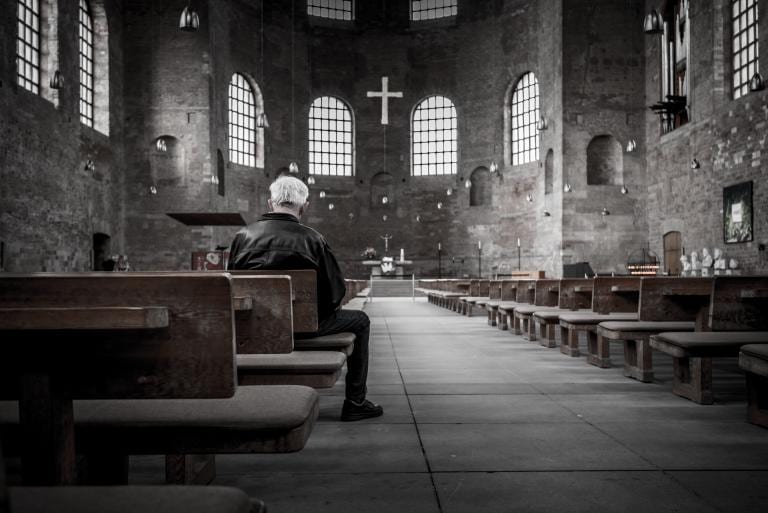
Royalty-free image supplied by the author
Getting past our egos to our true selves is great. It’s something that the Pagan paths I know of all strive for, but from everything I’ve seen, we uniformly encourage self-esteem and taking pride in ourselves, while avoiding the pitfall of arrogance. Arrogance differs from pride in that it is the self-view that you’re better than everyone else, or at least part of some elite group, whereas pride is simply having a high esteem of yourself while acknowledging that everyone else is equally worthy of pride.
So, this Pagan value is often at odds with the values of the religions we came from. It’s certainly been a struggle for me. I was raised to see humanity, society, and community as more important than me and to see myself as merely a part of that greater whole. I saw this as necessary for Buddhist transcendence. So, I tend to, knee-jerk-reaction, respond to compliments with a sort of awe-shucks response like, “well, I can’t take credit for all of that”. My Pagan path, however, instructs me to simply say, “thank you”. That allows the other person to sincerely compliment me, allowing me to take pride in the things I’m good at, and I think it’s actually less dismissive of their praise.

Flag by Clker-Free-Vector-Images, via Pixabay
Now, there’s a difference between self-esteem and having a big ego. Having a big ego is when we’re full of ourselves. That is, it’s when we just heap the praise on ourselves, even when we really don’t deserve it. Egotists tend to want to steamroll over others and typically have a me-first attitude. People with high self-esteem don’t need to do any of this, because they have everything they need within themselves to feel truly confident and good about themselves. So, they tend to have a power-with attitude that celebrates everybody around them as well as themselves. Self-esteem is a form of strength. Having a big ego is actually a form of weakness.
What I personally got from the Great Horned God is a sort of mystical koan that true pride is to true humility as arrogance is to false humility. One type of false humility is when someone thinks of themselves as being so much more humble than everyone else. It’s actually a form of arrogance. Another type is the type that beats ourselves down and fails to acknowledge our original sanctity or our fundamentally good potential and, basically, the more-good-than-bad disposition that I think most of us have, even when we get it wrong. That is, we all were born innocent (without Original Sin) and most of us are basically good people. When we do hurtful things, it’s something to work on, but, at our core, I think most of us fundamentally want to be good and strive for goodness, even if we bumble around with it and get misguided sometimes.
I’ve personally come to reconcile humility and pride through the notion that true humility, as opposed to the false kind that’s self-flagellating or beating down the nail that sticks up, are two sides of the same coin. True pride is thinking well of ourselves and acknowledging our fundamental good nature and original sanctity.
True humility is nothing more than realizing that, as amazing and special as we are, everyone else is too. Looked at one way, this notion is pride, if we emphasize our own personal good features, and it’s humility if we emphasize the good features of everyone else. The struggle for me, and I think for many of us Pagans, is to find the balance between self adulation and affirming the good qualities of others. At its core, it’s the balance between self and other. It also has a great potential, which is the elevation of everyone, us and our community. By affirming the fundamentally good potential of all, we elevate both ourselves and those around us to help free all of us from the self-imposed bonds of the self-denying type of false humility.
How to Free Ourselves from False Humility
We do ritual great. Many of us do some sort of magic. How to set up sacred space and everything else that goes before and after a magical, self-transformative act is beyond the scope of this post, but your tradition probably has a way to do this, and there’s a bunch of information online. So, I’ll stick to the basics of the act itself, but propose that you do it in sacred space, according to your tradition or whatever works for you. If it were me, I’d probably cleanse the space, ground and center, cast circle, call quarters, call on the Divine, perform this exercise, and then thank the Gods, and take down circle, but do what works for you.
I’ve found from personal experience that it rarely works to remove anything from myself. There’s a line from the Thelemic Gnostic Mass which says, “there is no part of me that is not also a part of the Gods”. Every time I’ve tried to rid myself of anything within myself, I’ve had it come back worse than before. So, what I’m going to suggest is that you try to transform arrogance and false humility into true pride, which is also true humility. The ritual I have here is one that you can use as is or modify to a way that works for you, but this is a method I’ve found to work, and I hope you’ll find it so as well.
Another concept I abjure (which I’ll save for a later post) is the notion that all spiritual beings in the universe, including our souls, need to be divided strictly into good and evil. So, I’d advise thinking of this part of ourselves as misguided rather than “evil”. After all, it would be antithetical to this entire exercise to try to beat down a part of yourself in the name of self-esteem.
Here are the steps that I suggest to take:
1. Visualize it. What does that look like to you? You might even visualize it as a creature of some sort: an unruly spirit within you waiting for guidance. You might even include the sound, smell, touch, and, yes, even taste of this being. Remember that it’s a part of you.

daemon by kalhh, via Pixabay
2. Create sacred space however you do that and call on whatever Deities or spiritual beings you work with, particularly any patrons you might have, and particularly any ones that are good at this sort of work. Deities of transformation come to mind, as do healers, since this is really a type of healing.
3. See (and maybe even feel, smell, taste, and hear) this arrogance/false humility beasty inside of you.
4. Talk to this being. It’s part of you, so you can talk to it. Find out why it is the way it is. Rather than being adversarial to it, I strongly suggest coming to it with compassion. You may find that, misguided as it is, it’s doing all these things for reasons that it thinks are good, or what we want (and maybe, at some level, we have been encouraging it, even if we now need to stop doing so).
5. Thank it for all its done, but explain to it why its behavior is a problem. Explain that you’re communicating with it in a non-judgmental way, but, also explain that it can serve you better by relinquishing arrogance and false humility and, instead, providing you with self-esteem and affirming good qualities in others.
6. Will that, for the greater good of both you and humanity, it transform itself from a being of arrogance and false humility to a being of true pride and true humility. Visualize this (and maybe smell, hear, touch, and perhaps even taste this). See it transform into this. If you have any trouble, ask your Deities or spirit helpers for help with this, but remember that you’re just changing yourself, so you have the right to decide how you’re going to be. Rather than seeing it as a battle, transform it with love. Changing yourself from a person of insecure arrogance and false humility to a person of strong self-esteem may take an act of self-love. So, turn on the love and try to get this being, which is part of you, to be on your side.
7. When you see (feel, sense, etc.) that this part of you has been transformed, thank it, and thank whatever spiritual beings and Deities you’ve called, and then open sacred space.
Afterwards, I’d encourage you to let this be the magical act that it was. Avoid talking to others about it or even thinking much about it. More than mere psychology, this is magic. It will transform you, so let it flow.
Previous Post

March 4, 2019
Acorn & Antler: What's Under Your Robes?
Next Post

March 6, 2019 Phoenix Rising: Stranger At the Party
Browse Our Archives
Select a Category A Lakeside Hearth Adventures in Wortcunning Alone In Her Presence Arts, Crafts & Cooking Birthing Hereditary Witchcraft Book of Blackbirds Book Reviews Born-Again Witch Cauldron, Sword, Spear, & Stone Cermony and Liturgy Columns Community Dandelion Seeds Dear Jasmine Druid Thoughts Editor's Picks Everyday Pagan Family & Household Practice Family Traditions Full Frontal Magic Gateway Goddess Guest Articles Happily Heathen Health and Wellness Hearth of Hellenism Heathen Woman Hills of the Horizon History Holidays Horse Goddesses Interfaith Interviews Irish-American Witchcraft Jewish Witch Lamp & Labyrinth Letters from Midgard Literature, Media, Film, Music Loop of Brighid Love, Sex & Relationships Magic or Magick Making Light Naturalistic Traditions Nature News Outside The Circle Pantheisticon Politics Prayers, Poems, Blessings & Stories Queer Femme Mystic Queer of Swords Recipes Ritual and Practice Science and Research Seekers and Guides Seeking the Grail Socially Responsible Magic Spear of Athena Star Made Witch Syncretic Electric Technology The Blooming Staff The Busy Witch The Cartomancer The Crow's Nest The Dance of Pagan Recovery The Hearth of Hellenism The Lady's Quill The Other Side of the Hedge The Path of She The Rantin' Raven The Witches Next Door The Zen Pagan Theology, Ethics, Philosophy Tree City Witch Urban Earthwitch Wayfaring Woman Witch on Fire Wyrd Words
Select a Month January 2026 March 2025 December 2024 June 2024 April 2024 March 2024 January 2024 December 2023 November 2023 October 2023 August 2023 July 2023 May 2023 April 2023 March 2023 February 2023 January 2023 December 2022 November 2022 October 2022 September 2022 August 2022 July 2022 June 2022 May 2022 March 2022 February 2022 January 2022 December 2021 November 2021 October 2021 September 2021 August 2021 July 2021 June 2021 May 2021 April 2021 March 2021 February 2021 January 2021 December 2020 November 2020 October 2020 September 2020 August 2020 July 2020 June 2020 May 2020 April 2020 March 2020 February 2020 January 2020 December 2019 November 2019 October 2019 September 2019 August 2019 July 2019 June 2019 May 2019 April 2019 March 2019 February 2019 January 2019 December 2018 November 2018 October 2018 September 2018 August 2018 July 2018 June 2018 May 2018 April 2018 March 2018 February 2018 January 2018 December 2017 November 2017 October 2017 September 2017 August 2017 July 2017 June 2017 May 2017 April 2017 March 2017 February 2017 January 2017 December 2016 November 2016 October 2016 September 2016 August 2016 July 2016 June 2016 May 2016 April 2016 March 2016 February 2016 January 2016 December 2015 November 2015 October 2015 September 2015 August 2015 July 2015 June 2015 May 2015 April 2015 March 2015 February 2015 January 2015 December 2014 November 2014 October 2014 September 2014 August 2014 July 2014 June 2014 May 2014 April 2014 March 2014 February 2014 January 2014 December 2013 November 2013 October 2013 September 2013 August 2013 July 2013 June 2013 May 2013 April 2013 March 2013 February 2013 January 2013 December 2012 November 2012 October 2012 September 2012 August 2012 July 2012 June 2012 May 2012 April 2012 March 2012 February 2012 January 2012
Follow Us!
TAKE THE
Religious Wisdom Quiz
Who was the oldest man recorded in the Bible?
Select your answer to see how you score.
Jared Methuselah Adam Noah
Related posts from Agora

Simple Witchery: To Keep Silent

Simple Witchery: Leaning On The Four Pillars


Simple Witchery: Resistance and Resilience in Hard Times
TRENDING AT PATHEOS Pagan

I was recently chatting with someone on Instagram. She asked me what...

While there are many people who share their results, the end of...

On July 23, I saw Christopher Nolan's The Odyssey which is Homer’s...

As I write this two big events have just finished up. One...

Restoring the Watershed of Divine Love
Perhaps cooperation is not something we manufacture through legislation, ideology, or moral...

Many UUs don’t pray because of bad experiences in a previous religion,...
view all Pagan blogs
Ad-Free & Subscriber Log-In Subscription Support
- About Us
- 2026 Calendar
- Videos
- Podcasts
- Library of World Religions
- Faith In Media Tracker
- Advertise With Us
- Write for Us
- Privacy Policy
- Terms of Service
- Do Not Sell My Data
- Contact Us
- Radiant Digital
- Manage Newsletter Subscriptions
- Unsubscribe From Notifications
- Sitemap
Copyright 2008-2026, Patheos. All rights reserved.
Subscription Support Ad-Free & Subscriber Log-In
Follow Patheos